
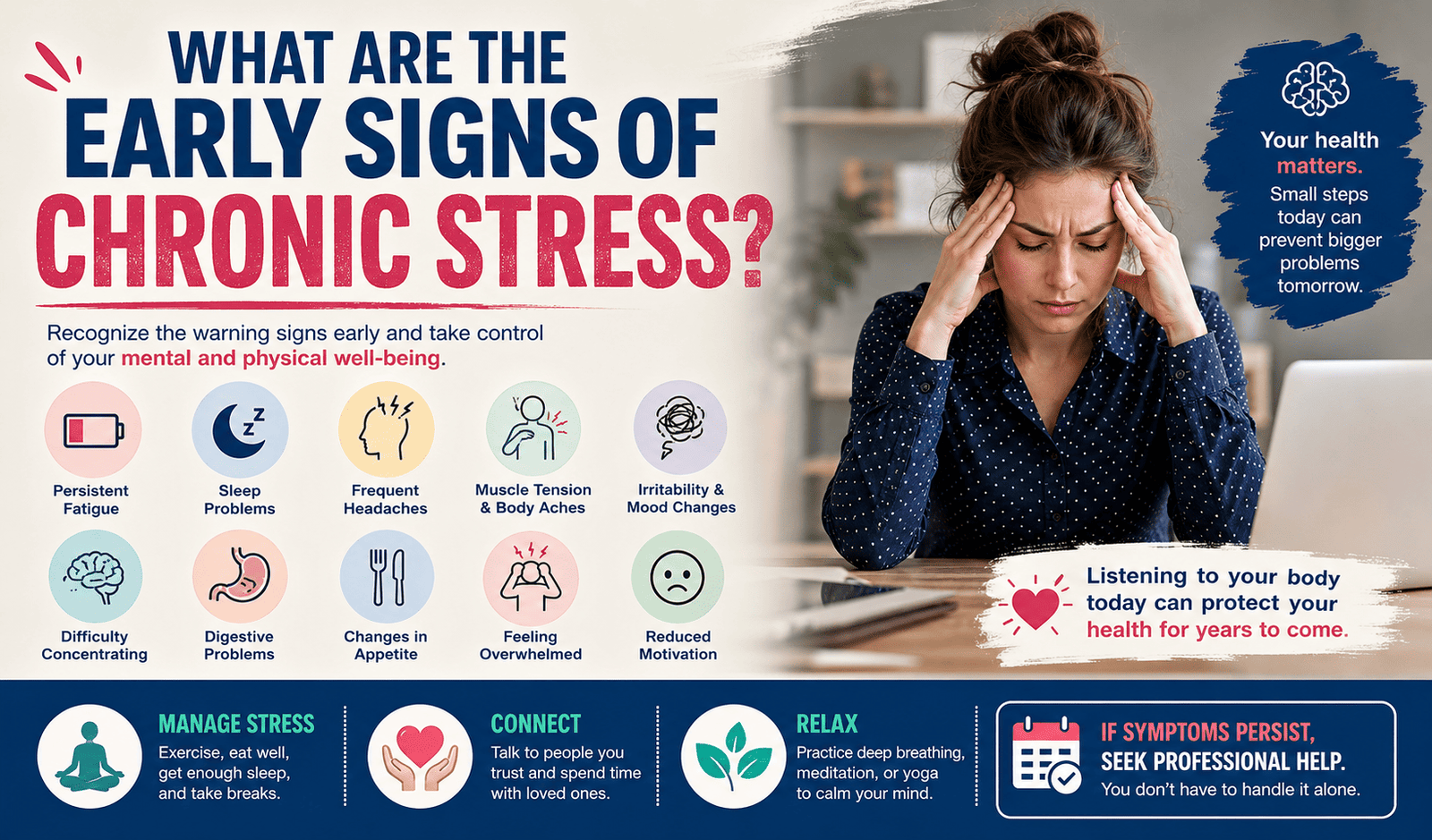
The early signs of chronic stress can include persistent fatigue, poor sleep, headaches, muscle tension, digestive discomfort, irritability, anxiety, difficulty concentrating, changes in appetite, and feeling overwhelmed. Unlike short-term stress, chronic stress continues for an extended period and may gradually affect both mental and physical health. Recognizing these warning signs early can help you take steps to manage stress before it begins to interfere significantly with daily life.
What Is Chronic Stress?
Stress is the body’s natural response to challenging or demanding situations. In short periods, stress can be useful because it helps you stay alert, focused, and prepared to respond to a perceived threat. Your body may increase your heart rate, breathing rate, blood pressure, and muscle tension as part of the fight-or-flight response. Once the stressful situation passes, these reactions generally return toward normal.
Chronic stress is different because the stress response continues for a prolonged period. It can develop when work pressure, financial concerns, relationship difficulties, caregiving responsibilities, health problems, or other ongoing challenges repeatedly activate the body’s stress response. Over time, continuously elevated stress responses can affect multiple body systems and contribute to physical and psychological symptoms.
Also Read : What foods help reduce stress?
What Are the Early Signs of Chronic Stress?
The early signs of chronic stress are often subtle. You may initially think you are simply tired, busy, distracted, or having a difficult week. However, when several symptoms persist or repeatedly return without an obvious explanation, stress may be contributing to them.
Persistent Fatigue
Feeling tired after a demanding day is normal, but persistent fatigue can be an early warning sign when it continues despite getting adequate opportunities for rest. Chronic stress can keep the body’s stress-response system activated for longer than necessary, potentially making it harder to feel physically and mentally refreshed. Fatigue may also make everyday responsibilities feel more difficult than usual.
Sleep Problems
Changes in sleep are among the common early signs of prolonged stress. You may have difficulty falling asleep because your mind keeps replaying problems or anticipating what could go wrong. Some people wake frequently during the night or wake up feeling unrefreshed. Poor sleep can then make it harder to regulate emotions, concentrate, and cope with the next day’s challenges, potentially creating a cycle in which stress and sleep problems reinforce one another.
Also Read : What are the signs of emotional burnout?
Frequent Headaches
Recurring headaches can sometimes accompany ongoing stress. Chronic muscle tension, particularly around the neck, shoulders, and head, may contribute to tension-type headaches. Stress is not the only possible cause of headaches, however, so persistent, severe, or unusual headaches should not automatically be attributed to stress.
Muscle Tension and Body Aches
When you experience stress, your muscles can tense as part of the body’s protective response. If that response remains activated for a long time, muscle tension may become persistent. You might notice tightness in your shoulders, neck, jaw, or back, or experience unexplained muscle discomfort. Chronic stress has been associated with prolonged muscle tension and pain.
Also Read : What are the symptoms of chronic stress?
Irritability and Mood Changes
You may notice that small problems bother you more than they normally would. Increased irritability, anger, restlessness, feeling overwhelmed, sadness, or anxiety can occur when stress becomes persistent. Changes in mood can be especially important when they begin affecting relationships, work performance, or your ability to enjoy activities you normally value.
Difficulty Concentrating
Another early sign of chronic stress is difficulty focusing. You might find yourself rereading the same information, forgetting appointments, losing track of tasks, or struggling to make simple decisions. Long-term stress can affect memory and concentration, making everyday cognitive tasks feel more demanding.
Also Read : Why does stress affect my stomach?
Digestive Problems
Stress can influence communication between the brain and digestive system. Some people experiencing prolonged stress may notice stomach discomfort, bloating, changes in bowel habits, or heartburn. Because digestive symptoms can have many causes, persistent gastrointestinal problems should be evaluated rather than automatically assumed to be stress-related.
Changes in Appetite
Chronic stress can affect eating behavior. Some people eat more when they feel stressed, while others lose their appetite or skip meals. Over time, these changes can contribute to unwanted changes in weight and overall nutrition. Mayo Clinic identifies overeating or undereating among behavioral effects that can accompany stress.
Also Read : Can burnout make you physically sick?
Feeling Constantly Overwhelmed
One of the more recognizable psychological signs is a persistent feeling that you cannot keep up. Normal responsibilities may suddenly seem exhausting or unmanageable. You may feel as though you are constantly trying to catch up without ever reaching a point where you can relax. This ongoing sense of being overwhelmed can be a signal that your current stress load needs attention.
Reduced Motivation
Chronic stress can affect motivation and make activities that once felt enjoyable seem like chores. You may procrastinate more often, avoid responsibilities, withdraw from social activities, or find it difficult to start tasks. Mayo Clinic lists lack of motivation and social withdrawal among behavioral or emotional effects associated with stress.
Also Read : What are symptoms of high cortisol?
How Does Chronic Stress Affect the Body?
Chronic stress is not only an emotional experience. The body’s stress response involves multiple systems, including the nervous, cardiovascular, endocrine, gastrointestinal, musculoskeletal, respiratory, and immune systems. When stress-response mechanisms remain active for too long, ongoing exposure to stress hormones and related physiological changes can contribute to health problems.
For example, prolonged stress may contribute to persistent muscle tension, headaches, sleep difficulties, digestive symptoms, and changes in appetite. Over longer periods, chronic stress has also been associated with increased risk of conditions involving cardiovascular health, including high blood pressure, heart disease, heart attack, and stroke. This does not mean that stress alone causes these conditions, but it can be one factor affecting overall health.
Also Read : Can overthinking affect physical health?
What Causes Chronic Stress?
Chronic stress can have many different sources, and the triggers vary from person to person. Workplace pressure, financial difficulties, relationship conflict, caregiving responsibilities, major life changes, ongoing health concerns, lack of sleep, and persistent uncertainty can all contribute to prolonged stress.
Sometimes there is no single major event. Instead, multiple smaller stressors accumulate over time. A demanding job combined with poor sleep, family responsibilities, financial concerns, and little time for recovery may gradually create a sustained stress burden.
Also Read : Why do I feel anxious at night?
What Is the Difference Between Normal Stress and Chronic Stress?
Normal stress is usually temporary and connected to a specific situation. For example, you might feel stressed before an important presentation, during a difficult workday, or while dealing with an unexpected problem. Once the situation is resolved, your stress response generally decreases.
Chronic stress persists or repeatedly returns over an extended period. You may begin feeling stressed even when there is no immediate crisis, or you may notice that your body and mind never seem to fully relax. Persistent symptoms such as sleep problems, fatigue, irritability, headaches, digestive discomfort, or difficulty concentrating deserve attention, particularly when they interfere with daily life.
Also Read : Can stress cause physical symptoms?
How Can You Manage Early Signs of Chronic Stress?
Recognizing chronic stress early gives you an opportunity to make changes before stress becomes increasingly disruptive. Healthy stress-management strategies can include regular physical activity, adequate sleep, relaxation practices, spending time with supportive people, maintaining a balanced diet, making time for hobbies, and identifying tasks or commitments that can be reduced or reorganized.
Relaxation techniques such as slow breathing, meditation, yoga, and other mind-body approaches may help activate the relaxation response and reduce some physiological effects of stress. The National Center for Complementary and Integrative Health notes that the relaxation response can slow heart rate, lower blood pressure, and decrease stress-related physiological activity.
It can also help to identify what is actually causing your stress. Keeping a journal may help you recognize patterns, such as particular situations that consistently trigger worry, poor sleep, irritability, or physical tension. Once you understand the triggers, you can focus on changes that are realistically within your control.
Also Read : Why do I wake up tired after naps?
When Should You Talk to a Doctor About Stress?
You should consider talking with a healthcare professional when stress symptoms persist, become difficult to manage, or begin interfering with sleep, work, relationships, or everyday activities. Persistent fatigue, headaches, digestive problems, sleep disturbances, significant appetite changes, anxiety, depression, or concentration problems can have causes other than stress and may need professional evaluation.
It is particularly important not to assume that a serious or unusual physical symptom is caused by stress. For example, chest pain, severe shortness of breath, fainting, or other potentially serious symptoms require appropriate medical assessment rather than self-diagnosis as stress.
A mental health professional can also help when ongoing stress is accompanied by significant anxiety, depression, persistent feelings of hopelessness, or difficulty functioning. Professional counseling can provide individualized strategies for coping with ongoing stress and addressing underlying concerns.
Also Read : Why do I feel mentally tired after work?
Can Chronic Stress Be Prevented?
Chronic stress cannot always be prevented because many stressful circumstances are outside your control. However, building healthy routines can improve resilience and reduce the likelihood that everyday stress will become overwhelming. Regular physical activity, consistent sleep, social support, relaxation practices, healthy eating habits, and realistic boundaries can all form part of a long-term approach to stress management.
It is also important to recognize that asking for help is a healthy response to prolonged stress. You do not have to wait until stress becomes severe before discussing it with a healthcare professional or mental health provider.
Also Read : Can gut health affect energy levels?
Frequently Asked Questions About Early Signs of Chronic Stress
1. What are the first signs of chronic stress?
The first signs can include persistent tiredness, poor sleep, headaches, muscle tension, irritability, anxiety, difficulty concentrating, digestive discomfort, appetite changes, and feeling overwhelmed. Symptoms can vary significantly between individuals.
2. How long does stress have to last to be considered chronic?
There is no single number of days or weeks that defines chronic stress for everyone. The term generally refers to stress that persists or repeatedly occurs over an extended period rather than resolving after a short-term stressful event. The impact on your health and daily functioning is also important.
3. Can chronic stress cause physical symptoms?
Yes. Chronic stress can be associated with physical symptoms such as headaches, muscle tension, fatigue, sleep problems, digestive discomfort, and changes in appetite. Stress can affect several body systems, so its effects are not limited to mood or emotions.
4. Can chronic stress cause sleep problems?
Yes. Ongoing stress and anxiety can make it difficult to fall asleep, stay asleep, or feel rested. Sleep problems can then make it harder to manage stress, creating a cycle that may continue unless the underlying stress and sleep issues are addressed.
5. Can stress cause headaches every day?
Stress and prolonged muscle tension can contribute to headaches, particularly tension-type headaches. However, daily or persistent headaches can have many possible causes. If headaches are frequent, severe, worsening, or unusual for you, speak with a healthcare professional rather than assuming stress is the only explanation.
6. Can chronic stress affect digestion?
Yes. Stress can affect communication between the brain and digestive system and may contribute to symptoms such as stomach discomfort, bloating, or heartburn. Persistent digestive symptoms should still be evaluated because gastrointestinal problems can have many different causes.
7. Can chronic stress affect memory and concentration?
Yes. Prolonged stress can be associated with difficulty concentrating and memory problems. You may notice that focusing on work, remembering information, or making decisions becomes more difficult than usual.
8. Can chronic stress cause anxiety or depression?
Chronic stress can contribute to psychological difficulties, including anxiety and depressive symptoms. However, stress, anxiety disorders, and depression are not interchangeable diagnoses. If persistent worry, sadness, hopelessness, or loss of interest is affecting your daily life, consider speaking with a qualified mental health professional.
9. What is the best way to reduce chronic stress?
There is no single best strategy for everyone. Regular exercise, sufficient sleep, relaxation practices, social connection, healthy eating, time for enjoyable activities, and reducing manageable sources of stress can help. Professional counseling may also be useful when stress becomes difficult to control independently.
10. When should I seek professional help for chronic stress?
Consider professional help when stress persists, becomes overwhelming, or interferes with your health, sleep, work, relationships, or daily activities. Persistent physical symptoms should also be evaluated because they may have causes unrelated to stress.

Spending time outdoors may enhance emotional wellness naturally.
Final Thoughts
The early signs of chronic stress can be easy to overlook because they often develop gradually. Persistent fatigue, sleep problems, headaches, muscle tension, digestive discomfort, irritability, concentration difficulties, appetite changes, and feeling overwhelmed may all signal that your body and mind are dealing with prolonged stress.
Recognizing these changes does not mean diagnosing yourself with chronic stress. Instead, they can serve as a reason to examine what is happening in your life and consider healthier ways to manage ongoing pressure. If symptoms persist, worsen, or interfere with everyday functioning, talking with a healthcare professional can help determine whether stress is contributing to the problem or whether another condition needs attention.
Medical Disclaimer: This article is intended for general educational and informational purposes and does not provide medical advice, diagnosis, or treatment. Stress-related symptoms can overlap with many other medical and mental health conditions. If you have persistent, severe, or concerning symptoms, consult a qualified healthcare professional for personalized evaluation and guidance.
Reviewed by: Dzarro Editorial Team
Fact-checked using trusted medical and scientific sources.

Sandip Choudhary is a Health & Wellness Researcher and Content Creator specializing in sleep, digestive health, preventive wellness, and evidence-based health education. He has been creating online content and researching health-related topics for several years, focusing on translating complex medical information into practical guidance for everyday readers.
With a strong background in SEO and content strategy, Sandip ensures that every article is optimized for both search engines and real users. His goal is to provide reliable, clear, and helpful information that supports healthier living.
Disclaimer: The content published is for informational purposes only and is not a substitute for professional medical advice.
4 thoughts on “What Are the Early Signs of Chronic Stress?”
Comments are closed.