
Introduction
You wake up tired, your mind feels heavy, your body aches for no clear reason—and even small tasks feel overwhelming. If this sounds familiar, you’re not alone. In the United States, millions of adults deal with ongoing stress due to work pressure, financial concerns, and lifestyle imbalance.
But here’s the problem: many people ignore the early warning signs until stress becomes chronic—and starts affecting both mental and physical health.
Quick Answer
Chronic stress symptoms include constant fatigue, headaches, muscle tension, sleep problems, irritability, and digestive issues. Over time, it can lead to anxiety, depression, weakened immunity, and heart problems. Unlike short-term stress, chronic stress persists for weeks or months and affects both the body and mind.
What Is Chronic Stress?
Chronic stress is a long-term state of mental and physical tension that continues for weeks, months, or even years.
Unlike short-term stress (like preparing for an exam or meeting a deadline), chronic stress doesn’t go away easily. It keeps your body in a constant “alert mode,” which can slowly damage your health.
Think of it like this:
👉 Short-term stress = temporary pressure
👉 Chronic stress = ongoing strain on your body and mind
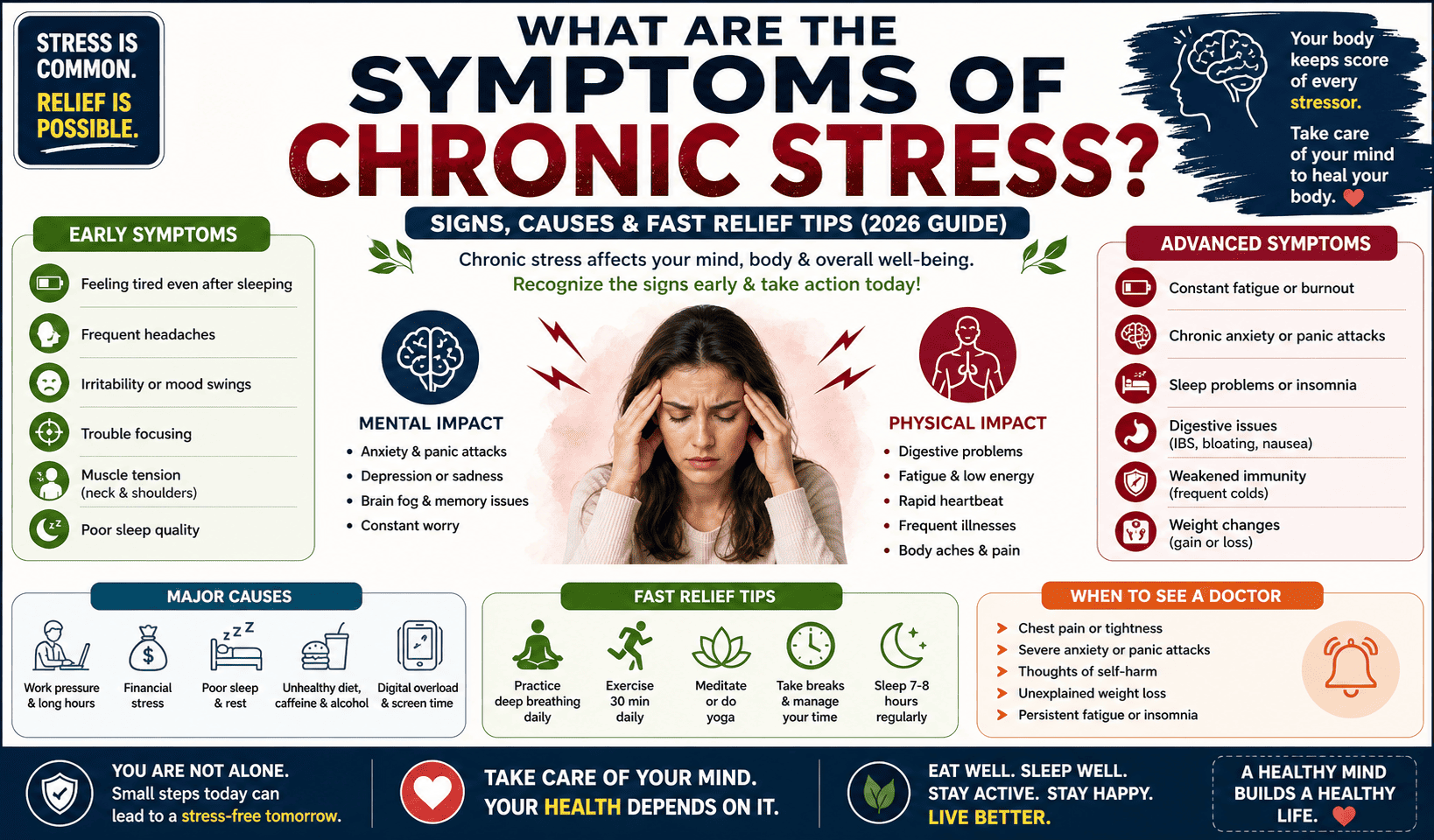
Symptoms of Chronic Stress
Chronic stress affects multiple systems in your body. Symptoms can start mild and gradually become severe.
🔹 Early Symptoms:
- Feeling tired even after sleeping
- Frequent headaches
- Mild anxiety or restlessness
- Trouble focusing
- Irritability or mood swings
- Muscle tension (especially neck and shoulders)
- Poor sleep quality
🔹 Advanced Symptoms:
- Constant fatigue or burnout
- Panic attacks or chronic anxiety
- Depression or emotional numbness
- Digestive problems (bloating, IBS-like symptoms)
- Rapid heartbeat or chest tightness
- Frequent illnesses (low immunity)
- Weight gain or loss
- Brain fog and memory issues
Causes & Risk Factors
Chronic stress doesn’t come from one single cause—it builds over time due to multiple factors.
🔸 Lifestyle Factors:
- Overworking or long office hours
- Lack of sleep
- Poor work-life balance
🔸 Emotional & Mental Triggers:
- Relationship issues
- Financial stress
- Job insecurity
🔸 Diet & Health Factors:
- High caffeine intake
- Processed food diet
- Alcohol or smoking
🔸 Medical & Environmental Causes:
- Chronic illness
- Hormonal imbalance
- Lack of physical activity
👉 In the USA, workplace stress and digital overload are major contributors.
Acute Stress vs Chronic Stress (Comparison)
| Factor | Acute Stress | Chronic Stress |
|---|---|---|
| Duration | Short-term | Long-term |
| Cause | Specific event | Ongoing situations |
| Impact | Temporary discomfort | Long-term health damage |
| Recovery | Quick recovery | Slow recovery |
| Severity | Mild to moderate | Moderate to severe |
Best Treatment Options for Chronic Stress
Managing chronic stress requires a combination approach, not just one solution.
1. Natural Remedies
- Deep breathing exercises
- Meditation (10–15 minutes daily)
- Yoga or stretching
- Herbal teas (like chamomile)
2. Medical Support
- Therapy (CBT – Cognitive Behavioral Therapy)
- Anti-anxiety medications (if prescribed)
- Sleep support treatments
3. Lifestyle Changes
- Regular exercise (30 minutes daily)
- Better sleep routine
- Reducing screen time
4. Stress Management Techniques
- Journaling
- Time management
- Digital detox
👉 Learn more about improving emotional balance naturally in our detailed Mental Wellness resource hub.
Diet & Lifestyle Tips
✅ What to Eat:
- Whole foods (fruits, vegetables, whole grains)
- Omega-3 rich foods (salmon, walnuts)
- Magnesium-rich foods (spinach, almonds)
- Herbal teas
❌ What to Avoid:
- Excess caffeine
- Processed foods
- Sugary drinks
- Alcohol (especially during stress periods)
Daily Routine Improvements:
- Fixed sleep schedule
- Morning sunlight exposure
- Short breaks during work
- Physical movement every few hours
When to See a Doctor
You should seek medical help if you notice:
- Chest pain or pressure
- Severe anxiety or panic attacks
- Ongoing insomnia
- Unexplained weight loss
- Persistent fatigue
- Thoughts of self-harm
👉 Chronic stress can lead to serious conditions like heart disease and depression if ignored.
Who Is at Risk?
Chronic stress can affect anyone, but some groups are more vulnerable:
- Office workers with high workloads
- Students under academic pressure
- Women balancing work and family
- Caregivers
- People with financial stress
- Individuals with chronic illness
FAQs
1. What are the first signs of chronic stress?
Early signs include fatigue, headaches, irritability, and trouble sleeping.
2. Can chronic stress affect your body?
Yes, it can impact your heart, digestion, immune system, and mental health.
3. How long does chronic stress last?
It can last weeks, months, or even years if not managed properly.
4. Can chronic stress be cured naturally?
Yes, with lifestyle changes, stress management, and proper care, symptoms can improve significantly.
5. Is chronic stress dangerous?
Yes, long-term stress can lead to serious health issues like heart disease, anxiety disorders, and depression.
Conclusion
Chronic stress is more than just feeling overwhelmed—it’s a long-term health risk that affects both your body and mind.
The key is to recognize symptoms early and take action. Small changes like improving sleep, managing your time, and eating better can make a huge difference.
👉 Don’t ignore your body’s signals. Managing stress today can protect your health tomorrow.
Reviewed by: Dzarro Editorial Team
Fact-checked using trusted medical and scientific sources.

Sandip Choudhary is a Health & Wellness Researcher and Content Creator specializing in sleep, digestive health, preventive wellness, and evidence-based health education. He has been creating online content and researching health-related topics for several years, focusing on translating complex medical information into practical guidance for everyday readers.
With a strong background in SEO and content strategy, Sandip ensures that every article is optimized for both search engines and real users. His goal is to provide reliable, clear, and helpful information that supports healthier living.
Disclaimer: The content published is for informational purposes only and is not a substitute for professional medical advice.