
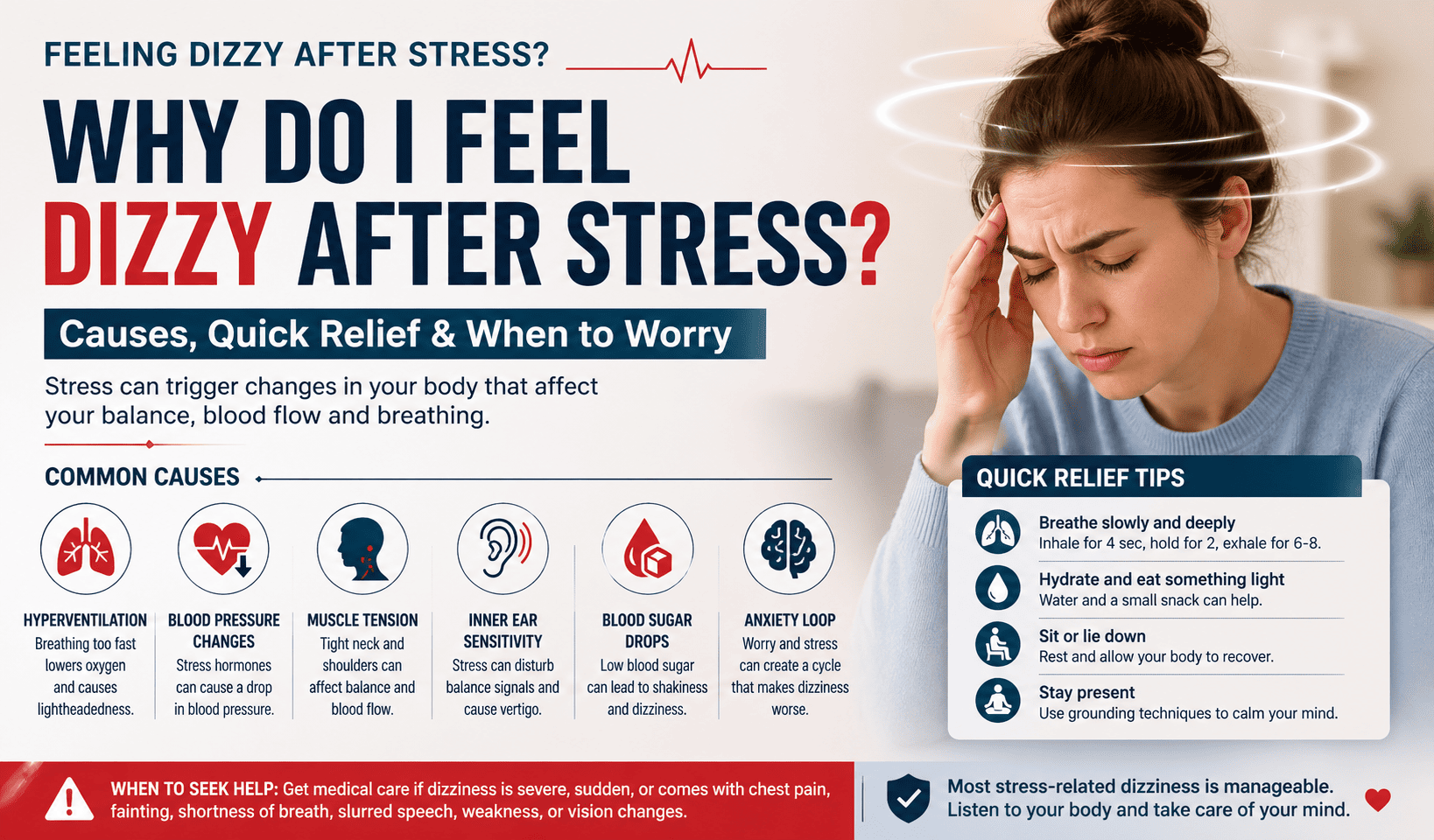
Feeling dizzy after a stressful moment can be unsettling—especially when it happens suddenly or keeps coming back. The good news is that stress-related dizziness is common and often manageable once you understand what’s happening inside your body.
Quick Answer
You may feel dizzy after stress because your body’s fight-or-flight response changes your breathing, heart rate, blood flow, and hormone levels. These shifts can reduce blood flow to the brain temporarily or alter balance signals—leading to lightheadedness, spinning, or a faint feeling.
What Does Stress-Related Dizziness Feel Like?
People describe it in different ways:
- Lightheaded or faint
- Unsteady or off-balance
- A spinning sensation (vertigo)
- “Floating” or disconnected feeling
- Pressure in the head or behind the eyes
It can last a few seconds, minutes, or linger for hours depending on the trigger and your body’s response.
Why Stress Can Make You Dizzy
1) Hyperventilation (Breathing Too Fast)
When you’re anxious or stressed, you may breathe quickly or shallowly. This can lower carbon dioxide levels in your blood, which may cause:
- Lightheadedness
- Tingling in hands/face
- A sense of unreality
2) Sudden Blood Pressure Changes
Stress hormones like adrenaline can make your heart pump faster and your blood vessels constrict. After the stressful moment passes, your blood pressure can drop quickly, causing:
- Dizziness on standing
- Weakness or a “whoosh” feeling
3) Muscle Tension (Neck & Shoulders)
Tight muscles in the neck and upper back can affect blood flow and nerve signals related to balance, leading to:
- Head pressure
- Off-balance sensation
- Tension headaches with dizziness
4) Inner Ear Sensitivity
Stress can heighten how your brain processes signals from the inner ear (which controls balance). This may trigger:
- Brief spinning sensations
- Motion sensitivity
- Worsening of existing balance issues
5) Blood Sugar Fluctuations
During stress, your body uses energy quickly. If you haven’t eaten or you’re sensitive to drops in blood sugar, you might feel:
- Shaky
- Sweaty
- Dizzy or faint
6) Anxiety & Panic Response
A spike in anxiety can create a loop: dizziness → fear → more adrenaline → more dizziness. This can make symptoms feel intense even when there’s no dangerous underlying cause.
👉 Explore how mental wellness and brain health are connected in our expert category guide.
Common Triggers
- Emotional stress (work pressure, arguments)
- Panic or anxiety episodes
- Poor sleep
- Dehydration
- Skipping meals or long gaps between meals
- Caffeine overload
- Long screen time or poor posture
How to Stop Dizziness After Stress (Fast Relief)
1) Slow Your Breathing
Try a simple pattern:
- Inhale through your nose for 4 seconds
- Hold for 2–3 seconds
- Exhale slowly for 6–8 seconds
Repeat for 2–3 minutes to stabilize CO₂ levels and calm your nervous system.
2) Sit or Lie Down Safely
If you feel faint:
- Sit and lower your head slightly, or lie down
- Elevate your legs if possible
This helps blood return to your brain.
3) Hydrate
Drink water or an electrolyte drink—especially if you’ve had caffeine or haven’t eaten.
4) Eat Something Light
A small snack with protein + complex carbs (like yogurt with fruit, or a sandwich) can stabilize blood sugar.
5) Release Neck Tension
- Gentle neck stretches
- Shoulder rolls
- A brief warm compress on the neck
6) Grounding Technique
Name:
- 5 things you can see
- 4 things you can feel
- 3 things you can hear
- 2 things you can smell
- 1 thing you can taste
This can break the anxiety loop.
How Long Does It Last?
- Mild cases: a few seconds to minutes
- After strong stress: up to a few hours
- Recurring episodes: may come and go for days if stress/anxiety remains high
With consistent management (sleep, hydration, breathing), frequency and intensity usually decrease.
When Should You Be Concerned?
Seek medical care (urgent or emergency) if dizziness is:
- Severe or sudden with no clear stress trigger
- Accompanied by chest pain, fainting, or shortness of breath
- Paired with weakness on one side, slurred speech, or vision loss
- Ongoing for days despite rest and hydration
- Happening with new medications or after a head injury
These could indicate conditions that need immediate evaluation.
Long-Term Prevention
Build Stress Resilience
- Daily breathing or meditation (5–10 minutes)
- Regular physical activity (walking, light cardio)
- Limit caffeine and energy drinks
Support Your Body
- Stay hydrated throughout the day
- Eat balanced meals at regular intervals
- Maintain a consistent sleep schedule
Improve Posture & Screen Habits
- Keep screens at eye level
- Take breaks every 30–60 minutes
- Stretch your neck and shoulders
Track Your Triggers
Keep a simple log:
- What happened before dizziness
- What you ate/drank
- Sleep quality
- Stress level
Patterns will help you prevent future episodes.
FAQ
Can stress alone cause dizziness?
Yes. Stress can alter breathing, blood flow, and hormone levels, which can directly lead to dizziness.
Is it dangerous?
Usually not, if it’s clearly linked to stress and resolves with rest and hydration. But red-flag symptoms should be checked by a doctor.
Why does it happen after the stress is over?
Your body can “crash” after an adrenaline spike, leading to a temporary drop in blood pressure or energy.
Can anxiety cause vertigo?
Anxiety can trigger or worsen a spinning sensation by affecting how your brain processes balance signals.
Bottom Line
Dizziness after stress is typically your body reacting to rapid changes in breathing, blood pressure, and tension. It’s uncomfortable—but often manageable with simple steps like slow breathing, hydration, and reducing triggers. If symptoms are severe, frequent, or come with warning signs, get medical advice to rule out other causes.
Reviewed by: Dzarro Editorial Team
Fact-checked using trusted medical and scientific sources.

Sandip Choudhary is a Health & Wellness Researcher and Content Creator specializing in sleep, digestive health, preventive wellness, and evidence-based health education. He has been creating online content and researching health-related topics for several years, focusing on translating complex medical information into practical guidance for everyday readers.
With a strong background in SEO and content strategy, Sandip ensures that every article is optimized for both search engines and real users. His goal is to provide reliable, clear, and helpful information that supports healthier living.
Disclaimer: The content published is for informational purposes only and is not a substitute for professional medical advice.