
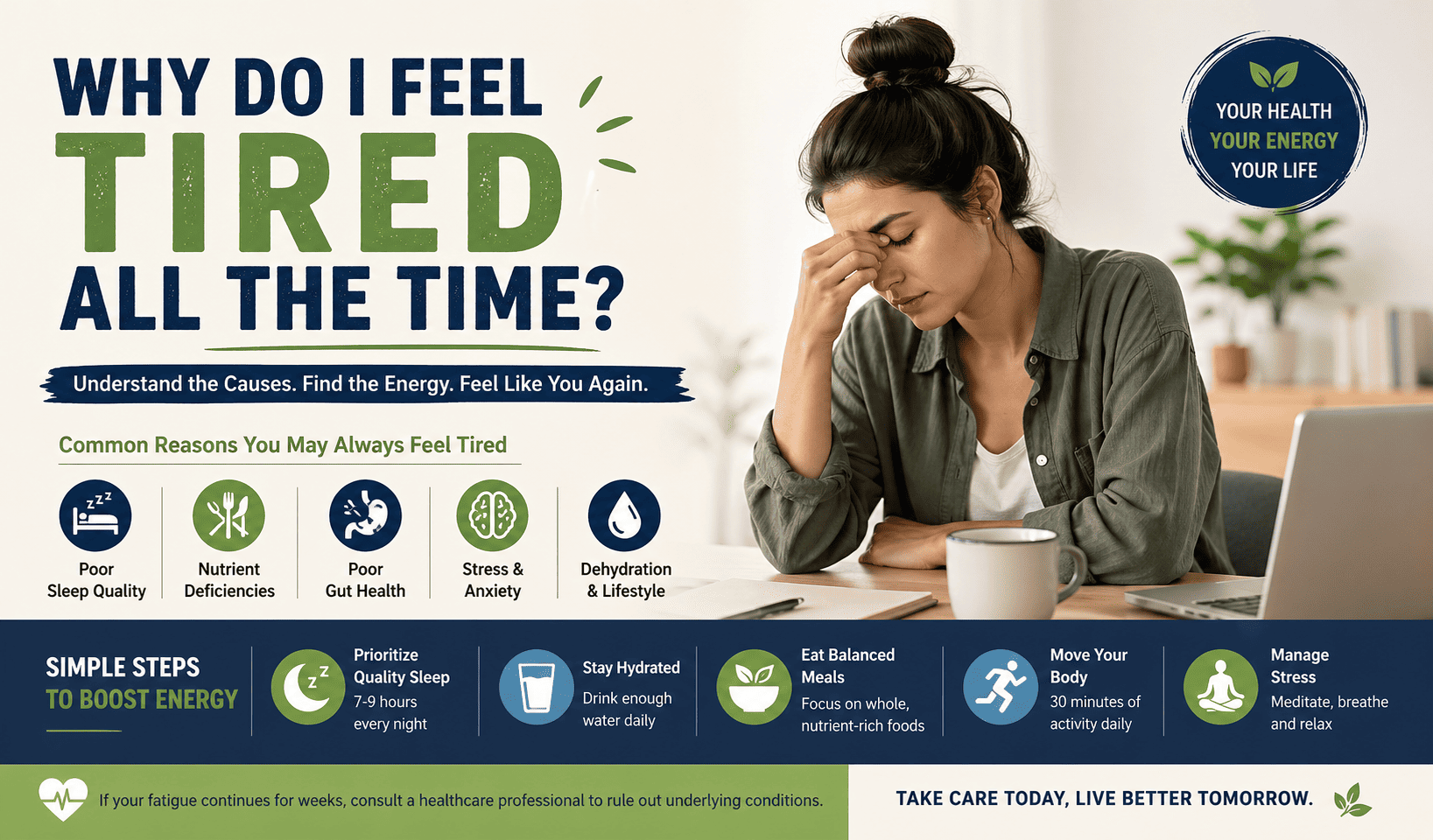
Feeling exhausted every day can be frustrating. If you’ve ever asked yourself, “Why do I feel tired all the time?”, you’re not alone. Millions of Americans experience ongoing fatigue that affects work, relationships, exercise, and overall quality of life. While occasional tiredness after a busy week is normal, persistent fatigue is often a sign that your body or mind needs attention.
Constant tiredness isn’t always caused by lack of sleep. Your lifestyle, diet, stress levels, medical conditions, medications, and even mental health can all play important roles. Understanding the root cause is the first step toward feeling energized again.
What Does It Mean to Feel Tired All the Time?
Feeling tired all the time means experiencing ongoing physical or mental exhaustion that doesn’t improve significantly after a good night’s sleep. Some people describe it as lacking energy, while others struggle with difficulty concentrating, low motivation, or feeling physically weak throughout the day.
Fatigue is different from normal sleepiness. Sleepiness usually improves after sleeping, while fatigue may continue even after getting enough rest.
Also Read : What causes brain fog?
Common Causes of Constant Fatigue
There isn’t one single reason why someone feels tired every day. In many cases, several factors contribute to ongoing fatigue.
Poor Sleep Quality
Getting eight hours in bed doesn’t always mean you’re getting restorative sleep. Interrupted sleep, inconsistent bedtimes, excessive screen time before bed, or an uncomfortable sleeping environment can reduce sleep quality.
Conditions like snoring or sleep apnea may repeatedly interrupt breathing during sleep, preventing deep rest without you even realizing it.
Chronic Stress
Long-term stress keeps your body in a constant state of alertness. Elevated stress hormones can interfere with sleep, increase muscle tension, and drain mental energy.
People dealing with work pressure, financial concerns, caregiving responsibilities, or major life changes often experience ongoing fatigue.
Poor Nutrition
Your body relies on nutrients to produce energy. Skipping meals, eating excessive processed foods, or following restrictive diets may reduce your energy levels.
Low intake of iron, vitamin B12, vitamin D, magnesium, or protein can contribute to persistent tiredness.
Dehydration
Even mild dehydration can reduce physical performance, impair concentration, and increase feelings of fatigue. Many adults simply don’t drink enough water throughout the day.
Lack of Physical Activity
Although it may seem counterintuitive, sitting for long periods can actually increase fatigue. Regular physical activity improves circulation, supports better sleep, and increases overall energy.
Mental Health Conditions
Anxiety, depression, and chronic emotional stress frequently cause persistent fatigue. Mental exhaustion can feel just as overwhelming as physical exhaustion.
If fatigue is accompanied by sadness, loss of interest, excessive worry, or difficulty enjoying daily activities, mental health should also be considered.
Also Read : Can stress affect digestion?
Medical Conditions That Can Cause Constant Fatigue
Persistent fatigue may sometimes indicate an underlying medical condition that requires evaluation.
Common examples include:
- Iron-deficiency anemia
- Thyroid disorders
- Diabetes
- Sleep apnea
- Chronic kidney disease
- Heart disease
- Chronic fatigue syndrome
- Fibromyalgia
- Autoimmune diseases
- Liver disease
- Certain infections
These conditions often produce additional symptoms besides fatigue, making medical evaluation important if tiredness persists.
Could Your Medications Be Making You Tired?
Yes. Several prescription and over-the-counter medications may cause drowsiness or fatigue.
These may include:
- Allergy medications
- Blood pressure medications
- Some antidepressants
- Anti-anxiety medications
- Muscle relaxants
- Certain pain medications
Never stop taking prescribed medication without speaking with your healthcare provider.
Also Read : How to reduce anxiety naturally?
Lifestyle Habits That Drain Your Energy
Daily habits have a major impact on how energized you feel.
Consuming excessive caffeine may temporarily improve alertness but can disrupt nighttime sleep. Drinking alcohol before bed may also reduce sleep quality despite making you feel sleepy initially.
Irregular sleep schedules, smoking, excessive sugar intake, prolonged screen use, and insufficient sunlight exposure can all contribute to chronic fatigue.
Signs That Your Fatigue May Need Medical Attention
While occasional tiredness is common, certain symptoms should not be ignored.
Seek medical advice if your fatigue:
- Lasts longer than several weeks
- Becomes progressively worse
- Interferes with work or daily activities
- Occurs despite adequate sleep
- Is accompanied by unexplained weight loss
- Includes chest pain or shortness of breath
- Is associated with fainting or severe dizziness
- Comes with persistent fever
- Is accompanied by heavy snoring or pauses in breathing during sleep
A healthcare provider can determine whether testing or treatment is needed.
Also Read : Why do I feel dizzy after stress?
How Doctors Diagnose the Cause of Fatigue
Diagnosis usually begins with a detailed medical history and physical examination.
Your healthcare provider may ask about:
- Sleep habits
- Diet
- Exercise routine
- Stress levels
- Mental health
- Current medications
- Family medical history
Depending on your symptoms, blood tests may be recommended to check for anemia, thyroid disorders, diabetes, vitamin deficiencies, infections, or other health concerns.
Additional sleep studies or imaging tests may be necessary in some situations.
Also Read : How to balance cortisol levels?
How to Stop Feeling Tired All the Time
Improving energy often requires addressing multiple areas of health rather than relying on a single solution.
Prioritize Sleep
Aim for seven to nine hours of quality sleep each night.
Go to bed and wake up at the same time every day, including weekends. Keep your bedroom cool, quiet, and dark while limiting screen exposure before bedtime.
Eat a Balanced Diet
Focus on nutrient-rich foods such as vegetables, fruits, whole grains, lean proteins, healthy fats, beans, nuts, and seeds.
Avoid relying heavily on sugary snacks or highly processed foods for energy.
Stay Hydrated
Drink water consistently throughout the day, especially during hot weather or exercise.
Many people notice improved alertness simply by correcting mild dehydration.
Exercise Regularly
Moderate physical activity can significantly improve energy over time.
Walking, swimming, cycling, strength training, or yoga several times each week helps improve circulation, mood, and sleep quality.
Manage Stress
Stress management techniques such as meditation, deep breathing, mindfulness, journaling, or spending time outdoors may reduce mental fatigue.
Social support from friends and family also plays an important role.
Limit Alcohol and Excessive Caffeine
Moderate caffeine intake is generally safe for most adults, but excessive consumption can disrupt sleep and worsen fatigue over time.
Avoid caffeine late in the afternoon or evening.
Also Read : Can burnout affect physical health?
Can Vitamin Deficiencies Cause Fatigue?
Absolutely.
Several nutrient deficiencies are commonly associated with ongoing tiredness, including:
- Iron
- Vitamin B12
- Vitamin D
- Folate
- Magnesium
However, supplements should only be taken after discussing them with your healthcare provider or confirming a deficiency through testing.
Is Chronic Fatigue Syndrome the Same as Being Tired?
No.
Chronic Fatigue Syndrome, also known as Myalgic Encephalomyelitis (ME/CFS), is a complex medical condition characterized by severe, long-lasting fatigue that isn’t relieved by rest and often worsens after physical or mental activity.
It is much more serious than everyday tiredness and requires medical evaluation.
Also Read : How to improve focus without caffeine?
When Should You See a Doctor?
If your fatigue continues despite healthy lifestyle changes or begins interfering with your daily life, it’s time to schedule a medical evaluation.
Early diagnosis can help identify treatable conditions before they become more serious.
Final Thoughts
If you’ve been wondering, “Why do I feel tired all the time?”, remember that persistent fatigue is often your body’s way of signaling that something needs attention. Whether the cause is poor sleep, stress, nutrition, an underlying medical condition, or a combination of factors, identifying the root cause is essential for long-term improvement.
Healthy sleep habits, balanced nutrition, regular exercise, stress management, and appropriate medical care can dramatically improve your energy levels. If your fatigue is severe, persistent, or accompanied by other concerning symptoms, don’t ignore it. Speaking with a qualified healthcare professional is the safest next step toward restoring your health and well-being.
👉 Explore the best healthy habits for mental wellness and long-term emotional health.
Frequently Asked Questions (FAQs)
1. Why do I feel tired all the time even after sleeping?
Poor sleep quality, sleep disorders such as sleep apnea, stress, nutritional deficiencies, depression, thyroid problems, or other medical conditions may cause fatigue even after a full night’s sleep.
2. Can dehydration make you feel tired?
Yes. Even mild dehydration can reduce energy, concentration, and physical performance, making you feel unusually tired.
3. What vitamin deficiency causes constant fatigue?
Iron deficiency, vitamin B12 deficiency, vitamin D deficiency, folate deficiency, and magnesium deficiency are commonly associated with persistent fatigue.
4. Can anxiety cause constant tiredness?
Yes. Anxiety places continuous stress on the body, often leading to poor sleep, muscle tension, mental exhaustion, and daytime fatigue.
5. When should I worry about feeling tired all the time?
You should consult a healthcare provider if fatigue lasts several weeks, interferes with daily life, worsens over time, or is accompanied by symptoms such as unexplained weight loss, chest pain, shortness of breath, fever, or fainting.
Medical Disclaimer: This article is for educational purposes only and should not replace professional medical advice, diagnosis, or treatment. Always consult a qualified healthcare provider regarding persistent fatigue or other concerning symptoms.
Medically reviewed information sourced from trusted health organizations.
References
- National Institute of Mental Health (NIMH). Depression.
https://www.nimh.nih.gov/health/topics/depression - National Institute of Mental Health (NIMH). Anxiety Disorders. https://www.nimh.nih.gov/health/topics/anxiety-disorders
- Centers for Disease Control and Prevention (CDC). Mental Health. https://www.cdc.gov/mentalhealth
- Harvard T.H. Chan School of Public Health. Mental Health. https://www.hsph.harvard.edu/news/category/mental-health/
Reviewed by: Dzarro Editorial Team
Fact-checked using trusted medical and scientific sources.
Last Updated: July 4, 2026

Sandip Choudhary is a Health & Wellness Researcher and Content Creator specializing in sleep, digestive health, preventive wellness, and evidence-based health education. He has been creating online content and researching health-related topics for several years, focusing on translating complex medical information into practical guidance for everyday readers.
With a strong background in SEO and content strategy, Sandip ensures that every article is optimized for both search engines and real users. His goal is to provide reliable, clear, and helpful information that supports healthier living.
Disclaimer: The content published is for informational purposes only and is not a substitute for professional medical advice.