
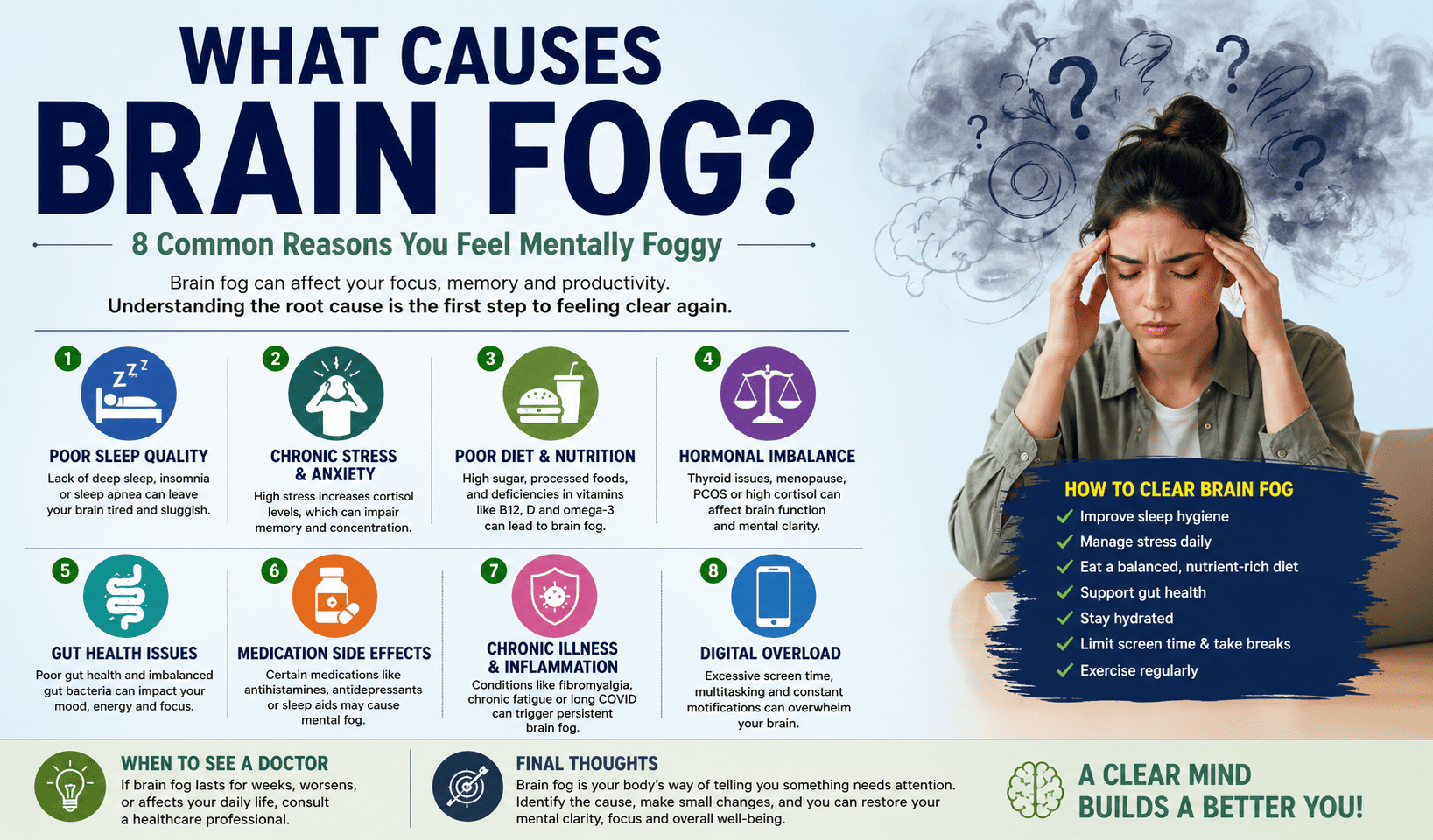
Have you ever walked into a room and forgotten why you were there? Struggled to focus during an important meeting? Or felt like your brain was operating in slow motion despite getting enough sleep? These experiences are often described as brain fog.
If you’ve been wondering, what causes brain fog?, you’re not alone. Millions of Americans experience episodes of mental cloudiness, poor concentration, and forgetfulness. While brain fog is not a medical diagnosis, it is a symptom that can signal lifestyle issues, nutritional deficiencies, stress, hormonal changes, or underlying health conditions.
Understanding what contributes to brain fog is the first step toward improving mental clarity and overall well-being.
What Is Brain Fog?
Brain fog refers to a collection of cognitive symptoms that affect how clearly you think. People experiencing brain fog often describe feeling mentally sluggish, distracted, forgetful, or unable to concentrate.
Although occasional brain fog is common, persistent symptoms lasting several weeks or months may indicate an underlying medical condition that deserves professional evaluation.
Also Read : Why do I feel tired all the time?
Common Symptoms of Brain Fog
Brain fog can affect daily activities, work performance, and relationships. Symptoms often vary from person to person but commonly include:
Difficulty concentrating on tasks, forgetting appointments or conversations, slower thinking, trouble finding the right words, reduced mental sharpness, confusion, difficulty making decisions, low motivation, and feeling mentally exhausted even after resting.
Some individuals also experience headaches, irritability, or reduced productivity alongside cognitive symptoms.
What Causes Brain Fog?
Brain fog rarely has a single cause. Instead, it usually develops from a combination of physical, emotional, and lifestyle factors.
Poor Sleep Quality
Sleep plays a vital role in memory formation, learning, and brain repair. Adults generally need seven to nine hours of quality sleep each night. When sleep is interrupted or insufficient, the brain struggles to process information efficiently.
Conditions such as insomnia, sleep apnea, irregular work schedules, or excessive screen time before bed can all contribute to persistent brain fog.
Chronic Stress
Stress triggers the release of cortisol, the body’s primary stress hormone. While short-term stress can improve alertness, long-term stress may interfere with memory, attention, and decision-making.
People managing demanding jobs, caregiving responsibilities, financial pressures, or emotional challenges often notice worsening mental clarity during prolonged periods of stress.
Anxiety and Depression
Mental health conditions frequently affect cognitive performance. Anxiety can overwhelm the brain with excessive worry, making concentration difficult. Depression may slow thinking, reduce motivation, and impair memory.
Many people experiencing brain fog discover that improving their mental health also improves cognitive function.
Nutritional Deficiencies
Your brain depends on a steady supply of nutrients to function properly. Deficiencies in several vitamins and minerals have been linked to cognitive symptoms.
Low levels of vitamin B12 may cause memory problems and confusion. Iron deficiency can reduce oxygen delivery to the brain, leading to fatigue and poor concentration. Inadequate vitamin D, magnesium, and folate may also contribute to cognitive difficulties.
Eating a diet high in processed foods and low in fruits, vegetables, healthy fats, and lean protein may further worsen brain function.
Dehydration
Even mild dehydration can reduce attention, memory, and mood. The brain is highly sensitive to fluid balance, and inadequate water intake may quickly lead to mental fatigue.
Many people mistake dehydration-related brain fog for simple tiredness.
Hormonal Changes
Hormones influence nearly every system in the body, including brain function.
Brain fog commonly occurs during pregnancy, menopause, and the postpartum period due to significant hormonal fluctuations. Thyroid disorders, particularly hypothyroidism, may also cause slowed thinking, fatigue, and memory problems.
Blood Sugar Fluctuations
The brain relies on glucose as its primary energy source. Large swings in blood sugar caused by skipping meals, consuming excessive refined carbohydrates, or poorly controlled diabetes may lead to difficulty concentrating and mental fatigue.
Maintaining stable blood sugar levels through balanced meals often improves cognitive performance.
Certain Medications
Some prescription and over-the-counter medications may cause brain fog as a side effect. These include certain antihistamines, sleep medications, pain medications, antidepressants, anti-anxiety medications, and chemotherapy drugs.
If cognitive symptoms begin shortly after starting a medication, consult your healthcare provider before making any changes.
Medical Conditions
Several health conditions are associated with persistent brain fog, including:
Diabetes, anemia, chronic fatigue syndrome, fibromyalgia, autoimmune diseases such as lupus or multiple sclerosis, thyroid disorders, sleep apnea, migraines, long COVID, and certain neurological disorders.
Because brain fog can have many medical causes, persistent symptoms should not be ignored.
Also Read : Can stress affect digestion?
Can Long COVID Cause Brain Fog?
Yes. Brain fog has become one of the most commonly reported symptoms following COVID-19 infection.
Some individuals continue experiencing memory problems, difficulty concentrating, slower processing speed, and mental fatigue for weeks or even months after recovering from the initial illness.
Researchers continue studying why this occurs, but inflammation, immune system changes, and altered blood flow to the brain may all play a role.
Lifestyle Habits That May Worsen Brain Fog
Daily habits significantly influence brain health.
Consuming excessive alcohol, smoking, using recreational drugs, spending prolonged periods sitting, skipping regular exercise, eating highly processed foods, and chronic sleep deprivation can all contribute to poor cognitive performance.
Similarly, excessive multitasking and constant digital distractions may reduce focus and increase mental fatigue over time.
Also Read : How to reduce anxiety naturally?
How to Reduce Brain Fog Naturally
Although treatment depends on the underlying cause, many people notice improvements through healthy lifestyle changes.
Prioritize Better Sleep
Aim for consistent bedtimes, reduce evening screen exposure, avoid caffeine late in the day, and create a cool, quiet sleeping environment.
Good sleep hygiene supports memory, attention, and emotional regulation.
Eat a Brain-Healthy Diet
Choose foods rich in nutrients that support cognitive function.
Include leafy green vegetables, berries, fatty fish containing omega-3 fatty acids, whole grains, beans, nuts, seeds, eggs, and lean proteins. Limiting sugary beverages and ultra-processed foods may also help maintain stable energy levels throughout the day.
Stay Hydrated
Drink enough water consistently throughout the day. Hydration needs vary based on age, climate, physical activity, and health status, but making water your primary beverage supports overall brain function.
Exercise Regularly
Physical activity increases blood flow to the brain and supports healthy nerve function.
Even thirty minutes of moderate exercise most days of the week may improve memory, mood, and concentration.
Manage Stress
Stress reduction techniques such as mindfulness meditation, deep breathing, yoga, journaling, spending time outdoors, or talking with supportive friends can improve both emotional well-being and cognitive performance.
Limit Multitasking
The human brain performs best when focusing on one task at a time.
Breaking large projects into smaller steps and minimizing unnecessary distractions may improve productivity and reduce mental overload.
Check for Nutritional Deficiencies
If brain fog persists despite healthy habits, your healthcare provider may recommend blood tests to evaluate vitamin B12, iron, thyroid function, vitamin D, blood sugar, or other potential contributors.
Avoid taking supplements without medical advice, as excessive amounts of certain vitamins or minerals may also be harmful.
Also Read : Why do I feel dizzy after stress?
When Should You See a Doctor?
Occasional brain fog after a poor night’s sleep or a stressful week is generally not a cause for concern.
However, you should seek medical evaluation if brain fog:
Persists for several weeks, worsens over time, interferes with work or daily activities, occurs with severe headaches, vision changes, weakness, numbness, speech difficulties, personality changes, unexplained weight loss, persistent fatigue, or loss of consciousness.
These symptoms may require prompt medical assessment to identify serious underlying conditions.
Also Read : How to balance cortisol levels?
Can Brain Fog Be Prevented?
In many cases, yes.
Maintaining consistent sleep, regular physical activity, balanced nutrition, adequate hydration, effective stress management, and routine medical checkups can reduce the risk of developing brain fog.
Early treatment of chronic conditions such as diabetes, thyroid disease, depression, and sleep disorders also supports long-term cognitive health.
👉 Learn helpful strategies for emotional burnout recovery with our complete wellness guide.
Final Thoughts
If you’ve been asking, what causes brain fog?, the answer is often more complex than simple forgetfulness. Brain fog can result from poor sleep, chronic stress, nutritional deficiencies, hormonal changes, medications, dehydration, or medical conditions affecting brain function.
Fortunately, many cases improve by addressing lifestyle habits and treating underlying health problems. Persistent or worsening symptoms should always be discussed with a qualified healthcare professional to determine the appropriate evaluation and treatment.
Taking care of your brain through healthy daily habits can improve focus, memory, productivity, and overall quality of life.
Also Read : Can burnout affect physical health?
Frequently Asked Questions (FAQ)
1. What is the most common cause of brain fog?
The most common causes include poor sleep, chronic stress, anxiety, dehydration, and nutritional deficiencies. Many people experience improvement once these underlying issues are addressed.
2. Is brain fog a disease?
No. Brain fog is not a disease or medical diagnosis. It is a symptom that may result from various physical, psychological, or medical conditions.
3. Can dehydration cause brain fog?
Yes. Even mild dehydration can affect concentration, memory, mood, and mental performance. Drinking enough water throughout the day supports healthy brain function.
4. How long does brain fog usually last?
Brain fog may last a few hours after poor sleep or stress, but it can persist for weeks or months if caused by chronic illness, hormonal changes, or conditions such as long COVID.
5. Can vitamin deficiencies cause brain fog?
Yes. Deficiencies in vitamin B12, iron, vitamin D, folate, and other nutrients may contribute to memory problems, fatigue, and difficulty concentrating.
6. Can exercise help reduce brain fog?
Regular physical activity improves blood circulation to the brain, supports cognitive function, reduces stress, and may significantly improve mental clarity over time.
7. When should I worry about brain fog?
Seek medical care if brain fog is severe, persistent, worsening, or accompanied by symptoms such as confusion, weakness, vision changes, speech problems, or severe headaches. These symptoms may indicate a more serious medical condition requiring prompt evaluation.
Medical Disclaimer: This article is for educational purposes only and should not replace professional medical advice, diagnosis, or treatment. Always consult a qualified healthcare provider regarding persistent fatigue or other concerning symptoms.
Medically reviewed information sourced from trusted health organizations.
References
- National Institute of Mental Health (NIMH). Depression.
https://www.nimh.nih.gov/health/topics/depression - National Institute of Mental Health (NIMH). Anxiety Disorders. https://www.nimh.nih.gov/health/topics/anxiety-disorders
- Centers for Disease Control and Prevention (CDC). Mental Health. https://www.cdc.gov/mentalhealth
- Harvard T.H. Chan School of Public Health. Mental Health. https://www.hsph.harvard.edu/news/category/mental-health/
Reviewed by: Dzarro Editorial Team
Fact-checked using trusted medical and scientific sources.
Last Updated: July 4, 2026

Sandip Choudhary is a Health & Wellness Researcher and Content Creator specializing in sleep, digestive health, preventive wellness, and evidence-based health education. He has been creating online content and researching health-related topics for several years, focusing on translating complex medical information into practical guidance for everyday readers.
With a strong background in SEO and content strategy, Sandip ensures that every article is optimized for both search engines and real users. His goal is to provide reliable, clear, and helpful information that supports healthier living.
Disclaimer: The content published is for informational purposes only and is not a substitute for professional medical advice.