
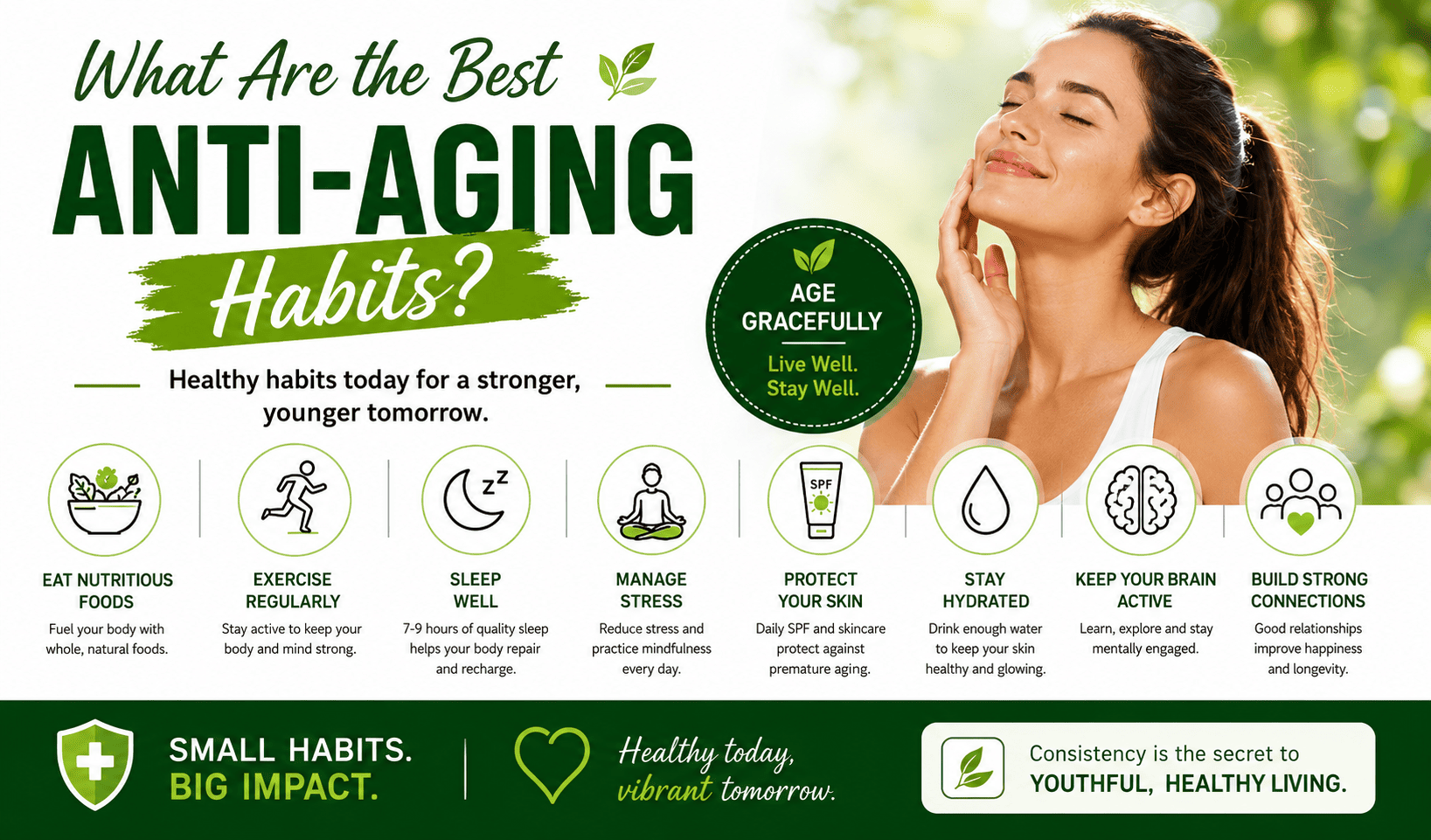
Everyone wants to age gracefully, but healthy aging is about much more than looking younger. The best anti-aging habits focus on protecting your body, brain, and overall well-being so you can enjoy a higher quality of life for years to come.
While no lifestyle can completely stop aging, scientific research shows that everyday choices significantly influence how quickly your body ages. Eating a nutritious diet, exercising regularly, sleeping well, managing stress, protecting your skin, and avoiding harmful habits can reduce the risk of chronic diseases while helping you maintain energy, strength, and cognitive function.
If you’re wondering what are the best anti-aging habits, this guide explains the evidence-based lifestyle practices that support healthy aging naturally.
Aging Is Natural, but Lifestyle Matters
Aging is a biological process that affects every cell in the body. Over time, cells repair themselves more slowly, collagen production decreases, muscles lose strength, and metabolism changes. However, genetics is only one part of the story.
Researchers estimate that lifestyle choices account for a large portion of healthy aging outcomes. Daily habits influence inflammation, oxidative stress, hormone balance, cardiovascular health, and brain function—all of which affect how we age.
Rather than searching for miracle supplements or expensive cosmetic treatments, focusing on sustainable healthy habits provides the greatest long-term benefits.
Also Read : Can gut health affect aging?
Prioritize a Nutrient-Dense Diet
One of the strongest anti-aging habits is eating a balanced diet rich in whole foods. Your body depends on vitamins, minerals, antioxidants, fiber, healthy fats, and protein to repair tissues and maintain normal cellular function.
Vegetables and fruits provide antioxidants that help protect cells from damage caused by free radicals. Whole grains offer fiber that supports digestive health and helps regulate blood sugar. Lean proteins preserve muscle mass, while healthy fats from foods like olive oil, nuts, seeds, and fatty fish support heart and brain health.
Limiting highly processed foods, added sugars, and excessive sodium may also lower the risk of obesity, diabetes, and cardiovascular disease.
Healthy eating isn’t about following restrictive diets. Instead, consistency matters most.
Also Read : What foods help you live longer?
Exercise Every Week
Regular physical activity is one of the most powerful tools for slowing age-related decline.
Exercise improves circulation, strengthens the heart, preserves muscle, increases bone density, enhances flexibility, and supports brain health. It also reduces the risk of many chronic diseases that become more common with age.
Experts generally recommend combining aerobic exercise with strength training and flexibility exercises throughout the week.
Walking, cycling, swimming, dancing, resistance training, yoga, and bodyweight workouts are all excellent options. The best exercise routine is the one you can maintain consistently.
Make Quality Sleep a Priority
Sleep is when your body performs essential repair and recovery processes.
Poor sleep has been associated with increased inflammation, impaired memory, weight gain, reduced immune function, and faster biological aging. During deep sleep, the body repairs tissues, regulates hormones, and consolidates memories.
Adults should aim for approximately seven to nine hours of quality sleep each night.
Improving sleep hygiene may include maintaining a regular sleep schedule, reducing evening screen exposure, limiting caffeine late in the day, and creating a cool, quiet bedroom environment.
Also Read : Can stress speed up the aging process?
Protect Your Skin Every Day
Healthy skin reflects healthy aging.
Sun exposure is one of the leading causes of premature skin aging. Ultraviolet (UV) rays contribute to wrinkles, dark spots, loss of elasticity, and an increased risk of skin cancer.
Daily sun protection is one of the simplest anti-aging habits. Applying broad-spectrum sunscreen, wearing protective clothing, and seeking shade during peak sunlight hours can significantly reduce cumulative UV damage.
A gentle skincare routine that includes moisturizing and appropriate cleansing also helps maintain the skin’s protective barrier.
Stay Hydrated
Water supports nearly every function in the human body.
Proper hydration helps regulate body temperature, transport nutrients, lubricate joints, support digestion, and maintain healthy skin.
While individual hydration needs vary depending on activity level, climate, and health conditions, drinking water consistently throughout the day is generally the healthiest approach.
Many fruits and vegetables also contribute to daily fluid intake.
Also Read : What causes inflammation in the body?
Manage Chronic Stress
Stress is unavoidable, but chronic stress may accelerate aging.
Long-term stress increases cortisol levels, disrupts sleep, affects immune function, raises blood pressure, and contributes to chronic inflammation.
Healthy stress management can improve both mental and physical health.
Activities such as meditation, deep breathing, spending time outdoors, reading, journaling, prayer, hobbies, and regular exercise may help reduce stress levels. Building healthy coping strategies is often more effective than trying to eliminate stress entirely.
Build Strong Social Connections
Healthy relationships support healthy aging.
Research consistently finds that people with strong social connections often experience better mental health, lower stress levels, and even longer life expectancy.
Maintaining friendships, spending time with family, volunteering, or participating in community activities can help reduce loneliness while improving emotional well-being.
Social engagement also stimulates the brain and encourages physical activity.
Also Read : How to boost immune system naturally?
Keep Your Brain Active
The brain benefits from lifelong learning.
Reading books, solving puzzles, learning a new language, playing musical instruments, taking educational courses, and developing new skills all help challenge the brain.
Mental stimulation may improve memory, attention, and cognitive flexibility while supporting overall brain health as people age.
Combining intellectual activities with regular exercise appears particularly beneficial.
Also Read : What supplements support healthy aging?
Avoid Smoking and Limit Alcohol
Smoking remains one of the most significant contributors to premature aging.
It damages blood vessels, reduces oxygen delivery, increases the risk of numerous diseases, and accelerates skin aging.
Excessive alcohol consumption may also negatively affect liver function, sleep quality, cardiovascular health, and cognitive performance.
If you smoke, quitting provides health benefits at almost any age. Alcohol should be consumed only in moderation, if at all.
Maintain a Healthy Weight
Healthy weight management supports nearly every body system.
Excess body fat increases the risk of heart disease, diabetes, arthritis, sleep apnea, and several cancers. On the other hand, losing excessive muscle mass during aging may reduce strength and independence.
Rather than focusing only on the number on the scale, aim to maintain healthy body composition through balanced nutrition and regular strength training.
Schedule Preventive Health Checkups
Preventive healthcare becomes increasingly important with age.
Routine screenings can identify potential health issues before symptoms develop. Blood pressure checks, cholesterol testing, diabetes screening, cancer screenings, vision exams, dental visits, and recommended vaccinations all play important roles in healthy aging.
Always discuss individual screening schedules with your healthcare provider based on your age, family history, and personal risk factors.
Also Read : Best daily habits for longevity?
Healthy Aging Is Built Through Daily Habits
There is no single secret to staying young forever. Instead, healthy aging results from hundreds of small choices repeated consistently over many years.
Eating nutritious foods, exercising regularly, sleeping well, protecting your skin, staying mentally active, managing stress, maintaining relationships, and receiving preventive medical care work together to support long-term health.
The earlier these habits become part of your lifestyle, the greater their potential benefits. Even if you’re starting later in life, adopting healthier habits today can still improve your future health and quality of life.
Frequently Asked Questions (FAQs)
1. What are the best anti-aging habits naturally?
The most effective natural anti-aging habits include eating a balanced diet, exercising regularly, getting enough sleep, managing stress, protecting your skin from the sun, staying hydrated, and avoiding smoking.
2. Can exercise slow the aging process?
Exercise cannot stop aging, but it helps preserve muscle mass, strengthen bones, improve cardiovascular health, support brain function, and reduce the risk of many chronic diseases associated with aging.
3. Does drinking water reduce wrinkles?
Hydration supports healthy skin, but drinking more water alone will not eliminate wrinkles. Healthy skin also depends on sun protection, nutrition, sleep, and proper skincare.
4. Which foods are best for healthy aging?
Colorful fruits, vegetables, whole grains, legumes, fatty fish, nuts, seeds, olive oil, and lean protein are commonly associated with healthy aging because they provide essential nutrients and antioxidants.
5. Is it ever too late to start healthy anti-aging habits?
No. Research suggests that adopting healthier lifestyle habits at almost any age can improve cardiovascular health, physical function, mental well-being, and overall quality of life.
Medical Disclaimer: This article is for educational purposes only and does not replace professional medical advice, diagnosis, or treatment. Always consult a qualified healthcare provider before making significant changes to your diet, exercise routine, medications, or health management plan.
Medically reviewed information sourced from trusted health organizations.
References
- National Institute on Aging (NIA). Healthy Aging and Longevity Resources.
https://www.nia.nih.gov/health - National Institutes of Health (NIH). Healthy Aging Research.
https://www.nih.gov/health-information - Centers for Disease Control and Prevention (CDC). Healthy Aging.
https://www.cdc.gov/aging - Harvard T.H. Chan School of Public Health. Nutrition and Healthy Aging.
https://www.hsph.harvard.edu/nutritionsource
Reviewed by: Dzarro Editorial Team
Fact-checked using trusted medical and scientific sources.

Sandip Choudhary is a Health & Wellness Researcher and Content Creator specializing in sleep, digestive health, preventive wellness, and evidence-based health education. He has been creating online content and researching health-related topics for several years, focusing on translating complex medical information into practical guidance for everyday readers.
With a strong background in SEO and content strategy, Sandip ensures that every article is optimized for both search engines and real users. His goal is to provide reliable, clear, and helpful information that supports healthier living.
Disclaimer: The content published is for informational purposes only and is not a substitute for professional medical advice.