
Introduction
You eat healthy, try to stay active, and still feel tired, bloated, or older than your age. Sound familiar?
In the U.S., millions of adults struggle with low energy, brain fog, skin issues, and digestive discomfort—often assuming it’s just “aging.” But what if your gut is actually driving how fast you age?
Emerging research shows a strong connection between gut health and aging, impacting everything from immunity to skin, metabolism, and even brain function.
Quick Answer
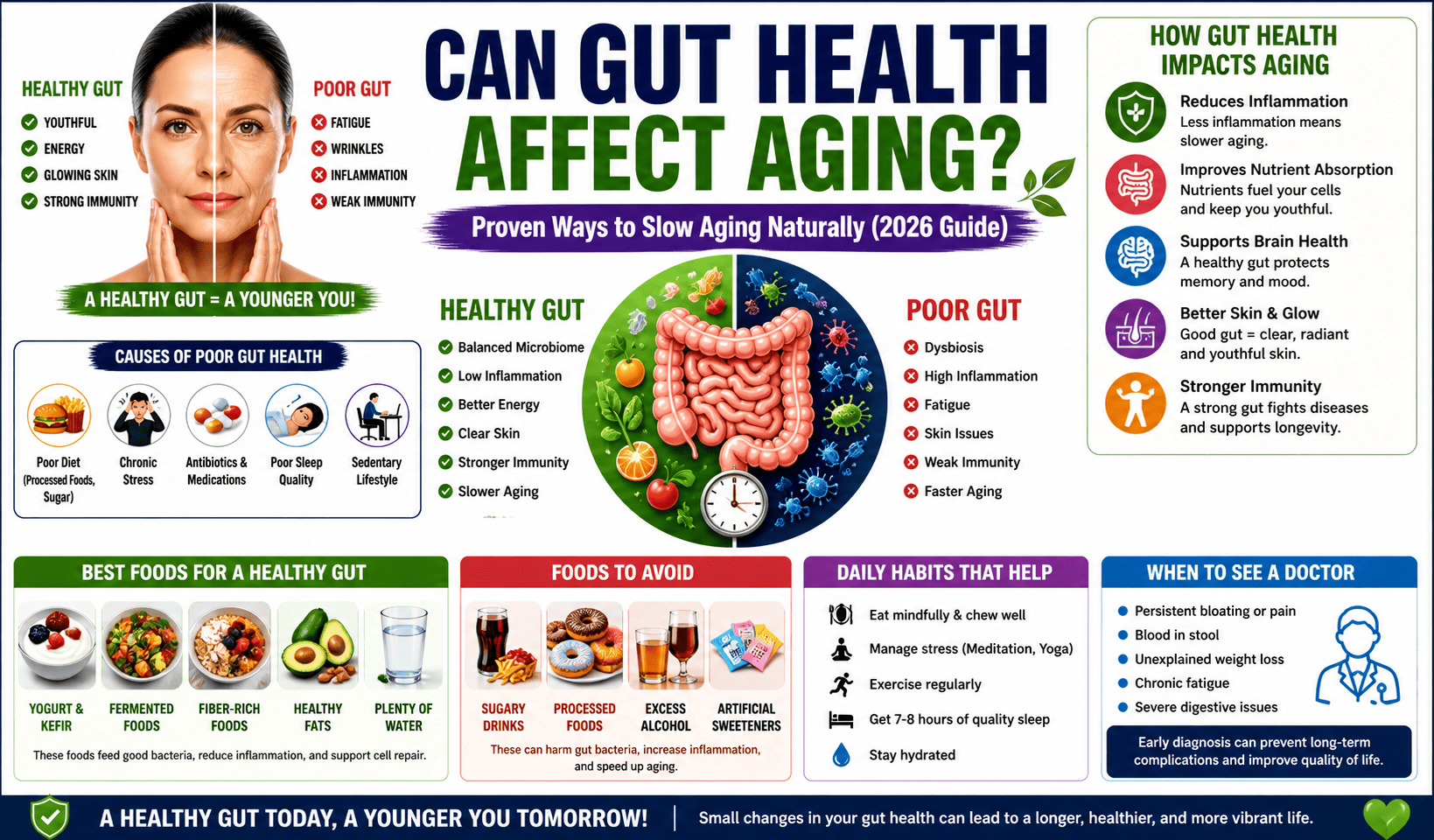
Yes, gut health can affect aging. A balanced gut microbiome helps reduce inflammation, supports nutrient absorption, and boosts immune function—key factors that slow aging. Poor gut health, on the other hand, can accelerate aging by increasing inflammation, weakening immunity, and contributing to fatigue, skin problems, and chronic diseases.
What Is Gut Health and Its Role in Aging?
Gut health refers to the balance of bacteria and microorganisms living in your digestive system, also known as the gut microbiome.
A healthy gut:
- Helps digest food efficiently
- Absorbs essential nutrients
- Supports immune function
- Regulates inflammation
As you age, your gut microbiome naturally changes. If this balance is disrupted, it can speed up aging processes in your body.
👉 Think of your gut as your body’s control center for long-term health and longevity.
Symptoms of Poor Gut Health That May Accelerate Aging
Early Signs:
- Bloating and gas
- Irregular bowel movements
- Low energy levels
- Food sensitivities
- Mild brain fog
Advanced Signs:
- Chronic fatigue
- Skin issues (acne, wrinkles, dull skin)
- Weakened immune system
- Joint pain or inflammation
- Hormonal imbalance
- Weight gain or difficulty losing weight
Causes & Risk Factors
Several lifestyle and environmental factors in the U.S. contribute to poor gut health and faster aging:
Diet-Related Causes:
- High processed food intake
- Excess sugar and refined carbs
- Low fiber consumption
Lifestyle Factors:
- Chronic stress
- Poor sleep quality
- Sedentary lifestyle
Medical Factors:
- Frequent antibiotic use
- Long-term medication use (like NSAIDs)
- Gut infections or inflammation
👉 Creating a consistent sleep schedule is an important step toward better preventive wellness strategies.
How Gut Health Impacts Aging (Comparison Table)
| Factor | Healthy Gut | Poor Gut Health |
|---|---|---|
| Inflammation | Low | High |
| Energy Levels | Stable | Fatigue |
| Skin Health | Clear, youthful | Dull, wrinkled |
| Immunity | Strong | Weak |
| Nutrient Absorption | Efficient | Poor |
| Aging Speed | Slower | Accelerated |
Best Treatment Options to Improve Gut Health & Slow Aging
1. Natural Remedies
- Probiotics (good bacteria support)
- Prebiotic foods (feed healthy gut bacteria)
- Herbal support (like ginger, turmeric)
2. Medical Approaches
- Gut microbiome testing (if symptoms persist)
- Targeted supplements (doctor-recommended)
- Treatment of underlying digestive conditions
3. Lifestyle Changes
- Stress management (meditation, yoga)
- Regular exercise
- Consistent sleep schedule
👉 Small daily changes can significantly improve gut health over time.
Diet & Lifestyle Tips for Better Gut Health
What to Eat:
- Fiber-rich foods (vegetables, fruits, whole grains)
- Fermented foods (yogurt, kefir, sauerkraut)
- Healthy fats (avocados, nuts, olive oil)
What to Avoid:
- Processed foods
- Excess sugar
- Artificial sweeteners
- Alcohol (in excess)
Daily Routine Tips:
- Drink plenty of water
- Eat meals at consistent times
- Avoid overeating
- Get 7–8 hours of sleep
When to See a Doctor
Seek medical attention if you experience:
- Persistent digestive issues
- Unexplained weight loss
- Severe fatigue
- Blood in stool
- Long-term bloating or pain
👉 Early diagnosis can prevent long-term complications.
Who Is at Risk?
Certain groups in the U.S. are more prone to poor gut health and faster aging:
- Adults over 30
- People with high-stress jobs
- Individuals with poor diet habits
- Women with hormonal imbalances
- Office workers with sedentary lifestyles
- People frequently using antibiotics
FAQs
1. Can improving gut health slow aging?
Yes, improving gut health can reduce inflammation, improve immunity, and support overall cellular health, which may slow aging.
2. What foods improve gut health for anti-aging?
Fiber-rich foods, fermented foods, and healthy fats are best for improving gut health and supporting longevity.
3. How long does it take to improve gut health?
It can take a few weeks to a few months, depending on lifestyle changes and consistency.
4. Does gut health affect skin aging?
Yes, poor gut health can lead to inflammation that affects skin, causing acne, wrinkles, and dullness.
5. Can stress damage gut health?
Yes, chronic stress disrupts gut bacteria balance and contributes to digestive issues and faster aging.
Conclusion
So, can gut health affect aging? Absolutely.
Your gut plays a powerful role in how your body ages—from your energy levels and skin health to immunity and overall well-being.
The good news? You don’t need drastic changes.
👉 Start with simple steps:
- Improve your diet
- Manage stress
- Support your gut daily
These small actions can lead to a healthier gut—and a slower, more graceful aging process.
Medically reviewed information sourced from trusted health organizations.
References
- National Institute on Aging (NIA). Healthy Aging and Longevity Resources.
https://www.nia.nih.gov/health - National Institutes of Health (NIH). Healthy Aging Research.
https://www.nih.gov/health-information - Centers for Disease Control and Prevention (CDC). Healthy Aging.
https://www.cdc.gov/aging - Harvard T.H. Chan School of Public Health. Nutrition and Healthy Aging.
https://www.hsph.harvard.edu/nutritionsource
Reviewed by: Dzarro Editorial Team
Fact-checked using trusted medical and scientific sources.
Last Updated: June 18, 2026

Sandip Choudhary is a Health & Wellness Researcher and Content Creator specializing in sleep, digestive health, preventive wellness, and evidence-based health education. He has been creating online content and researching health-related topics for several years, focusing on translating complex medical information into practical guidance for everyday readers.
With a strong background in SEO and content strategy, Sandip ensures that every article is optimized for both search engines and real users. His goal is to provide reliable, clear, and helpful information that supports healthier living.
Disclaimer: The content published is for informational purposes only and is not a substitute for professional medical advice.