
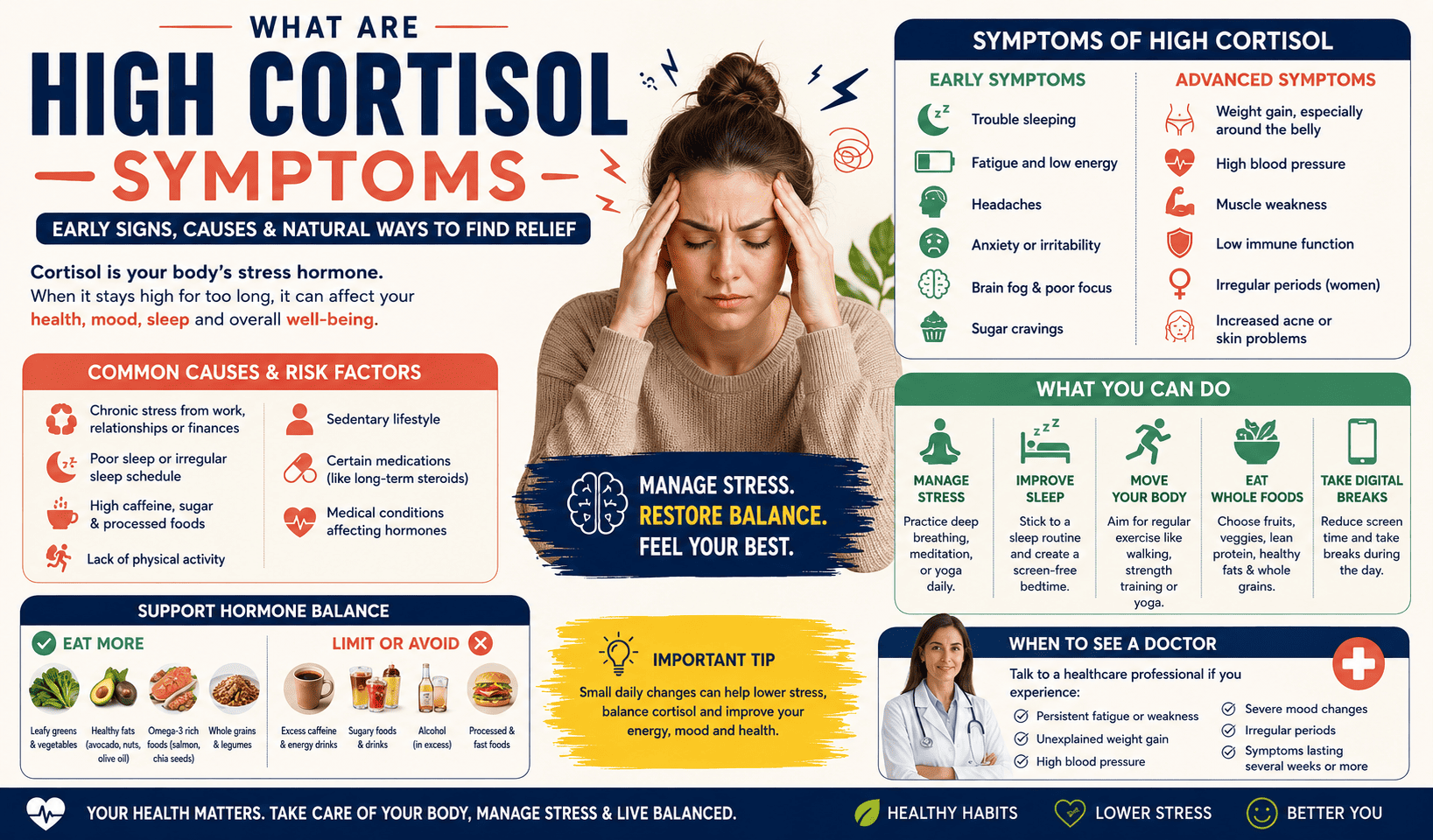
Feeling constantly tired, anxious, gaining weight around your midsection, or struggling to sleep? You may wonder whether stress is taking a bigger toll on your body than you realize. In today’s fast-paced world, many Americans experience chronic stress from work, finances, family responsibilities, and digital overload. Over time, this stress can affect cortisol levels and contribute to a range of physical and mental symptoms.
Cortisol is often called the “stress hormone,” but it does much more than help the body respond to stress. When cortisol remains elevated for long periods, it may impact sleep, metabolism, mood, and overall health. Understanding the symptoms of high cortisol can help you recognize potential warning signs and take steps toward better wellness.
Quick Answer
High cortisol may cause symptoms such as fatigue, weight gain—especially around the abdomen—poor sleep, anxiety, irritability, brain fog, headaches, high blood pressure, and sugar cravings. Since many symptoms overlap with other conditions, persistent or severe symptoms should be evaluated by a healthcare professional.
What Is Cortisol?
Cortisol is a hormone produced by the adrenal glands, which sit on top of the kidneys. It plays an important role in regulating:
- Stress response
- Blood sugar levels
- Metabolism
- Blood pressure
- Inflammation
- Sleep-wake cycles
Cortisol is not inherently bad. In fact, it is essential for survival. Problems usually arise when cortisol remains elevated for an extended period due to chronic stress, poor sleep, certain medications, or underlying medical conditions.
Normally, cortisol levels are highest in the morning and gradually decrease throughout the day. Disruptions to this natural rhythm may contribute to health problems.
Also Read : Can overthinking affect physical health?
Symptoms of High Cortisol
High cortisol can affect multiple systems in the body. Symptoms vary from person to person and may develop gradually.
Early Symptoms of High Cortisol
In the early stages, people may experience subtle signs that are easy to dismiss as everyday stress.
Common early symptoms include:
- Difficulty falling asleep or staying asleep
- Feeling tired despite sleeping enough hours
- Increased anxiety or nervousness
- Brain fog or trouble concentrating
- Frequent headaches
- Sugar cravings
- Irritability or mood swings
- Low energy levels
Many people attribute these symptoms to a busy lifestyle, but persistent stress may contribute to hormonal imbalance over time.
Advanced Symptoms of High Cortisol
If elevated cortisol continues for months or years, symptoms may become more noticeable.
Advanced symptoms may include:
- Weight gain, especially around the abdomen
- High blood pressure
- Muscle weakness
- Increased body fat
- Reduced immune function
- Frequent illnesses
- Skin changes, including acne
- Irregular menstrual cycles in women
- Decreased motivation and burnout
Because these symptoms overlap with many health conditions, self-diagnosis is not recommended.
Also Read : How to reduce cortisol naturally?
How Does High Cortisol Affect the Body?
Cortisol influences nearly every organ system. When levels remain elevated, the body may stay in a prolonged “fight-or-flight” state.
This prolonged stress response can:
- Increase inflammation
- Disrupt blood sugar regulation
- Affect sleep quality
- Alter appetite and cravings
- Reduce recovery and energy levels
Over time, chronic stress may contribute to long-term health concerns if left unmanaged.
Causes & Risk Factors of High Cortisol
Chronic Stress
Chronic stress is one of the most common contributors to elevated cortisol. Workplace pressure, financial concerns, caregiving responsibilities, and ongoing emotional stress may keep the body in a constant state of alertness.
Unlike short-term stress, chronic stress provides little opportunity for recovery.
Poor Sleep Quality
Sleep and cortisol have a close relationship. Inadequate sleep may increase cortisol production, while elevated cortisol can further disrupt sleep.
This creates a cycle where poor sleep and stress reinforce each other.
Diet and Nutrition
Certain dietary habits may influence stress responses.
Examples include:
- Excess sugar intake
- High caffeine consumption
- Frequent processed food consumption
- Skipping meals
Blood sugar fluctuations may also affect how the body responds to stress.
Sedentary Lifestyle
Lack of physical activity may contribute to poor stress regulation. Regular movement supports mood, sleep, and hormonal balance.
Medical Conditions
In some cases, elevated cortisol may be associated with medical conditions affecting hormone regulation. Certain medications, including long-term corticosteroid use, may also increase cortisol levels.
Any concerns about medications or hormones should be discussed with a healthcare professional.
Also Read : How to balance cortisol levels?
High Cortisol vs Normal Stress: Comparison Table
| Feature | Normal Stress Response | Chronic High Cortisol |
|---|---|---|
| Duration | Short-term | Long-term |
| Energy | Temporary boost | Persistent fatigue |
| Sleep | Usually unaffected | Often disrupted |
| Mood | Brief stress | Anxiety and irritability |
| Weight | Usually stable | May increase over time |
| Recovery | Quick recovery | Slow recovery |
Best Treatment Options for High Cortisol
Managing cortisol often focuses on addressing lifestyle factors and reducing chronic stress.
Stress Reduction Techniques
Mind-body practices may help support stress management, including:
- Meditation
- Deep breathing exercises
- Yoga
- Journaling
- Mindfulness practices
Even a few minutes of relaxation each day may help support emotional well-being.
Improve Sleep Hygiene
Healthy sleep habits are essential for cortisol regulation.
Helpful strategies include:
- Maintaining a consistent sleep schedule
- Reducing screen time before bed
- Keeping the bedroom cool and dark
- Limiting caffeine later in the day
Sleep quality often plays a major role in hormonal health.
Regular Physical Activity
Exercise supports both mental and physical health. Moderate activity such as walking, strength training, cycling, or yoga may help reduce stress levels.
However, excessive exercise without adequate recovery may increase stress in some individuals.
Professional Medical Care
If symptoms persist or significantly impact daily life, medical evaluation may be appropriate. Healthcare providers can determine whether symptoms are related to stress, hormonal factors, or other conditions.
Also Read : Why do I feel anxious at night?
Diet & Lifestyle Tips for Healthy Cortisol Levels
Nutrition and daily habits can support overall stress management.
Foods That May Support Wellness
A balanced diet rich in whole foods may help support overall health.
Examples include:
- Fruits and vegetables
- Whole grains
- Lean proteins
- Nuts and seeds
- Fatty fish rich in omega-3 fatty acids
Staying hydrated throughout the day is equally important.
Foods and Habits to Limit
Certain habits may worsen stress responses:
- Excess caffeine
- Heavy alcohol use
- Frequent processed foods
- Late-night eating
- Irregular sleep schedules
Small lifestyle adjustments often produce meaningful long-term benefits.
Daily Routine Improvements
Healthy daily routines may support better stress regulation:
- Morning sunlight exposure
- Regular movement breaks
- Consistent meal timing
- Relaxation before bedtime
- Limiting excessive screen time
Consistency often matters more than perfection.
Also Read : What foods help reduce stress?
When to See a Doctor
Occasional stress is part of life, but persistent symptoms deserve attention.
Consider speaking with a healthcare professional if you experience:
- Ongoing fatigue
- Significant weight changes
- Persistent sleep problems
- Anxiety affecting daily life
- High blood pressure
- Frequent illness
- Symptoms lasting several weeks or longer
Professional evaluation can help identify underlying causes and guide appropriate treatment.
Who Is at Risk?
Some groups may be more likely to experience elevated stress levels or cortisol-related symptoms.
1. Office Workers
Long work hours, deadlines, and prolonged sitting may increase stress.
2. Shift Workers
Irregular schedules can disrupt natural cortisol rhythms and sleep cycles.
3. Parents and Caregivers
Balancing responsibilities may contribute to chronic stress and fatigue.
4. Students
Academic pressure and inconsistent sleep habits can affect stress hormones.
5. Women
Hormonal fluctuations during different life stages may influence stress responses.
Frequently Asked Questions
1. What are the most common symptoms of high cortisol?
Common symptoms may include fatigue, poor sleep, anxiety, weight gain, headaches, and difficulty concentrating.
2. Can high cortisol cause weight gain?
Elevated cortisol has been associated with increased appetite and abdominal weight gain in some individuals.
3. Does stress always increase cortisol?
Stress can increase cortisol temporarily, but chronic stress may lead to prolonged elevations in some people.
4. Can sleep affect cortisol levels?
Yes. Poor sleep and elevated cortisol often influence each other in a cycle.
5. How can I lower cortisol naturally?
Stress management, quality sleep, regular exercise, and balanced nutrition may help support healthy cortisol regulation.
👉 Taking regular breaks can improve cognitive wellness and focus.
Conclusion
Cortisol is an essential hormone that helps the body respond to stress, but chronically elevated levels may affect sleep, mood, energy, and overall health. Recognizing the symptoms of high cortisol can help you take proactive steps toward better wellness.
Healthy habits such as stress management, regular exercise, balanced nutrition, and quality sleep may support long-term health. If symptoms persist or interfere with daily life, consulting a healthcare professional is the safest approach.
Small lifestyle changes today can have a meaningful impact on both stress resilience and overall well-being.
Reviewed by: Dzarro Editorial Team
Fact-checked using trusted medical and scientific sources.

Sandip Choudhary is a Health & Wellness Researcher and Content Creator specializing in sleep, digestive health, preventive wellness, and evidence-based health education. He has been creating online content and researching health-related topics for several years, focusing on translating complex medical information into practical guidance for everyday readers.
With a strong background in SEO and content strategy, Sandip ensures that every article is optimized for both search engines and real users. His goal is to provide reliable, clear, and helpful information that supports healthier living.
Disclaimer: The content published is for informational purposes only and is not a substitute for professional medical advice.
1 thought on “What are symptoms of high cortisol?”
Comments are closed.