
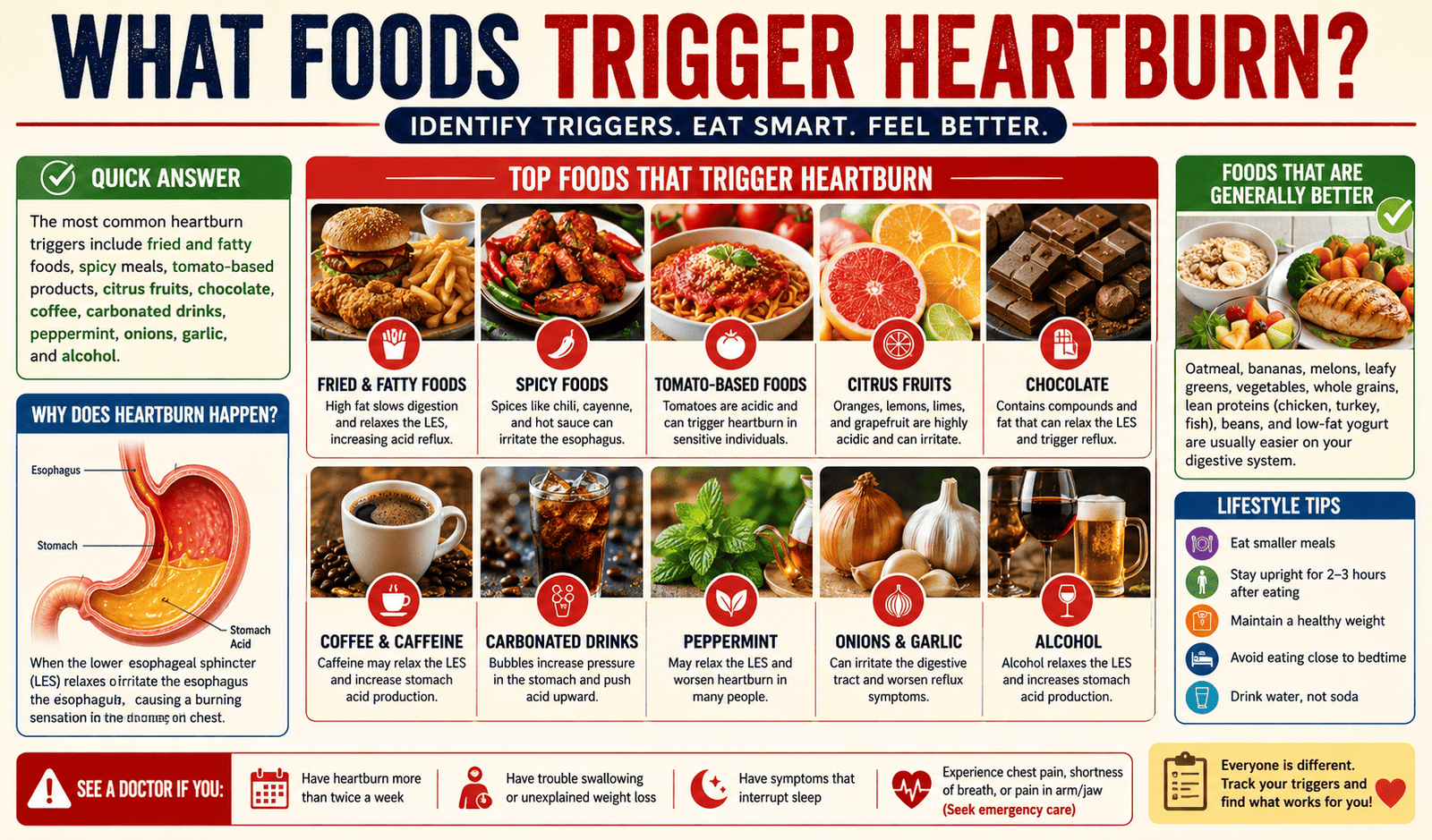
What foods trigger heartburn? The foods most commonly associated with heartburn include fried and fatty foods, spicy meals, tomato-based products, citrus fruits, chocolate, coffee, carbonated drinks, peppermint, onions, garlic, and alcohol. These foods may relax the lower esophageal sphincter, increase stomach acid, or irritate the esophagus, making acid reflux more likely.
Heartburn is one of the most common digestive complaints in the United States, affecting millions of adults every week. While occasional heartburn after a large meal is normal, frequent symptoms are often connected to dietary choices and eating habits. Understanding which foods trigger heartburn can help reduce discomfort, improve digestion, and lower the risk of chronic acid reflux.
What Is Heartburn?

Heartburn is a burning sensation that usually develops in the chest when stomach acid flows backward into the esophagus. The esophagus is the tube that carries food from your mouth to your stomach. A muscular valve called the lower esophageal sphincter normally keeps stomach contents where they belong. When this valve relaxes or weakens, acid can travel upward and irritate the lining of the esophagus.
Symptoms often include a burning feeling behind the breastbone, a sour or bitter taste in the mouth, difficulty swallowing, and discomfort that becomes worse after eating or lying down. Although heartburn and acid reflux are closely related, persistent symptoms occurring several times each week may indicate gastroesophageal reflux disease, commonly known as GERD.
Also Read : What Is Acid Reflux and How Can I Prevent It?
Fried and Fatty Foods

Fried and high-fat foods are among the biggest contributors to heartburn. Foods such as French fries, fried chicken, bacon, pizza, cheeseburgers, creamy pasta, and potato chips take longer to digest because fat slows stomach emptying. As food remains in the stomach longer, pressure increases, making it easier for stomach acid to move upward into the esophagus.
Many Americans notice that symptoms become more severe after eating fast food or large restaurant meals. Replacing fried foods with grilled, baked, or air-fried alternatives can often reduce heartburn without sacrificing flavor.
Also Read : Why Do I Feel Full So Quickly?
Spicy Foods

Spicy foods affect people differently, but they are a common trigger for acid reflux. Ingredients like cayenne pepper, chili powder, hot sauce, jalapeños, and red pepper flakes contain compounds that may irritate the esophagus and worsen the burning sensation associated with reflux.
This does not mean everyone must eliminate spicy food completely. Many people tolerate mild spices well, while others benefit from choosing flavorful herbs such as basil, oregano, thyme, rosemary, or parsley instead of hot peppers.
Also Read : Can Dehydration Cause Constipation?
Tomato-Based Foods

Tomatoes are naturally acidic, making tomato-based foods one of the most frequent causes of heartburn. Pasta sauce, ketchup, salsa, tomato soup, chili, and pizza sauce all contain concentrated tomato products that may increase acidity in the stomach and irritate the esophagus.
If tomatoes consistently trigger symptoms, try replacing traditional pasta sauce with roasted vegetable sauce, olive oil and herbs, or a creamy low-fat alternative in moderation.
Also Read : How Much Water Should I Drink for Healthy Digestion?
Citrus Fruits and Juices

Citrus fruits are packed with vitamin C, but they are also highly acidic. Oranges, lemons, limes, grapefruit, and citrus juices can worsen heartburn in people who are sensitive to acid. Drinking orange juice on an empty stomach may produce stronger symptoms than eating a whole orange because juice is more concentrated.
Lower-acid fruits such as bananas, melons, pears, and apples are often better choices for people experiencing frequent reflux.
Also Read : What Causes Chronic Diarrhea?
Chocolate

Chocolate is a surprisingly common heartburn trigger because it contains both fat and caffeine-like compounds naturally found in cocoa. These ingredients may relax the lower esophageal sphincter, allowing stomach acid to escape more easily.
Dark chocolate contains a higher percentage of cocoa and may trigger stronger symptoms in some individuals than milk chocolate. Portion size also matters, as eating a small square may be better tolerated than consuming an entire dessert.
Also Read : Why Am I Constipated Even When I Eat Fiber?
Coffee and Caffeinated Drinks

Coffee is an essential part of many morning routines, but it can contribute to heartburn for some people. Caffeine may reduce the pressure of the lower esophageal sphincter while also stimulating stomach acid production. Energy drinks, strong tea, and certain caffeinated sodas may have similar effects.
Rather than giving up coffee entirely, some people find relief by choosing low-acid coffee, reducing serving size, avoiding coffee on an empty stomach, or limiting intake to earlier in the day.
Also Read : Can Stress Cause Digestive Problems?
Carbonated Drinks

Carbonated beverages create gas inside the stomach, increasing pressure that can push acid upward. Regular sodas combine carbonation with caffeine and sugar, making them particularly problematic for many people with reflux.
Even sparkling water may trigger symptoms in sensitive individuals, although it is generally a better option than sugary soft drinks. Plain still water remains the safest beverage for hydration when heartburn is frequent.
Also Read : What Foods Are Best for Gut Health?
Peppermint, Onions, Garlic, and Alcohol

Several everyday ingredients can quietly contribute to acid reflux. Peppermint may relax the lower esophageal sphincter despite its reputation for aiding digestion. Raw onions often cause bloating and reflux, while garlic may irritate sensitive digestive systems in some people. Alcohol can both increase stomach acid production and weaken the protective valve between the stomach and esophagus, especially when consumed during late evening meals.
Cooking onions thoroughly and reducing alcohol intake may improve symptoms for many adults.
Also Read : How Can I Improve My Gut Health Naturally?
Why Do These Foods Cause Heartburn?

Heartburn-triggering foods generally work through three different mechanisms. Some foods relax the lower esophageal sphincter, making it easier for acid to flow upward. Others slow digestion, leaving food in the stomach longer and increasing internal pressure. Highly acidic foods directly irritate the lining of the esophagus, making even small amounts of reflux feel more painful.
Individual tolerance varies considerably. One person may experience severe heartburn after pizza, while another may react only to coffee or citrus juice. Keeping a food diary is one of the most effective ways to identify personal triggers.
Also Read : What Causes Bloating Every Day?
Foods That Are Usually Better for Heartburn

Fortunately, many nutritious foods are naturally less likely to trigger reflux. Oatmeal is an excellent high-fiber breakfast that absorbs stomach acid while promoting healthy digestion. Brown rice, quinoa, whole-grain bread, bananas, melons, leafy greens, broccoli, green beans, sweet potatoes, grilled chicken, turkey, fish, beans, and low-fat yogurt are commonly well tolerated.
A balanced eating pattern rich in vegetables, lean protein, whole grains, and healthy fats often supports better digestive health while reducing the frequency of heartburn episodes.
Also Read : Why Does My Stomach Hurt After Eating?
A Sample Heartburn-Friendly Meal Plan
| Meal | Recommended Food |
|---|---|
| Breakfast | Oatmeal with banana |
| Morning Snack | Low-fat yogurt |
| Lunch | Grilled chicken with brown rice and broccoli |
| Afternoon Snack | Apple with whole-grain crackers |
| Dinner | Baked salmon with sweet potato and green beans |
| Evening Drink | Still water or chamomile tea |
This meal plan focuses on lower-fat cooking methods, fiber-rich foods, and gentle ingredients that are generally easier on the digestive system.
Also Read : Why do I feel tired after eating?
Lifestyle Habits That Reduce Heartburn

Diet is only part of the solution. Eating smaller portions helps prevent the stomach from becoming overly full, reducing pressure that contributes to reflux. Chewing food slowly improves digestion and may decrease swallowed air. Remaining upright for at least two to three hours after meals allows gravity to help keep stomach contents in place. Maintaining a healthy body weight can also reduce abdominal pressure and lower the risk of chronic acid reflux.
Avoiding late-night meals is particularly important because lying flat shortly after eating increases the likelihood of stomach acid reaching the esophagus during sleep.
Also Read : Why do I feel full after eating small amounts?
When Should You See a Healthcare Provider?

Occasional heartburn is usually manageable through dietary and lifestyle changes. However, you should seek medical evaluation if heartburn occurs more than twice a week, symptoms persist despite over-the-counter treatment, swallowing becomes painful or difficult, unexplained weight loss develops, or reflux repeatedly interrupts sleep.
Chest pain accompanied by shortness of breath, pain spreading to the arm or jaw, dizziness, or sweating requires immediate emergency medical attention because it may indicate a heart attack rather than heartburn.
Also Read : How many times can esophageal dilatation be done?
Conclusion
Knowing what foods trigger heartburn empowers you to make smarter dietary choices without unnecessarily restricting your diet. Fried foods, spicy meals, tomato products, citrus fruits, chocolate, coffee, carbonated beverages, peppermint, onions, garlic, and alcohol are the most common triggers, but personal tolerance is different for everyone. By identifying your individual trigger foods, eating smaller meals, and choosing lean proteins, vegetables, whole grains, and lower-acid fruits, many people experience significant improvement in their digestive comfort and overall quality of life.
Also Read : Can esophageal stricture heal naturally?
Frequently Asked Questions (FAQs)
1. What foods trigger heartburn the most?
Fried foods, fatty meals, spicy foods, tomatoes, chocolate, coffee, citrus fruits, soda, and alcohol are the most common triggers.
2. Can bananas help with heartburn?
Yes. Bananas are low in acid and are often well tolerated by people with mild acid reflux.
3. Is coffee a common cause of heartburn?
Coffee can trigger symptoms in some people because caffeine may relax the lower esophageal sphincter and stimulate stomach acid.
4. Why does pizza cause heartburn?
Pizza combines several triggers, including tomato sauce, cheese, high fat, and processed meats, making it a frequent cause of reflux.
5. Are spicy foods always bad for acid reflux?
No. Some people tolerate spicy foods well, while others experience significant burning after even mildly spicy meals.
6. Does drinking water relieve heartburn?
Plain water may temporarily reduce discomfort for some people, but it is not a treatment for chronic acid reflux.
7. Which fruits are safest for heartburn?
Bananas, melons, pears, and apples are generally lower in acid and are often easier on the digestive system.
8. Can chocolate trigger acid reflux?
Yes. Chocolate contains fat and cocoa compounds that may contribute to heartburn in sensitive individuals.
9. Is sparkling water better than soda?
Sparkling water contains carbonation, which may still trigger reflux, but it usually contains less sugar and no caffeine compared to regular soda.
10. Can changing my diet completely stop heartburn?
Many people experience major improvement through diet and lifestyle changes, but persistent or frequent heartburn should be evaluated by a healthcare provider to rule out GERD or other digestive conditions.

Diarrhea can lead to dehydration if it persists.
Medical Disclaimer: This article is intended for general health education and is not a substitute for personalized medical advice, diagnosis, or treatment. Fluid and dietary needs differ from person to person. If you have persistent constipation, significant symptoms, a chronic medical condition, or concerns about your hydration needs, consult a qualified healthcare professional.
Medically reviewed information sourced from trusted health organizations.
Reviewed by: Dzarro Editorial Team
Fact-checked using trusted medical and scientific sources.

Sandip Choudhary is a Health & Wellness Researcher and Content Creator specializing in sleep, digestive health, preventive wellness, and evidence-based health education. He has been creating online content and researching health-related topics for several years, focusing on translating complex medical information into practical guidance for everyday readers.
With a strong background in SEO and content strategy, Sandip ensures that every article is optimized for both search engines and real users. His goal is to provide reliable, clear, and helpful information that supports healthier living.
Disclaimer: The content published is for informational purposes only and is not a substitute for professional medical advice.
4 thoughts on “What Foods Trigger Heartburn?”
Comments are closed.