
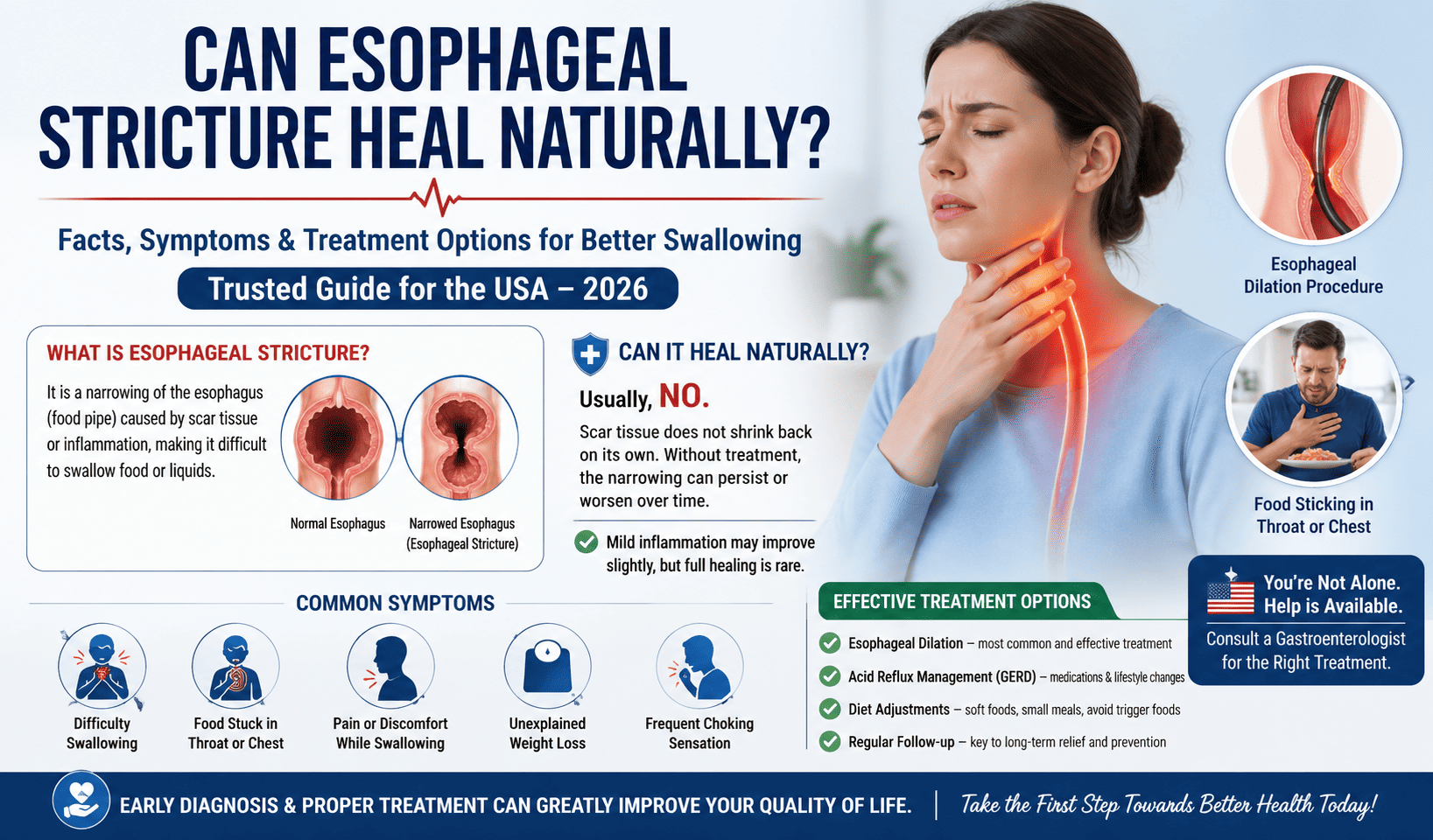
If you’re asking, “Can esophageal stricture heal naturally?”, you’re not alone. Difficulty swallowing, food getting stuck in the throat, and discomfort while eating are symptoms that often lead people to discover they have an esophageal stricture. This condition can significantly affect daily life and nutrition, making early diagnosis and treatment important.
The short answer is no—most esophageal strictures do not heal naturally, especially if scar tissue has already formed. While mild inflammation that causes temporary narrowing may improve with appropriate medical treatment, established scar tissue rarely disappears on its own. Waiting for a stricture to heal naturally can increase the risk of worsening symptoms, malnutrition, dehydration, and food impaction.
This article explains why esophageal strictures develop, whether they can resolve without treatment, available medical options, lifestyle changes that support recovery, and when you should seek medical attention.
What Is an Esophageal Stricture?
An esophageal stricture is an abnormal narrowing of the esophagus—the muscular tube that carries food and liquids from your mouth to your stomach.
Normally, food moves smoothly through the esophagus. When the passage becomes narrow, swallowing becomes increasingly difficult. Many people first notice problems with solid foods like bread, meat, or rice before liquids also become difficult to swallow.
Esophageal strictures are most commonly caused by chronic inflammation that leads to scar tissue formation. Unlike normal tissue, scar tissue lacks flexibility and permanently narrows the esophagus unless treated.
Also Read : What are the early symptoms of esophageal stricture?
Can Esophageal Stricture Heal Naturally?
The answer depends on what is causing the narrowing.
If the narrowing is due to temporary inflammation without permanent scarring, proper treatment of the underlying condition may allow the esophagus to return closer to normal over time.
However, most true esophageal strictures involve scar tissue, and scar tissue does not naturally disappear. Once fibrosis develops, the narrowed area generally remains unless it is treated by a healthcare professional.
For this reason, doctors usually recommend evaluation rather than simply waiting to see if symptoms improve.
Why Doesn’t Scar Tissue Heal on Its Own?
Scar tissue forms when repeated injury causes the body’s healing process to replace normal tissue with dense collagen fibers.
Unlike healthy esophageal tissue, scar tissue:
- Is less elastic
- Cannot stretch normally
- Permanently narrows the passage
- May continue worsening if the underlying cause persists
This explains why swallowing often becomes progressively more difficult over weeks or months.
Also Read : How many times can esophageal dilatation be done?
Common Causes of Esophageal Stricture
Several medical conditions can damage the esophagus over time.
Chronic Acid Reflux (GERD)
One of the leading causes is gastroesophageal reflux disease (GERD). Repeated exposure to stomach acid injures the lining of the esophagus, leading to inflammation and eventually scar formation.
Eosinophilic Esophagitis (EoE)
This chronic allergic inflammatory condition causes immune cells called eosinophils to build up inside the esophagus. Over time, untreated inflammation may result in fibrosis and narrowing.
Radiation Therapy
Cancer treatments involving the chest or neck may injure healthy esophageal tissue, causing scar formation months or years later.
Surgery
Previous operations involving the esophagus may occasionally heal with excessive scar tissue.
Also Read : Why do I feel full after eating small amounts?
Chemical Injuries
Swallowing household cleaning products, industrial chemicals, or strong acids and alkalis can severely burn the esophagus and create permanent strictures.
Certain Medical Procedures
Some endoscopic procedures may rarely result in scarring during healing.
Cancer
Although less common, tumors growing within the esophagus may also produce narrowing. This is why persistent swallowing difficulty always requires medical evaluation.
Symptoms of Esophageal Stricture
Symptoms often develop gradually and become worse over time.
Common symptoms include:
Difficulty swallowing solid foods is usually the earliest symptom. Many people eventually experience trouble swallowing softer foods and even liquids. Some individuals feel as though food gets stuck behind the breastbone. Others develop chest discomfort during meals, frequent regurgitation of undigested food, unintentional weight loss, poor appetite, or repeated choking episodes.
Persistent symptoms should never be ignored because they may indicate a serious underlying condition.
Also Read : Why do I feel tired after eating?
Can Lifestyle Changes Heal an Esophageal Stricture?
Lifestyle modifications cannot remove scar tissue, but they may help prevent further damage and improve comfort.
Managing acid reflux is particularly important. Reducing acidic foods, avoiding large evening meals, limiting alcohol, quitting smoking, maintaining a healthy body weight, and sleeping with the head elevated may decrease ongoing irritation.
People with eosinophilic esophagitis may also benefit from dietary modifications recommended by their gastroenterologist or allergist.
These measures support healing of inflamed tissue but do not reverse established narrowing.
Medical Treatments for Esophageal Stricture
Treatment depends on the cause, severity, and length of the stricture.
Esophageal Dilation
Esophageal dilation is the most common treatment.
During this minimally invasive procedure, a gastroenterologist gently stretches the narrowed portion using special balloons or dilators.
Many patients experience immediate improvement in swallowing. However, some strictures require multiple treatment sessions because scar tissue may gradually return.
Proton Pump Inhibitors (PPIs)
If acid reflux caused the stricture, medications that reduce stomach acid are often prescribed.
Lower acid exposure helps prevent additional injury and reduces the chance of recurrence after dilation.
Also Read : Why Does My Stomach Hurt After Eating?
Steroid Therapy
Patients with eosinophilic esophagitis may receive swallowed corticosteroids to reduce inflammation and slow progression.
Dietary Therapy
Eliminating trigger foods may reduce allergic inflammation in eosinophilic esophagitis and decrease future scarring.
Surgery
Surgery is usually reserved for complex cases when repeated dilations fail or when severe damage cannot be corrected using less invasive methods.
How Long Does Recovery Take?
Recovery depends on the underlying cause.
Following esophageal dilation, many people resume swallowing more comfortably within one or two days. Mild soreness after the procedure usually resolves quickly.
Recovery from inflammation may take several weeks once effective treatment begins.
Patients with chronic conditions such as GERD or eosinophilic esophagitis often require long-term management to reduce recurrence.
Also Read : What Causes Bloating Every Day?
Can an Esophageal Stricture Come Back?
Yes.
Even after successful treatment, strictures may recur if the underlying cause remains active.
For example, uncontrolled acid reflux continues damaging tissue, while untreated eosinophilic esophagitis may lead to repeated inflammation and fibrosis.
Regular follow-up helps identify recurrence before symptoms become severe.
Complications of Untreated Esophageal Stricture
Ignoring symptoms can lead to significant health problems.
Food may become completely lodged inside the esophagus, creating a medical emergency. Chronic swallowing difficulty can also result in dehydration, malnutrition, vitamin deficiencies, and unintended weight loss.
Persistent narrowing may also make future treatment more challenging.
When Should You See a Doctor?
Seek medical evaluation promptly if you experience:
Difficulty swallowing that persists or worsens, repeated episodes of food getting stuck, unexplained weight loss, pain while swallowing, vomiting blood, black stools, persistent chest pain, or inability to swallow saliva or liquids.
Sudden complete blockage of the esophagus requires immediate emergency care.
Also Read : How Can I Improve My Gut Health Naturally?
Tips for Living With an Esophageal Stricture
People living with an esophageal stricture often benefit from making gradual adjustments to eating habits while receiving medical treatment.
Eating slowly, chewing food thoroughly, taking small bites, drinking fluids during meals when advised by your physician, avoiding foods that frequently become lodged, and following prescribed medications consistently can improve daily comfort. Maintaining scheduled follow-up appointments also helps monitor long-term progress and reduces complications.
Can You Prevent Esophageal Stricture?
While not every case is preventable, many can be reduced by managing underlying conditions early.
Prompt treatment of chronic acid reflux, controlling eosinophilic esophagitis, avoiding accidental chemical ingestion, following medication instructions carefully, and attending regular medical follow-up if you have known esophageal disease all help lower the risk of permanent narrowing.
Final Thoughts
So, can esophageal stricture heal naturally? In most cases, no. Once scar tissue forms and narrows the esophagus, it generally does not disappear without medical treatment. While inflammation may improve with medications and lifestyle changes, established strictures usually require procedures such as esophageal dilation to restore swallowing.
The encouraging news is that modern treatments are highly effective for many patients. Early diagnosis, proper management of the underlying cause, and ongoing follow-up can significantly improve quality of life while reducing the risk of recurrence.
If you have persistent difficulty swallowing, don’t delay seeking medical care. Early evaluation offers the best chance of preventing complications and preserving normal swallowing function.
Frequently Asked Questions (FAQs)
Can esophageal stricture heal naturally without treatment?
Generally, no. Once scar tissue has formed, it does not usually resolve on its own. Medical treatment is often necessary to widen the narrowed area and address the underlying cause.
Can acid reflux cause esophageal stricture?
Yes. Long-term gastroesophageal reflux disease (GERD) is one of the most common causes of benign esophageal strictures because repeated acid exposure can lead to inflammation and scarring.
Is esophageal dilation permanent?
Not always. Many patients experience significant improvement, but some strictures may recur, particularly if the underlying condition remains uncontrolled.
What foods are easier to eat with an esophageal stricture?
Soft, moist foods such as yogurt, mashed potatoes, oatmeal, soups, smoothies, scrambled eggs, and well-cooked vegetables are often easier to swallow. Your healthcare provider or dietitian can recommend a diet tailored to your condition.
Is an esophageal stricture cancer?
Most esophageal strictures are benign and caused by conditions such as GERD or eosinophilic esophagitis. However, difficulty swallowing can sometimes be caused by esophageal cancer, making prompt medical evaluation important.
Can medications alone cure an esophageal stricture?
Medications can reduce inflammation and prevent further damage, but they generally cannot remove established scar tissue. Many patients require esophageal dilation in addition to medication.
Can an esophageal stricture become an emergency?
Yes. If food becomes completely stuck or you cannot swallow saliva, it is considered a medical emergency and requires immediate treatment.
Reviewed by: Dzarro Editorial Team
Fact-checked using trusted medical and scientific sources.
Last Updated : July 29, 2026

Sandip Choudhary is a Health & Wellness Researcher and Content Creator specializing in sleep, digestive health, preventive wellness, and evidence-based health education. He has been creating online content and researching health-related topics for several years, focusing on translating complex medical information into practical guidance for everyday readers.
With a strong background in SEO and content strategy, Sandip ensures that every article is optimized for both search engines and real users. His goal is to provide reliable, clear, and helpful information that supports healthier living.
Disclaimer: The content published is for informational purposes only and is not a substitute for professional medical advice.