
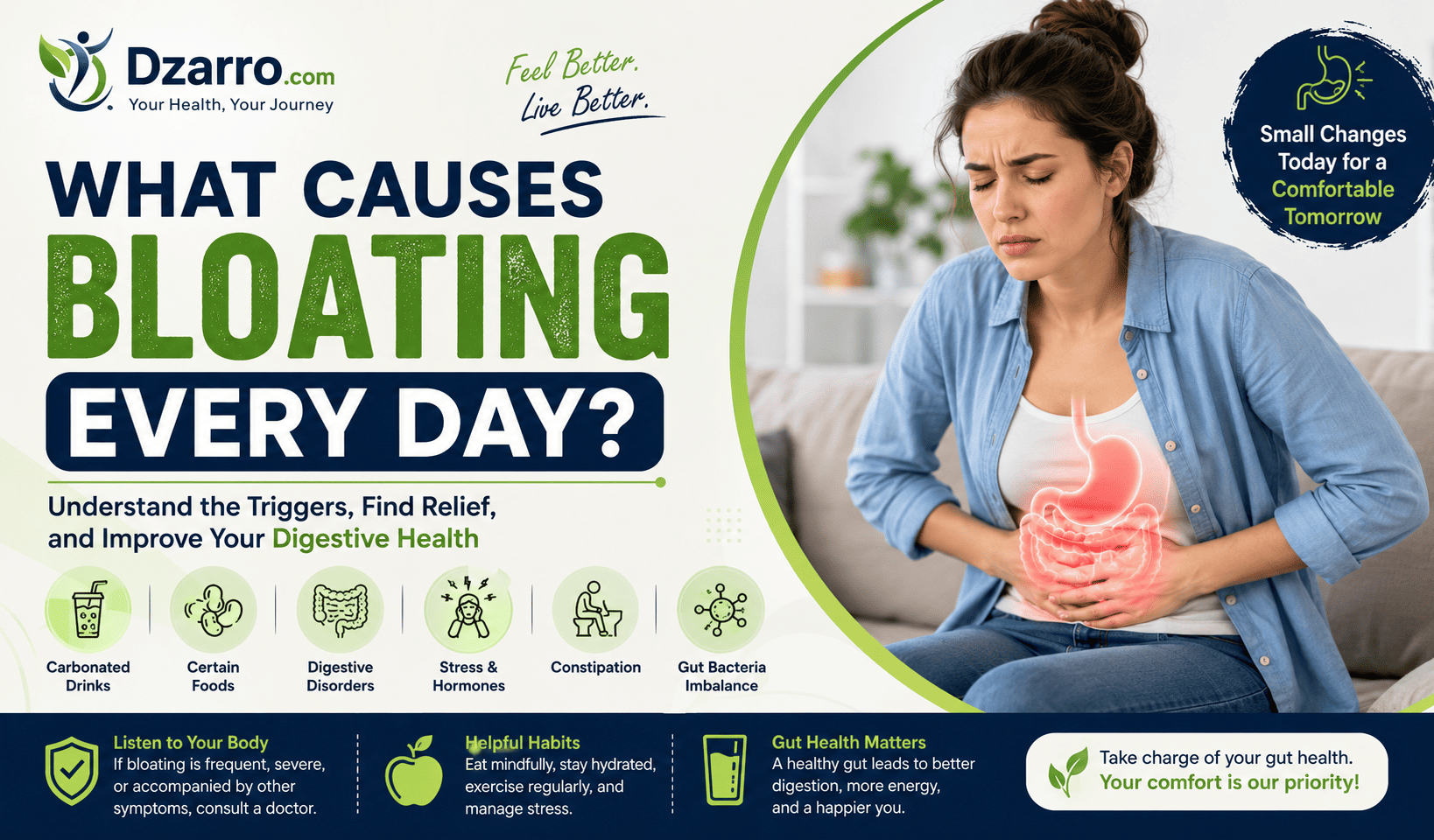
Have you ever wondered, “What Causes Bloating Every Day?” If your stomach regularly feels swollen, tight, or uncomfortable, you’re not alone. Daily bloating affects millions of Americans and can interfere with work, sleep, exercise, and overall quality of life. While occasional bloating after a large meal is common, experiencing it almost every day may indicate that something in your diet, digestive system, lifestyle, or health needs attention.
Persistent bloating isn’t a disease itself—it is a symptom. It can result from harmless habits like eating too quickly or consuming carbonated beverages, but it may also signal digestive disorders such as irritable bowel syndrome (IBS), food intolerances, constipation, or more serious medical conditions.
In this guide, you’ll learn what causes bloating every day, the most common risk factors, effective treatment options, prevention strategies, and when you should seek medical care.
What Is Bloating?
Bloating refers to a sensation of fullness, pressure, or swelling in the abdomen. Some people experience visible abdominal distension, while others simply feel uncomfortable or overly full despite eating small meals.
Daily bloating often occurs because of excess gas production, slowed digestion, fluid retention, changes in gut bacteria, or problems affecting the movement of food through the digestive tract.
Although many cases improve with lifestyle changes, chronic bloating deserves attention because it can sometimes be associated with underlying digestive disorders.
Also Read : What are the early symptoms of esophageal stricture?
What Causes Bloating Every Day?
Many different factors can contribute to chronic bloating. Sometimes more than one cause is involved.
1. Eating Too Quickly
One of the simplest answers to What Causes Bloating Every Day? is eating meals too fast.
When you rush through meals, you swallow excess air. This trapped air accumulates in the digestive tract, leading to abdominal pressure and bloating.
Fast eating may also interfere with proper digestion because your body has less time to recognize fullness signals, making overeating more likely.
2. Overeating
Large meals stretch the stomach and slow digestion.
Foods remain in the digestive tract longer, allowing bacteria to ferment carbohydrates and produce additional gas.
Even healthy foods can contribute to bloating when consumed in excessive portions.
Also Read : Can esophageal stricture heal naturally?
3. High-Fiber Foods
Fiber supports digestive health, but increasing intake too quickly can temporarily increase gas production.
Common high-fiber foods include:
- Beans
- Lentils
- Broccoli
- Brussels sprouts
- Whole grains
- Apples
- Pears
Your gut bacteria ferment fiber, producing gases that may lead to bloating while your digestive system adjusts.
4. Food Intolerances
Many adults unknowingly have food intolerances that contribute to everyday bloating.
Common examples include:
Lactose Intolerance
People lacking sufficient lactase enzyme cannot fully digest dairy products.
Symptoms often include:
- Bloating
- Gas
- Diarrhea
- Stomach cramps
Fructose Intolerance
Fructose found in fruits, honey, and processed foods may cause fermentation inside the intestines.
Gluten Sensitivity
Some individuals experience bloating after consuming wheat-containing foods even without celiac disease.
Also Read : How many times can esophageal dilatation be done?
5. Irritable Bowel Syndrome (IBS)
IBS remains one of the most common causes of chronic bloating in the United States.
Other symptoms often include:
- Abdominal pain
- Constipation
- Diarrhea
- Alternating bowel habits
- Gas
People with IBS frequently experience increased sensitivity to normal amounts of intestinal gas.
6. Constipation
When stool remains in the colon for extended periods, gas accumulates behind it.
This causes:
- Pressure
- Fullness
- Visible abdominal swelling
Improving bowel regularity often significantly reduces bloating.
Also Read : Why do I feel full after eating small amounts?
7. Swallowing Excess Air
Known medically as aerophagia, swallowing excessive air commonly occurs from:
- Chewing gum
- Smoking
- Drinking through straws
- Talking while eating
- Carbonated beverages
The swallowed air eventually reaches the digestive tract, causing abdominal discomfort.
8. Carbonated Drinks
Soft drinks, sparkling water, energy drinks, and beer contain dissolved carbon dioxide gas.
Once inside your digestive system, this gas expands and contributes to bloating.
9. Gut Microbiome Imbalance
Your intestines contain trillions of beneficial bacteria.
When this bacterial balance changes—due to antibiotics, poor diet, illness, or infections—gas production may increase significantly.
An unhealthy gut microbiome can contribute to recurring bloating, indigestion, and irregular bowel movements.
Also Read : Why do I feel tired after eating?
10. Small Intestinal Bacterial Overgrowth (SIBO)
SIBO occurs when excessive bacteria grow inside the small intestine instead of remaining mainly in the colon.
These bacteria ferment food prematurely, leading to:
- Severe bloating
- Gas
- Diarrhea
- Malabsorption
- Nutrient deficiencies
Diagnosis usually requires specialized breath testing.
11. Hormonal Changes
Many women experience bloating due to hormonal fluctuations before menstruation.
Hormones can increase water retention and temporarily slow digestion.
Pregnancy and menopause may also contribute to recurring bloating.
Also Read : Why Does My Stomach Hurt After Eating?
12. Chronic Stress
Stress affects the communication between your brain and digestive system.
High stress levels may slow digestion, alter gut bacteria, increase intestinal sensitivity, and worsen symptoms in people with IBS.
Stress-related bloating often becomes more noticeable during busy workdays or emotionally challenging situations.
Foods That Commonly Trigger Daily Bloating
Certain foods naturally produce more gas during digestion.
Common triggers include beans, onions, cabbage, broccoli, cauliflower, garlic, dairy products, wheat products, artificial sweeteners like sorbitol, carbonated beverages, fried foods, and heavily processed meals.
Not everyone reacts the same way. Keeping a food diary can help identify your personal triggers.
Medical Conditions That Can Cause Chronic Bloating
Sometimes the answer to What Causes Bloating Every Day? involves an underlying health condition.
Possible medical causes include:
- Irritable bowel syndrome (IBS)
- Celiac disease
- Inflammatory bowel disease (Crohn’s disease and ulcerative colitis)
- Gastroesophageal reflux disease (GERD)
- Gastroparesis
- Ovarian disorders
- Liver disease
- Pancreatic insufficiency
- Colon cancer (rare but possible)
- Stomach cancer (uncommon)
Although these conditions are less common than dietary causes, persistent or worsening symptoms should always be evaluated by a healthcare professional.
How Doctors Diagnose Daily Bloating?
Diagnosis begins with a detailed medical history and physical examination.
Your healthcare provider may ask about:
- When bloating occurs
- Foods that trigger symptoms
- Bowel habits
- Weight changes
- Family history
- Current medications
Depending on your symptoms, additional testing may include blood work, stool testing, food intolerance testing, hydrogen breath tests for lactose intolerance or SIBO, abdominal imaging, or endoscopy and colonoscopy.
How to Treat Daily Bloating?
Treatment depends on the underlying cause rather than simply masking symptoms.
If food intolerance is responsible, avoiding trigger foods often provides significant relief. People with lactose intolerance may benefit from lactose-free dairy products or lactase enzyme supplements. Those with IBS may experience improvement by following a low-FODMAP diet under the guidance of a registered dietitian.
Eating slowly, chewing food thoroughly, drinking adequate water, increasing physical activity, managing stress, and maintaining regular bowel movements are among the most effective lifestyle strategies for reducing daily bloating.
Healthcare providers may also recommend probiotics, digestive enzyme supplements, or prescription medications when appropriate. However, supplements should not replace a proper medical evaluation if symptoms are persistent or severe.
When Should You See a Doctor?
Occasional bloating is usually harmless.
However, seek medical evaluation if bloating occurs daily and is accompanied by:
- Unexplained weight loss
- Blood in the stool
- Persistent vomiting
- Severe abdominal pain
- Fever
- Difficulty swallowing
- Anemia
- New symptoms after age 50
- Persistent diarrhea or constipation lasting several weeks
- A rapidly enlarging abdomen
These symptoms may indicate a condition requiring prompt diagnosis and treatment.
Can Daily Bloating Be Prevented?
In many cases, yes.
Maintaining a balanced diet, identifying food triggers, eating smaller meals, limiting carbonated beverages, staying hydrated, exercising regularly, sleeping well, and managing stress can substantially reduce the frequency of bloating.
Many people notice improvement after making gradual dietary changes rather than following highly restrictive diets without medical guidance.
The Bottom Line
If you’ve been asking yourself, “What Causes Bloating Every Day?”, the answer isn’t always straightforward. Daily bloating can result from simple eating habits, food intolerances, constipation, stress, hormonal changes, or digestive disorders like IBS and SIBO. While occasional bloating is common, persistent symptoms deserve attention—especially if they’re accompanied by pain, weight loss, blood in the stool, or other warning signs.
The good news is that many cases improve with lifestyle modifications, mindful eating, and identifying dietary triggers. If symptoms continue despite these changes, consult a healthcare provider to determine the underlying cause and receive appropriate treatment. Early evaluation can help rule out serious conditions while improving your long-term digestive health.

A healthy gut supports both digestion and immune function.
Medical Disclaimer: This article is for educational purposes only and should not replace professional medical advice, diagnosis, or treatment. Always consult a qualified healthcare provider regarding persistent or severe digestive symptoms.
Frequently Asked Questions (FAQs)
1. What causes bloating every day even if I eat healthy?
Even healthy foods can cause bloating if they contain large amounts of fiber or fermentable carbohydrates. Food intolerances, IBS, constipation, stress, and gut bacteria imbalance can also contribute to daily bloating despite a nutritious diet.
2. Is daily bloating a sign of something serious?
Usually not, but persistent bloating accompanied by weight loss, blood in the stool, severe pain, vomiting, or ongoing digestive changes should be evaluated by a healthcare professional to rule out underlying medical conditions.
3. Can drinking more water reduce bloating?
Yes. Adequate hydration supports healthy digestion and helps prevent constipation, which is a common cause of bloating. However, water alone may not resolve bloating caused by food intolerances or digestive disorders.
4. Which foods cause the most bloating?
Common culprits include beans, onions, broccoli, cabbage, cauliflower, dairy products, wheat products, carbonated drinks, fried foods, and artificial sweeteners. Individual tolerance varies, so keeping a food diary may help identify personal triggers.
5. Does stress really cause bloating?
Yes. Stress can affect digestion by slowing gut movement, increasing sensitivity to gas, and altering communication between the brain and digestive system. Many people with IBS notice that bloating worsens during periods of high stress.
6. Can probiotics help with daily bloating?
Some probiotics may improve bloating in certain individuals, particularly those with IBS or an imbalance in gut bacteria. The benefits depend on the specific probiotic strain and the underlying cause of the symptoms. Consult a healthcare provider before starting supplements.
7. When should I see a doctor about bloating?
You should seek medical attention if bloating lasts for several weeks, becomes progressively worse, or occurs with severe pain, unexplained weight loss, blood in the stool, persistent vomiting, fever, or significant changes in bowel habits. These symptoms may require further medical evaluation.
Reviewed by: Dzarro Editorial Team
Fact-checked using trusted medical and scientific sources.

Sandip Choudhary is a Health & Wellness Researcher and Content Creator specializing in sleep, digestive health, preventive wellness, and evidence-based health education. He has been creating online content and researching health-related topics for several years, focusing on translating complex medical information into practical guidance for everyday readers.
With a strong background in SEO and content strategy, Sandip ensures that every article is optimized for both search engines and real users. His goal is to provide reliable, clear, and helpful information that supports healthier living.
Disclaimer: The content published is for informational purposes only and is not a substitute for professional medical advice.
1 thought on “What Causes Bloating Every Day?”
Comments are closed.