
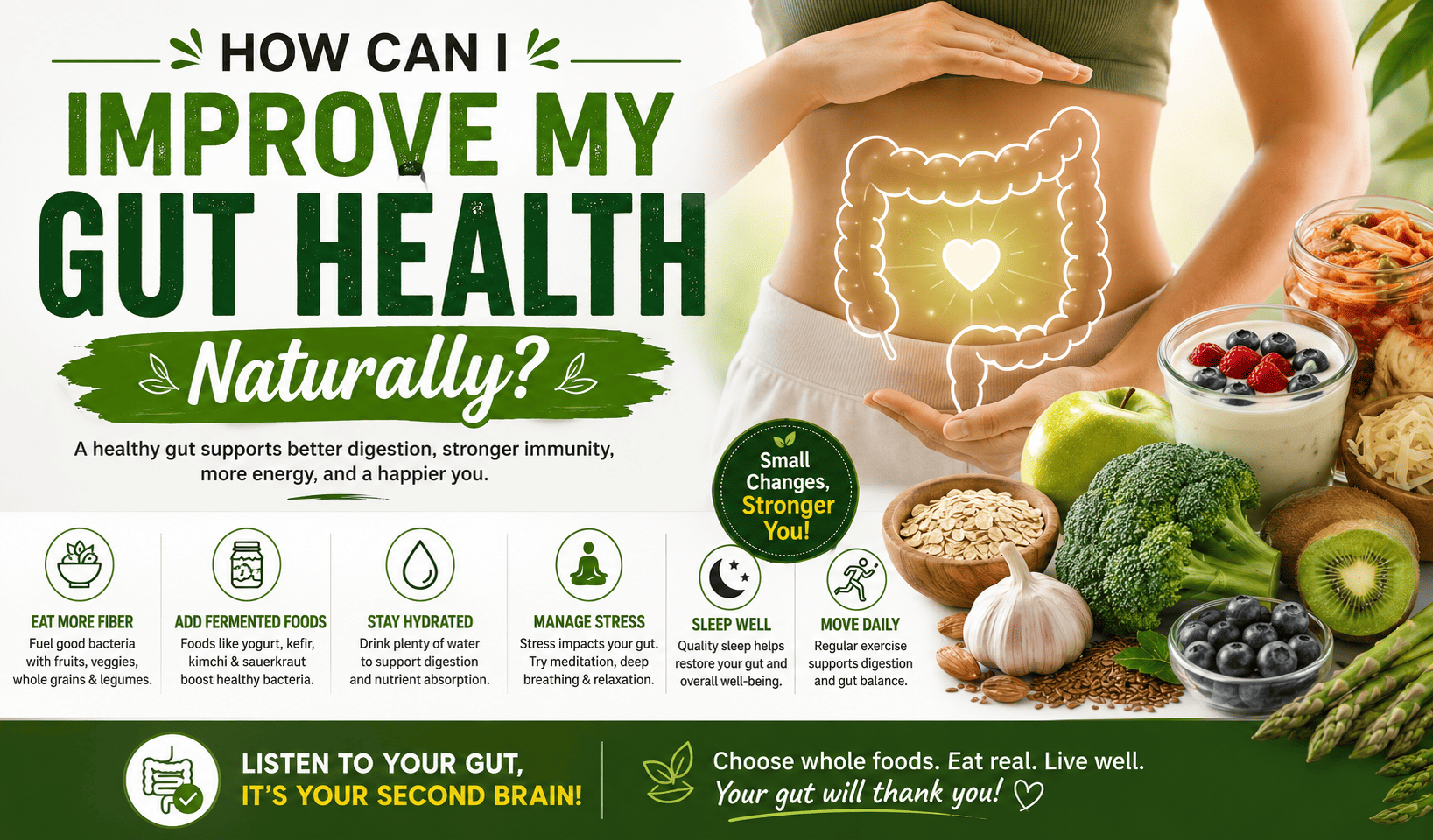
Your gut does much more than digest food. It influences your immune system, mental well-being, metabolism, energy levels, and even skin health. If you’ve ever wondered, How Can I Improve My Gut Health Naturally?, you’re asking one of the most important questions for long-term wellness.
The human digestive system contains trillions of microorganisms—collectively known as the gut microbiome. These bacteria, fungi, and other microbes work together to digest food, produce essential nutrients, regulate inflammation, and protect against harmful pathogens. When this balance is disrupted, it can lead to digestive discomfort, weakened immunity, fatigue, and an increased risk of chronic diseases.
Fortunately, improving gut health doesn’t require expensive supplements or extreme diets. Simple lifestyle and dietary changes can naturally support a healthier microbiome and improve digestion over time.
In this guide, we’ll answer How Can I Improve My Gut Health Naturally? using evidence-based strategies that are practical, sustainable, and suitable for adults across the United States.
What Is Gut Health?
Gut health refers to the proper functioning of your digestive tract and the balance of beneficial microorganisms living inside your intestines. A healthy gut efficiently digests food, absorbs nutrients, supports immune function, and communicates with the brain through the gut-brain axis.
Researchers estimate that nearly 70% of the immune system resides in the gut, highlighting its importance beyond digestion.
Why Is Gut Health So Important?
Your digestive system impacts nearly every aspect of your health. A healthy gut may help:
- Improve digestion
- Support immune function
- Reduce inflammation
- Enhance nutrient absorption
- Improve mood and mental health
- Promote healthy weight management
- Lower the risk of certain chronic diseases
Poor gut health, on the other hand, may contribute to bloating, constipation, diarrhea, acid reflux, food sensitivities, fatigue, and recurring infections.
Also Read : What Causes Bloating Every Day?
Signs Your Gut Health May Need Improvement
Although occasional digestive issues are common, persistent symptoms may suggest an imbalance in your gut microbiome.
Common signs include:
Persistent bloating after meals, excessive gas, constipation, diarrhea, irregular bowel movements, unexplained fatigue, poor sleep quality, frequent illness, sugar cravings, skin problems such as eczema or acne, and difficulty maintaining a healthy weight.
If these symptoms continue for several weeks or worsen, consult a healthcare provider to identify any underlying medical conditions.
How Can I Improve My Gut Health Naturally?
The good news is that your gut microbiome responds remarkably well to healthy lifestyle changes. Here are the most effective natural strategies.
Eat More Fiber Every Day
Dietary fiber is one of the best foods for beneficial gut bacteria. Unlike other nutrients, fiber isn’t fully digested by your body. Instead, it becomes food for healthy microbes, allowing them to produce short-chain fatty acids that support colon health and reduce inflammation.
Excellent sources of fiber include fruits, vegetables, beans, lentils, oats, barley, brown rice, nuts, seeds, and whole grains.
Most American adults consume less fiber than recommended. Women should aim for approximately 25 grams daily, while men should target around 38 grams.
Also Read : Why Does My Stomach Hurt After Eating?
Include Fermented Foods
Fermented foods naturally contain beneficial bacteria that may improve microbial diversity.
Regularly eating foods such as yogurt with live cultures, kefir, kimchi, sauerkraut, miso, tempeh, and kombucha may help replenish beneficial bacteria in your digestive tract.
Choose products with live and active cultures and limited added sugars for the greatest benefit.
Feed Good Bacteria with Prebiotic Foods
Prebiotics are specialized fibers that nourish the healthy bacteria already living in your gut.
Natural prebiotic foods include garlic, onions, asparagus, bananas, apples, oats, chicory root, Jerusalem artichokes, and leeks.
Combining prebiotic foods with probiotic-rich foods creates an ideal environment for a thriving gut microbiome.
Stay Well Hydrated
Water supports healthy digestion by softening stool, preventing constipation, and helping nutrients move efficiently through the digestive tract.
Many adults mistake thirst for hunger, leading to unnecessary snacking and poor digestion.
Drink water consistently throughout the day, especially when increasing fiber intake.
Reduce Ultra-Processed Foods
Highly processed foods often contain excessive added sugars, unhealthy fats, artificial sweeteners, and preservatives that may negatively affect gut bacteria.
Replacing processed snacks with whole foods supports healthier digestion and encourages microbial diversity.
Instead of sugary cereals or packaged snacks, choose fresh fruit, nuts, yogurt, or whole-grain options.
Limit Added Sugar
High sugar intake may encourage the growth of less beneficial bacteria while reducing microbial diversity.
Reducing sugary drinks, desserts, candies, and processed foods may improve the balance of your gut microbiome.
Natural sweetness from fruits provides fiber alongside vitamins and antioxidants, making it a healthier alternative.
Also Read : Why do I feel tired after eating?
Exercise Regularly
Physical activity benefits not only your heart but also your digestive system.
Research suggests that regular exercise increases microbial diversity and promotes healthy bowel function.
Aim for at least 150 minutes of moderate physical activity each week through walking, cycling, swimming, or strength training.
Get Enough Sleep
Sleep and gut health are closely connected.
Poor sleep may alter gut bacteria, while an unhealthy gut may interfere with sleep quality through the gut-brain connection.
Adults should aim for seven to nine hours of quality sleep each night.
Maintaining consistent bedtimes can further support your digestive health.
Manage Stress Naturally
Chronic stress can significantly disrupt the gut microbiome.
Stress hormones affect digestion, alter bacterial balance, and increase inflammation.
Helpful stress-management practices include meditation, deep breathing, yoga, walking outdoors, journaling, prayer, and spending time with supportive family and friends.
Avoid Unnecessary Antibiotics
Antibiotics save lives when medically necessary, but they also eliminate beneficial bacteria.
Never take antibiotics without a healthcare provider’s recommendation, and always complete prescribed courses appropriately.
After antibiotic treatment, consuming fiber-rich and fermented foods may help restore microbial balance.
Also Read : Why do I feel full after eating small amounts?
Foods That Naturally Support Gut Health
A gut-friendly eating pattern focuses on whole, minimally processed foods.
Excellent choices include leafy greens, berries, apples, bananas, oats, brown rice, quinoa, beans, lentils, chickpeas, almonds, walnuts, flaxseeds, chia seeds, olive oil, salmon, yogurt, kefir, kimchi, sauerkraut, garlic, onions, asparagus, broccoli, spinach, and fermented soy products.
Eating a wide variety of plant foods each week encourages a more diverse and resilient microbiome.
Foods That May Harm Gut Health
Certain dietary habits may negatively affect beneficial bacteria.
Limiting highly processed foods, sugary beverages, excessive alcohol, fried foods, excessive artificial sweeteners, and frequent fast-food meals may help protect your digestive system.
Occasional treats are generally fine, but overall dietary patterns matter most.
Also Read : How many times can esophageal dilatation be done?
Can Probiotic Supplements Help?
Probiotic supplements may benefit some people, particularly after antibiotic use or during certain digestive conditions. However, supplements are not necessary for everyone.
Many healthy individuals can support their gut microbiome through a balanced diet rich in fiber and fermented foods.
Before starting any supplement, consult your healthcare provider, especially if you have immune disorders or chronic medical conditions.
The Gut-Brain Connection
Scientists increasingly recognize the powerful communication between the digestive system and the brain.
This “gut-brain axis” explains why stress can trigger digestive symptoms and why gut health may influence mood, anxiety, and cognitive function.
Supporting your microbiome through healthy eating, exercise, stress management, and quality sleep may contribute to both physical and mental well-being.
Also Read : Can esophageal stricture heal naturally?
How Long Does It Take to Improve Gut Health Naturally?
Positive changes can begin within days of adopting healthier eating habits, but meaningful improvements typically develop over several weeks.
Consistency is more important than perfection.
Eating fiber-rich foods daily, staying active, sleeping well, and managing stress can gradually reshape your gut microbiome over time.
When Should You See a Healthcare Provider?
While many digestive symptoms improve with lifestyle changes, medical evaluation is important if you experience persistent abdominal pain, unexplained weight loss, blood in your stool, chronic diarrhea, severe constipation, difficulty swallowing, persistent vomiting, or symptoms that continue despite dietary improvements.
Early diagnosis can help identify conditions such as inflammatory bowel disease, celiac disease, irritable bowel syndrome, or other digestive disorders.
Also Read : What are the early symptoms of esophageal stricture?
Final Thoughts
If you’ve been asking, How Can I Improve My Gut Health Naturally?, the answer lies in consistent daily habits rather than quick fixes. A diet rich in fiber, fruits, vegetables, whole grains, legumes, and fermented foods provides nourishment for beneficial gut bacteria. Staying hydrated, exercising regularly, managing stress, getting enough sleep, and limiting ultra-processed foods further support a balanced digestive system.
Gut health is a lifelong journey, and small improvements made consistently often lead to meaningful long-term benefits. By caring for your microbiome, you’re supporting not only your digestive system but also your immune function, metabolism, heart health, and overall quality of life.

The stomach breaks down food using acids and digestive enzymes.
Medical Disclaimer: This article is for educational purposes only and should not replace professional medical advice, diagnosis, or treatment. Always consult a qualified healthcare provider regarding persistent or severe digestive symptoms.
Frequently Asked Questions (FAQs)
1. How can I improve my gut health naturally?
You can naturally improve gut health by eating more fiber, consuming fermented foods, drinking enough water, exercising regularly, managing stress, getting adequate sleep, and limiting processed foods and added sugars.
2. What foods are best for gut health?
Fiber-rich fruits, vegetables, whole grains, beans, lentils, yogurt with live cultures, kefir, kimchi, sauerkraut, nuts, seeds, garlic, onions, and asparagus are among the best foods for supporting gut health.
3. How long does it take to improve gut health?
Some changes in the gut microbiome can occur within a few days, while noticeable improvements in digestion and overall gut health often take several weeks of consistent healthy habits.
4. Do I need probiotic supplements?
Not necessarily. Many people can maintain a healthy gut microbiome through a balanced diet that includes fermented foods and plenty of fiber. Supplements may be beneficial in certain situations but should be discussed with a healthcare provider.
5. Can stress affect gut health?
Yes. Chronic stress can disrupt the balance of gut bacteria, slow digestion, increase inflammation, and worsen digestive symptoms such as bloating or abdominal discomfort.
6. Is drinking water good for gut health?
Yes. Staying hydrated supports healthy digestion, promotes regular bowel movements, and helps dietary fiber work effectively within the digestive tract.
7. What are the signs of an unhealthy gut?
Common signs include bloating, gas, constipation, diarrhea, irregular bowel movements, frequent illness, fatigue, food intolerances, skin issues, and unexplained weight changes. Persistent symptoms should be evaluated by a healthcare professional.
Reviewed by: Dzarro Editorial Team
Fact-checked using trusted medical and scientific sources.

Sandip Choudhary is a Health & Wellness Researcher and Content Creator specializing in sleep, digestive health, preventive wellness, and evidence-based health education. He has been creating online content and researching health-related topics for several years, focusing on translating complex medical information into practical guidance for everyday readers.
With a strong background in SEO and content strategy, Sandip ensures that every article is optimized for both search engines and real users. His goal is to provide reliable, clear, and helpful information that supports healthier living.
Disclaimer: The content published is for informational purposes only and is not a substitute for professional medical advice.