
Do you feel sleepy, sluggish, or mentally foggy after meals? Maybe you finish lunch and suddenly struggle to focus, or you feel exhausted after dinner even when you slept well the night before. If this sounds familiar, you’re not alone.
Many Americans experience fatigue after eating, especially after large meals, sugary foods, or stressful days. While occasional post-meal tiredness can be normal, frequent exhaustion after eating may signal issues related to blood sugar, digestion, stress, sleep quality, or underlying health conditions.
This guide explains why you feel tired after eating, the most common causes, symptoms to watch for, and natural ways to improve energy levels and digestion.
Quick Answer
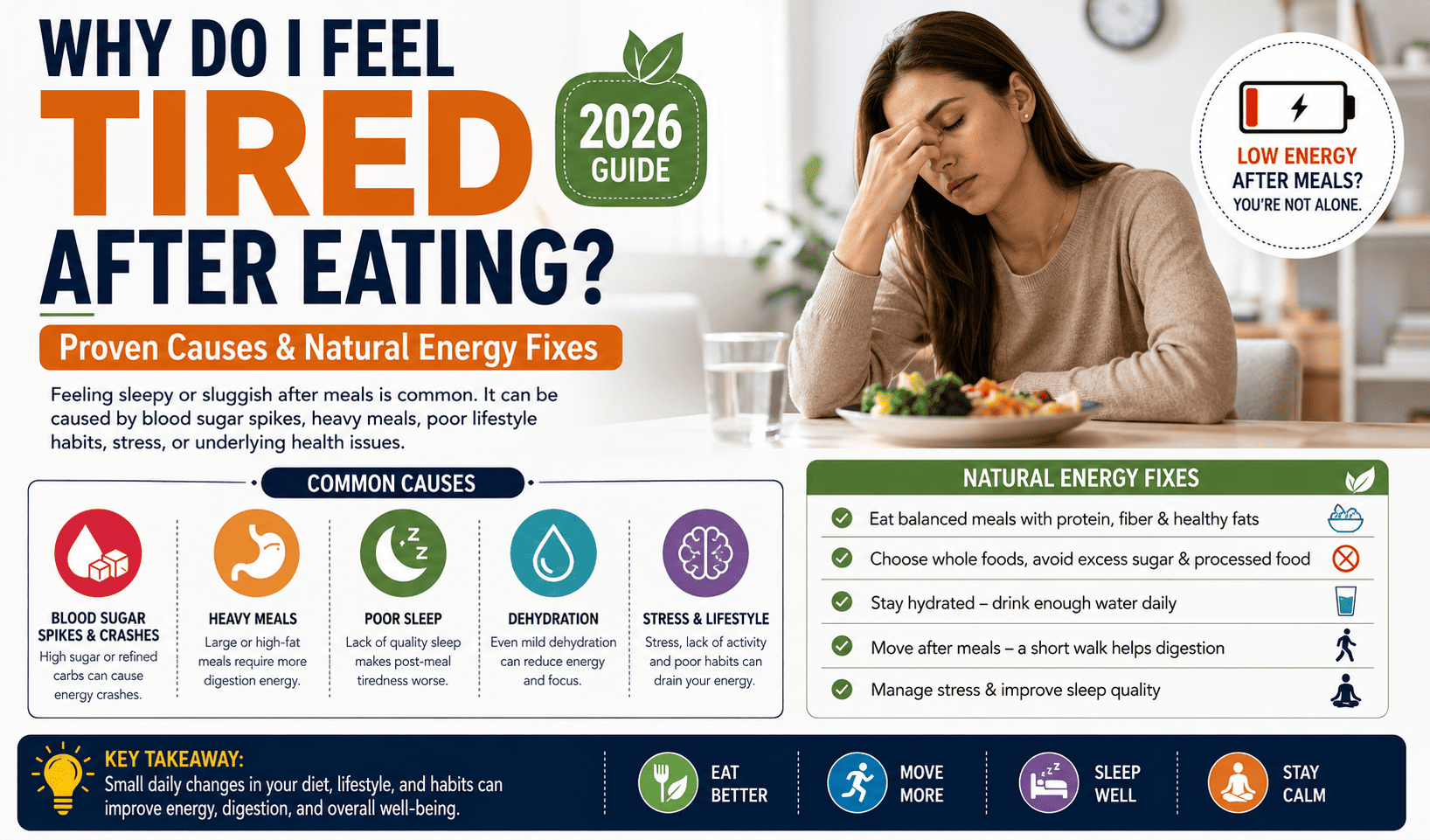
Feeling tired after eating is often caused by digestion demands, blood sugar spikes and crashes, poor sleep, dehydration, stress, or unhealthy food choices. Heavy meals, excess sugar, processed foods, and underlying conditions like insulin resistance or food sensitivities may also contribute to post-meal fatigue. Improving diet, hydration, sleep, and meal balance can help boost energy naturally.
Also Read : What are the early symptoms of esophageal stricture?
What Does It Mean to Feel Tired After Eating?
Feeling sleepy after meals is sometimes called post-meal fatigue or postprandial somnolence.
After eating, your body directs energy toward:
- Digestion
- Nutrient absorption
- Blood sugar regulation
This process naturally makes some people feel relaxed or slightly sleepy. However, if fatigue becomes severe or happens after most meals, there may be underlying factors affecting your energy levels.
In the United States, post-meal fatigue is increasingly common due to:
- Processed diets
- Stress
- Poor sleep
- Sedentary lifestyles
- Blood sugar imbalance
Also Read : What are the signs of poor sleep quality?
Common Symptoms of Post-Meal Fatigue
Symptoms can range from mild tiredness to significant exhaustion.
Early Symptoms
- Sleepiness after meals
- Brain fog
- Low focus
- Mild bloating
- Heavy feeling in the stomach
- Low motivation
Advanced Symptoms
- Needing naps after eating
- Dizziness
- Sugar cravings
- Frequent fatigue
- Digestive discomfort
- Headaches
- Energy crashes during the day
Some people notice symptoms mostly after:
- Lunch
- High-carb meals
- Sugary snacks
- Fast food
Also Read : Why do I feel full after eating small amounts?
Why Do I Feel Tired After Eating?
Several factors may contribute to fatigue after meals.
1. Blood Sugar Spikes & Crashes
One of the most common causes is rapid blood sugar fluctuation.
When you eat foods high in:
- Sugar
- Refined carbs
- Processed ingredients
your blood sugar rises quickly. The body then releases insulin to lower blood sugar levels.
This rapid rise and drop may lead to:
- Sleepiness
- Brain fog
- Low energy
- Cravings
Common Trigger Foods
- Soda
- White bread
- Desserts
- Sugary coffee drinks
- Fast food meals
2. Heavy Meals Require More Digestion Energy
Large meals force the digestive system to work harder.
This can redirect blood flow toward digestion and away from other body systems temporarily.
Heavy meals often contain:
- Fried foods
- Excess fats
- Large portions
- High-calorie ingredients
This may leave you feeling:
- Sluggish
- Bloated
- Tired
3. Poor Sleep Quality
Lack of quality sleep makes post-meal fatigue worse.
If you already feel sleep-deprived, eating may trigger:
- Relaxation
- Reduced alertness
- Energy crashes
People who wake up tired often experience stronger fatigue after meals.
4. Dehydration
Even mild dehydration may reduce energy and digestion efficiency.
Symptoms may include:
- Dry mouth
- Fatigue
- Brain fog
- Headaches
Many Americans drink too much caffeine and not enough water, which may worsen daytime tiredness.
5. Food Sensitivities
Some foods may trigger inflammation or digestive discomfort in sensitive individuals.
Possible triggers include:
- Dairy
- Gluten
- Highly processed foods
Food sensitivities may contribute to:
- Bloating
- Fatigue
- Brain fog
- Digestive symptoms
6. Stress & Anxiety
Stress affects digestion and energy production through the gut-brain connection.
Chronic stress may:
- Slow digestion
- Increase inflammation
- Affect blood sugar balance
- Reduce sleep quality
This combination can worsen post-meal tiredness.
7. Medical Conditions
Persistent fatigue after eating may sometimes be linked to:
- Insulin resistance
- Diabetes
- Sleep apnea
- Thyroid disorders
- Anemia
Medical evaluation may be necessary if symptoms become severe or persistent.
Also Read : Can gut health affect energy levels?
Comparison Table: Normal vs Concerning Fatigue After Eating
| Situation | Usually Normal | May Need Medical Attention |
|---|---|---|
| Mild relaxation after meals | Yes | No |
| Severe exhaustion daily | No | Yes |
| Occasional sleepiness | Yes | Sometimes |
| Dizziness after eating | Sometimes | Possible concern |
| Fatigue with weight loss | No | Yes |
| Brain fog after every meal | Sometimes | Possible concern |
Best Treatment Options for Post-Meal Fatigue
Improving energy after eating usually involves lifestyle and dietary changes.
1. Eat Balanced Meals
Balanced meals help stabilize blood sugar.
Include:
- Lean protein
- Healthy fats
- Fiber-rich foods
- Complex carbs
Better Meal Examples
- Eggs with vegetables
- Grilled chicken salad
- Oatmeal with nuts
- Greek yogurt with berries
Balanced meals may reduce energy crashes.
2. Reduce Processed Sugar
Limiting sugary foods can improve energy stability.
Foods to Limit
- Candy
- Soda
- Sugary cereals
- Sweetened coffee drinks
- Processed desserts
Reducing sugar spikes may improve focus and energy naturally.
3. Improve Sleep Quality
Better sleep often reduces daytime fatigue significantly.
Helpful Sleep Habits
- Consistent sleep schedule
- Reduced screen time before bed
- Cool bedroom temperature
- Stress management
Sleep optimization plays a major role in daytime energy.
Also Read : Can esophageal stricture heal naturally?
4. Stay Hydrated
Hydration supports:
- Digestion
- Blood flow
- Brain function
- Energy production
Helpful Hydration Tips
- Drink water throughout the day
- Limit sugary beverages
- Reduce excess alcohol
5. Move After Meals
Light movement after eating may improve:
- Digestion
- Blood sugar balance
- Energy levels
Helpful Activities
- Walking
- Gentle stretching
- Standing breaks
Even 10 minutes of movement may help reduce sluggishness.
6. Manage Stress Naturally
Stress reduction supports digestion and energy balance.
Helpful Techniques
- Meditation
- Deep breathing
- Exercise
- Journaling
- Relaxation before meals
Lower stress often improves gut health and post-meal energy.
Also Read : Can gut health affect mental health?
Diet & Lifestyle Tips
Foods That May Help Energy
Best Options
- Salmon
- Eggs
- Avocados
- Nuts
- Oats
- Brown rice
- Leafy greens
- Berries
These foods provide more stable energy compared to processed meals.
Foods to Avoid
Common Energy Crash Triggers
- Fried fast food
- Excess sugar
- Soda
- White bread
- Alcohol
- Energy drinks
These foods may worsen blood sugar swings and fatigue.
Daily Routine Improvements
Morning
- Eat protein-rich breakfast
- Stay hydrated
- Get sunlight exposure
During the Day
- Avoid skipping meals
- Take movement breaks
- Reduce excessive caffeine
Evening
- Avoid large late-night meals
- Improve sleep habits
- Manage stress before bed
Consistency often matters more than perfection.
Also Read : How many times can esophageal dilatation be done?
When Should You See a Doctor?
Seek medical advice if you experience:
- Severe fatigue after meals
- Frequent dizziness
- Unexplained weight loss
- Persistent digestive issues
- Chest pain
- Extreme sleepiness
- Blood sugar concerns
- Fatigue lasting weeks or months
These symptoms may indicate an underlying health condition.
👉 This sleep health guide explains practical ways to improve sleep naturally.
Who Is Most at Risk?
1. Office Workers
Long sitting hours and processed lunches may worsen fatigue.
2. People with Poor Sleep
Sleep deprivation often increases post-meal tiredness.
3. Adults Under Chronic Stress
Stress may worsen digestion and blood sugar balance.
4. Individuals with High Sugar Diets
Frequent processed foods may increase energy crashes.
5. Older Adults
Aging metabolism and medical conditions may affect energy regulation.
FAQs
1. Why do I get sleepy after eating carbs?
Carbs can raise blood sugar quickly, followed by an insulin response that may contribute to fatigue and sleepiness.
2. Is it normal to feel tired after eating?
Mild tiredness can be normal, but severe or frequent exhaustion may indicate diet, sleep, stress, or health-related issues.
3. Can dehydration make you tired after meals?
Yes. Dehydration may worsen digestion, blood flow, and energy levels.
4. What foods help prevent fatigue after eating?
Balanced meals with protein, fiber, and healthy fats may help stabilize energy.
5. Can stress affect energy after meals?
Yes. Stress affects digestion, hormones, and blood sugar balance, which may increase post-meal fatigue.
Conclusion
Feeling tired after eating is common, but it shouldn’t interfere with daily life regularly. In many cases, post-meal fatigue is linked to blood sugar fluctuations, heavy meals, poor sleep, stress, dehydration, or unhealthy eating habits.
The good news is that small lifestyle improvements can make a major difference:
- Eat balanced meals
- Improve sleep naturally
- Stay hydrated
- Reduce processed foods
- Manage stress
- Move regularly
If symptoms continue despite healthy changes, it’s important to consult a healthcare professional to rule out underlying medical conditions and improve long-term wellness.
Reviewed by: Dzarro Editorial Team
Fact-checked using trusted medical and scientific sources.

Sandip Choudhary is a Health & Wellness Researcher and Content Creator specializing in sleep, digestive health, preventive wellness, and evidence-based health education. He has been creating online content and researching health-related topics for several years, focusing on translating complex medical information into practical guidance for everyday readers.
With a strong background in SEO and content strategy, Sandip ensures that every article is optimized for both search engines and real users. His goal is to provide reliable, clear, and helpful information that supports healthier living.
Disclaimer: The content published is for informational purposes only and is not a substitute for professional medical advice.
3 thoughts on “Why do I feel tired after eating?”