
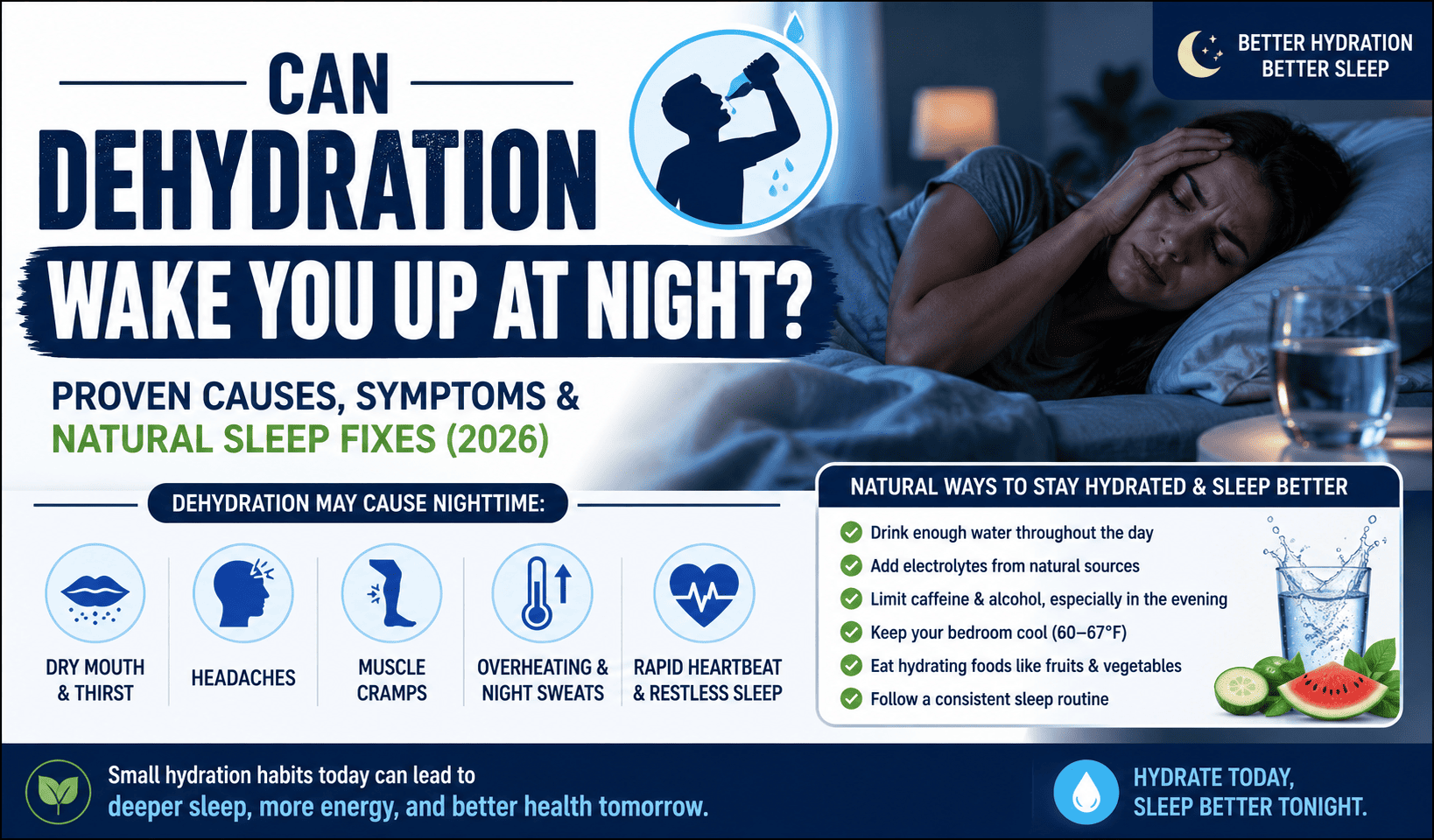
Have you ever woken up in the middle of the night feeling thirsty, restless, overheated, or unable to fall back asleep? Many Americans blame stress, insomnia, or poor sleep habits, but dehydration may also be a hidden reason behind nighttime waking.
Even mild dehydration can affect sleep quality, body temperature regulation, energy levels, and overnight recovery. When the body lacks enough fluids, it may trigger symptoms like dry mouth, headaches, muscle cramps, rapid heartbeat, and disrupted sleep cycles.
This guide explains how dehydration affects sleep, common symptoms, risk factors, and practical ways to stay hydrated for better rest and recovery.
Quick Answer
Yes, dehydration can wake you up at night by causing dry mouth, thirst, muscle cramps, headaches, overheating, and disrupted sleep cycles. Poor hydration may also affect melatonin production, circulation, and body temperature regulation, making it harder to stay asleep and feel rested in the morning.
What Does It Mean When Dehydration Affects Sleep?
Dehydration happens when your body loses more fluids than it takes in.
Water is essential for:
- Brain function
- Circulation
- Temperature control
- Muscle recovery
- Hormonal balance
- Sleep regulation
During sleep, your body continues losing fluids through:
- Breathing
- Sweating
- Body heat regulation
If hydration levels are already low before bedtime, your body may struggle to maintain healthy sleep patterns overnight.
Also Read : Why do I feel dizzy after waking up?
Common Symptoms of Nighttime Dehydration
Symptoms may start mild and gradually worsen.
Early Symptoms
- Dry mouth at night
- Increased thirst
- Restless sleep
- Mild headaches
- Dry lips
- Feeling overheated
- Difficulty staying asleep
Advanced Symptoms
- Muscle cramps
- Nighttime dizziness
- Rapid heartbeat
- Severe fatigue
- Brain fog in the morning
- Dark urine
- Waking multiple times overnight
Many people don’t realize dehydration may be affecting both sleep quality and daytime energy.
How Dehydration Can Wake You Up at Night
Dehydration affects multiple systems involved in sleep and recovery.
1. Dry Mouth & Thirst
One of the most common signs of dehydration is waking up with:
- Dry mouth
- Sticky saliva
- Intense thirst
This discomfort alone may interrupt deep sleep and make it difficult to fall back asleep.
2. Body Temperature Imbalance
Hydration helps regulate body temperature.
When dehydrated, the body may struggle to cool itself properly during sleep, increasing the chances of:
- Overheating
- Sweating
- Restlessness
- Night waking
This is especially common in warmer climates and heated bedrooms.
3. Muscle Cramps During Sleep
Low hydration may contribute to:
- Leg cramps
- Muscle tightness
- Restless legs
These symptoms can suddenly wake people during the night.
4. Increased Heart Rate & Stress Response
Dehydration may increase stress hormone activity and heart rate.
This can make the nervous system feel more alert at night, reducing relaxation and deep sleep quality.
5. Poor Sleep Recovery
Even mild dehydration may reduce:
- Deep sleep
- REM sleep
- Overnight recovery
As a result, people often wake up:
- Groggy
- Mentally foggy
- Low on energy
Also Read : What causes restless sleep every night?
Dehydration vs Poor Sleep Comparison Table
| Symptom | Dehydration | General Poor Sleep |
|---|---|---|
| Dry mouth | Very common | Less common |
| Thirst at night | Common | Rare |
| Muscle cramps | Possible | Less common |
| Morning headache | Common | Common |
| Dark urine | Common | Rare |
| Brain fog | Common | Common |
| Night sweating | Possible | Sometimes |
Main Causes & Risk Factors
Several factors increase the risk of dehydration-related sleep problems.
1. Not Drinking Enough Water
Many adults simply don’t drink enough fluids during the day.
Busy schedules, work stress, and excessive caffeine often contribute to poor hydration habits.
2. Excess Caffeine
Coffee, soda, and energy drinks may increase fluid loss in some people.
Caffeine late in the day may also:
- Disrupt sleep
- Increase nighttime waking
- Reduce deep sleep quality
3. Alcohol Consumption
Alcohol can increase dehydration and disrupt REM sleep.
Many people wake up during the night after drinking alcohol because of:
- Dehydration
- Increased body temperature
- Poor sleep cycles
4. Hot Sleep Environment
Warm bedrooms and heavy blankets increase sweating and fluid loss overnight.
This may worsen:
- Dry mouth
- Restlessness
- Night waking
5. Intense Exercise Without Rehydration
Heavy exercise without proper hydration replacement may increase nighttime dehydration risk.
6. Stress & Anxiety
Stress may increase sweating, breathing rate, and muscle tension, all of which may affect hydration levels and sleep quality.
Also Read : Why do I keep waking up in the middle of the night?
Best Treatment Options for Nighttime Dehydration
The best solution usually involves improving hydration habits and optimizing sleep routines.
1. Hydrate Consistently During the Day
Instead of drinking large amounts of water right before bed, focus on staying hydrated throughout the day.
Helpful Tip
Drink water steadily:
- Morning
- Afternoon
- Early evening
This supports better overnight hydration balance.
2. Limit Excess Fluids Right Before Bed
Drinking too much water immediately before sleep may increase nighttime bathroom trips.
Aim for balanced hydration earlier in the evening instead.
3. Improve Electrolyte Balance
Electrolytes help regulate fluid balance.
Helpful Electrolyte Sources
- Coconut water
- Bananas
- Yogurt
- Leafy greens
- Potassium-rich foods
4. Optimize Room Temperature
A cooler sleep environment may reduce sweating and overnight dehydration.
Ideal Bedroom Temperature
60–67°F (15–19°C)
5. Reduce Alcohol & Excess Caffeine
Reducing:
- Alcohol
- Energy drinks
- Excess coffee
may improve both hydration and sleep quality naturally.
6. Support Better Sleep Habits
Healthy sleep routines improve recovery and hydration balance.
Helpful Sleep Habits
- Consistent sleep schedule
- Dark, cool bedroom
- Reduced screen exposure
- Relaxation before bed
Also Read : Why do I wake up tired even after 8 hours of sleep?
Diet & Lifestyle Tips for Better Hydration & Sleep
Best Foods for Hydration
- Watermelon
- Cucumbers
- Oranges
- Strawberries
- Celery
- Soup-based meals
These foods naturally support hydration.
Foods & Drinks to Limit
Before Bed Avoid:
- Alcohol
- Salty processed foods
- Excess sugar
- Energy drinks
- Heavy caffeine intake
These may worsen dehydration overnight.
Daily Routine Improvements
Morning
- Drink water after waking up
- Get sunlight exposure
- Avoid excess caffeine immediately
Daytime
- Carry a water bottle
- Monitor hydration habits
- Replace fluids after exercise
Evening
- Reduce alcohol
- Keep room cool
- Avoid overheating
Small hydration improvements may lead to better sleep quality over time.
When to See a Doctor
Seek medical attention if you experience:
- Severe dehydration symptoms
- Confusion
- Chest pain
- Persistent dizziness
- Fainting
- Severe muscle cramps
- Ongoing sleep disturbances
- Excessive nighttime urination
Persistent symptoms may indicate underlying medical conditions.
Who Is Most at Risk?
1. Older Adults
Aging may reduce thirst awareness and increase dehydration risk.
2. Athletes
Heavy sweating increases fluid loss.
3. Office Workers
Long workdays and excess caffeine may contribute to poor hydration habits.
4. People Living in Hot Climates
Heat exposure increases overnight fluid loss.
5. Individuals with Anxiety
Stress and nervous system activation may worsen both hydration and sleep problems.
Also Read : Why do I feel groggy after naps?
FAQs
1. Can dehydration cause insomnia?
Yes. Dehydration may cause discomfort, overheating, thirst, headaches, and muscle cramps that disrupt sleep.
2. Why do I wake up thirsty at night?
Common causes include dehydration, warm rooms, alcohol, salty foods, mouth breathing, or poor hydration during the day.
3. Can dehydration cause night sweats?
Dehydration itself may worsen body temperature regulation, increasing discomfort and sweating during sleep.
4. How can I stay hydrated without waking up to pee?
Focus on steady hydration during the day instead of drinking large amounts of water right before bed.
5. Does dehydration affect sleep quality?
Yes. Poor hydration may reduce deep sleep quality and increase nighttime waking.
👉 Many adults achieve better rest naturally by improving their sleep environment.
Conclusion
Dehydration can absolutely affect sleep quality and may be one of the hidden reasons behind nighttime waking, dry mouth, headaches, fatigue, and poor overnight recovery.
The good news is that simple habits — like drinking enough water during the day, reducing alcohol, optimizing room temperature, and maintaining healthy sleep routines — may significantly improve both hydration and sleep naturally.
If symptoms continue despite healthy hydration habits, speaking with a healthcare professional can help identify possible underlying causes and improve long-term wellness.
Medically reviewed information sourced from trusted health organizations.
References
- National Institutes of Health (NIH). Sleep and Sleep Disorders.
https://www.nhlbi.nih.gov/health/sleep - Sleep Foundation. Sleep Health Resources.
https://www.sleepfoundation.org/ - Centers for Disease Control and Prevention (CDC). Sleep and Sleep Disorders.
https://www.cdc.gov/sleep/ - Mayo Clinic. Sleep Disorders Overview.
https://www.mayoclinic.org/
Reviewed by: Dzarro Editorial Team
Fact-checked using trusted medical and scientific sources.
Last Updated: June 13, 2026

Sandip Choudhary is a Health & Wellness Researcher and Content Creator specializing in sleep, digestive health, preventive wellness, and evidence-based health education. He has been creating online content and researching health-related topics for several years, focusing on translating complex medical information into practical guidance for everyday readers.
With a strong background in SEO and content strategy, Sandip ensures that every article is optimized for both search engines and real users. His goal is to provide reliable, clear, and helpful information that supports healthier living.
Disclaimer: The content published is for informational purposes only and is not a substitute for professional medical advice.