
You take a nap hoping to feel refreshed, but instead you wake up feeling heavy, dizzy, tired, or mentally foggy. Sound familiar? You’re not alone.
Many Americans experience grogginess after naps, especially during busy workdays, stressful schedules, or poor nighttime sleep. While naps can improve energy and focus, the wrong type of nap can actually make you feel worse.
The good news is that post-nap grogginess usually has a clear explanation — and in most cases, it can be improved naturally with small lifestyle changes.
Quick Answer
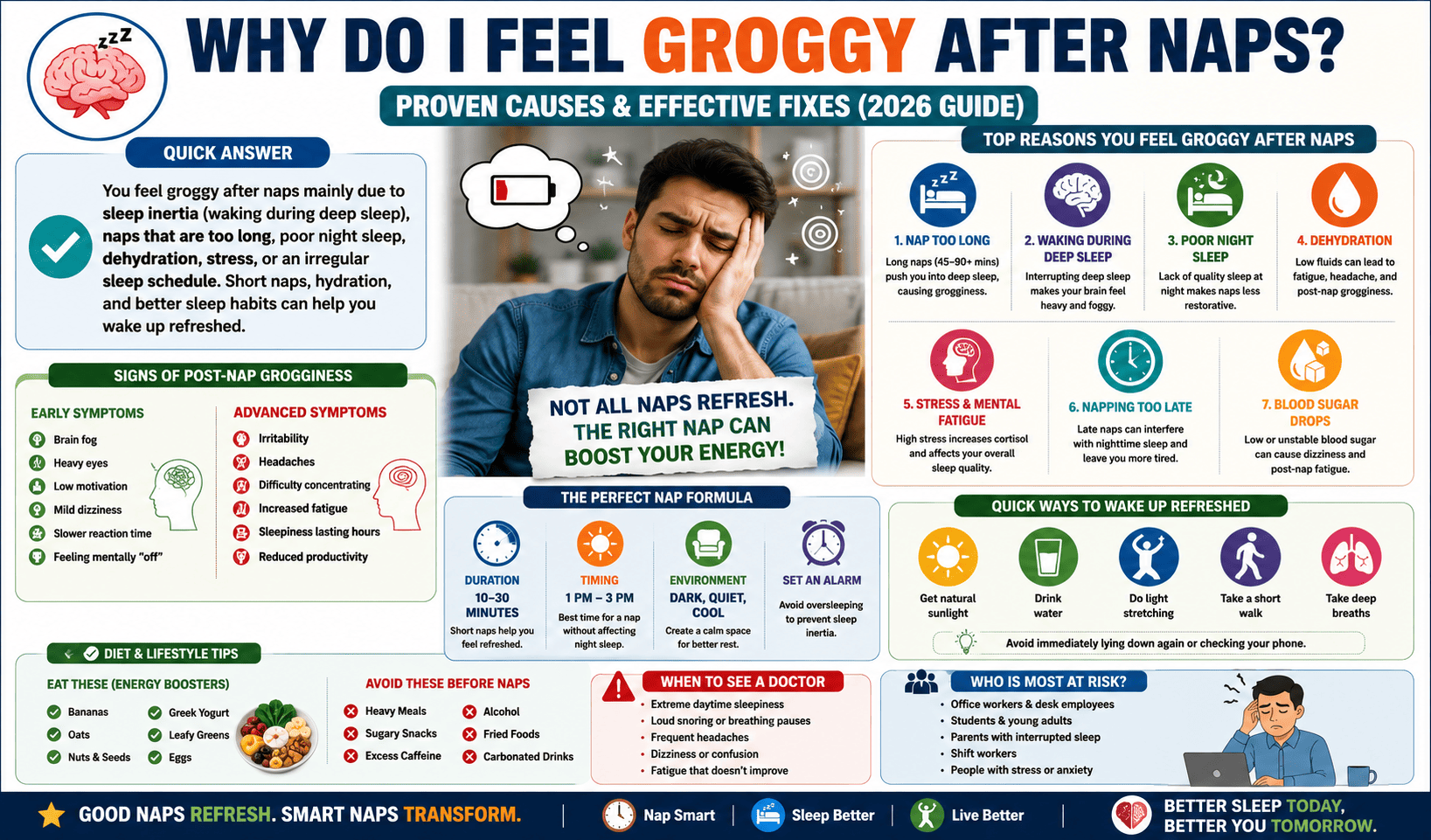
Feeling groggy after naps is often caused by waking up during deep sleep, taking naps that are too long, poor sleep quality, dehydration, stress, or an irregular sleep schedule. Short naps of 10–30 minutes, proper hydration, and better sleep habits can help reduce post-nap fatigue and improve alertness naturally.
What Does It Mean to Feel Groggy After Naps?
Grogginess after naps is commonly called sleep inertia.
Sleep inertia is the temporary feeling of:
- Mental fog
- Heavy tiredness
- Slow thinking
- Dizziness
- Lack of focus
that happens immediately after waking up.
Your brain needs time to fully transition from sleep mode to alertness. If you wake up during deep sleep, this transition becomes harder, making you feel worse instead of refreshed.
Also Read : Can sleeping too much make you tired?
Common Symptoms of Post-Nap Grogginess
Early Symptoms
- Brain fog
- Heavy eyes
- Low motivation
- Mild dizziness
- Slower reaction time
- Feeling mentally “off”
Advanced Symptoms
- Irritability
- Headaches
- Difficulty concentrating
- Increased fatigue
- Sleepiness lasting hours
- Reduced productivity
Some people may also feel:
- Anxiety after waking
- Confusion
- Temporary weakness
- Dry mouth or dehydration
Why Do I Feel Groggy After Naps?
Several factors can contribute to grogginess after napping.
1. Your Nap Was Too Long
One of the biggest reasons for grogginess is oversleeping during naps.
Ideal Nap Length
- 10–30 minutes = refreshing
- 30–90 minutes = higher risk of grogginess
Long naps often push your body into deep sleep. Waking up during deep sleep causes stronger sleep inertia.
2. You Woke Up During Deep Sleep
Your sleep cycle has stages:
- Light sleep
- Deep sleep
- REM sleep
If your alarm interrupts deep sleep, your brain may struggle to “wake up” properly.
This can lead to:
- Mental fog
- Sluggishness
- Irritability
- Heavy fatigue
3. Poor Nighttime Sleep
Frequent naps combined with exhaustion may signal poor nighttime sleep quality.
Common causes include:
- Stress
- Insomnia
- Sleep apnea
- Irregular sleep schedule
- Excess screen time before bed
When your body lacks quality nighttime rest, naps may not feel restorative.
4. Dehydration
Dehydration can worsen fatigue and brain fog after naps.
Many Americans:
- Drink too much caffeine
- Don’t consume enough water
- Nap in warm rooms
This may leave them waking up:
- Dry
- Headachy
- Mentally sluggish
5. Stress and Mental Fatigue
High stress affects both sleep quality and post-nap recovery.
Stress may:
- Increase cortisol
- Interrupt deep sleep quality
- Cause anxiety after waking
Mental burnout is especially common among office workers and students.
6. Napping Too Late in the Day
Late afternoon or evening naps can confuse your body clock.
This may:
- Reduce nighttime sleep quality
- Cause grogginess
- Increase nighttime alertness
Experts often recommend avoiding naps after 3 PM.
7. Blood Sugar Fluctuations
Low or unstable blood sugar can make post-nap fatigue worse.
This may happen if:
- You skip meals
- Eat high-sugar snacks
- Consume excessive caffeine
Blood sugar crashes may increase dizziness and weakness after waking up.
Also Read : What causes sleep anxiety at night?
Grogginess vs Healthy Nap Comparison
| Feature | Healthy Nap | Groggy Nap |
|---|---|---|
| Nap Duration | 10–30 minutes | 45–90+ minutes |
| Wake-Up Feeling | Refreshed | Heavy & tired |
| Mental Clarity | Improved | Brain fog |
| Energy Levels | Increased | Reduced |
| Sleep Stage | Light sleep | Deep sleep interruption |
Best Treatment Options for Nap Grogginess
Most post-nap grogginess improves with better sleep habits and routine changes.
1. Keep Naps Short
The best nap length for most adults is:
- 10–20 minutes
Short naps improve:
- Alertness
- Mood
- Focus
- Productivity
without entering deep sleep.
2. Nap Earlier in the Day
Best nap timing:
- Early afternoon
- Around 1 PM–3 PM
Avoid evening naps whenever possible.
3. Improve Nighttime Sleep
Naps should support healthy sleep — not replace it.
Better Sleep Habits
- Consistent bedtime
- Limit blue light at night
- Reduce caffeine late in the day
- Sleep in a cool, dark room
4. Stay Hydrated
Drink water before and after naps.
Hydration helps:
- Brain function
- Energy production
- Mental clarity
Even mild dehydration can worsen grogginess.
5. Move Your Body After Waking Up
Light movement helps your brain wake up faster.
Helpful Activities
- Stretching
- Walking
- Sunlight exposure
- Deep breathing
Avoid immediately lying back down.
6. Manage Stress Levels
Stress management improves both:
- Sleep quality
- Daytime energy
Helpful Techniques
- Meditation
- Journaling
- Exercise
- Screen breaks
- Relaxation before sleep
Also Read : Is sleep apnea dangerous if untreated?
Diet & Lifestyle Tips for Better Energy After Naps
Best Foods for Energy
- Oatmeal
- Bananas
- Greek yogurt
- Nuts and seeds
- Eggs
- Leafy greens
Foods to Avoid Before Naps
- Heavy fried foods
- Sugary snacks
- Alcohol
- Excess caffeine
Daily Routine Improvements
Morning
- Get sunlight exposure
- Drink water immediately
- Avoid oversleeping
During the Day
- Stay active
- Take movement breaks
- Avoid excessive caffeine
Evening
- Reduce screen exposure
- Avoid late-night meals
- Create a consistent bedtime routine
Healthy daily habits improve overall sleep recovery and reduce nap-related fatigue.
👉 Building healthy sleep habits can improve long-term energy, recovery, and overall wellness.
When Should You See a Doctor?
Occasional grogginess after naps is normal. However, you should seek medical advice if you experience:
- Extreme daytime fatigue
- Loud snoring
- Breathing pauses during sleep
- Frequent headaches
- Dizziness
- Ongoing exhaustion
- Difficulty staying awake during the day
Persistent fatigue may indicate:
- Sleep apnea
- Insomnia
- Nutrient deficiencies
- Depression
- Thyroid problems
Who Is Most at Risk?
Office Workers
Mental fatigue and screen exposure increase daytime tiredness.
Students
Poor sleep schedules and stress worsen nap quality.
Shift Workers
Irregular schedules disrupt natural sleep cycles.
Parents
Interrupted nighttime sleep increases daytime exhaustion.
Adults With High Stress
Anxiety and burnout affect both naps and nighttime sleep quality.
FAQs
1. Why do I feel worse after naps?
You may be waking up during deep sleep, causing sleep inertia and temporary brain fog.
2. How long should a healthy nap be?
Most experts recommend naps between 10–30 minutes for better alertness without grogginess.
3. Can dehydration cause grogginess after naps?
Yes. Dehydration may worsen fatigue, headaches, and mental fog after waking up.
4. Is it normal to feel dizzy after naps?
Mild dizziness can happen occasionally, especially after long naps or dehydration. Persistent dizziness should be evaluated by a doctor.
5. Why do naps make me more tired sometimes?
Long naps, poor nighttime sleep, stress, and irregular sleep schedules can make naps feel less refreshing.
Also Read : How to Get Rid of Groggy Feelings After a Nap
Conclusion
Feeling groggy after naps is extremely common and is usually linked to sleep inertia, long nap duration, dehydration, poor sleep habits, or stress.
The good news is that small changes can make a major difference:
- Keep naps short
- Nap earlier in the day
- Improve nighttime sleep
- Stay hydrated
- Reduce stress levels
If post-nap fatigue becomes severe or constant, it’s important to check for underlying sleep or health conditions with a healthcare professional.
Medically reviewed information sourced from trusted health organizations.
References
- National Institutes of Health (NIH). Sleep and Sleep Disorders.
https://www.nhlbi.nih.gov/health/sleep - Sleep Foundation. Sleep Health Resources.
https://www.sleepfoundation.org/ - Centers for Disease Control and Prevention (CDC). Sleep and Sleep Disorders.
https://www.cdc.gov/sleep/ - Mayo Clinic. Sleep Disorders Overview.
https://www.mayoclinic.org/
Reviewed by: Dzarro Editorial Team
Fact-checked using trusted medical and scientific sources.
Last Updated: June 13, 2026

Sandip Choudhary is a Health & Wellness Researcher and Content Creator specializing in sleep, digestive health, preventive wellness, and evidence-based health education. He has been creating online content and researching health-related topics for several years, focusing on translating complex medical information into practical guidance for everyday readers.
With a strong background in SEO and content strategy, Sandip ensures that every article is optimized for both search engines and real users. His goal is to provide reliable, clear, and helpful information that supports healthier living.
Disclaimer: The content published is for informational purposes only and is not a substitute for professional medical advice.