
Do you often wake up sweating, shivering, tossing, or turning during the night? Maybe you sleep for 7–8 hours but still wake up tired and groggy. Many Americans blame stress or insomnia, but one overlooked factor could be your bedroom temperature.
Yes, room temperature can significantly affect sleep quality. A bedroom that’s too hot or too cold can disrupt deep sleep, reduce comfort, and interfere with your body’s natural sleep cycle. The good news is that small changes to your sleep environment can make a noticeable difference.
This guide explains how room temperature impacts sleep, the ideal bedroom temperature for adults, common symptoms of poor sleep environments, and practical ways to sleep better naturally.
Quick Answer
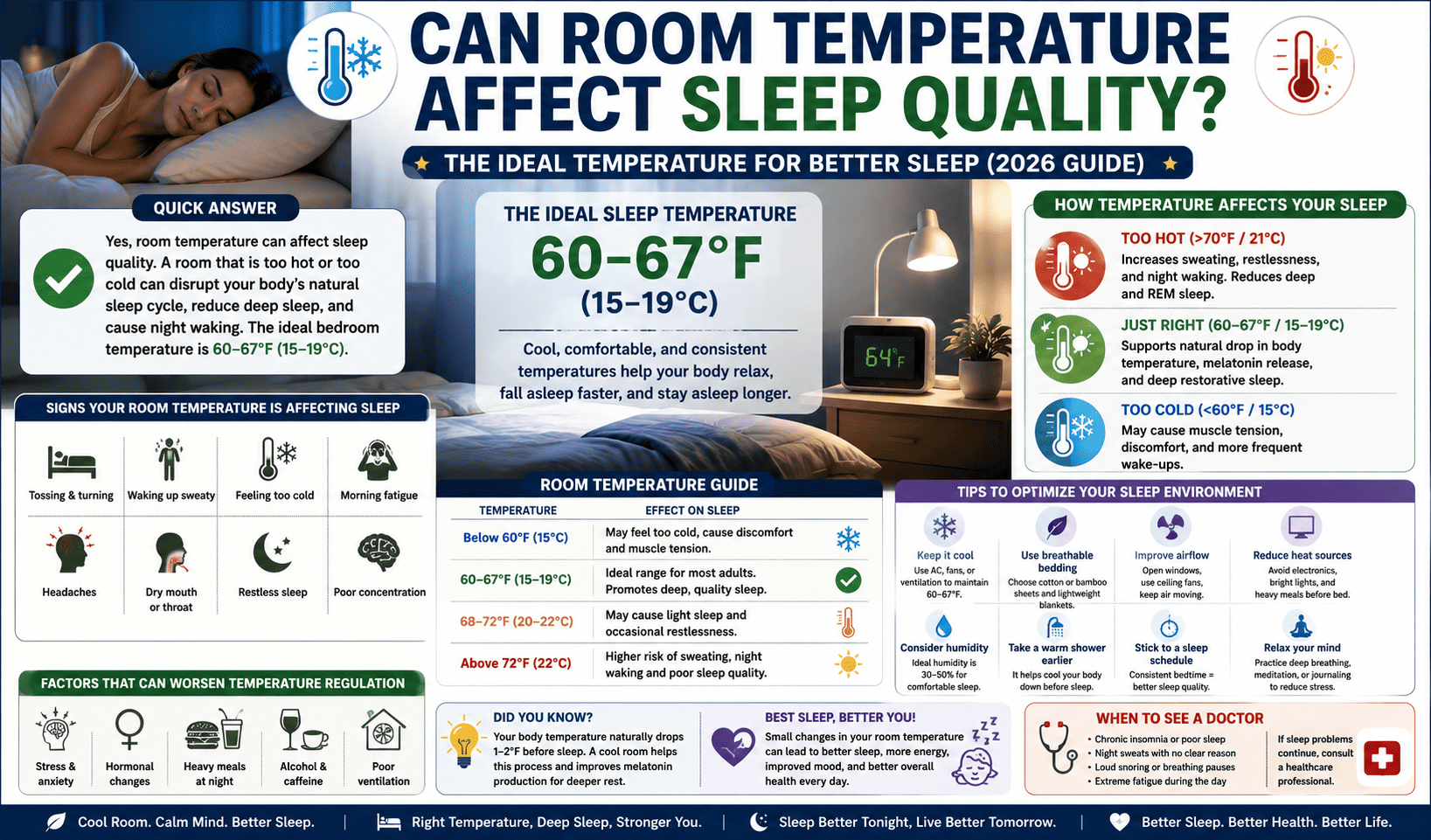
Yes, room temperature can affect sleep quality by influencing body temperature regulation, melatonin production, and deep sleep cycles. Rooms that are too hot or too cold may lead to night waking, poor sleep, fatigue, sweating, or restlessness. Most sleep experts recommend keeping bedroom temperature between 60–67°F (15–19°C) for optimal sleep.
What Does It Mean When Room Temperature Affects Sleep?
Your body naturally cools down before sleep as part of your circadian rhythm. This temperature drop signals the brain that it’s time to rest.
If your room is:
- Too hot → your body struggles to cool down
- Too cold → your body works harder to stay warm
Both situations can interfere with:
- Falling asleep
- Staying asleep
- Deep sleep quality
- REM sleep recovery
That’s why temperature plays a major role in how refreshed you feel the next morning.
Also Read : Can magnesium improve sleep quality?
Common Symptoms of Poor Sleep Temperature
A bad sleep environment often causes subtle symptoms at first.
Early Symptoms
- Tossing and turning
- Waking up sweaty
- Cold feet or hands
- Difficulty falling asleep
- Light sleep
- Mild morning fatigue
Advanced Symptoms
- Frequent waking during the night
- Poor deep sleep
- Morning headaches
- Brain fog
- Irritability
- Chronic fatigue
- Poor concentration
Many people don’t realize their bedroom temperature may be contributing to these problems.
How Room Temperature Impacts Sleep Quality
Your body relies on temperature regulation for healthy sleep.
1. Hot Rooms Can Disrupt Deep Sleep
A warm room can prevent the body from lowering its core temperature.
This may cause:
- Night sweating
- Restlessness
- Increased heart rate
- Frequent waking
Hot environments often reduce REM and deep sleep quality.
Common Causes of Overheated Bedrooms
- Poor air circulation
- Heavy blankets
- Warm climates
- Excess screen heat
- High indoor humidity
2. Cold Rooms Can Cause Sleep Discomfort
Cold temperatures may also interrupt sleep.
When the room is too cold, your muscles may tense up and your body stays alert to maintain warmth.
Possible Symptoms
- Chills
- Tight muscles
- Difficulty relaxing
- Interrupted sleep
Some people are especially sensitive to cold due to:
- Poor circulation
- Low body weight
- Aging
3. Temperature Affects Melatonin Production
Melatonin is the hormone that helps regulate sleep.
A cool, dark room supports healthy melatonin release, while overheating may interfere with your body’s natural sleep signals.
This is one reason why cooler bedrooms are often associated with better sleep quality.
Also Read : What foods improve sleep quality naturally?
Ideal Sleep Temperature Comparison Table
| Room Temperature | Possible Effect on Sleep |
|---|---|
| Below 60°F | May feel too cold, muscle tension |
| 60–67°F | Ideal range for most adults |
| Above 70°F | Increased sweating and restlessness |
| Above 75°F | Higher risk of poor sleep quality |
Causes & Risk Factors That Affect Sleep Temperature
Several lifestyle and environmental factors can worsen temperature-related sleep problems.
Poor Ventilation
Rooms without proper airflow trap heat and humidity.
This often leads to:
- Sweating
- Stuffy air
- Interrupted sleep
Stress & Anxiety
Stress increases body temperature and nervous system activity.
People under chronic stress may feel:
- Overheated at night
- Restless
- Unable to relax
Heavy Meals Before Bed
Eating large meals late at night increases metabolism and body heat.
This may contribute to:
- Night sweating
- Acid reflux
- Sleep discomfort
Alcohol & Caffeine
Alcohol may initially cause drowsiness but often disrupts body temperature regulation later in the night.
Caffeine can increase alertness and make it harder for the body to relax naturally.
Hormonal Changes
Hormonal fluctuations can affect body temperature.
This is especially common in:
- Women during menopause
- Pregnancy
- People with thyroid conditions
Also Read : How to sleep better without medication?
Best Treatment Options for Better Sleep Temperature
Improving bedroom temperature is often one of the easiest ways to improve sleep quality naturally.
1. Keep the Bedroom Cool
Most sleep experts recommend:
60–67°F (15–19°C)
Helpful cooling methods:
- Fans
- Air conditioning
- Breathable bedding
- Cooling pillows
- Lightweight blankets
2. Improve Airflow
Fresh airflow can make a major difference.
Helpful Tips
- Open windows when possible
- Use ceiling fans
- Avoid blocking vents
- Reduce room clutter
Better airflow helps regulate humidity and temperature.
3. Choose Breathable Bedding
Heavy fabrics trap heat.
Better Sleep Materials
- Cotton sheets
- Bamboo fabrics
- Moisture-wicking pillow covers
These materials help the body cool naturally.
4. Reduce Heat Before Bed
Avoid Before Sleep
- Intense exercise late at night
- Hot showers immediately before bed
- Heavy meals
- Alcohol
- Excess screen time
These habits may raise body temperature and delay sleep.
5. Manage Stress Naturally
Stress reduction improves both sleep quality and body temperature regulation.
Helpful Relaxation Techniques
- Meditation
- Deep breathing
- Stretching
- Reading
- Calm music
A relaxed nervous system supports deeper sleep.
Also Read : How much sleep do adults really need?
Diet & Lifestyle Tips for Better Sleep
Foods That May Support Sleep
- Bananas
- Almonds
- Oatmeal
- Kiwi
- Herbal teas
- Magnesium-rich foods
Foods to Avoid Before Bed
- Spicy foods
- Fried foods
- Energy drinks
- Excess sugar
- Alcohol
Daily Sleep Routine Improvements
Morning
- Get sunlight exposure
- Avoid oversleeping
- Stay hydrated
Evening
- Keep lights dim
- Lower room temperature 1 hour before bed
- Reduce screen exposure
Consistency matters more than perfection.
When Should You See a Doctor?
Speak with a healthcare professional if you experience:
- Severe insomnia
- Loud snoring
- Persistent night sweats
- Chronic fatigue
- Difficulty breathing during sleep
- Frequent waking for weeks
- Chest pain or dizziness
These symptoms may indicate a sleep disorder or underlying medical condition.
Also Read : What are the signs of poor sleep quality?
Who Is Most at Risk?
1. Older Adults
Aging affects body temperature regulation and sleep quality.
2. Women During Menopause
Hot flashes and hormonal changes may disrupt sleep.
3. Office Workers
Stress and screen exposure increase sleep disturbances.
4. People Living in Hot Climates
Overheated bedrooms commonly affect sleep quality.
5. Individuals with Anxiety
Stress-related nervous system activity may increase nighttime restlessness.
FAQs
1. What is the best room temperature for sleep?
Most experts recommend keeping bedroom temperature between 60–67°F for optimal sleep quality.
2. Can a hot room cause poor sleep?
Yes. Hot rooms may increase sweating, restlessness, and nighttime waking, reducing deep sleep quality.
3. Is sleeping in a cold room healthy?
A slightly cool room is usually beneficial, but extremely cold temperatures may disrupt comfort and sleep.
4. Can room temperature affect dreams and REM sleep?
Yes. Overheating may reduce REM sleep and increase nighttime interruptions.
5. Why do I wake up sweating even with AC on?
Possible causes include stress, heavy bedding, hormones, illness, or poor airflow in the bedroom.
👉 Building healthy sleep habits is an important part of a complete Sleep Optimization Guide.
Conclusion
Room temperature plays a major role in sleep quality, energy levels, and overnight recovery. A bedroom that is too hot or too cold can interfere with your body’s natural sleep cycle, leading to fatigue, restlessness, and poor concentration during the day.
The good news is that simple adjustments — like cooling the room, improving airflow, using breathable bedding, and reducing stress — can help improve sleep naturally.
If sleep problems continue despite improving your sleep environment, it’s important to speak with a healthcare professional to rule out sleep disorders or underlying health conditions.
Medically reviewed information sourced from trusted health organizations.
References
- National Institutes of Health (NIH). Sleep and Sleep Disorders.
https://www.nhlbi.nih.gov/health/sleep - Sleep Foundation. Sleep Health Resources.
https://www.sleepfoundation.org/ - Centers for Disease Control and Prevention (CDC). Sleep and Sleep Disorders.
https://www.cdc.gov/sleep/ - Mayo Clinic. Sleep Disorders Overview.
https://www.mayoclinic.org/
Reviewed by: Dzarro Editorial Team
Fact-checked using trusted medical and scientific sources.
Last Updated: June 13, 2026

Sandip Choudhary is a Health & Wellness Researcher and Content Creator specializing in sleep, digestive health, preventive wellness, and evidence-based health education. He has been creating online content and researching health-related topics for several years, focusing on translating complex medical information into practical guidance for everyday readers.
With a strong background in SEO and content strategy, Sandip ensures that every article is optimized for both search engines and real users. His goal is to provide reliable, clear, and helpful information that supports healthier living.
Disclaimer: The content published is for informational purposes only and is not a substitute for professional medical advice.