
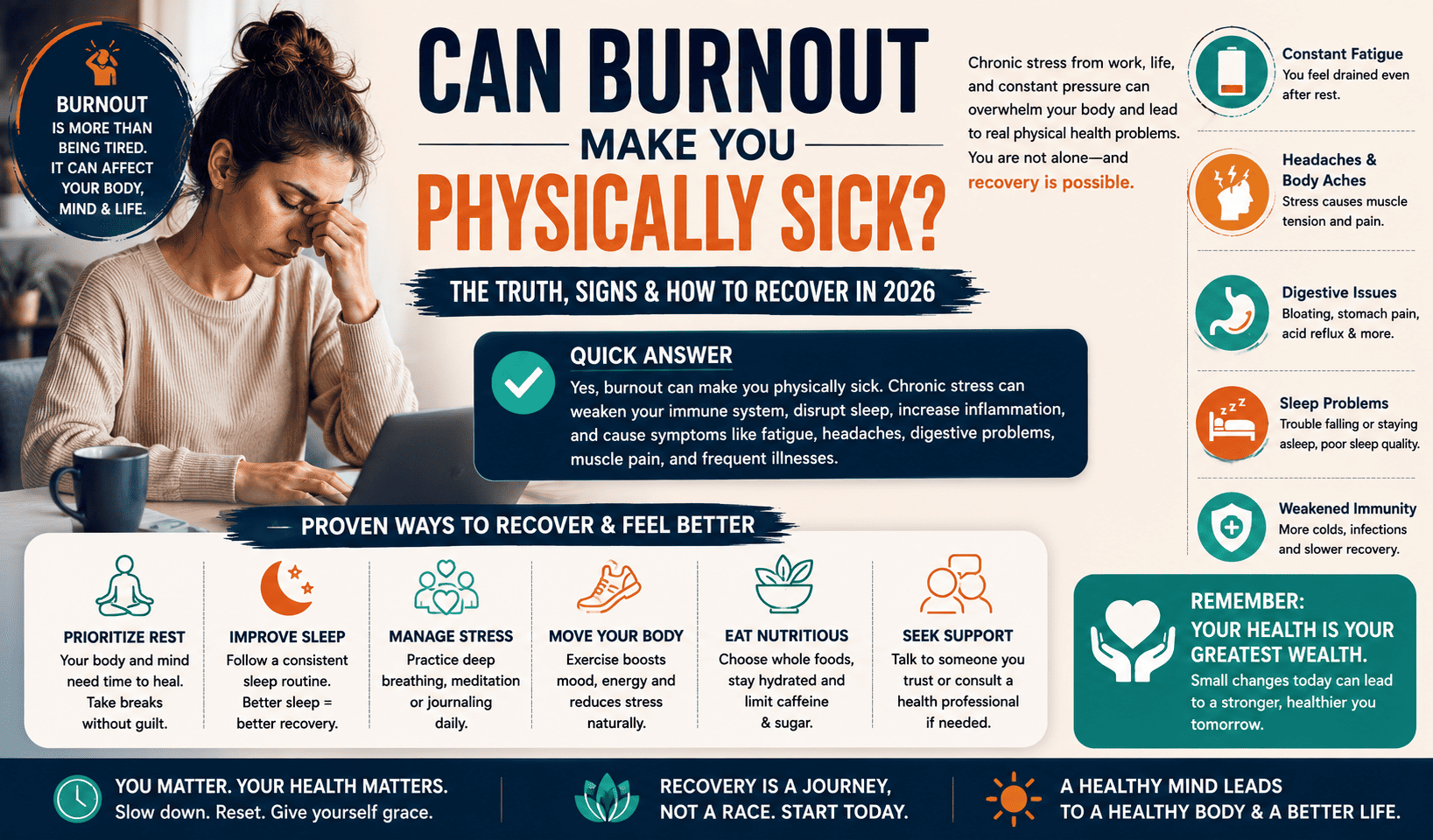
Feeling exhausted even after a full night’s sleep? Struggling with headaches, stomach issues, or frequent illnesses during stressful periods? If so, you may wonder: Can burnout make you physically sick?
The answer is yes. Burnout is more than feeling stressed or overworked. It can affect both your mental and physical health. In today’s fast-paced world, many Americans juggle demanding jobs, family responsibilities, financial pressures, and constant digital connectivity. Over time, chronic stress can push the body into a state of burnout, affecting energy levels, immunity, sleep, and overall well-being.
This guide explains how burnout affects the body, common symptoms to watch for, and practical ways to recover naturally.
Quick Answer
Yes, burnout can make you physically sick. Chronic stress associated with burnout may weaken the immune system, disrupt sleep, increase inflammation, and contribute to symptoms like fatigue, headaches, digestive problems, muscle pain, and frequent illnesses. Managing stress, improving sleep, and seeking support can help reduce burnout-related health effects.
What Is Burnout?
Burnout is a state of physical, emotional, and mental exhaustion caused by prolonged stress. It commonly develops when people feel overwhelmed, emotionally drained, or unable to meet ongoing demands.
Although burnout is often linked to work, it can also affect:
- Parents and caregivers
- Students
- Healthcare workers
- Remote workers
- Business owners
Burnout doesn’t happen overnight. It usually develops gradually as stress accumulates over weeks or months.
Also Read : Can overthinking affect physical health?
How Can Burnout Affect the Body?
The body is designed to handle short-term stress. However, when stress becomes chronic, it can keep stress hormones like cortisol elevated for long periods.
Over time, this may affect:
- Immune function
- Sleep quality
- Digestion
- Blood pressure
- Hormone balance
- Mental well-being
This explains why burnout can feel both emotional and physical.
Also Read : What are symptoms of high cortisol?
Symptoms of Burnout
Burnout symptoms often start subtly and become more severe if left unaddressed.
Early Symptoms
- Feeling tired most days
- Difficulty concentrating
- Irritability
- Trouble sleeping
- Reduced motivation
- Feeling emotionally drained
Advanced Symptoms
- Frequent headaches
- Muscle tension or body aches
- Digestive problems
- Anxiety or depression symptoms
- Increased illness frequency
- Persistent fatigue
- Difficulty performing daily tasks
Many people mistakenly assume these symptoms are simply part of a busy lifestyle.
Also Read : Can overthinking affect physical health?
Can Burnout Cause Physical Symptoms?
Yes. Burnout can contribute to a variety of physical symptoms because stress affects multiple body systems simultaneously.
Fatigue and Low Energy
One of the most common signs of burnout is extreme fatigue. Unlike normal tiredness, burnout-related fatigue may persist even after rest.
People often report:
- Waking up exhausted
- Feeling drained by simple tasks
- Lack of motivation throughout the day
Frequent Illnesses
Chronic stress may weaken immune function, making it harder for the body to fight infections.
Some people notice:
- More colds
- Longer recovery times
- Increased susceptibility to illness
Headaches and Muscle Pain
Stress often causes muscle tension, especially in the neck, shoulders, and back.
This may lead to:
- Tension headaches
- Jaw pain
- Body aches
- Chronic discomfort
Digestive Problems
The gut and brain are closely connected through the gut-brain axis.
Burnout may contribute to:
- Stomach discomfort
- Bloating
- Acid reflux
- Changes in bowel habits
Stress-related digestive symptoms are common among adults experiencing burnout.
Sleep Problems
Burnout frequently affects sleep quality.
Many individuals experience:
- Difficulty falling asleep
- Nighttime waking
- Restless sleep
- Waking up tired despite sleeping enough
Poor sleep can worsen burnout, creating a cycle that becomes difficult to break.
Also Read : Why do I feel anxious at night?
Comparison Table: Stress vs Burnout
| Factor | Stress | Burnout |
|---|---|---|
| Duration | Short-term | Long-term |
| Energy Level | Overactive | Exhausted |
| Emotions | Anxiety | Detachment |
| Motivation | Reduced | Very low |
| Physical Symptoms | Mild | More severe |
| Recovery | Easier | May take longer |
Causes & Risk Factors
Burnout develops due to a combination of personal, environmental, and lifestyle factors.
Work Pressure
Heavy workloads, long hours, and lack of work-life balance are common contributors.
People who constantly feel pressure to perform may be at higher risk.
Chronic Stress
Ongoing financial, family, or personal stress can gradually overwhelm the body’s coping systems.
Unlike temporary stress, chronic stress rarely allows the body to fully recover.
Poor Sleep Habits
Lack of restorative sleep increases stress hormone levels and reduces resilience.
People who sleep less than recommended may be more vulnerable to burnout.
Sedentary Lifestyle
Physical inactivity can negatively affect:
- Mood
- Energy levels
- Stress management
Regular movement helps regulate both physical and mental health.
Diet Quality
Highly processed foods, excess sugar, and heavy caffeine use may worsen energy fluctuations and stress responses.
A balanced diet supports overall well-being and recovery.
Also Read : What foods help reduce stress?
Best Treatment Options for Burnout Recovery
Recovering from burnout usually requires lifestyle changes and support.
Prioritize Rest and Recovery
Rest is not laziness—it is an important part of recovery.
This may include:
- Taking breaks
- Using vacation time
- Reducing unnecessary commitments
Improve Sleep Quality
Sleep helps regulate:
- Hormones
- Immunity
- Mood
- Energy production
Healthy sleep habits often improve resilience to stress.
Set Healthy Boundaries
Learning to say no can protect mental and physical health.
Examples include:
- Limiting after-hours work
- Reducing screen time
- Delegating responsibilities
Seek Social Support
Talking to friends, family members, or mental health professionals can provide emotional support during stressful periods.
Connection often plays a key role in recovery.
Professional Treatment
In some cases, professional support may be beneficial.
Healthcare professionals may recommend:
- Counseling
- Stress management strategies
- Evaluation for underlying health concerns
Also Read : Can lack of sleep worsen anxiety?
Diet & Lifestyle Tips
Lifestyle habits can significantly influence stress levels and recovery.
Foods That May Support Recovery
Foods rich in nutrients may support overall health, including:
- Fatty fish
- Leafy greens
- Nuts and seeds
- Berries
- Whole grains
Staying hydrated throughout the day is also important.
Foods to Limit
Some foods may worsen stress responses or disrupt sleep:
- Excess caffeine
- Alcohol
- Sugary drinks
- Highly processed foods
Moderation is often more sustainable than strict restriction.
Daily Routine Improvements
Small habits often create meaningful changes over time.
Helpful strategies include:
- Walking outdoors
- Practicing mindfulness
- Taking short work breaks
- Maintaining consistent sleep schedules
Recovery usually happens gradually rather than overnight.
When to See a Doctor
Burnout symptoms can sometimes overlap with other health conditions.
Consider seeking medical advice if you experience:
- Persistent fatigue lasting weeks or months
- Chest pain
- Significant weight changes
- Severe sleep problems
- Anxiety or depression symptoms
- Difficulty functioning in daily life
A healthcare professional can help evaluate possible causes and recommend appropriate care.
Also Read : How to calm anxiety naturally at home?
Who Is Most at Risk?
Burnout can affect anyone, but some groups may be at higher risk.
1. Office Workers
High workloads, deadlines, and long screen hours can contribute to chronic stress.
2. Healthcare Workers
Emotional demands and long shifts may increase burnout risk.
3. Parents and Caregivers
Balancing responsibilities can create significant physical and emotional strain.
4. Students
Academic pressure and irregular sleep patterns may contribute to burnout symptoms.
5. Remote Workers
Working from home may blur boundaries between work and personal life.
Frequently Asked Questions
1. Can burnout make you physically ill?
Yes. Burnout can affect the immune system, sleep, digestion, and overall health, leading to physical symptoms.
2. What are the physical signs of burnout?
Common signs include fatigue, headaches, muscle tension, digestive issues, and frequent illnesses.
3. Can burnout cause stomach problems?
Yes. Chronic stress can affect the gut-brain connection and contribute to digestive symptoms.
4. How long does burnout recovery take?
Recovery varies by individual and may depend on stress levels, lifestyle changes, and support systems.
5. Can burnout affect sleep quality?
Yes. Burnout often disrupts sleep patterns and may contribute to insomnia or non-restorative sleep.
👉 A balanced lifestyle helps promote healthy emotional balance.
Conclusion
Burnout is not simply feeling busy or stressed—it can affect the body in real and measurable ways. Chronic stress may contribute to fatigue, digestive problems, sleep disturbances, headaches, and reduced immune function.
The good news is that recovery is possible. Prioritizing rest, improving sleep, setting healthy boundaries, and seeking support can help restore both physical and mental well-being. If symptoms persist or interfere with daily life, speaking with a healthcare professional may provide additional guidance.
Reviewed by: Dzarro Editorial Team
Fact-checked using trusted medical and scientific sources.

Sandip Choudhary is a Health & Wellness Researcher and Content Creator specializing in sleep, digestive health, preventive wellness, and evidence-based health education. He has been creating online content and researching health-related topics for several years, focusing on translating complex medical information into practical guidance for everyday readers.
With a strong background in SEO and content strategy, Sandip ensures that every article is optimized for both search engines and real users. His goal is to provide reliable, clear, and helpful information that supports healthier living.
Disclaimer: The content published is for informational purposes only and is not a substitute for professional medical advice.
3 thoughts on “Can burnout make you physically sick?”
Comments are closed.