
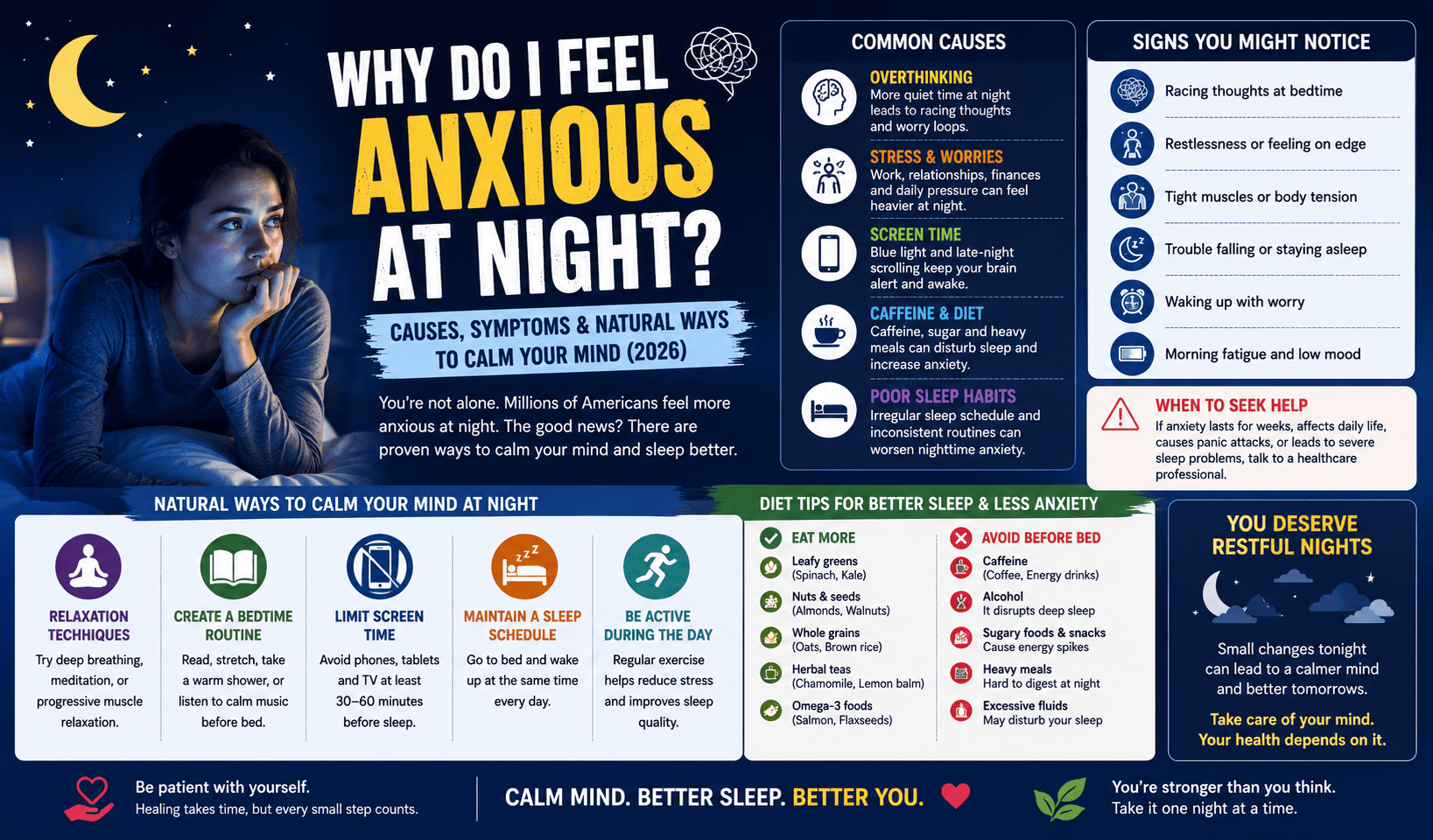
You finally finish your day, turn off the lights, and get into bed—only for your mind to suddenly become more active than ever. Thoughts start racing, worries feel bigger, and falling asleep becomes difficult. If you’ve ever wondered, “Why do I feel anxious at night?”, you’re not alone.
Millions of Americans experience nighttime anxiety, even if they feel relatively calm during the day. Nighttime anxiety can interfere with sleep, affect mental health, and leave you feeling exhausted the next morning. Understanding why it happens is the first step toward managing it effectively.
Quick Answer
Feeling anxious at night is often caused by stress, overthinking, poor sleep habits, caffeine, hormonal changes, or underlying anxiety disorders. At night, fewer distractions can make worries feel more intense. Healthy bedtime routines, stress management techniques, and improving sleep habits may help reduce nighttime anxiety naturally.
What Is Nighttime Anxiety?
Nighttime anxiety refers to feelings of worry, nervousness, or unease that become more noticeable in the evening or while trying to sleep.
Unlike daytime stress, nighttime anxiety often feels stronger because your brain has fewer distractions. Without work, conversations, or daily activities competing for attention, worries may become more noticeable.
Nighttime anxiety is not always a sign of a medical condition. In many cases, lifestyle habits, stress levels, and sleep patterns play a significant role.
Also Read : What foods help reduce stress?
Symptoms of Nighttime Anxiety
Nighttime anxiety affects both the mind and body.
Early Symptoms
- Racing thoughts before bed
- Difficulty relaxing
- Feeling restless at night
- Mild sleep problems
- Increased worrying
- Difficulty falling asleep
Advanced Symptoms
- Frequent waking during the night
- Panic-like symptoms
- Chronic insomnia
- Daytime fatigue
- Difficulty concentrating
- Mood changes
- Persistent sleep disruption
Some people also experience physical symptoms such as:
- Increased heart rate
- Muscle tension
- Sweating
- Upset stomach
Also Read : Can lack of sleep worsen anxiety?
Why Do I Feel Anxious at Night?
There isn’t one single cause of nighttime anxiety. Several factors may contribute.
1. Fewer Distractions at Night
During the day, your brain stays busy with work, family, errands, and social interactions. At night, those distractions disappear.
As a result, worries about:
- Finances
- Relationships
- Health
- Work responsibilities
may become more noticeable.
This is one of the most common reasons people experience nighttime anxiety.
2. Chronic Stress
Stress activates the body’s “fight-or-flight” response.
When stress remains elevated for long periods, your body may struggle to relax at bedtime. High cortisol levels can make it difficult to fall asleep and stay asleep.
Common stressors in the United States include:
- Work pressure
- Financial concerns
- Family responsibilities
- Academic stress
3. Poor Sleep Habits
Irregular sleep schedules can affect your internal body clock.
Habits that may worsen nighttime anxiety include:
- Late-night screen use
- Sleeping at inconsistent times
- Excessive napping
- Working in bed
A lack of structure may increase mental stimulation before sleep.
4. Caffeine Consumption
Caffeine stimulates the nervous system and may stay in the body for several hours.
Even afternoon coffee or energy drinks may contribute to:
- Restlessness
- Racing thoughts
- Difficulty sleeping
Some individuals are more sensitive to caffeine than others.
5. Overthinking and Rumination
Nighttime often becomes a quiet space for reflection.
While reflection can be healthy, excessive overthinking may increase anxiety and interfere with sleep. People may replay conversations, worry about future events, or dwell on past experiences.
6. Hormonal Changes
Hormones influence mood and sleep.
Hormonal fluctuations may contribute to nighttime anxiety in:
- Women during menstruation
- Pregnancy
- Menopause
- Individuals with thyroid conditions
Also Read : How to calm anxiety naturally at home?
Nighttime Anxiety vs Normal Stress
| Feature | Normal Stress | Nighttime Anxiety |
|---|---|---|
| Duration | Temporary | Frequent or recurring |
| Sleep disruption | Mild | Common |
| Physical symptoms | Occasional | More noticeable |
| Impact on daily life | Limited | May affect functioning |
| Need for evaluation | Rare | Sometimes helpful |
Best Treatment Options for Nighttime Anxiety
Managing nighttime anxiety often requires a combination of lifestyle changes and stress reduction techniques.
1. Create a Relaxing Bedtime Routine
A consistent nighttime routine helps signal to the brain that it is time to rest.
Helpful activities include:
- Reading
- Gentle stretching
- Meditation
- Deep breathing exercises
- Listening to calming music
Repeating these habits consistently may improve sleep quality over time.
2. Limit Screen Time Before Bed
Phones, tablets, and computers emit blue light that may interfere with melatonin production.
Experts often recommend avoiding screens for 30–60 minutes before bedtime.
Replacing screen time with relaxing activities may help reduce nighttime anxiety.
3. Practice Mindfulness
Mindfulness techniques encourage focusing on the present moment rather than future worries.
Examples include:
- Guided meditation
- Box breathing
- Gratitude journaling
- Body scans
Even a few minutes of mindfulness may help calm an active mind.
4. Exercise Regularly
Physical activity can help regulate stress hormones and improve sleep quality.
Many adults benefit from:
- Walking
- Yoga
- Strength training
- Cycling
Avoid intense exercise immediately before bedtime.
5. Seek Professional Support When Needed
If anxiety becomes persistent or interferes with daily life, professional support may be helpful.
Healthcare professionals may recommend:
- Therapy
- Stress management programs
- Sleep evaluations
- Additional mental health support
Also Read : What are the signs of emotional burnout?
Diet & Lifestyle Tips for Nighttime Anxiety
What you eat and how you structure your day can influence nighttime anxiety.
Foods That May Support Relaxation
Certain foods contain nutrients that support normal nervous system function.
Examples include:
- Magnesium-rich foods
- Whole grains
- Leafy greens
- Nuts and seeds
- Fatty fish
- Herbal teas
Maintaining regular meals may also help stabilize energy levels.
What to Avoid Before Bed
Late-night habits can sometimes worsen anxiety.
Consider limiting:
- Excess caffeine
- Alcohol
- Heavy meals
- Sugary snacks
- Excess screen time
Small changes in evening habits may improve sleep and reduce stress.
Daily Routine Improvements
A healthy daily routine supports both mental wellness and sleep quality.
Helpful habits include:
- Getting morning sunlight
- Staying physically active
- Taking breaks during work
- Practicing stress management
- Maintaining consistent sleep times
Consistency often matters more than perfection.
When to See a Doctor
Occasional nighttime anxiety is common. However, you should consider speaking with a healthcare professional if you experience:
- Anxiety lasting for several weeks
- Panic attacks
- Severe sleep disruption
- Difficulty functioning during the day
- Persistent sadness or hopelessness
- Significant changes in mood or behavior
Professional evaluation can help identify underlying causes and provide appropriate support.
Also Read : Why do I feel overwhelmed for no reason?
Who Is at Risk?
Some groups may be more likely to experience nighttime anxiety.
1. Adults Under Chronic Stress
Work demands, finances, and family responsibilities may increase stress levels.
2. College Students
Academic pressure and irregular schedules can affect sleep and mental health.
3. Women
Hormonal changes may contribute to nighttime anxiety in some individuals.
4. Shift Workers
Irregular sleep schedules may disrupt circadian rhythms.
5. People With Existing Anxiety Disorders
Individuals with anxiety conditions may notice stronger symptoms at night.
Frequently Asked Questions
1. Why is my anxiety worse at night?
Nighttime often has fewer distractions, allowing worries and stress to become more noticeable.
2. Can lack of sleep cause anxiety?
Yes. Poor sleep and anxiety can influence each other, creating a cycle that may worsen symptoms.
3. How can I calm anxiety before bed?
Relaxation techniques, limiting screens, and following a consistent bedtime routine may help reduce anxiety.
4. Can caffeine make nighttime anxiety worse?
Yes. Caffeine stimulates the nervous system and may increase restlessness in some individuals.
5. Is nighttime anxiety normal?
Occasional nighttime anxiety is common, but persistent symptoms may benefit from professional evaluation.
👉 Healthy lifestyle changes often lead to better psychological well-being.
Conclusion
If you’ve been asking, “Why do I feel anxious at night?”, the answer often involves a combination of stress, sleep habits, overthinking, lifestyle factors, and mental health.
The good news is that nighttime anxiety can often improve with small but consistent changes. Building healthy sleep habits, managing stress, limiting screen time, and creating a relaxing bedtime routine may help calm the mind and improve sleep quality.
If anxiety continues to interfere with your daily life or sleep, speaking with a healthcare professional can provide additional guidance and support.
Reviewed by: Dzarro Editorial Team
Fact-checked using trusted medical and scientific sources.

Sandip Choudhary is a Health & Wellness Researcher and Content Creator specializing in sleep, digestive health, preventive wellness, and evidence-based health education. He has been creating online content and researching health-related topics for several years, focusing on translating complex medical information into practical guidance for everyday readers.
With a strong background in SEO and content strategy, Sandip ensures that every article is optimized for both search engines and real users. His goal is to provide reliable, clear, and helpful information that supports healthier living.
Disclaimer: The content published is for informational purposes only and is not a substitute for professional medical advice.
1 thought on “Why do I feel anxious at night?”
Comments are closed.