
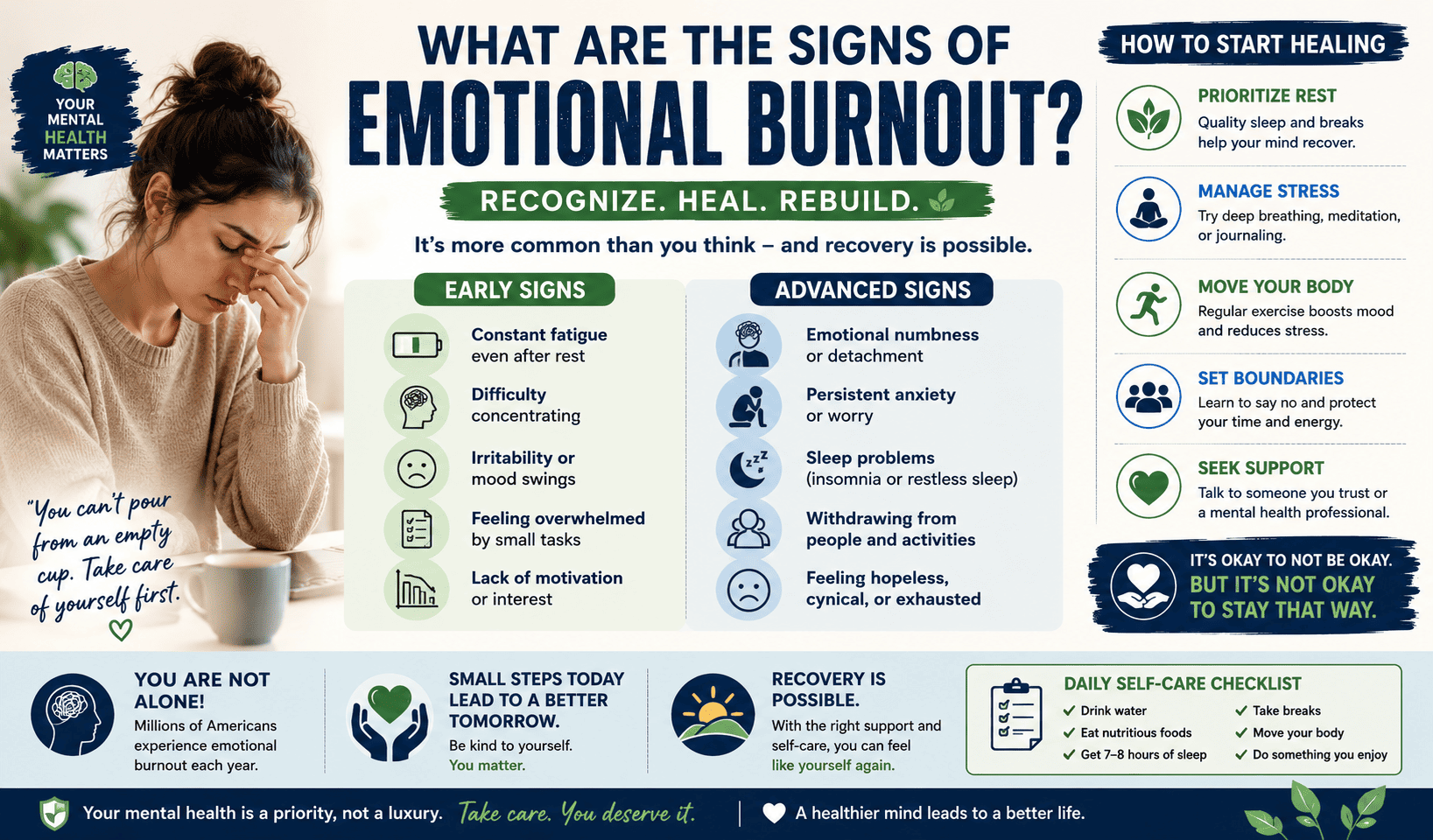
Have you been feeling constantly exhausted, unmotivated, or emotionally drained—even after getting enough sleep? Maybe small tasks feel overwhelming, your patience is running thin, or you simply don’t enjoy things the way you used to. If this sounds familiar, you may be experiencing emotional burnout.
In today’s fast-paced world, emotional burnout is becoming increasingly common in the United States. Long work hours, financial pressure, caregiving responsibilities, and digital overload can all contribute to chronic stress. The good news is that recognizing the signs early can help you take steps toward recovery before burnout affects your health and quality of life.
Quick Answer
Emotional burnout is a state of physical, mental, and emotional exhaustion caused by prolonged stress. Common signs include constant fatigue, lack of motivation, irritability, difficulty concentrating, emotional numbness, sleep problems, and feeling overwhelmed. Early recognition and lifestyle changes can help prevent burnout from becoming more severe.
What Is Emotional Burnout?
Emotional burnout occurs when ongoing stress overwhelms your ability to cope. It doesn’t happen overnight. Instead, it often develops gradually after weeks or months of emotional strain.
Unlike ordinary tiredness, burnout affects how you think, feel, and function in daily life. You may feel emotionally disconnected, mentally exhausted, or unable to recharge—even after taking time off.
Burnout is not officially classified as a medical diagnosis in itself, but it is widely recognized as a serious occupational and lifestyle-related issue that can affect overall well-being.
Also Read : Why do I feel mentally tired after work?
Signs of Emotional Burnout
The symptoms of emotional burnout can vary from person to person. Some signs appear early, while others develop over time.
Early Signs of Emotional Burnout
- Feeling tired most days, even after sleeping
- Difficulty concentrating at work or home
- Increased irritability or frustration
- Loss of motivation
- Feeling overwhelmed by simple tasks
- Reduced productivity
- Trouble relaxing during free time
At this stage, many people assume they are simply “busy” or “stressed,” which can delay recovery.
Advanced Signs of Emotional Burnout
As burnout progresses, symptoms may become more intense and begin affecting relationships, work performance, and physical health.
Common advanced signs include:
- Emotional numbness
- Frequent anxiety
- Social withdrawal
- Sleep disturbances
- Persistent exhaustion
- Cynicism or negativity
- Feeling detached from work or family responsibilities
- Loss of enjoyment in activities once loved
When burnout becomes severe, it can significantly affect quality of life.
Also Read : Can stress cause physical symptoms?
How Emotional Burnout Differs From Normal Stress
Stress and burnout are related, but they are not the same thing.
| Factor | Stress | Emotional Burnout |
|---|---|---|
| Energy level | Overactive | Emotionally depleted |
| Motivation | Usually remains | Often disappears |
| Recovery | Improves with rest | Rest alone may not help |
| Emotions | Heightened | Numb or detached |
| Productivity | Reduced temporarily | Significantly impaired |
Stress often feels like “too much,” while burnout can feel like “nothing left.”
What Causes Emotional Burnout?
Burnout usually develops when multiple stressors build up over time.
Chronic Work Stress
Long hours, unrealistic deadlines, and workplace pressure are among the leading causes of burnout in the United States. Remote work has also blurred the boundaries between professional and personal life for many adults.
Employees who feel a lack of control, support, or recognition may be at greater risk.
Poor Sleep Quality
Sleep is essential for emotional recovery. Chronic sleep deprivation can increase stress hormones, reduce resilience, and make emotional exhaustion worse.
People who wake up tired despite sleeping enough may be experiencing early burnout.
Caregiving Responsibilities
Parents, caregivers, and individuals supporting loved ones often experience emotional strain that accumulates over time.
Balancing caregiving with work and personal responsibilities can create long-term stress.
Financial Pressure
Rising living costs, debt, and economic uncertainty can contribute to ongoing emotional stress.
Financial concerns often affect sleep, relationships, and mental well-being.
Digital Overload
Constant notifications, social media use, and screen exposure make it difficult for the brain to fully rest.
Many Americans struggle to disconnect from technology, especially at night.
Also Read : How to reduce cortisol naturally?
Risk Factors for Emotional Burnout
Certain lifestyle and health factors may increase vulnerability to burnout.
These include:
- Chronic stress
- Poor sleep habits
- Lack of physical activity
- Social isolation
- Excessive work hours
- Perfectionism
- Anxiety disorders
- Limited work-life balance
Burnout rarely has a single cause. Instead, it usually develops through a combination of personal and environmental factors.
Also Read : What causes brain fog and fatigue?
How Emotional Burnout Affects Physical Health
Burnout doesn’t only affect emotions. It can also influence physical health.
Prolonged stress may affect:
- Immune function
- Digestive health
- Blood pressure
- Sleep quality
- Energy levels
- Hormonal balance
Some people experience headaches, muscle tension, stomach problems, or frequent illnesses during periods of emotional exhaustion.
This is one reason why addressing burnout early is important.
Also Read : Why do I feel mentally drained all the time?
Best Treatment Options for Emotional Burnout
Recovery from burnout takes time, but practical lifestyle changes can help restore emotional well-being.
Prioritize Rest and Recovery
Rest is more than sleep. Emotional recovery also requires mental breaks, relaxation, and time away from stressors.
Taking regular breaks during the day may help prevent chronic exhaustion.
Set Healthy Boundaries
Many people experiencing burnout struggle to say no.
Learning to set boundaries around work hours, responsibilities, and digital use can reduce emotional overload.
Creating clear separation between work and personal life is especially important for remote workers.
Improve Sleep Habits
Sleep plays a major role in emotional health.
Helpful habits include maintaining a consistent bedtime, reducing screen exposure before sleep, and creating a relaxing nighttime routine.
Small changes in sleep quality may significantly improve resilience to stress.
Exercise Regularly
Physical activity supports both mental and physical health.
Regular movement may help lower stress hormones, improve mood, and increase energy levels.
Walking, yoga, cycling, and strength training can all support emotional recovery.
Seek Professional Support
If burnout becomes severe or begins affecting daily life, speaking with a healthcare professional or mental health provider may help.
Professional support can provide coping strategies and personalized guidance.
Also Read : What are the symptoms of chronic stress?
Diet & Lifestyle Tips for Emotional Wellness
Nutrition and lifestyle habits play a major role in emotional health.
A balanced diet that includes fruits, vegetables, lean protein, whole grains, and healthy fats may support brain function and energy levels.
Staying hydrated throughout the day is equally important. Even mild dehydration can contribute to fatigue and reduced concentration.
Limiting highly processed foods, excessive sugar, and alcohol may help stabilize energy and mood.
Daily routines also matter. Spending time outdoors, maintaining social connections, and practicing relaxation techniques can improve emotional resilience over time.
What to Avoid During Burnout
Certain habits may unintentionally worsen emotional exhaustion.
These include:
- Excess caffeine
- Skipping meals
- Chronic sleep deprivation
- Overworking
- Social isolation
- Excessive screen time
While these behaviors may provide temporary relief, they often contribute to long-term stress.
When Should You See a Doctor?
You should consider seeking professional help if you experience:
- Persistent sadness lasting weeks
- Severe anxiety
- Sleep problems that do not improve
- Difficulty functioning at work or home
- Loss of interest in daily activities
- Thoughts of self-harm
Emotional burnout can overlap with other mental health conditions. A healthcare professional can help identify appropriate support options.
Also Read : Why do I feel overwhelmed for no reason?
Who Is Most at Risk?
1. Office Workers
Long work hours, deadlines, and constant connectivity increase burnout risk.
2. Healthcare Professionals
High-pressure environments and caregiving demands can lead to emotional exhaustion.
3. Parents and Caregivers
Balancing responsibilities for children or loved ones may contribute to chronic stress.
4. Students
Academic pressure, social expectations, and financial concerns can increase burnout risk.
5. Remote Workers
Without clear boundaries, work may extend into personal time and reduce recovery.
Frequently Asked Questions
1. What are the first signs of emotional burnout?
Early signs often include fatigue, irritability, lack of motivation, trouble concentrating, and feeling overwhelmed by daily tasks.
2. Can emotional burnout cause physical symptoms?
Yes. Burnout may contribute to headaches, digestive problems, muscle tension, fatigue, and sleep disturbances.
3. How long does emotional burnout last?
Recovery varies depending on stress levels, lifestyle changes, and support systems. Some people recover within weeks, while others may require longer.
4. Is emotional burnout the same as depression?
No. Although symptoms may overlap, burnout and depression are different conditions. A healthcare professional can help evaluate symptoms.
5. Can sleep improve emotional burnout?
Good sleep supports emotional regulation, recovery, and stress resilience, making it an important part of burnout prevention.
👉 Regular exercise plays a major role in supporting brain health naturally.
Conclusion
Emotional burnout is becoming increasingly common in modern life, but recognizing the warning signs early can make a meaningful difference. Constant fatigue, emotional exhaustion, loss of motivation, and difficulty concentrating are signals that your mind and body may need rest and support.
Recovery often begins with small changes—improving sleep, setting boundaries, managing stress, staying active, and seeking help when needed. Prioritizing emotional well-being is not a luxury; it is an essential part of long-term health.
Reviewed by: Dzarro Editorial Team
Fact-checked using trusted medical and scientific sources.

Sandip Choudhary is a Health & Wellness Researcher and Content Creator specializing in sleep, digestive health, preventive wellness, and evidence-based health education. He has been creating online content and researching health-related topics for several years, focusing on translating complex medical information into practical guidance for everyday readers.
With a strong background in SEO and content strategy, Sandip ensures that every article is optimized for both search engines and real users. His goal is to provide reliable, clear, and helpful information that supports healthier living.
Disclaimer: The content published is for informational purposes only and is not a substitute for professional medical advice.
1 thought on “What are the signs of emotional burnout?”
Comments are closed.