
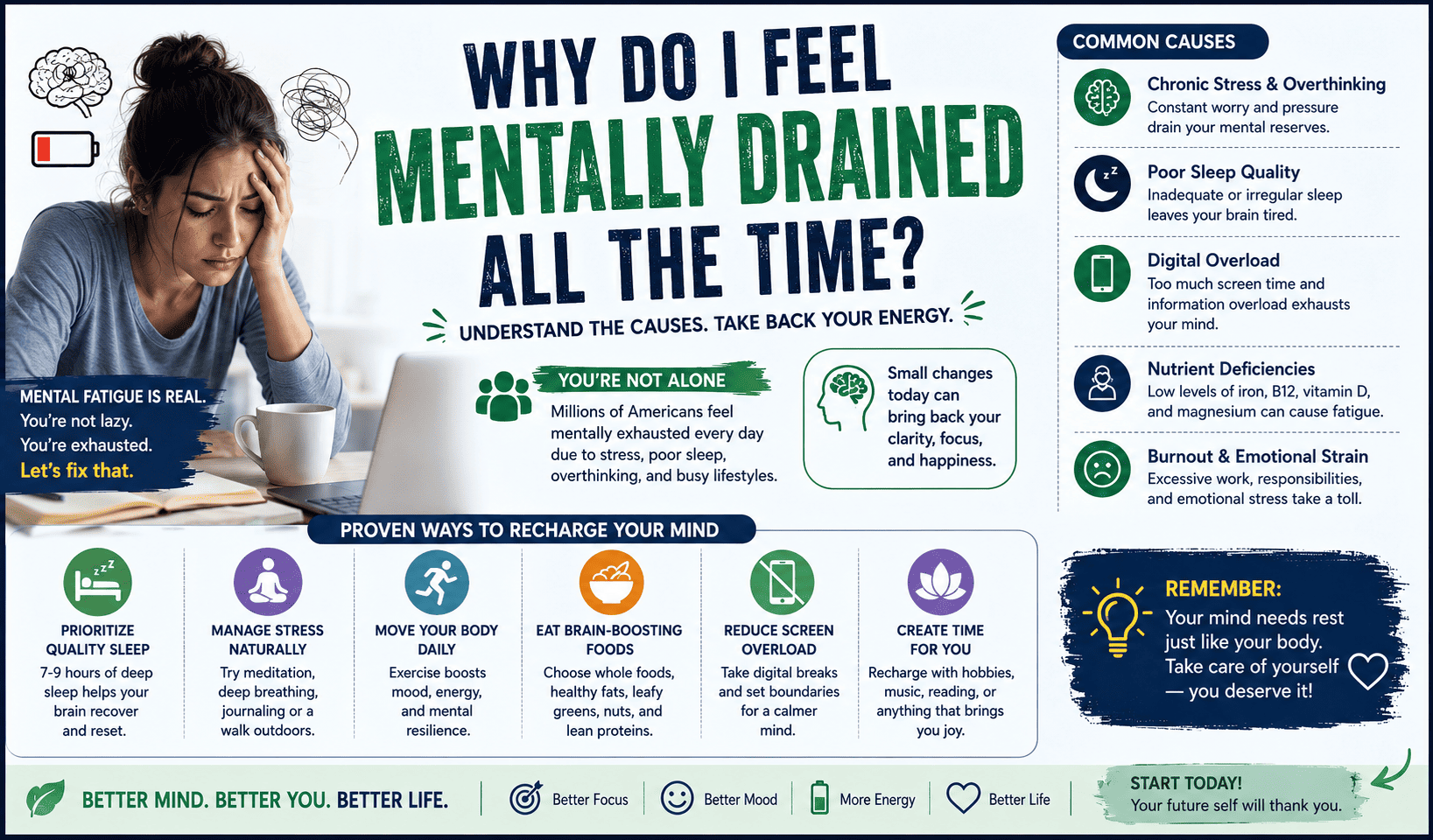
Do you wake up feeling exhausted even after a full night’s sleep? Maybe simple tasks feel overwhelming, your motivation is low, and your mind feels foggy all day. If this sounds familiar, you’re not alone. Millions of Americans experience mental exhaustion due to work stress, poor sleep, information overload, and busy lifestyles.
Feeling mentally drained all the time can affect productivity, relationships, and overall well-being. The good news is that understanding the causes of mental fatigue is the first step toward feeling better.
Quick Answer
Feeling mentally drained all the time can result from chronic stress, poor sleep, burnout, anxiety, nutrient deficiencies, lack of physical activity, or emotional overload. Improving sleep habits, managing stress, eating a balanced diet, and setting healthy boundaries may help restore mental energy and improve overall well-being.
What Does It Mean to Feel Mentally Drained?
Mental exhaustion occurs when your brain is overworked and doesn’t get enough time to recover. Unlike physical tiredness, mental fatigue can make it difficult to think clearly, stay motivated, or manage emotions effectively.
In today’s digital world, many Americans juggle work responsibilities, family obligations, financial concerns, and constant notifications. Over time, this mental load can leave you feeling emotionally and cognitively exhausted.
Mental fatigue doesn’t necessarily mean something is seriously wrong. Often, it’s a signal from your body and mind that recovery is needed.
Also Read : Why do I feel mentally tired after work?
Common Symptoms of Mental Exhaustion
Mental fatigue affects people differently, but several symptoms are common.
Early Symptoms
- Difficulty concentrating
- Feeling overwhelmed by simple tasks
- Mild irritability
- Reduced motivation
- Trouble making decisions
- Frequent forgetfulness
Advanced Symptoms
- Persistent fatigue
- Emotional numbness
- Increased anxiety
- Sleep problems
- Reduced productivity
- Social withdrawal
- Frequent headaches
- Feeling detached from daily life
If these symptoms persist for weeks or interfere with daily functioning, it may be helpful to seek professional guidance.
Also Read : What are the symptoms of chronic stress?
Why Do I Feel Mentally Drained All the Time?
There isn’t one single cause of mental exhaustion. In many cases, multiple factors work together.
Chronic Stress
Stress is one of the leading causes of mental fatigue. When your body remains in a constant state of alertness, stress hormones like cortisol stay elevated, making it difficult for the brain to recover.
Common stressors include:
- Work deadlines
- Financial pressure
- Family responsibilities
- Caregiving duties
- Major life changes
Long-term stress can leave you feeling emotionally depleted and physically tired.
Poor Sleep Quality
Sleep is essential for brain recovery. Even if you sleep for 7–8 hours, poor-quality sleep may leave you mentally exhausted.
Sleep problems that contribute to mental fatigue include:
- Frequent waking during the night
- Sleep apnea
- Insomnia
- Irregular sleep schedules
Deep sleep plays an important role in memory, mood regulation, and cognitive performance.
Information Overload
Modern life exposes people to a constant stream of information through smartphones, emails, social media, and news alerts.
This nonstop mental stimulation can overwhelm the brain and reduce its ability to rest.
Many people unknowingly experience “digital fatigue,” where excessive screen time contributes to mental exhaustion.
Burnout
Burnout is a state of emotional, mental, and physical exhaustion caused by prolonged stress.
Unlike temporary tiredness, burnout often includes:
- Feeling detached from work
- Loss of motivation
- Cynicism
- Reduced performance
Burnout has become increasingly common among office workers and remote employees.
Anxiety and Emotional Stress
Anxiety keeps the brain active even during rest.
People with anxiety often experience:
- Racing thoughts
- Overthinking
- Difficulty relaxing
- Sleep disturbances
Over time, this constant mental activity may contribute to exhaustion.
Nutrient Deficiencies
Nutrition plays an important role in brain health.
Low levels of certain nutrients may contribute to fatigue, including:
- Iron
- Vitamin B12
- Vitamin D
- Magnesium
A balanced diet supports healthy energy production and cognitive function.
Also Read : Can dehydration cause anxiety?
Mental Fatigue vs Physical Fatigue
| Feature | Mental Fatigue | Physical Fatigue |
|---|---|---|
| Main symptom | Brain fog | Muscle tiredness |
| Concentration | Reduced | Usually unaffected |
| Motivation | Low | May remain normal |
| Emotional changes | Common | Less common |
| Sleep improvement | Sometimes | Often helps |
Many people experience both types of fatigue at the same time.
Best Treatment Options for Mental Exhaustion
Recovering from mental fatigue usually involves addressing lifestyle factors and stress management.
Prioritize Sleep
Good sleep supports memory, mood, and cognitive performance.
Helpful sleep habits include:
- Maintaining a consistent sleep schedule
- Reducing screen time before bed
- Keeping the bedroom cool and dark
- Avoiding caffeine late in the day
Improving sleep quality often leads to noticeable improvements in mental energy.
Reduce Digital Overload
Taking regular breaks from screens may reduce mental strain.
Consider:
- Turning off unnecessary notifications
- Setting boundaries for social media use
- Scheduling device-free time each day
Even short digital breaks can help the brain recover.
Manage Stress Effectively
Stress management looks different for everyone.
Helpful strategies may include:
- Meditation
- Deep breathing
- Journaling
- Walking outdoors
- Talking with supportive friends or family
Regular stress reduction practices can improve resilience over time.
Stay Physically Active
Exercise benefits both physical and mental health.
Physical activity may help:
- Improve mood
- Reduce stress hormones
- Increase energy levels
- Support better sleep
Even 20–30 minutes of daily movement can make a difference.
Seek Professional Support When Needed
If symptoms persist or significantly affect daily life, speaking with a healthcare professional or licensed mental health provider may be helpful.
Support may include:
- Counseling
- Stress management techniques
- Evaluation for underlying conditions
Also Read : How to improve focus without caffeine?
Diet & Lifestyle Tips for Better Mental Energy
Nutrition and daily habits strongly influence brain function.
Foods that support brain health include:
- Fatty fish rich in omega-3s
- Leafy green vegetables
- Nuts and seeds
- Whole grains
- Berries
- Lean proteins
Hydration also matters. Even mild dehydration can affect mood, concentration, and energy levels.
Try limiting:
- Excess sugar
- Highly processed foods
- Energy drinks
- Excess alcohol
Creating a consistent routine for sleep, meals, and exercise can help stabilize mental energy throughout the day.
When Should You See a Doctor?
Occasional mental fatigue is common, but some symptoms deserve medical attention.
Consider seeking professional evaluation if you experience:
- Fatigue lasting several weeks
- Severe mood changes
- Difficulty functioning at work or home
- Persistent sleep problems
- Thoughts of self-harm
- Sudden cognitive changes
A healthcare professional can help identify possible underlying causes and recommend appropriate treatment.
Also Read : Can burnout affect physical health?
Who Is Most at Risk?
Certain groups may be more vulnerable to mental exhaustion.
1. Office Workers
Long work hours, screen exposure, and job stress can increase mental fatigue.
2. Parents and Caregivers
Balancing responsibilities often leads to emotional and physical exhaustion.
3. College Students
Academic pressure and irregular sleep schedules may contribute to burnout.
4. Shift Workers
Disrupted sleep patterns can affect cognitive performance and recovery.
5. Older Adults
Age-related changes in sleep and health conditions may influence energy levels.
Frequently Asked Questions
1. Why do I feel mentally drained even after sleeping?
Poor sleep quality, stress, anxiety, burnout, or underlying health issues may contribute to ongoing mental fatigue.
2. Can stress cause mental exhaustion?
Yes. Chronic stress increases cortisol levels and may reduce the brain’s ability to recover properly.
3. What vitamin deficiency causes mental fatigue?
Low levels of vitamin B12, vitamin D, iron, and magnesium may contribute to fatigue in some individuals.
4. How can I recover from mental burnout?
Improving sleep, reducing stress, exercising regularly, eating well, and seeking support when needed may help recovery.
5. Can screen time make you mentally tired?
Yes. Excessive screen time and constant digital stimulation may contribute to mental fatigue and reduced concentration.
👉 Managing stress effectively is an important part of mental wellness.
Conclusion
If you find yourself asking, “Why do I feel mentally drained all the time?” the answer is often multifactorial. Stress, poor sleep, burnout, digital overload, and lifestyle habits can all contribute to mental exhaustion.
The good news is that small changes can have a meaningful impact. Prioritizing sleep, managing stress, staying active, and creating healthier routines can help restore mental energy over time.
If symptoms persist or interfere with daily life, speaking with a healthcare professional can help identify underlying causes and guide appropriate treatment.
Reviewed by: Dzarro Editorial Team
Fact-checked using trusted medical and scientific sources.

Sandip Choudhary is a Health & Wellness Researcher and Content Creator specializing in sleep, digestive health, preventive wellness, and evidence-based health education. He has been creating online content and researching health-related topics for several years, focusing on translating complex medical information into practical guidance for everyday readers.
With a strong background in SEO and content strategy, Sandip ensures that every article is optimized for both search engines and real users. His goal is to provide reliable, clear, and helpful information that supports healthier living.
Disclaimer: The content published is for informational purposes only and is not a substitute for professional medical advice.