
Introduction
You wake up tired even after a full night’s sleep. Your body feels heavy, your head aches, and even small tasks feel exhausting. If this sounds familiar, you’re not alone.
In the United States, millions of people—especially office workers, entrepreneurs, and healthcare professionals—are experiencing burnout, and many don’t realize it’s not just mental… it’s physical too.
The real question is:
👉 Can burnout affect physical health?
The answer might surprise you.
Quick Answer
Yes, burnout can significantly affect physical health. It can lead to chronic fatigue, headaches, weakened immunity, digestive issues, sleep problems, and even increased risk of heart disease. Burnout disrupts the body’s stress response system, causing long-term inflammation and hormonal imbalance if not managed properly.
What Is Burnout?
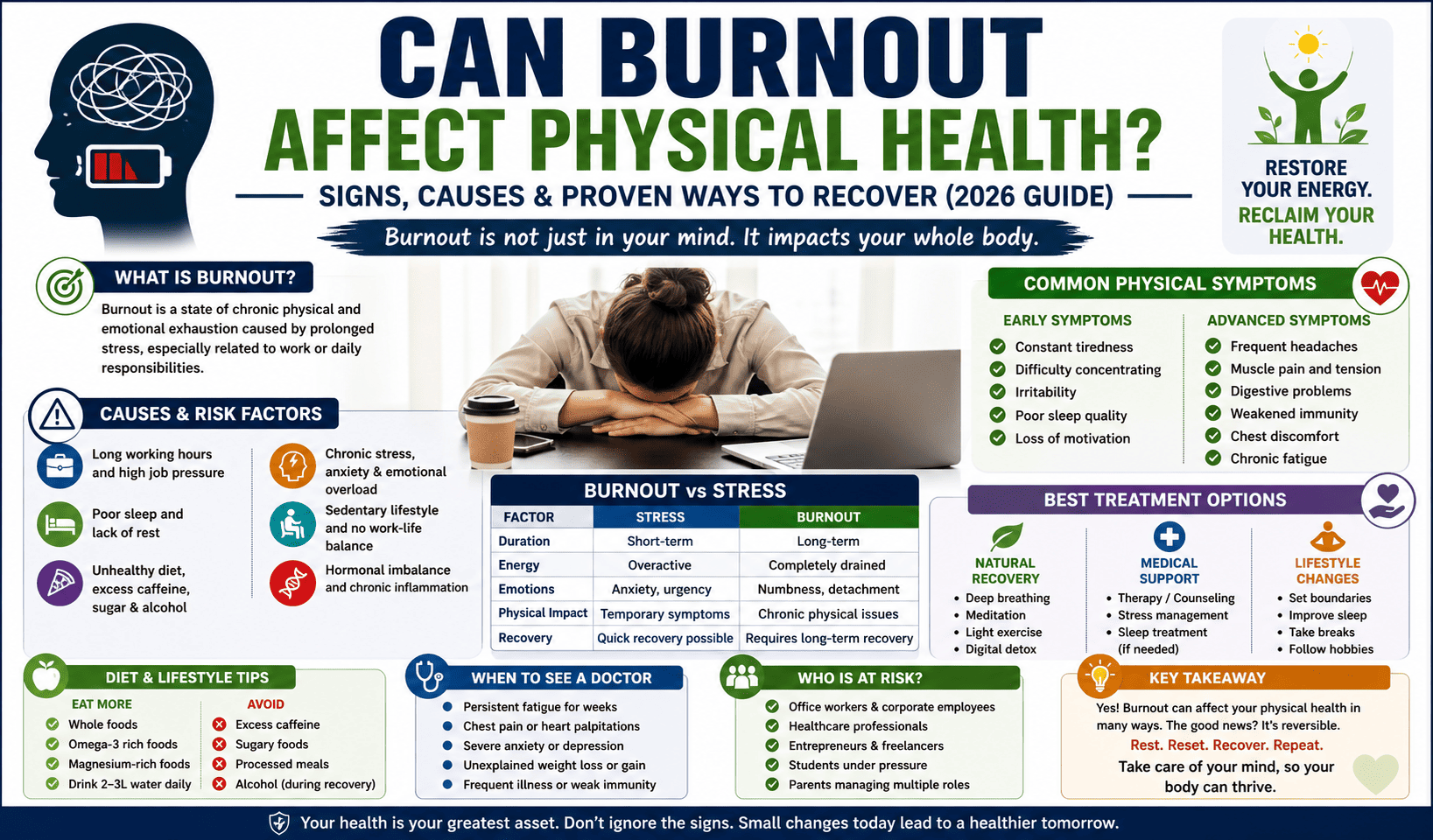
Burnout is a state of chronic physical and emotional exhaustion caused by prolonged stress, especially related to work or daily responsibilities.
It’s not just “feeling tired.”
Burnout happens when your body stays in stress mode for too long without proper recovery.
Key Components of Burnout:
- Emotional exhaustion
- Reduced motivation
- Mental fatigue
- Physical depletion
Think of it like this:
👉 Your body’s battery is drained—and it’s not charging anymore.
Symptoms of Burnout
Burnout shows up in both mind and body.
Early Symptoms:
- Constant tiredness
- Difficulty concentrating
- Irritability
- Poor sleep quality
- Loss of motivation
Advanced Physical Symptoms:
- Frequent headaches
- Muscle pain and tension
- Digestive problems (bloating, IBS-like symptoms)
- Weakened immune system (frequent illness)
- Chest discomfort or increased heart rate
- Chronic fatigue even after rest
Causes & Risk Factors
Burnout doesn’t happen overnight. It builds slowly due to multiple factors.
Lifestyle Factors:
- Long working hours
- Lack of sleep
- Poor work-life balance
- Sedentary lifestyle
Stress Factors:
- Job pressure
- Financial stress
- Emotional overload
- Lack of control or support
Diet & Health Factors:
- High caffeine intake
- Processed food diet
- Nutrient deficiencies
- Dehydration
Medical & Biological Factors:
- Hormonal imbalance (cortisol dysregulation)
- Chronic inflammation
- Mental health conditions (anxiety, depression)
👉 Want to improve emotional well-being naturally? Check out our Mental Wellness resource center.
Burnout vs Stress: What’s the Difference?
| Factor | Stress | Burnout |
|---|---|---|
| Duration | Short-term | Long-term |
| Energy | Overactive | Completely drained |
| Emotions | Anxiety, urgency | Numbness, detachment |
| Physical Impact | Temporary symptoms | Chronic physical issues |
| Recovery | Quick recovery possible | Requires long-term recovery |
👉 Key takeaway:
Stress is too much pressure, burnout is no energy left.
Best Treatment Options
Recovery from burnout requires a whole-body approach.
1. Natural Recovery Methods
- Deep breathing exercises
- Meditation (10–15 minutes daily)
- Walking or light exercise
- Digital detox
2. Medical Support
- Therapy or counseling
- Stress management programs
- Sleep treatment (if insomnia is severe)
3. Lifestyle Changes
- Reduce workload or set boundaries
- Improve sleep schedule
- Take regular breaks
- Reconnect with hobbies
4. Nervous System Reset
- Cold exposure (like cold showers)
- Yoga or stretching
- Mindfulness practices
Diet & Lifestyle Tips
Your body needs the right fuel to recover.
What to Eat:
- Whole foods (vegetables, fruits, lean protein)
- Omega-3 rich foods (salmon, walnuts)
- Magnesium-rich foods (spinach, almonds)
- Hydration (at least 2–3 liters/day)
What to Avoid:
- Excess caffeine
- Sugary foods
- Ultra-processed meals
- Alcohol (especially during recovery)
Daily Routine Improvements:
- Fixed sleep schedule
- Morning sunlight exposure
- Limit screen time before bed
- Short breaks during work
When to See a Doctor
Don’t ignore burnout if symptoms become severe.
Seek medical help if you have:
- Persistent fatigue for weeks
- Chest pain or heart palpitations
- Severe anxiety or depression
- Unexplained weight loss or gain
- Frequent illness or weak immunity
👉 Early intervention can prevent serious long-term health issues.
Who Is at Risk?
Burnout can affect anyone, but some groups are more vulnerable:
High-Risk Groups:
- Office workers & corporate employees
- Healthcare professionals
- Entrepreneurs & freelancers
- Students under pressure
- Parents managing multiple responsibilities
Additional Risk:
- Women balancing work and home
- Remote workers with no boundaries
- High achievers and perfectionists
FAQs
1. Can burnout cause physical illness?
Yes, burnout can lead to physical issues like fatigue, headaches, digestive problems, and weakened immunity due to prolonged stress.
2. How long does it take to recover from burnout?
Recovery can take weeks to months depending on severity, lifestyle changes, and support systems.
3. Can burnout affect the immune system?
Yes, chronic stress from burnout weakens the immune system, making you more prone to infections.
4. Is burnout reversible?
Yes, with proper rest, lifestyle changes, and stress management, burnout is reversible.
5. Can burnout cause heart problems?
Long-term burnout may increase the risk of heart disease due to chronic stress and inflammation.
Conclusion
So, can burnout affect physical health?
👉 Absolutely—and in more ways than most people realize.
Burnout is not just mental exhaustion. It impacts your:
- Energy
- Immunity
- Digestion
- Heart health
The good news is:
✔ It’s reversible
✔ It’s manageable
✔ And with the right steps, you can fully recover
Start small:
- Improve your sleep
- Reduce stress
- Nourish your body
Because your health isn’t just about avoiding illness—it’s about protecting your energy.
Reviewed by: Dzarro Editorial Team
Fact-checked using trusted medical and scientific sources.

Sandip Choudhary is a Health & Wellness Researcher and Content Creator specializing in sleep, digestive health, preventive wellness, and evidence-based health education. He has been creating online content and researching health-related topics for several years, focusing on translating complex medical information into practical guidance for everyday readers.
With a strong background in SEO and content strategy, Sandip ensures that every article is optimized for both search engines and real users. His goal is to provide reliable, clear, and helpful information that supports healthier living.
Disclaimer: The content published is for informational purposes only and is not a substitute for professional medical advice.