
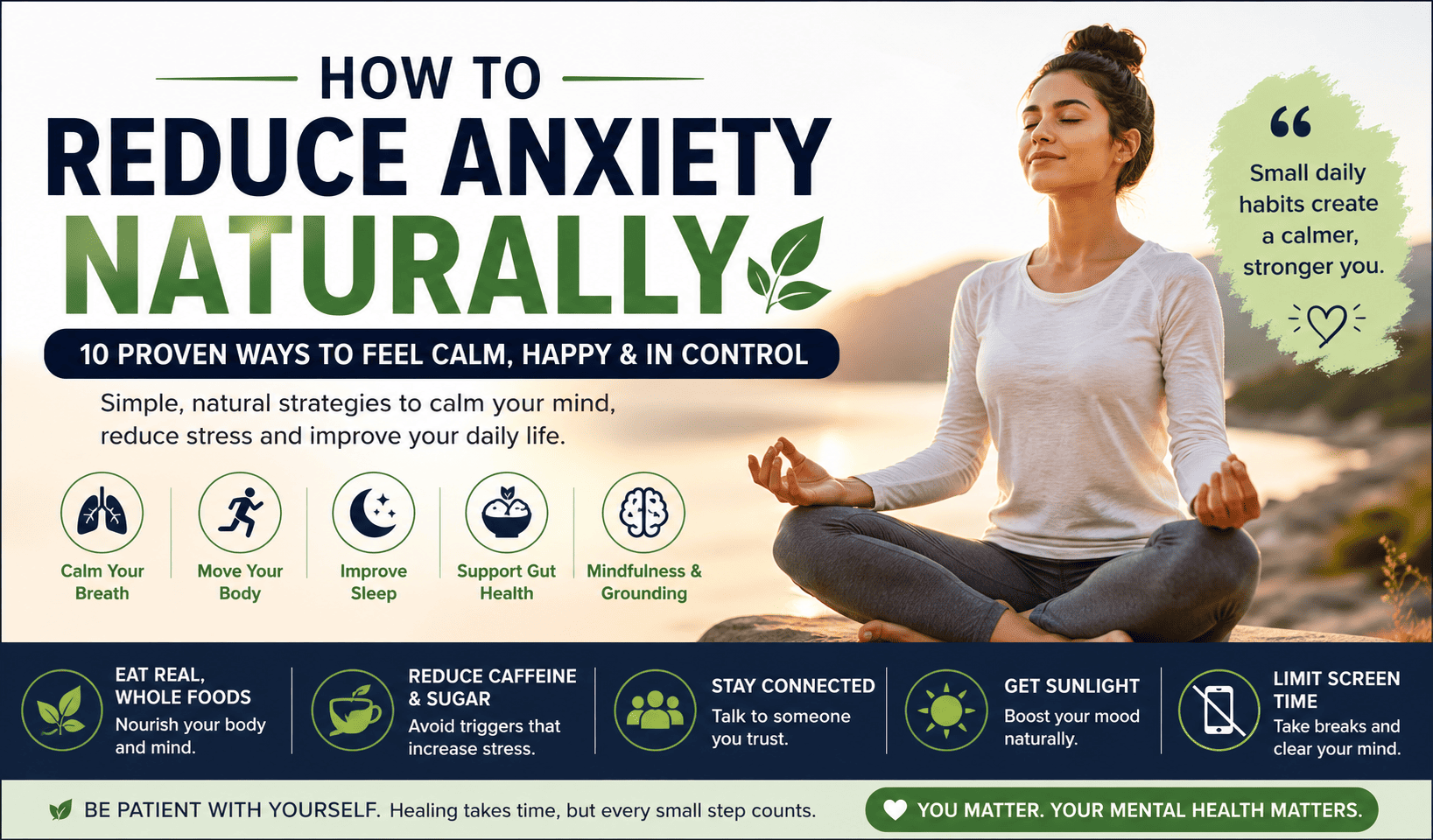
Anxiety is one of the most common health concerns in the United States. While occasional stress is normal, persistent worry, racing thoughts, poor sleep, and physical tension can affect your daily life. The good news: many people can reduce anxiety naturally using evidence-based lifestyle strategies—often alongside professional care when needed.
This guide explains what works, why it works, and how to start today.
Quick Answer
To reduce anxiety naturally, focus on:
- Regulating your breathing and nervous system
- Moving your body consistently
- Improving sleep quality
- Supporting gut health and nutrition
- Limiting stimulants (like caffeine)
- Practicing mindfulness and grounding
- Building social connection and routine
What Causes Anxiety?
Anxiety can come from a mix of factors:
- Chronic stress and overthinking
- Poor sleep or irregular routines
- High caffeine or alcohol intake
- Blood sugar swings and nutrient gaps
- Hormonal changes
- Gut–brain imbalance
- Unresolved emotional stress
Common symptoms include:
- Restlessness or racing thoughts
- Tight chest, shallow breathing
- Digestive discomfort
- Brain fog and fatigue
- Difficulty sleeping
1) Control Your Breath (Fastest Way to Calm Anxiety)
Your breath directly affects your nervous system. Slow, controlled breathing signals safety to your brain.
Try this (4–7–8 breathing):
- Inhale for 4 seconds
- Hold for 7 seconds
- Exhale slowly for 8 seconds
- Repeat for 4–6 cycles
Why it works: It activates the parasympathetic (“rest and digest”) response, lowering heart rate and stress hormones.
2) Move Your Body Daily
Exercise is one of the most reliable natural anxiety reducers.
Best options:
- Walking 20–30 minutes daily
- Light strength training
- Yoga or stretching
- Outdoor activities (sunlight boosts mood)
Why it works: Physical activity releases endorphins and reduces cortisol, helping stabilize mood and improve sleep.
3) Improve Sleep Quality
Poor sleep worsens anxiety—and anxiety worsens sleep.
Fix your sleep with:
- Consistent sleep/wake time
- No screens 60 minutes before bed
- A dark, cool bedroom
- Avoiding caffeine after 2 PM
Bonus: Magnesium glycinate or herbal teas may help relaxation (consult a professional if unsure).
4) Support Gut Health (The Gut–Brain Connection)
Your gut and brain are closely linked. Poor digestion can increase anxiety symptoms.
Do this:
- Eat whole, unprocessed foods
- Add fiber (vegetables, oats, seeds)
- Include fermented foods (yogurt, kefir)
- Stay hydrated
Why it matters: A healthy gut supports neurotransmitters like serotonin, which regulate mood.
5) Reduce Caffeine and Sugar
High caffeine can trigger:
- Racing heart
- Jitters
- Panic-like symptoms
Better approach:
- Limit to 1 cup/day or switch to green tea
- Avoid sugary snacks that cause crashes
6) Practice Mindfulness and Grounding
Mindfulness helps break the cycle of overthinking.
Simple grounding exercise (5-4-3-2-1):
- 5 things you see
- 4 things you feel
- 3 things you hear
- 2 things you smell
- 1 thing you taste
Why it works: It brings attention to the present moment and reduces mental overload.
7) Build a Simple Daily Routine
Unstructured days increase anxiety.
Try this routine:
- Morning sunlight + movement
- Work blocks with breaks
- Regular meals
- Evening wind-down ritual
Consistency creates a sense of control and safety.
8) Stay Connected (Don’t Isolate)
Talking to someone you trust can reduce anxiety quickly.
Options:
- Friends or family
- Support groups
- A licensed therapist
Social connection lowers stress hormones and improves resilience.
9) Try Natural Supplements (If Needed)
Some people find support with:
- Magnesium (for relaxation)
- Ashwagandha (stress adaptation)
- Omega-3 fatty acids
- L-theanine (calm focus)
Important: Always check with a healthcare professional, especially if you take medications.
10) Limit News and Social Media Overload
Constant exposure to negative news can increase anxiety.
Fix:
- Set time limits
- Avoid doom-scrolling
- Take digital breaks
👉 Discover practical techniques to reduce stress naturally and improve your emotional balance.
When to Seek Professional Help
Natural methods are powerful—but sometimes you need additional support.
Consider help if:
- Anxiety affects daily life
- You have frequent panic attacks
- Sleep is severely disrupted
- Symptoms persist for weeks
A licensed professional can guide therapy, medication, or a combined approach.
Final Thoughts
Reducing anxiety naturally is not about one quick fix—it’s about daily habits that calm your nervous system and support your body.
Start small:
- Fix your breathing
- Improve sleep
- Move your body
Then build from there.
Over time, these changes can significantly improve how you feel—mentally and physically.
FAQs
How long does it take to reduce anxiety naturally?
Many people feel improvement within 1–2 weeks, but lasting change usually takes consistent habits over several weeks.
What is the fastest natural way to calm anxiety?
Slow breathing exercises and grounding techniques can reduce symptoms within minutes.
Can anxiety go away without medication?
Yes, mild to moderate anxiety often improves with lifestyle changes, though severe cases may need professional care.
Does diet affect anxiety?
Yes. Blood sugar balance, gut health, and nutrient intake all play a role in mood and stress response.
Reviewed by: Dzarro Editorial Team
Fact-checked using trusted medical and scientific sources.

Sandip Choudhary is a Health & Wellness Researcher and Content Creator specializing in sleep, digestive health, preventive wellness, and evidence-based health education. He has been creating online content and researching health-related topics for several years, focusing on translating complex medical information into practical guidance for everyday readers.
With a strong background in SEO and content strategy, Sandip ensures that every article is optimized for both search engines and real users. His goal is to provide reliable, clear, and helpful information that supports healthier living.
Disclaimer: The content published is for informational purposes only and is not a substitute for professional medical advice.