
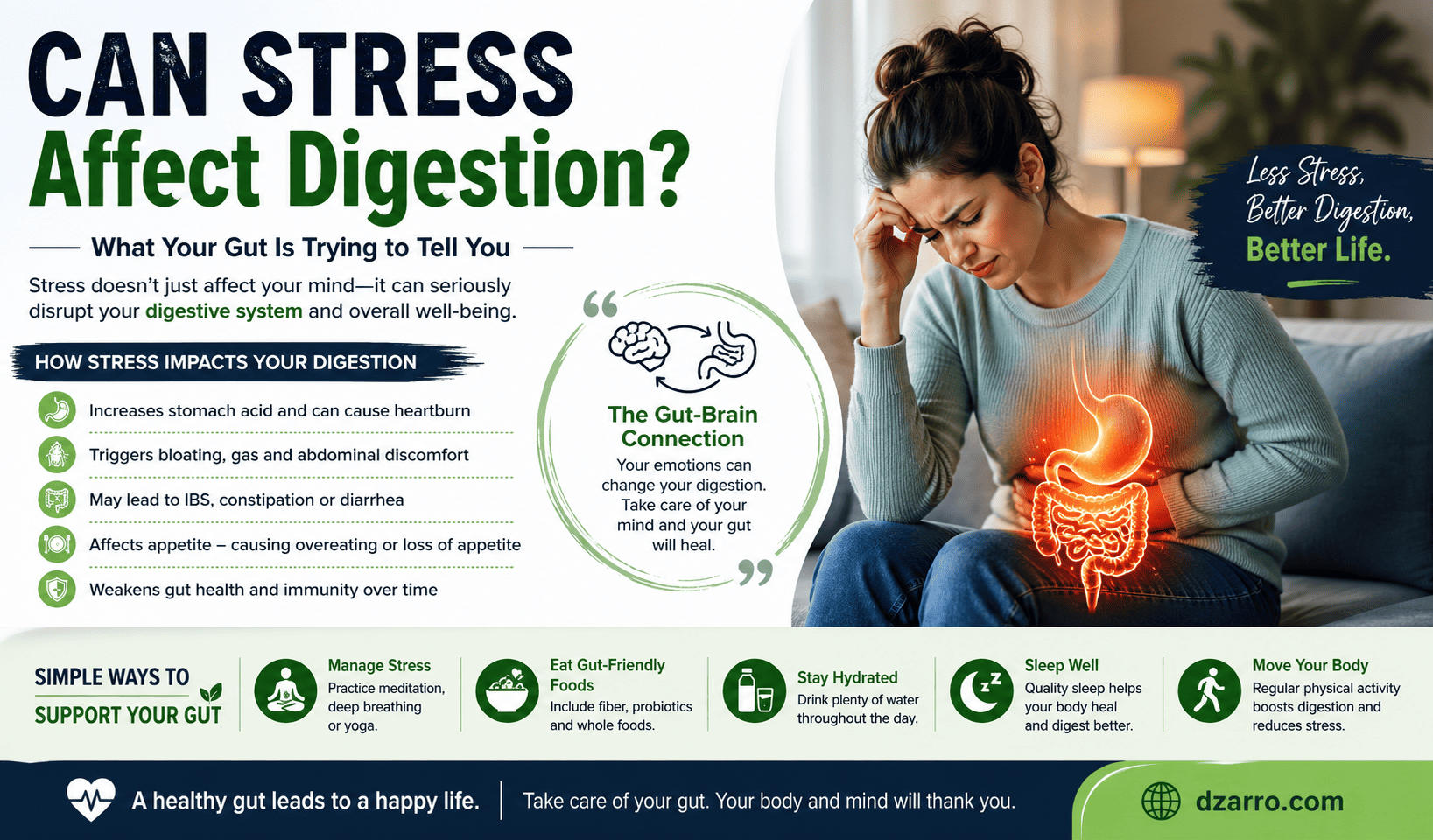
Yes—stress can directly affect digestion, and for many people in the U.S., it’s one of the most overlooked causes of stomach discomfort, bloating, acid reflux, and irregular bowel movements. The connection between your brain and gut is powerful, and when stress increases, your digestive system often reacts immediately.
How Stress Affects Digestion
Your body has a built-in system called the gut-brain axis, which links emotional and mental states to digestive function.
When you’re stressed:
- Your body activates the fight-or-flight response
- Blood flow is redirected away from digestion
- Digestive processes slow down or become irregular
This can lead to:
- Slower digestion
- Increased stomach acid
- Muscle tension in the gut
- Changes in bowel movements
Common Digestive Problems Caused by Stress
1. Acid Reflux and Heartburn
Stress can increase stomach acid production, which may worsen symptoms of Gastroesophageal Reflux Disease.
Symptoms include:
- Burning sensation in the chest
- Sour taste in the mouth
- Difficulty swallowing
2. Irritable Bowel Syndrome (IBS)
Stress is a major trigger for Irritable Bowel Syndrome.
You may experience:
- Bloating
- Abdominal cramps
- Diarrhea or constipation
3. Bloating and Gas
When stressed:
- Digestion slows
- Food stays longer in the gut
- Gas builds up
This leads to persistent bloating and discomfort.
4. Loss of Appetite or Overeating
Stress can affect hunger hormones:
- Some people lose appetite
- Others crave high-sugar or high-fat foods
Both patterns can disrupt digestion.
5. Nausea and Stomach Pain
Stress hormones can irritate the stomach lining, causing:
- Nausea
- Tightness in the stomach
- Sharp or dull abdominal pain
Why Stress Impacts Your Gut So Strongly
The gut contains millions of nerve cells and is highly sensitive to emotional changes. When stress levels rise:
- Cortisol (stress hormone) increases
- Gut bacteria balance changes
- Inflammation may increase
Over time, this can weaken digestion and lead to chronic issues.
👉 Visit our Mental Wellness hub to learn how to improve mental clarity and reduce brain fog naturally.
Signs Your Digestive Issues May Be Stress-Related
You might be dealing with stress-related digestion if:
- Symptoms worsen during anxiety or pressure
- Medical tests show no clear cause
- Issues come and go depending on mood
- You feel tightness in your stomach during stress
Can Stress Cause Long-Term Digestive Problems?
Yes, chronic stress can contribute to long-term conditions like:
- Persistent acid reflux
- IBS flare-ups
- Gut inflammation
- Food sensitivities
If left unmanaged, it can impact overall gut health and nutrient absorption.
How to Improve Digestion During Stress
1. Practice Mindful Eating
- Eat slowly
- Chew food properly
- Avoid eating while anxious
2. Manage Stress Levels
- Deep breathing exercises
- Meditation or yoga
- Regular physical activity
3. Improve Sleep Quality
Poor sleep increases stress hormones and worsens digestion.
4. Support Gut Health
- Eat fiber-rich foods
- Include probiotics (like yogurt)
- Stay hydrated
5. Limit Trigger Foods
Avoid:
- Caffeine
- Alcohol
- Spicy and processed foods
When to See a Doctor
Consult a healthcare provider if you experience:
- Persistent abdominal pain
- Difficulty swallowing
- Unexplained weight loss
- Severe acid reflux
These could indicate underlying conditions beyond stress.
Final Thoughts
Stress doesn’t just affect your mind—it can significantly disrupt your digestive system. Understanding the connection between stress and gut health is the first step toward long-term relief.
By managing stress and supporting your digestive system, you can reduce symptoms and improve overall well-being.
Reviewed by: Dzarro Editorial Team
Fact-checked using trusted medical and scientific sources.

Sandip Choudhary is a Health & Wellness Researcher and Content Creator specializing in sleep, digestive health, preventive wellness, and evidence-based health education. He has been creating online content and researching health-related topics for several years, focusing on translating complex medical information into practical guidance for everyday readers.
With a strong background in SEO and content strategy, Sandip ensures that every article is optimized for both search engines and real users. His goal is to provide reliable, clear, and helpful information that supports healthier living.
Disclaimer: The content published is for informational purposes only and is not a substitute for professional medical advice.