
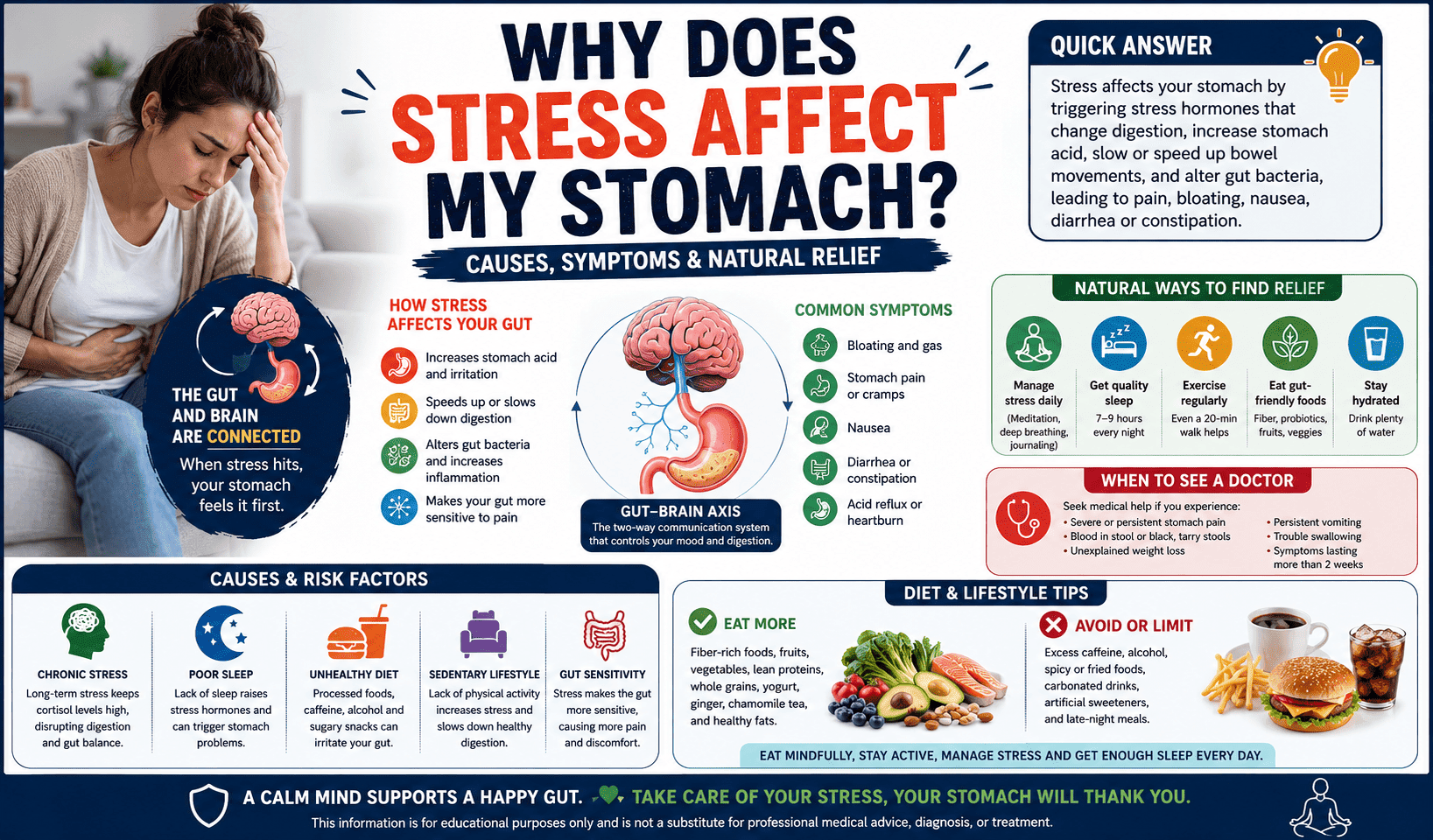
Have you ever noticed your stomach acting up before an important meeting, stressful event, or difficult conversation? Maybe you experience butterflies in your stomach, bloating, nausea, or sudden trips to the bathroom during stressful times. If this sounds familiar, you’re not alone.
Millions of Americans experience digestive discomfort linked to stress every day. In fact, the connection between the brain and the gut is so strong that many experts refer to the gut as the body’s “second brain.” When stress levels rise, your digestive system often feels the impact first.
Understanding why stress affects your stomach can help you manage symptoms naturally and support long-term digestive health.
Quick Answer
Stress affects the stomach because the brain and digestive system communicate through the gut-brain axis. When you’re stressed, your body releases hormones like cortisol and adrenaline, which can alter digestion, increase stomach acid, change gut bacteria, and trigger symptoms such as bloating, nausea, diarrhea, constipation, and stomach pain.
What Does It Mean When Stress Affects Your Stomach?
The stomach and brain are constantly communicating through a network known as the gut-brain axis. This communication system helps regulate digestion, mood, immunity, and stress responses.
When the body experiences stress, it activates the “fight-or-flight” response. During this state, the body prioritizes survival over digestion. Blood flow shifts away from the digestive tract, stress hormones increase, and normal digestive processes slow down or speed up unexpectedly.
As a result, many people notice stomach symptoms even when there is no infection or food-related illness.
Also Read : Can burnout make you physically sick?
Common Symptoms of Stress-Related Stomach Problems
Stress can affect digestion differently from person to person. Some individuals experience mild discomfort, while others develop ongoing digestive symptoms.
Early Symptoms
- Butterflies in the stomach
- Mild bloating
- Nausea
- Temporary stomach cramps
- Loss of appetite
- Increased gas
- Mild acid reflux
Advanced Symptoms
- Frequent diarrhea
- Chronic constipation
- IBS flare-ups
- Persistent stomach pain
- Food sensitivities
- Ongoing indigestion
- Fatigue after eating
Many people notice that symptoms worsen during work stress, financial pressure, poor sleep, or emotional challenges.
Also Read : What are symptoms of high cortisol?
How Stress Changes the Digestive System
Stress affects nearly every stage of digestion. Understanding these changes can explain why stomach symptoms often appear during difficult periods.
Increased Stomach Acid
Stress may increase acid production in some individuals, leading to heartburn, acid reflux, and stomach irritation. While stress itself may not directly cause ulcers, it can worsen existing digestive symptoms.
Changes in Gut Movement
Stress can either slow digestion or speed it up.
When digestion slows, people may experience:
- Constipation
- Bloating
- Feeling overly full
When digestion speeds up, symptoms may include:
- Diarrhea
- Urgency
- Abdominal cramping
This is one reason why stress-related digestive symptoms vary widely.
Gut Bacteria Imbalance
The gut contains trillions of microorganisms that help regulate digestion and immunity. Chronic stress may alter the balance of healthy bacteria, potentially affecting digestion and inflammation.
Increased Sensitivity
Stress can make the digestive system more sensitive to normal sensations. This means mild gas or normal digestive activity may feel more painful or uncomfortable during stressful times.
Also Read : Can overthinking affect physical health?
Stress Stomach vs Food Poisoning: What’s the Difference?
| Feature | Stress-Related Stomach Problems | Food Poisoning |
|---|---|---|
| Trigger | Emotional stress | Contaminated food |
| Fever | Rare | Common |
| Duration | Recurring or chronic | Usually short-term |
| Anxiety connection | Strong | Minimal |
| Bloating | Common | Sometimes |
| Nausea | Common | Common |
If symptoms occur repeatedly during stressful periods, stress may be playing a significant role.
Causes & Risk Factors
Several lifestyle and health factors can increase the likelihood of stress-related stomach issues.
Chronic Stress
Long-term stress keeps cortisol levels elevated, which may affect digestion over time.
Common sources include:
- Work deadlines
- Financial concerns
- Family responsibilities
- Relationship issues
Poor Sleep
Sleep and digestion are closely connected. Poor sleep may increase stress hormones, which can worsen digestive symptoms.
People who frequently wake up tired often report more stomach discomfort throughout the day.
Unhealthy Diet
Stress often changes eating habits. Some people overeat, while others skip meals entirely.
Highly processed foods, sugary snacks, and fast food may worsen digestive discomfort during stressful periods.
Excess Caffeine
Coffee and energy drinks can stimulate the digestive tract and increase anxiety in some individuals.
Lack of Physical Activity
Regular movement supports healthy digestion and stress management. Sedentary lifestyles may increase both stress and digestive symptoms.
Also Read : Why do I feel anxious at night?
Best Treatment Options for Stress-Related Stomach Problems
The most effective approach often addresses both stress management and digestive health simultaneously.
Practice Stress Reduction Techniques
Relaxation strategies may help calm the nervous system and improve digestion.
Helpful methods include:
- Deep breathing exercises
- Meditation
- Yoga
- Journaling
- Walking outdoors
Even 10 minutes of daily stress reduction may provide benefits over time.
Improve Sleep Quality
Quality sleep helps regulate hormones, reduce stress, and support gut health.
Helpful sleep habits include:
- Consistent bedtime schedules
- Limiting screen time before bed
- Maintaining a cool sleep environment
- Reducing caffeine intake late in the day
Support Gut Health
Eating nutrient-rich foods may support healthy digestion and gut bacteria balance.
Fermented foods, fruits, vegetables, and fiber-rich foods are commonly recommended for digestive wellness.
Seek Professional Help When Needed
If stress significantly affects daily life, counseling or therapy may help address underlying stress and anxiety.
Also Read : What foods help reduce stress?
Diet & Lifestyle Tips for Better Gut Health
What you eat and how you live can influence both stress and digestion.
Foods That May Support Digestive Health
Foods rich in fiber and beneficial nutrients may support gut health.
Examples include:
- Oats
- Yogurt with live cultures
- Bananas
- Leafy greens
- Berries
- Salmon
- Ginger
Staying hydrated throughout the day is equally important.
Foods to Limit
Some foods may worsen digestive symptoms during stressful periods.
These include:
- Excess alcohol
- Sugary drinks
- Ultra-processed foods
- Heavy late-night meals
- Excess caffeine
Daily Habits That Help
Small lifestyle changes often produce meaningful results over time.
Helpful habits include:
- Eating meals slowly
- Taking regular walks
- Staying hydrated
- Maintaining consistent sleep schedules
- Practicing stress management daily
Also Read : Can lack of sleep worsen anxiety?
When Should You See a Doctor?
Stress-related digestive symptoms are common, but certain warning signs should not be ignored.
Seek medical advice if you experience:
- Blood in stool
- Unexplained weight loss
- Persistent vomiting
- Severe abdominal pain
- Difficulty swallowing
- Symptoms lasting several weeks
- Frequent nighttime symptoms
These symptoms may require medical evaluation to rule out other conditions.
Also Read : How to calm anxiety naturally at home?
Who Is Most at Risk?
Certain groups may be more likely to experience stress-related stomach issues.
1. Office Workers
High-pressure environments and long hours can increase stress and digestive symptoms.
2. College Students
Academic pressure and irregular schedules often affect both sleep and digestion.
3. Women
Hormonal fluctuations combined with stress may influence digestive health.
4. People With Anxiety
Individuals with anxiety disorders may experience stronger gut-brain interactions.
5. Shift Workers
Irregular sleep schedules can disrupt both stress regulation and digestion.
Frequently Asked Questions
1. Why does stress make my stomach hurt?
Stress activates the body’s fight-or-flight response, which changes digestion, increases gut sensitivity, and may trigger stomach discomfort.
2. Can anxiety cause stomach problems every day?
Yes. Chronic anxiety may contribute to ongoing digestive symptoms such as nausea, bloating, and stomach pain.
3. Can stress cause diarrhea or constipation?
Yes. Stress can speed up or slow down digestion, leading to diarrhea, constipation, or both.
4. How can I calm my stomach from stress naturally?
Deep breathing, exercise, adequate sleep, stress management, and a balanced diet may help reduce stress-related stomach symptoms.
5. Can stress worsen IBS?
Yes. Stress is a common trigger that may worsen IBS symptoms in many individuals.
👉 Long-term stress can negatively affect mental and emotional health.
Conclusion
If you’ve ever wondered, “Why does stress affect my stomach?”, the answer lies in the powerful connection between the brain and digestive system. Stress can influence stomach acid, gut bacteria, digestion speed, and even pain sensitivity.
The good news is that improving sleep, managing stress, eating a balanced diet, and adopting healthier habits may help support both mental wellness and digestive health. While occasional stomach discomfort during stressful periods is common, persistent or severe symptoms should always be evaluated by a healthcare professional.
Reviewed by: Dzarro Editorial Team
Fact-checked using trusted medical and scientific sources.

Sandip Choudhary is a Health & Wellness Researcher and Content Creator specializing in sleep, digestive health, preventive wellness, and evidence-based health education. He has been creating online content and researching health-related topics for several years, focusing on translating complex medical information into practical guidance for everyday readers.
With a strong background in SEO and content strategy, Sandip ensures that every article is optimized for both search engines and real users. His goal is to provide reliable, clear, and helpful information that supports healthier living.
Disclaimer: The content published is for informational purposes only and is not a substitute for professional medical advice.
4 thoughts on “Why does stress affect my stomach?”
Comments are closed.