
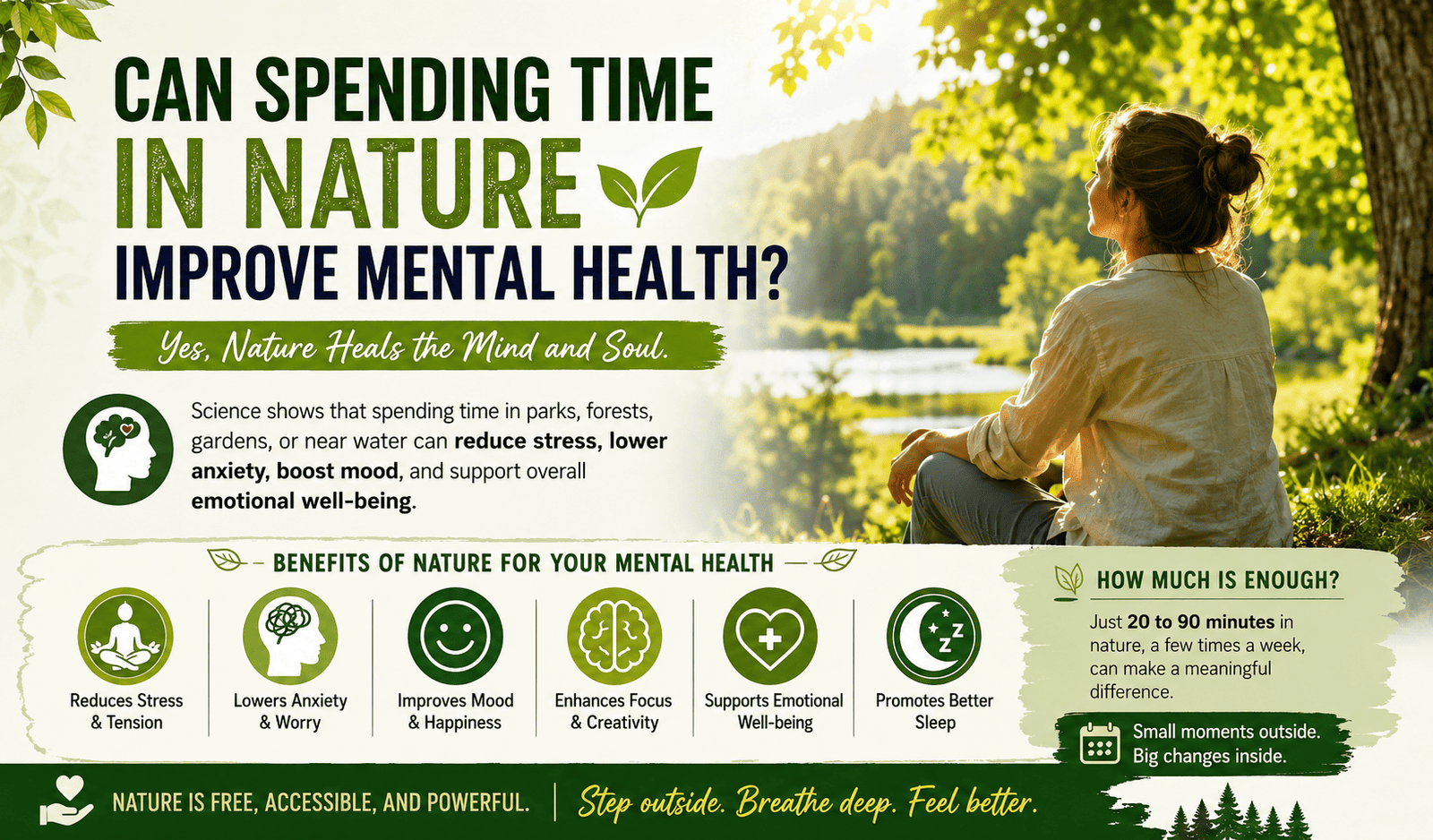
Yes. Spending time in nature can improve mental health by reducing stress, lowering anxiety, improving mood, and supporting overall emotional well-being. Even spending 20–90 minutes in parks, forests, gardens, or near water can help many people feel calmer and mentally refreshed. Nature works best as a healthy lifestyle habit alongside good sleep, exercise, social connection, and professional care when needed.
Introduction
Modern life in the United States is increasingly spent indoors. Between remote work, smartphones, streaming entertainment, and long hours at a desk, many adults spend most of their day surrounded by buildings rather than natural landscapes. At the same time, stress, anxiety, burnout, and emotional exhaustion have become common concerns for people of all ages.
This has led researchers to explore an important question: Can Spending Time in Nature Improve Mental Health? The growing scientific evidence suggests that the answer is yes. Regular exposure to green spaces and natural environments may help reduce stress, improve mood, increase emotional resilience, and support overall psychological well-being. While nature is not a replacement for therapy or medication, it can be a powerful and accessible part of a healthy lifestyle.
Also Read : Why Do Small Tasks Feel So Difficult?
What Counts as Nature?

Nature is much more than national parks and wilderness adventures. For mental health, nature includes neighborhood parks, forests, gardens, hiking trails, botanical gardens, rivers, lakes, beaches, and even tree-lined streets. Researchers often describe these environments as green spaces and blue spaces because both vegetation and water appear to have positive effects on emotional well-being.
The encouraging part is that you do not need to live in the mountains to benefit. A nearby park or quiet garden can provide meaningful opportunities to disconnect from daily stress and reconnect with the natural world.
Also Read : What Is Decision Fatigue and How Can I Prevent It?
How Nature Affects the Brain?

Natural environments influence both the mind and body. When people spend time outdoors, the body’s stress response often becomes less active. Heart rate slows, muscles relax, and feelings of calmness begin to replace mental tension. At the same time, nature gently captures our attention without overwhelming the brain, allowing the mind to recover from the constant stimulation of screens, traffic, and busy schedules.
Outdoor environments also encourage mindfulness. Listening to birds, feeling the breeze, or watching leaves move in the wind naturally brings attention to the present moment. This simple shift can reduce mental fatigue and improve emotional balance.
Also Read : How Can I Build Emotional Resilience?
What Does the Research Say?

Hundreds of scientific studies have explored the relationship between nature and mental health. Overall, the findings consistently show that people who regularly spend time in natural environments often report lower stress, reduced anxiety, improved mood, and greater life satisfaction.
Researchers have found that activities such as walking in parks, forest bathing, gardening, and hiking can produce measurable psychological benefits. Many studies suggest that sessions lasting between 20 and 90 minutes, repeated consistently over several weeks, provide the strongest improvements. Although more high-quality research is still being conducted, the evidence strongly supports nature as a valuable wellness practice.
Also Read : Can Loneliness Affect Mental Health?
Can Nature Reduce Stress?

Stress is one of the first areas where nature seems to make a noticeable difference. After spending time outdoors, many people report feeling more relaxed, less overwhelmed, and mentally refreshed. Natural settings provide a break from constant notifications, traffic noise, and work-related pressure.
Even a short walk during a lunch break can create a meaningful mental reset. Rather than scrolling through a phone indoors, spending time beneath trees or beside a quiet lake may help restore focus and improve emotional recovery throughout the day.
Also Read : Why Do I Feel Unmotivated Every Morning?
Can Nature Help Anxiety and Depression?

Nature shows significant promise for supporting people experiencing anxiety and depression. Regular exposure to green spaces has been associated with fewer anxious feelings, greater emotional stability, and improved overall mood. Outdoor activities combine gentle movement, fresh air, and calming surroundings, creating an environment that supports mental wellness.
However, it is important to understand that nature is a complementary tool rather than a substitute for professional treatment. Individuals experiencing persistent depression, panic attacks, or severe anxiety should seek support from licensed healthcare providers while using nature as an additional healthy habit.
Also Read : How Does Exercise Improve Mental Well-Being?
How Much Time in Nature Is Enough?

One of the most practical questions is how much nature people actually need. Research suggests that there is no perfect number, but spending 20 to 90 minutes in a natural environment appears to be an effective range for improving mood and reducing stress.
Consistency matters more than occasional adventures. Visiting a local park three or four times each week is likely to provide greater long-term benefits than taking a single hiking trip once every few months. Building nature into your regular routine is the key to lasting emotional wellness.
Also Read : What Are the Early Signs of Chronic Stress?
Best Nature Activities for Mental Well-Being

Different people enjoy nature in different ways, and there is no single perfect activity. Walking through neighborhood parks remains one of the easiest and most effective options because it combines physical movement with restorative scenery. Forest hiking offers deeper immersion in nature, while forest bathing encourages slow, mindful observation rather than intense exercise.
Gardening has also become increasingly popular because it provides both physical activity and a sense of purpose. Spending time near beaches, lakes, or rivers can create similar feelings of relaxation, especially for people who find water naturally calming. The best activity is simply the one you enjoy enough to do consistently.
Also Read : Can Social Media Harm Mental Health?
Nature for Children and Families

Children benefit from outdoor experiences in many ways beyond physical exercise. Parks and natural playgrounds encourage imagination, curiosity, social interaction, and emotional regulation. Families who spend time outdoors together often strengthen relationships while reducing screen time and creating healthier daily routines.
Simple activities like weekend picnics, nature scavenger hunts, or evening walks can become meaningful family traditions that support both mental and physical well-being.
Also Read : Why Do I Feel Emotionally Numb?
Nature and Workplace Burnout

Burnout has become increasingly common among professionals working long hours or remotely. Spending brief periods outdoors during the workday may help reduce cognitive fatigue and improve concentration. Taking walking meetings, enjoying coffee in a nearby park, or working outside for a short period can provide valuable mental recovery without disrupting productivity.
Nature cannot eliminate workplace stress, but it can improve how the mind recovers between demanding tasks and help create a healthier work-life balance.
Also Read : How Can I Improve My Mental Health Every Day?
Conclusion
So, can spending time in nature improve mental health? The evidence suggests that it can. Regular exposure to parks, forests, gardens, beaches, and other natural environments is associated with reduced stress, lower anxiety, improved mood, and greater emotional resilience. The greatest benefits come from making nature a consistent part of everyday life rather than treating it as an occasional escape.
Whether you choose a 30-minute walk through your neighborhood park, spend weekends gardening, or relax beside a lake after work, nature offers one of the simplest and most affordable ways to support your mental well-being. Combined with healthy habits and professional care when necessary, it can become a powerful foundation for a happier and more balanced life.
Also Read : Why does stress affect my stomach?
Frequently Asked Questions (FAQ)
1. Can spending time in nature improve mental health?
Yes. Regular time in natural environments can help reduce stress, improve mood, and support emotional well-being.
2. How many minutes should I spend in nature daily?
Most research suggests that spending between 20 and 90 minutes outdoors can provide noticeable mental health benefits.
3. Is walking in a park good for anxiety?
Yes. Walking in green spaces combines gentle exercise with calming surroundings, which may help reduce anxious feelings.
4. Can nature cure depression?
No. Nature can support mental health but should not replace therapy, medication, or professional treatment for depression.
5. What is forest bathing?
Forest bathing is the practice of slowly and mindfully experiencing a forest using your senses rather than focusing on exercise.
6. Does gardening help mental health?
Yes. Gardening encourages physical activity, relaxation, creativity, and a sense of accomplishment, all of which can improve mood.
7. Are beaches better than parks?
Both can be beneficial. Green spaces and blue spaces each offer calming environments that support emotional wellness.
8. Can children benefit from spending time outdoors?
Yes. Outdoor play supports emotional regulation, creativity, attention, and healthy physical development.
9. Does living near a park matter?
Living near accessible green spaces may encourage more frequent outdoor activity and contribute to better overall well-being.
10. What is the easiest way to start spending more time in nature?
Begin with a simple 20–30 minute walk in your local park several times a week and gradually make outdoor time part of your regular routine.

Learning relaxation techniques can strengthen mental health habits.
Medical Disclaimer: This article is intended for general educational and informational purposes and does not provide medical advice, diagnosis, or treatment. Stress-related symptoms can overlap with many other medical and mental health conditions. If you have persistent, severe, or concerning symptoms, consult a qualified healthcare professional for personalized evaluation and guidance.
Reviewed by: Dzarro Editorial Team
Fact-checked using trusted medical and scientific sources.

Sandip Choudhary is a Health & Wellness Researcher and Content Creator specializing in sleep, digestive health, preventive wellness, and evidence-based health education. He has been creating online content and researching health-related topics for several years, focusing on translating complex medical information into practical guidance for everyday readers.
With a strong background in SEO and content strategy, Sandip ensures that every article is optimized for both search engines and real users. His goal is to provide reliable, clear, and helpful information that supports healthier living.
Disclaimer: The content published is for informational purposes only and is not a substitute for professional medical advice.
1 thought on “Can Spending Time in Nature Improve Mental Health?”
Comments are closed.