
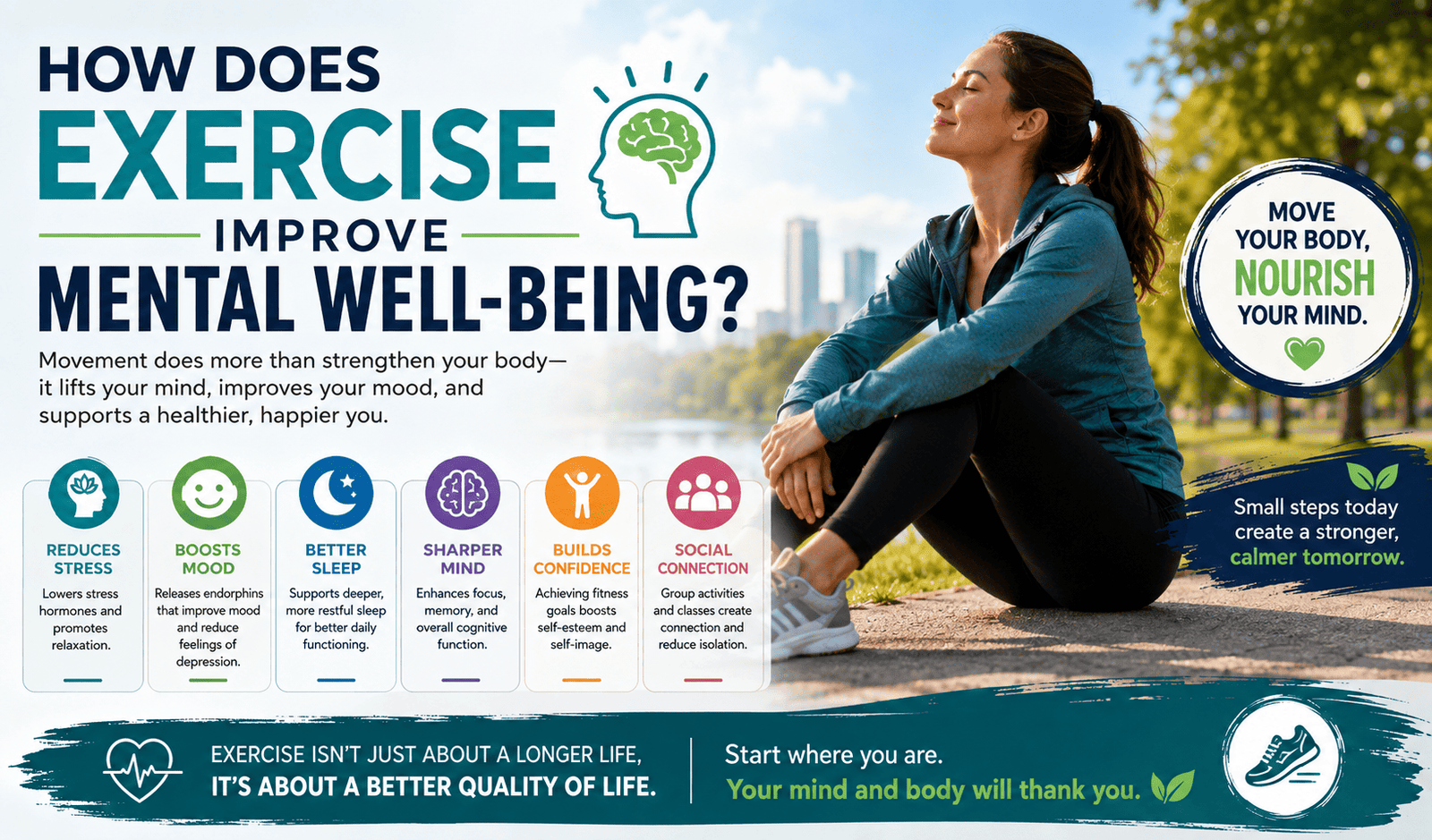
Exercise improves mental well-being by helping reduce symptoms of stress, anxiety, and depression while supporting better sleep, mood, cognitive function, confidence, and overall quality of life. Physical activity can influence the brain and body in several ways, including reducing physiological stress, supporting healthy brain function, and creating opportunities for routine, achievement, social connection, and time outdoors. Even relatively small amounts of movement can provide health benefits, while consistent physical activity can offer greater long-term benefits.
Introduction
Mental well-being is an important part of overall health. For many people in the United States, work demands, financial pressures, family responsibilities, social challenges, poor sleep, and sedentary lifestyles can contribute to ongoing stress or affect mood. While exercise is often promoted for physical fitness, its potential effects on mental well-being are equally important.
So, how does exercise improve mental well-being? Regular physical activity can support emotional health by reducing anxiety and depressive symptoms, improving sleep, supporting cognitive function, and helping people feel more energetic and capable. The U.S. Physical Activity Guidelines recognize physical activity as an important part of maintaining health, and research summarized by federal health agencies and the American Psychiatric Association supports its role in mental well-being.
Exercise should not be viewed as a replacement for professional mental health care when someone has a mental health condition requiring treatment. Instead, physical activity can be an important component of a broader wellness strategy and, in some circumstances, part of a treatment plan developed with a healthcare professional.
Also Read : What Are the Early Signs of Chronic Stress?
How Does Exercise Improve Mental Well-Being?
Exercise can improve mental well-being through a combination of biological, psychological, and behavioral effects. When you exercise, your body becomes more physically active, your cardiovascular system works harder, and your brain responds to the increased demand. Regular movement is associated with improvements in mood, anxiety, sleep, cognitive function, and quality of life.
The benefits do not necessarily require extreme workouts. Walking, cycling, swimming, dancing, resistance training, recreational sports, and other activities can contribute to physical activity. The best exercise for mental well-being is often an activity that a person can perform safely and consistently.
Federal physical activity guidance emphasizes that moving more and sitting less can benefit nearly everyone, and people who are currently least active may gain meaningful benefits from even modest increases in activity.
Also Read : Can Social Media Harm Mental Health?
Exercise Can Help Reduce Stress
One of the most noticeable mental benefits of exercise may be its ability to help people manage everyday stress. Stress activates the body’s physiological response to perceived challenges. When stress becomes persistent, it can affect mood, sleep, concentration, and energy.
Physical activity provides a healthy outlet for physical tension and can shift attention away from stressful thoughts. A walk after work, a short cycling session, or a strength-training workout can create a structured break from work and other responsibilities.
Regular physical activity may also make it easier to develop healthy routines. Instead of spending the entire day focused on stressful situations, exercise creates dedicated time for movement, recovery, and mental separation from daily demands.
Also Read : Why Do I Feel Emotionally Numb?
Exercise and Anxiety
Exercise may also help reduce feelings and symptoms associated with anxiety. The Physical Activity Guidelines for Americans report that moderate-to-vigorous physical activity performed consistently over weeks or months can reduce anxiety symptoms in adults and older adults.
Anxiety can involve excessive worry, physical tension, restlessness, and difficulty concentrating. Physical activity can provide a temporary change of focus while helping the body use some of the physical energy associated with the stress response.
Exercise may be particularly useful when incorporated into a broader lifestyle routine. For example, someone who takes a brisk walk in the morning may combine movement with exposure to daylight, a predictable routine, and time away from screens. These factors can work together to support overall well-being.
However, exercise should not be presented as a guaranteed cure for an anxiety disorder. People experiencing persistent, severe, or disruptive anxiety should consider speaking with a qualified healthcare or mental health professional.
Also Read : How Can I Improve My Mental Health Every Day?
Exercise and Depression
Research and federal health guidance also connect regular physical activity with lower depression risk and improvements in some symptoms of depression. The Physical Activity Guidelines report that regular physical activity can reduce the risk of developing depression and improve many symptoms experienced by people with depression.
The American Psychiatric Association also notes that exercise has consistently been shown to reduce symptoms of depression and can support mental well-being either as a primary treatment approach in appropriate circumstances or alongside medication or therapy.
Depression can make physical activity difficult because low energy, lack of motivation, and withdrawal can reduce a person’s desire to exercise. This creates an important practical consideration: the goal does not have to be an intense workout. Starting with a short walk or another manageable activity may be more realistic than immediately attempting a demanding exercise program.
If depression symptoms are severe, persistent, or associated with thoughts of self-harm, professional medical or mental health support is important. Exercise can complement appropriate care, but it should not replace it.
Also Read : Why does stress affect my stomach?
Exercise May Improve Sleep
Sleep and mental health are closely connected. Poor sleep can make it harder to regulate emotions, concentrate, and manage everyday stress, while mental health difficulties can make sleep more difficult.
Regular physical activity may help support healthier sleep. The Physical Activity Guidelines report associations between moderate-to-vigorous physical activity and reduced sleep latency, improved sleep efficiency, better sleep quality, and more deep sleep.
The relationship between exercise and sleep can also become part of a positive cycle. Better physical activity habits may support sleep, and better sleep can make it easier to have the energy and motivation needed to remain physically active.
Also Read : Can burnout make you physically sick?
Exercise Can Support Brain Health and Cognitive Function
Mental well-being is not only about mood. Cognitive health, including attention, memory, learning, and the ability to manage daily tasks, also contributes to quality of life.
The American Psychiatric Association reports that physical activity has been associated with improved cognitive function and greater neuroplasticity, which refers to the brain’s ability to change and adapt. Physical activity is also associated with brain-health benefits and a lower risk of cognitive decline.
For someone who spends many hours sitting at a desk, incorporating movement throughout the day may also provide useful mental breaks. Brief periods of physical activity can be easier to maintain than trying to complete one long workout session every day.
Also Read : What are symptoms of high cortisol?
Exercise Can Improve Self-Confidence
Physical activity can influence how people perceive themselves. Setting a realistic exercise goal and consistently completing it can create a sense of accomplishment. Over time, improvements in strength, stamina, mobility, or fitness may reinforce confidence.
Self-confidence does not have to come from achieving a particular body shape or weight. It can come from recognizing that you are capable of creating and maintaining a healthy habit.
This distinction is important because mental well-being should not be tied exclusively to appearance. A sustainable exercise routine should support physical and psychological health rather than create unrealistic expectations about body image.
Also Read : Can overthinking affect physical health?
Exercise Can Provide Social Connection
Exercise does not always have to be a solitary activity. Recreational sports, walking groups, fitness classes, community programs, and exercising with friends can provide opportunities for social interaction.
Social connection itself can contribute to emotional well-being. The American Psychiatric Association has highlighted that activities such as participating in sports, exercising with others, and being part of a group can support positive mental health.
For people who feel isolated, choosing a social form of physical activity may provide both movement and meaningful human interaction.
Also Read : Why do I feel anxious at night?
Exercise Can Help Create a Healthy Daily Routine
Consistency is one of the most important factors in making physical activity part of a healthy lifestyle. Exercise can create structure in an otherwise unpredictable day.
A person might establish a routine of walking before work, exercising during a lunch break, attending a fitness class in the evening, or taking a short walk after dinner. These predictable habits can provide a sense of control and accomplishment.
The key is to choose an approach that fits the person’s lifestyle. A sustainable 20-minute walk may be more beneficial in the long run than an intense workout program that someone cannot maintain.
Also Read : What foods help reduce stress?
How Much Exercise Is Needed for Mental Well-Being?
For overall physical health, the current Physical Activity Guidelines for Americans recommend that adults aim for 150 to 300 minutes of moderate-intensity aerobic activity per week or 75 to 150 minutes of vigorous-intensity aerobic activity, along with muscle-strengthening activities on at least two days each week.
These recommendations are broad health guidelines rather than a specific prescription for treating an individual mental health condition. People can also benefit from starting below these levels and gradually becoming more active.
Someone who is currently inactive does not need to wait until they can complete a full workout. Walking, taking the stairs, performing household activities, stretching, gardening, or taking short movement breaks can all help increase daily physical activity.
Also Read : Can lack of sleep worsen anxiety?
What Types of Exercise Are Best for Mental Health?
There is no single exercise that is universally best for mental well-being. Aerobic activities such as brisk walking, jogging, cycling, swimming, and dancing can be useful. Resistance training can also support physical and psychological health. Recreational sports may add social benefits, while outdoor activities can combine exercise with time in natural environments.
The most effective choice is generally an activity that is safe, enjoyable, accessible, and realistic enough to perform consistently. The American Psychiatric Association notes that physical activity can take many forms, including walking, running, fitness classes, and organized sports.
Also Read : How to calm anxiety naturally at home?
How to Start Exercising for Better Mental Well-Being?
Starting small can make exercise more sustainable. A person who has been inactive might begin with a short walk and gradually increase duration or intensity as their fitness improves. Someone who already exercises may benefit from adding variety, social activities, outdoor movement, or resistance training.
It is also useful to focus on how exercise makes you feel rather than treating it solely as a way to change your appearance. Notice whether movement helps you feel calmer, sleep better, concentrate more effectively, or feel more energetic.
People with certain medical conditions, injuries, disabilities, pregnancy-related considerations, or significant physical limitations may need individualized advice before beginning or changing an exercise program. A healthcare professional can help determine what type and intensity of activity is appropriate.
Also Read : What are the signs of emotional burnout?
Can Exercise Replace Therapy or Medication?
Exercise can support mental health, but it should not automatically be considered a substitute for professional treatment. Mental health conditions vary significantly in severity and cause, and treatment should be individualized.
For some people, exercise may be one part of a comprehensive approach that also includes psychotherapy, medication, sleep management, social support, nutrition, and other interventions. The American Psychiatric Association specifically recognizes exercise as something that can be used alongside medication or therapy in appropriate situations.
Anyone experiencing persistent depression, severe anxiety, major changes in functioning, or other concerning mental health symptoms should speak with a qualified healthcare professional rather than relying solely on exercise.
Also Read : Why do I feel overwhelmed for no reason?
Frequently Asked Questions About Exercise and Mental Well-Being
1. How does exercise improve mental well-being?
Exercise can improve mental well-being by reducing symptoms of anxiety and depression, supporting better sleep, improving mood and cognitive function, reducing stress, and contributing to a greater sense of overall well-being. Regular physical activity is associated with several mental and brain-health benefits.
2. Can exercise reduce anxiety?
Yes. Regular moderate-to-vigorous physical activity can reduce symptoms of anxiety in adults and older adults. Exercise may also provide a healthy way to manage physical tension and stress.
3. Can exercise help with depression?
Exercise can help reduce symptoms of depression and is associated with a lower risk of developing depression. However, people with significant depression should not rely on exercise alone and may need professional treatment.
4. How long should I exercise for mental health benefits?
There is no single duration that works for everyone. Federal guidelines recommend 150 to 300 minutes of moderate-intensity aerobic activity or 75 to 150 minutes of vigorous activity per week for overall adult health, plus muscle-strengthening activity at least two days per week. Starting with smaller amounts is reasonable for people who are currently inactive.
5. Is walking good for mental health?
Yes. Walking is a practical form of physical activity that can contribute to overall health and mental well-being. It is also relatively accessible for many people and can be performed outdoors or with others, adding potential benefits from routine, social interaction, and time outside.
6. Does exercise help you sleep better?
Regular physical activity is associated with better sleep quality, improved sleep efficiency, shorter time needed to fall asleep, and more deep sleep. Better sleep can also support mood, concentration, and emotional regulation.
7. What is the best exercise for mental health?
There is no universally best exercise. Walking, running, cycling, swimming, resistance training, dancing, fitness classes, and recreational sports can all be appropriate depending on individual preferences, abilities, and health status. The best activity is one that can be performed safely and consistently.
8. Can exercise improve mood immediately?
A single session of physical activity can provide immediate health benefits, and federal guidance reports that physical activity can reduce anxiety and improve sleep-related outcomes. The effects of exercise on mood can vary from person to person, while consistent activity is important for longer-term benefits.
9. Can exercise replace antidepressants or therapy?
Not necessarily. Exercise may be an important part of mental health care, but it does not replace professional treatment for everyone. People with depression or anxiety should discuss treatment options with a qualified healthcare professional.
10. How can I make exercise a regular habit?
Start with an activity that feels manageable and enjoyable rather than attempting an overly demanding routine. Scheduling movement at a consistent time, choosing activities that fit your lifestyle, exercising with friends, and gradually increasing activity can make a routine easier to maintain.

Building resilience is key to maintaining long-term mental health.
Final Thoughts
Understanding how exercise improves mental well-being shows why physical activity deserves a place in a comprehensive approach to health. Exercise can support mood, reduce anxiety and depressive symptoms, improve sleep, enhance cognitive function, encourage social connection, and create a stronger sense of routine and accomplishment.
You do not need to become a competitive athlete to experience these potential benefits. A consistent walking routine, strength-training program, recreational sport, cycling session, dance class, or another enjoyable form of movement can be a meaningful step toward better overall well-being.
The most important goal is sustainable movement. Start at a level that is appropriate for you, increase activity gradually, and seek professional guidance when you have medical or mental health concerns. Exercise is not a universal cure, but when combined with appropriate healthcare and other healthy lifestyle habits, it can be a powerful tool for supporting mental and physical well-being.
Medical Disclaimer: This article is intended for general educational and informational purposes and does not provide medical advice, diagnosis, or treatment. Stress-related symptoms can overlap with many other medical and mental health conditions. If you have persistent, severe, or concerning symptoms, consult a qualified healthcare professional for personalized evaluation and guidance.
Reviewed by: Dzarro Editorial Team
Fact-checked using trusted medical and scientific sources.

Sandip Choudhary is a Health & Wellness Researcher and Content Creator specializing in sleep, digestive health, preventive wellness, and evidence-based health education. He has been creating online content and researching health-related topics for several years, focusing on translating complex medical information into practical guidance for everyday readers.
With a strong background in SEO and content strategy, Sandip ensures that every article is optimized for both search engines and real users. His goal is to provide reliable, clear, and helpful information that supports healthier living.
Disclaimer: The content published is for informational purposes only and is not a substitute for professional medical advice.
4 thoughts on “How Does Exercise Improve Mental Well-Being?”
Comments are closed.