
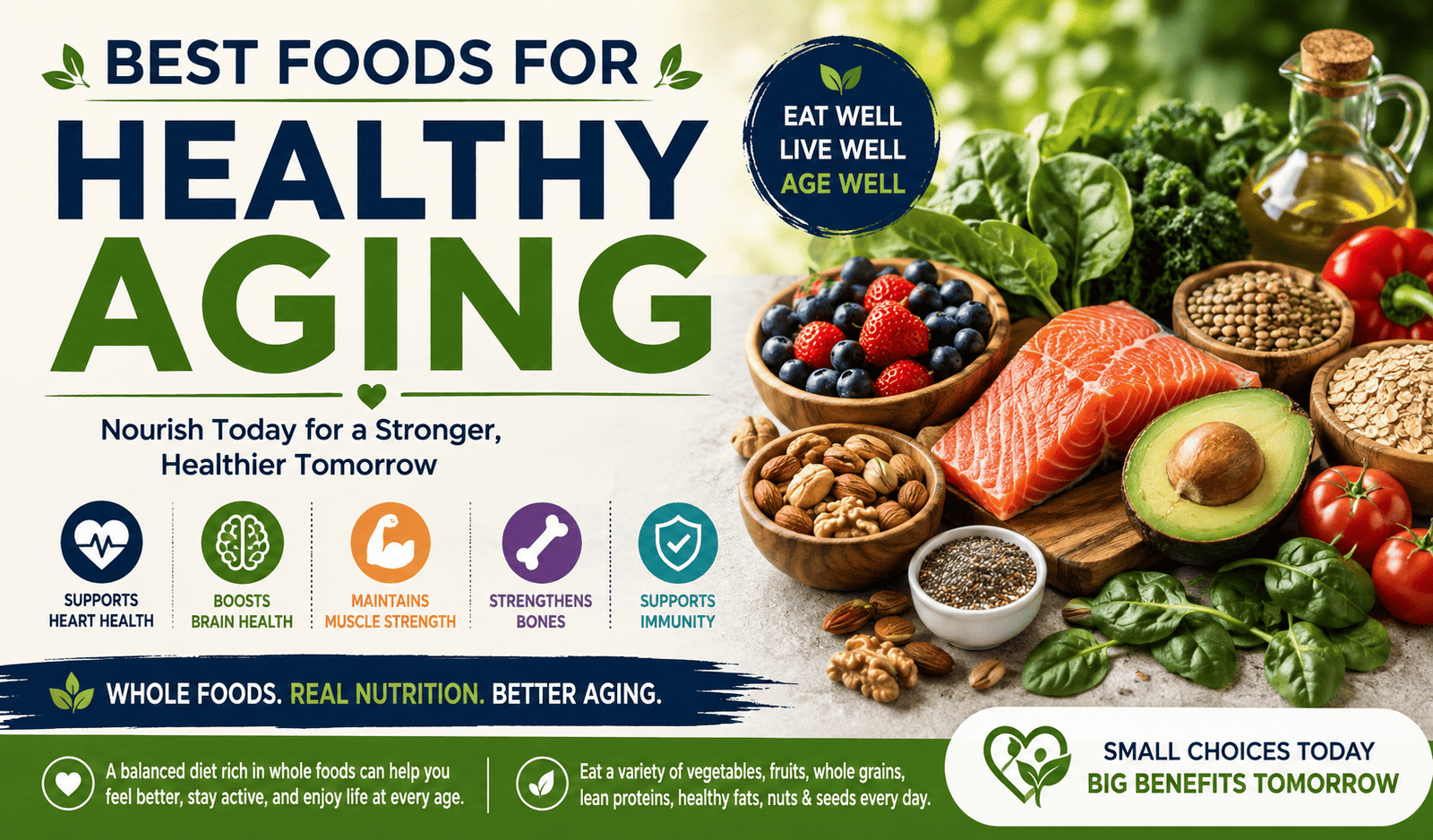
The best foods for healthy aging are nutrient-dense foods that provide protein, fiber, vitamins, minerals, antioxidants, and healthy fats. Focus on vegetables, berries and other fruits, beans and lentils, whole grains, nuts and seeds, fatty fish, low-fat dairy or fortified alternatives, eggs, and healthy plant oils such as olive oil. A Mediterranean-style eating pattern that emphasizes these foods may support heart health, brain health, muscle function, bone strength, and overall well-being as you age.
Aging is a natural process, but the way you eat can influence how well your body handles the changes that come with getting older. Nutrition becomes especially important because muscle mass, bone strength, metabolism, appetite, and nutrient needs can change over time. Instead of looking for one “superfood” that can stop aging, it is more useful to build a balanced eating pattern around a variety of minimally processed, nutrient-rich foods.
The National Institute on Aging emphasizes eating a variety of nutrient-dense foods from vegetables, fruits, grains, protein foods, dairy, and healthy oils. A healthy diet can also support muscle and bone health and may help reduce the risk of several chronic health conditions.
Why Nutrition Matters for Healthy Aging?
As you get older, maintaining muscle, bone strength, cardiovascular health, cognitive function, and a healthy weight becomes increasingly important. Your body still needs protein, fiber, vitamins, minerals, and healthy fats, but your calorie needs may change.
This makes nutrient density especially valuable. Nutrient-dense foods provide important nutrients without relying heavily on added sugar, excess sodium, or saturated fat. The American Heart Association recommends an overall eating pattern centered on vegetables, fruits, whole grains, healthy protein sources, and unsaturated fats while limiting highly processed foods, added sugars, and excess sodium.
Also Read : The Biggest Longevity Trends in America
Best Foods for Healthy Aging
Leafy Green Vegetables
Leafy greens such as spinach, kale, collard greens, Swiss chard, and romaine lettuce are excellent foods to include regularly as you age. They provide fiber and a variety of vitamins, minerals, and other plant compounds while generally being low in calories.
Adding leafy greens to salads, soups, omelets, sandwiches, or cooked meals is an easy way to increase vegetable intake. Their versatility also makes them practical for long-term healthy eating rather than something you need to consume as part of a restrictive diet.
Berries
Blueberries, strawberries, raspberries, and blackberries are nutrient-rich fruits that can fit well into a healthy aging diet. They provide fiber and naturally occurring plant compounds called polyphenols.
You can add berries to plain yogurt, oatmeal, smoothies, or enjoy them as a simple snack. Frozen berries can also be a convenient option when fresh berries are unavailable.
The goal is not to rely on one particular berry. Eating a variety of colorful fruits throughout the week can help increase the range of nutrients and plant compounds in your diet.
Also Read : What Does Aging Gracefully Really Mean?
Fatty Fish
Salmon, trout, sardines, herring, and other seafood are valuable sources of protein and omega-3 fatty acids. The National Institute on Aging specifically highlights seafood such as salmon, anchovies, and trout as sources of EPA and DHA omega-3 fatty acids.
Fish can be especially useful for healthy aging because it combines high-quality protein with important nutrients. The American Heart Association recommends regularly eating fish and seafood as part of a heart-healthy dietary pattern.
Choose preparation methods such as baking, grilling, roasting, or steaming rather than routinely deep-frying fish.
Beans and Lentils
Beans, lentils, chickpeas, and other legumes are excellent sources of plant protein and dietary fiber. They can be particularly useful for people looking for affordable, versatile foods that support a balanced diet.
Fiber is important for digestive health, while protein helps support the body’s tissues. Beans and lentils can be added to soups, salads, chili, grain bowls, or vegetable-based meals.
The American Heart Association recommends beans, peas, lentils, and nuts as healthy protein sources and encourages shifting some protein intake toward plant sources.
Also Read : Healthy Aging Myths You Should Stop Believing
Nuts and Seeds
Walnuts, almonds, pistachios, chia seeds, flaxseeds, pumpkin seeds, and other nuts and seeds can add healthy fats, protein, fiber, vitamins, and minerals to your meals.
A small serving can make oatmeal, yogurt, salads, or whole-grain meals more satisfying. Because nuts and seeds are calorie-dense, portion size still matters, particularly if maintaining a healthy weight is one of your goals.
Choose unsalted or lightly salted varieties when possible. The American Heart Association recognizes nuts as a source of healthy fats and important nutrients that can support heart and brain health.
Whole Grains
Oats, barley, brown rice, quinoa, whole-grain bread, and whole-grain pasta can provide more fiber and nutrients than refined grain choices.
Fiber-rich whole grains can support digestive health and are part of heart-healthy eating patterns. The American Heart Association recommends choosing foods made mostly from whole grains rather than refined grains.
A practical approach is to gradually replace refined grains with whole-grain alternatives rather than trying to completely change your diet overnight.
Also Read : Can You Slow Down Biological Aging?
Extra-Virgin Olive Oil and Other Healthy Plant Oils
Healthy fats are an important part of a balanced diet. Olive oil and other non-tropical liquid plant oils can provide unsaturated fats and can be used in cooking, dressings, and marinades.
The Mediterranean-style eating pattern places particular emphasis on unsaturated fats such as olive oil. Research summarized by the National Institute on Aging suggests that Mediterranean-style eating may have positive effects on overall health.
Replacing foods high in saturated fat with sources of unsaturated fat can be a useful dietary strategy.
Avocados
Avocados provide unsaturated fats, fiber, and several vitamins and minerals. They can be added to salads, whole-grain toast, sandwiches, or bowls.
Because they are energy-dense, they are best viewed as one component of a balanced diet rather than something that needs to be eaten in large quantities.
Also Read : Why Americans Are Focusing on Healthspan Instead of Lifespan?
Plain Yogurt and Other Nutrient-Rich Dairy Foods
Plain yogurt, milk, and other dairy foods can provide protein, calcium, and other nutrients important for maintaining strong bones. The National Institute on Aging notes that dairy foods can help older adults obtain calcium, potassium, and vitamin D, while fortified alternatives can provide similar nutrients.
For many adults, plain low-fat or fat-free yogurt can be an especially convenient option because it can be combined with berries, nuts, seeds, or whole grains.
People who avoid dairy can consider appropriately fortified alternatives, particularly calcium- and vitamin-D-fortified soy beverages.
Eggs
Eggs are a convenient source of protein and provide several vitamins and minerals. They can be paired with vegetables and whole grains to create a balanced breakfast or simple meal.
Rather than focusing on whether one individual food is “good” or “bad,” consider how eggs fit into your overall dietary pattern and your individual health needs.
Also Read : The Science Behind Longevity Explained.
Colorful Vegetables
Carrots, bell peppers, tomatoes, broccoli, cauliflower, sweet potatoes, and other colorful vegetables can help make meals more nutrient-dense and varied.
Eating vegetables of different colors throughout the week is a simple way to avoid relying on a narrow selection of foods. Fresh, frozen, and appropriately selected canned vegetables can all contribute to a healthy diet. The American Heart Association notes that healthy diets can include fresh, frozen, canned, and dried produce, with lower-sodium and no-added-sugar choices preferred when appropriate.
Lean Poultry
Chicken and turkey can provide high-quality protein and can be included in a healthy aging diet when prepared with minimal added saturated fat and sodium.
Choose skinless poultry and preparation methods such as roasting, baking, grilling, or steaming. It can be combined with vegetables, beans, and whole grains to create a balanced meal.
Also Read : Daily Habits That Support Healthy Aging
Fruit
Apples, oranges, pears, kiwi, peaches, cherries, and other whole fruits provide fiber, vitamins, minerals, and naturally occurring plant compounds.
Whole fruit is generally preferable to relying heavily on fruit juice because whole fruit retains its fiber and typically takes longer to consume. The National Institute on Aging encourages older adults to include a variety of fruits as part of a healthy eating pattern.
Best Foods for Healthy Aging and Brain Health
Food choices may also play a role in supporting cognitive health. The MIND dietary pattern, which combines elements of Mediterranean and DASH-style eating, emphasizes vegetables, berries, whole grains, beans, nuts, fish, and olive oil.
The National Institute on Aging notes that research on the relationship between diet and cognitive health is promising but not definitive, so diet should not be presented as a guaranteed way to prevent Alzheimer’s disease or dementia.
A practical takeaway is to regularly include a variety of vegetables, fruits, whole grains, legumes, nuts, and seafood rather than searching for one food that supposedly protects the brain.
Also Read : How to Live Longer Naturally?
Best Foods for Maintaining Muscle as You Age
Maintaining muscle becomes increasingly important with age because muscle strength contributes to mobility, balance, and independence. Protein-rich foods such as fish, eggs, yogurt, poultry, beans, lentils, tofu, nuts, and seeds can help provide the protein your body needs.
However, protein is only one part of maintaining muscle. Regular physical activity, particularly appropriate strength-training exercise, also plays an important role. Older adults with specific medical conditions, kidney disease, difficulty eating, or unintended weight loss should discuss individual protein and calorie needs with a qualified healthcare professional.
Also Read : Healthspan vs Lifespan: What’s the Difference?
Foods to Limit for Healthy Aging
Healthy aging is not about completely eliminating every favorite food. Instead, it is generally more helpful to make nutrient-rich foods the foundation of your diet while limiting foods and drinks that provide large amounts of added sugar, sodium, saturated fat, or calories with relatively few nutrients.
Highly processed meats, sugary beverages, frequent fried foods, excessive sweets, and foods high in sodium can make it harder to maintain a balanced dietary pattern. The American Heart Association recommends minimizing added sugars, sodium, processed meats, and foods high in saturated fat while emphasizing minimally processed foods.
Alcohol also deserves consideration. If you do not drink alcohol, major health organizations do not recommend starting for health benefits. If you drink, discuss appropriate limits with your healthcare professional, especially if you take medications or have medical conditions.
Also Read : How to improve immune system naturally?
What Is the Best Diet for Healthy Aging?
There is no single diet that is perfect for every person. However, Mediterranean-style and DASH-style eating patterns are commonly associated with many of the principles of healthy aging, including eating more vegetables, fruits, whole grains, legumes, fish, nuts, and healthy fats.
The National Institute on Aging reports that Mediterranean-style eating may have positive health effects, while DASH has been shown to help with blood pressure and other health outcomes.
The most sustainable approach is one that fits your culture, budget, preferences, medical needs, and lifestyle.
Also Read : What causes chronic inflammation?
How to Build a Healthy-Aging Plate?
A simple way to apply these principles is to make vegetables and fruits a major part of your meals, include a protein source, choose a whole grain or other high-fiber carbohydrate when appropriate, and use a moderate amount of healthy fat.
For example, a healthy-aging lunch could combine grilled salmon with leafy greens, vegetables, quinoa, and a simple olive-oil-based dressing. Another meal could combine lentils with brown rice and mixed vegetables. Breakfast might include plain yogurt, berries, walnuts, and oats.
The exact portions should depend on your age, activity level, body size, health conditions, medications, and nutritional needs.
Also Read : Why do I feel older than my age?
Bottom Line
The best foods for healthy aging are not exotic or expensive. Vegetables, fruits, berries, beans, lentils, whole grains, nuts, seeds, fish, eggs, yogurt, lean poultry, avocados, and healthy plant oils can form the foundation of a nutrient-dense eating pattern.
The bigger picture matters more than any individual food. Eating a varied diet, staying physically active, maintaining a healthy weight, getting enough protein and fiber, and limiting excess sodium, added sugar, saturated fat, and highly processed foods can help support health throughout adulthood.
If you have diabetes, kidney disease, heart disease, osteoporosis, digestive problems, food allergies, or another medical condition, your ideal diet may be different. Talk with your doctor or a registered dietitian before making major dietary changes.
Also Read : What supplements support healthy aging?
Frequently Asked Questions
1. What are the best foods for healthy aging?
The best foods for healthy aging include vegetables, berries and other whole fruits, beans, lentils, whole grains, nuts, seeds, fatty fish, eggs, low-fat dairy or fortified alternatives, lean poultry, avocados, and healthy plant oils. The goal is to eat a variety of nutrient-dense foods rather than depend on one “anti-aging” food.
2. What is the best fruit for healthy aging?
There is no single best fruit. Berries, apples, oranges, pears, cherries, kiwi, and other whole fruits can all contribute valuable nutrients and fiber. Eating different types of fruit provides greater variety.
3. Is fish good for healthy aging?
Yes. Fish provides high-quality protein, and fatty fish such as salmon and trout are sources of EPA and DHA omega-3 fatty acids. Regularly including fish and seafood is consistent with heart-healthy dietary recommendations.
4. Are nuts good for older adults?
Nuts can be an excellent addition to a healthy-aging diet because they provide healthy fats, protein, fiber, vitamins, and minerals. Unsalted or lightly salted nuts are generally preferable when limiting sodium.
5. What foods help maintain muscle as you age?
Protein-rich foods such as fish, eggs, yogurt, poultry, beans, lentils, tofu, nuts, and seeds can help provide protein needed by the body. Maintaining muscle also requires regular physical activity, including appropriate resistance exercise.
6. Is oatmeal good for healthy aging?
Oatmeal can be a healthy choice because oats are whole grains and provide dietary fiber. Choose plain or minimally sweetened oats and add foods such as berries, nuts, seeds, or plain yogurt for additional nutrients.
7. Is the Mediterranean diet good for healthy aging?
A Mediterranean-style eating pattern may support healthy aging because it emphasizes vegetables, fruits, whole grains, legumes, fish, nuts, and unsaturated fats while limiting many less nutritious foods. Research summarized by the National Institute on Aging suggests potential benefits for overall health.
8. What foods should older adults limit?
Older adults generally benefit from limiting foods and drinks high in added sugars, sodium, saturated fat, and excess calories, particularly highly processed meats and sugar-sweetened beverages. Individual needs can vary depending on health conditions and medications.
9. Can healthy food slow aging?
Healthy food cannot stop the biological aging process. However, a nutritious dietary pattern can support cardiovascular health, muscle and bone health, healthy weight management, and overall well-being, which can contribute to healthier aging.
10. How can I start eating for healthy aging?
Start with small, sustainable changes. Add more vegetables and whole fruits, replace some refined grains with whole grains, include protein at meals, eat beans or lentils regularly, choose nuts and seeds, include fish when appropriate, and use healthy plant oils. Gradually reduce excess sodium, added sugar, and highly processed foods. A registered dietitian or healthcare professional can help personalize these changes to your needs.

Quality sleep repairs the body.
Medical Disclaimer: This article is for general educational and informational purposes and is not a substitute for professional medical advice, diagnosis, or treatment. Longevity strategies, medications, supplements, exercise programs, and dietary changes should be individualized based on a person’s health history and discussed with an appropriately qualified healthcare professional.
Medically reviewed information sourced from trusted health organizations.
References
- National Institute on Aging (NIA). Healthy Aging and Longevity Resources.
https://www.nia.nih.gov/health - National Institutes of Health (NIH). Healthy Aging Research.
https://www.nih.gov/health-information - Centers for Disease Control and Prevention (CDC). Healthy Aging.
https://www.cdc.gov/aging - Harvard T.H. Chan School of Public Health. Nutrition and Healthy Aging.
https://www.hsph.harvard.edu/nutritionsource
Reviewed by: Dzarro Editorial Team
Fact-checked using trusted medical and scientific sources.

Sandip Choudhary is a Health & Wellness Researcher and Content Creator specializing in sleep, digestive health, preventive wellness, and evidence-based health education. He has been creating online content and researching health-related topics for several years, focusing on translating complex medical information into practical guidance for everyday readers.
With a strong background in SEO and content strategy, Sandip ensures that every article is optimized for both search engines and real users. His goal is to provide reliable, clear, and helpful information that supports healthier living.
Disclaimer: The content published is for informational purposes only and is not a substitute for professional medical advice.
3 thoughts on “Best Foods for Healthy Aging”
Comments are closed.