
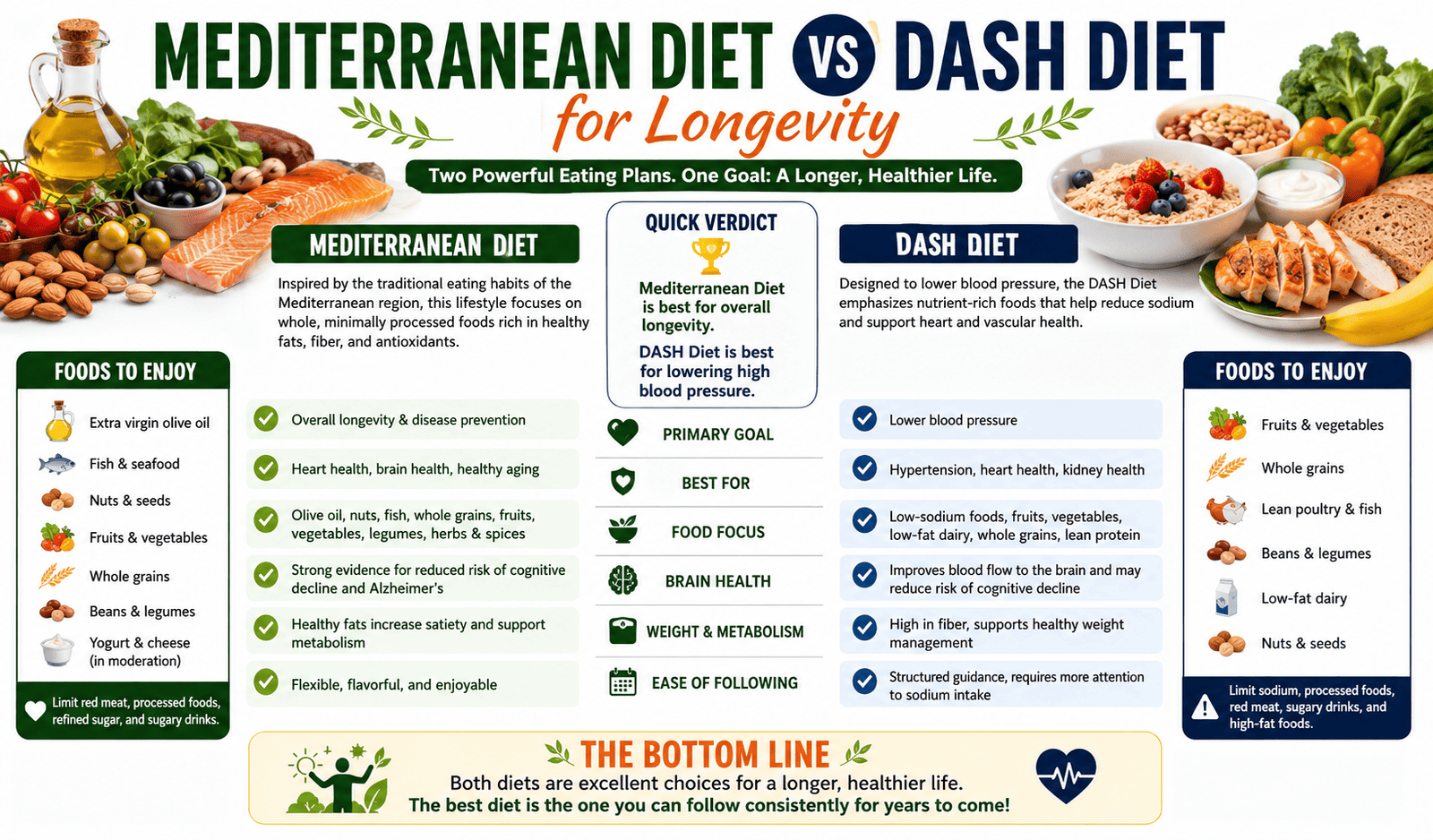
The Mediterranean Diet is generally considered the better choice for longevity because it has stronger evidence for reducing the risk of heart disease, stroke, cognitive decline, and premature death. The DASH Diet is the best option for lowering high blood pressure and improving cardiovascular health. Both diets emphasize whole, minimally processed foods and can help Americans live longer when followed consistently.
When it comes to healthy aging, nutrition is one of the most powerful lifestyle factors you can control. Millions of Americans are searching for the best diet to reduce chronic disease, maintain brain function, and increase life expectancy. Among the dozens of popular eating plans available today, two consistently rank at the top: the Mediterranean Diet and the DASH Diet.
Both diets are supported by decades of scientific research and recommended by healthcare professionals. However, they were designed with different primary goals. The Mediterranean Diet focuses on overall wellness and disease prevention, while the DASH Diet was originally created to treat and prevent hypertension. Understanding their similarities and differences can help you choose the eating pattern that best supports your long-term health.
What Is the Mediterranean Diet?
The Mediterranean Diet is based on the traditional eating habits of countries surrounding the Mediterranean Sea, particularly Greece, Italy, and Southern Spain. Rather than being a strict diet, it is a sustainable lifestyle centered around whole, natural foods.
This eating pattern encourages generous servings of vegetables, fruits, legumes, whole grains, nuts, seeds, and healthy fats from extra virgin olive oil. Fish and seafood are consumed regularly, while poultry, eggs, yogurt, and cheese are enjoyed in moderation. Red meat, processed foods, refined sugar, and sugary beverages are limited.
One reason this diet is associated with longevity is its high concentration of antioxidants, fiber, omega-3 fatty acids, and anti-inflammatory nutrients that protect the heart, brain, and blood vessels.
Also Read : Anti-Inflammatory Foods That May Support Longevity
What Is the DASH Diet?
The DASH Diet stands for Dietary Approaches to Stop Hypertension. It was developed by medical researchers specifically to lower blood pressure without relying entirely on medication.
The DASH eating plan emphasizes fruits, vegetables, whole grains, lean protein, beans, nuts, and low-fat dairy products. It also recommends reducing sodium intake while increasing potassium, calcium, magnesium, and fiber. These nutrients work together to support healthy blood pressure and improve cardiovascular function.
Today, the DASH Diet is widely recommended throughout the United States for people with hypertension, prehypertension, diabetes, and heart disease risk factors.
Also Read : Best Foods for Healthy Aging
Mediterranean Diet vs DASH Diet: Key Differences
Although both diets prioritize nutritious foods, their nutritional philosophy is slightly different. The Mediterranean Diet emphasizes healthy fats as a cornerstone of health, especially olive oil and fatty fish. The DASH Diet focuses more on limiting sodium and saturated fat while increasing mineral-rich foods that naturally regulate blood pressure.
The Mediterranean Diet is generally more flexible and culturally adaptable, whereas the DASH Diet provides more structured nutritional guidance, particularly for sodium intake and low-fat dairy consumption.
Also Read : The Biggest Longevity Trends in America
Which Diet Is Better for Longevity?
For overall longevity, the Mediterranean Diet has a slight advantage.
Large population studies have shown that people who closely follow Mediterranean eating patterns tend to experience lower rates of cardiovascular disease, stroke, type 2 diabetes, metabolic syndrome, and all-cause mortality. Researchers also associate this dietary pattern with healthier aging and greater life expectancy.
The combination of olive oil, vegetables, legumes, whole grains, fish, and nuts creates an anti-inflammatory eating pattern that supports nearly every major organ system. Since chronic inflammation is linked to aging and many diseases, reducing inflammation may contribute to a longer lifespan.
The DASH Diet also improves longevity by lowering blood pressure and reducing cardiovascular risk, but its strongest evidence lies in hypertension management rather than overall lifespan.
Also Read : What Does Aging Gracefully Really Mean?
Heart Health Comparison
Heart disease remains the leading cause of death in the United States, making cardiovascular health essential for longevity.
The Mediterranean Diet improves heart health by replacing unhealthy saturated fats with monounsaturated fats from olive oil and polyunsaturated fats from fish. These healthy fats help improve cholesterol balance, reduce inflammation, and protect arteries from plaque buildup.
The DASH Diet lowers heart disease risk primarily through blood pressure reduction. Its emphasis on potassium-rich fruits and vegetables, combined with reduced sodium intake, helps relax blood vessels and improve circulation.
If your goal is preventing heart attacks and supporting overall cardiovascular longevity, the Mediterranean Diet offers slightly broader benefits. If your primary concern is hypertension, the DASH Diet is often the better clinical choice.
Also Read : Healthy Aging Myths You Should Stop Believing
Which Diet Lowers Blood Pressure Better?
The DASH Diet is specifically designed to reduce high blood pressure, making it one of the most effective non-medication treatments available.
By limiting sodium while increasing potassium, calcium, and magnesium, the DASH Diet helps regulate fluid balance and blood vessel function. Many people experience noticeable improvements in blood pressure within a few weeks of consistently following the plan.
The Mediterranean Diet can also reduce blood pressure, especially when processed foods and excessive salt are minimized. However, its primary strength lies in overall cardiovascular and metabolic health rather than targeted hypertension treatment.
Also Read : Can You Slow Down Biological Aging?
Brain Health and Cognitive Longevity
Living longer is only valuable if brain health is preserved. Cognitive decline, memory loss, and dementia become increasingly common with age, making nutrition an important protective factor.
The Mediterranean Diet has been strongly associated with slower cognitive aging and a lower risk of Alzheimer’s disease. Foods rich in antioxidants, omega-3 fatty acids, vitamin E, and polyphenols help reduce oxidative stress that damages brain cells over time.
The DASH Diet also supports brain health by improving blood flow and reducing vascular damage caused by hypertension. Many experts believe that combining elements of both diets provides excellent protection for cognitive function throughout aging.
Also Read : Why Americans Are Focusing on Healthspan Instead of Lifespan?
Weight Management and Metabolism
Neither the Mediterranean nor DASH Diet was originally created as a weight-loss program, yet both naturally promote healthy body weight.
The Mediterranean Diet often feels more satisfying because healthy fats increase fullness and reduce cravings. People tend to find it easier to maintain over many years because it does not eliminate enjoyable foods or require strict calorie counting.
The DASH Diet supports weight management through high-fiber foods, lean proteins, and reduced consumption of processed foods. It encourages balanced meals that stabilize blood sugar and reduce overeating.
For sustainable weight control, consistency matters more than choosing one diet over the other.
Also Read : The Science Behind Longevity Explained.
Foods Included in the Mediterranean Diet
The Mediterranean Diet encourages eating colorful vegetables, fresh fruits, beans, lentils, chickpeas, whole grains like oats and brown rice, nuts, seeds, olive oil, salmon, sardines, tuna, yogurt, and moderate amounts of cheese. Herbs and spices replace excessive salt for flavor, while desserts and processed foods remain occasional treats.
Foods Included in the DASH Diet
The DASH Diet emphasizes vegetables, fruits, whole grains, skinless poultry, fish, beans, low-fat milk, yogurt, nuts, and seeds. It discourages processed meats, sugary beverages, refined snacks, excessive sodium, and foods high in saturated fat. Reading nutrition labels becomes an important habit because sodium is commonly hidden in packaged foods.
Also Read : Daily Habits That Support Healthy Aging
Which Diet Is Easier to Follow?
For many Americans, the Mediterranean Diet feels more enjoyable and flexible. It allows generous use of olive oil, flavorful herbs, and satisfying meals without focusing heavily on nutrient calculations. Families often find it easier to incorporate into everyday cooking.
The DASH Diet requires greater awareness of sodium intake, especially when eating restaurant meals or packaged foods. While it is highly effective, it may require more meal planning and label reading.
The best diet is ultimately the one you can maintain consistently for years rather than weeks.
Also Read : How to Live Longer Naturally?
Mediterranean Diet vs DASH Diet for Seniors
Older adults benefit tremendously from both eating patterns. Adequate protein, fiber, healthy fats, vitamins, and minerals help preserve muscle mass, maintain bone strength, support immune function, and reduce chronic disease risk.
The Mediterranean Diet may provide additional advantages for healthy aging because of its stronger association with cognitive health and reduced inflammation. Meanwhile, seniors with hypertension often achieve significant improvements in blood pressure through the DASH Diet.
Healthcare providers frequently recommend blending the strengths of both diets instead of choosing one exclusively.
Also Read : Healthspan vs Lifespan: What’s the Difference?
Sample Mediterranean Day for Longevity
A healthy Mediterranean breakfast may include Greek yogurt with blueberries, walnuts, and chia seeds. Lunch could feature a chickpea and quinoa salad with tomatoes, cucumber, spinach, feta cheese, and olive oil. An afternoon snack might be an apple with almonds. Dinner can consist of grilled salmon, roasted vegetables, brown rice, and a leafy green salad dressed with extra virgin olive oil.
This combination provides healthy fats, lean protein, antioxidants, and fiber that support long-term health.
Sample DASH Diet Day
A DASH-friendly breakfast may include oatmeal prepared with low-fat milk and topped with banana slices. Lunch could include grilled chicken, brown rice, steamed broccoli, and fresh fruit. A snack might consist of unsalted nuts and carrot sticks. Dinner may feature baked cod, sweet potatoes, green beans, and low-fat yogurt.
The meals are naturally rich in potassium, calcium, magnesium, and fiber while remaining relatively low in sodium.
Also Read : How to improve immune system naturally?
Final Verdict
When comparing the Mediterranean Diet vs DASH Diet for Longevity, both diets are outstanding choices supported by strong scientific evidence. The Mediterranean Diet earns the top position for overall longevity because it offers broader protection against heart disease, cognitive decline, inflammation, and premature mortality. The DASH Diet remains the leading dietary approach for lowering high blood pressure and protecting cardiovascular health.
Instead of viewing them as competing diets, many nutrition experts recommend combining their best principles: eat plenty of vegetables and fruits, choose whole grains, enjoy beans and legumes regularly, include fish several times per week, cook with olive oil, limit processed foods, reduce sodium, and stay physically active. These habits create a sustainable lifestyle that supports both a longer lifespan and a healthier quality of life.
Also Read : What causes chronic inflammation?
Frequently Asked Questions (FAQs)
1. Which diet is better for longevity: Mediterranean or DASH?
The Mediterranean Diet is generally considered better for overall longevity because it has stronger evidence for reducing premature death, heart disease, and cognitive decline.
2. Is the DASH Diet better for high blood pressure?
Yes. The DASH Diet was specifically designed to lower blood pressure and is one of the most effective eating plans for hypertension.
3. Can I combine the Mediterranean and DASH diets?
Yes. Combining olive oil, fish, vegetables, whole grains, legumes, and lower sodium intake creates an excellent long-term eating pattern.
4. Which diet is easier to maintain?
Most people find the Mediterranean Diet easier because it is more flexible and focuses on food quality rather than strict nutrient limits.
5. Does the Mediterranean Diet reduce inflammation?
Yes. Its emphasis on olive oil, nuts, fish, fruits, and vegetables provides anti-inflammatory nutrients that support healthy aging.
6. Is the DASH Diet good for diabetes?
Yes. The DASH Diet improves diet quality, supports stable blood sugar, and may reduce the risk of type 2 diabetes.
7. Which diet is better for cholesterol?
The Mediterranean Diet generally performs better for improving cholesterol because it emphasizes healthy unsaturated fats.
8. Are both diets good for seniors?
Yes. Both diets support heart health, brain function, healthy weight, and reduced chronic disease risk in older adults.
9. Do I need to count calories on these diets?
No. Neither diet requires calorie counting, although portion control can help with weight management.
10. What is the healthiest diet for Americans?
For most adults, the Mediterranean Diet is widely regarded as one of the healthiest and most sustainable eating patterns for long-term wellness and longevity.

Reducing inflammation may slow aging.
Medical Disclaimer : This article is for educational purposes only and should not be considered medical advice. Always consult a qualified healthcare professional regarding dietary or medical concerns.
Medically reviewed information sourced from trusted health organizations.
References
- National Institute on Aging (NIA). Healthy Aging and Longevity Resources.
https://www.nia.nih.gov/health - National Institutes of Health (NIH). Healthy Aging Research.
https://www.nih.gov/health-information - Centers for Disease Control and Prevention (CDC). Healthy Aging.
https://www.cdc.gov/aging - Harvard T.H. Chan School of Public Health. Nutrition and Healthy Aging.
https://www.hsph.harvard.edu/nutritionsource
Reviewed by: Dzarro Editorial Team
Fact-checked using trusted medical and scientific sources.

Sandip Choudhary is a Health & Wellness Researcher and Content Creator specializing in sleep, digestive health, preventive wellness, and evidence-based health education. He has been creating online content and researching health-related topics for several years, focusing on translating complex medical information into practical guidance for everyday readers.
With a strong background in SEO and content strategy, Sandip ensures that every article is optimized for both search engines and real users. His goal is to provide reliable, clear, and helpful information that supports healthier living.
Disclaimer: The content published is for informational purposes only and is not a substitute for professional medical advice.
2 thoughts on “Mediterranean Diet vs DASH Diet for Longevity”
Comments are closed.