
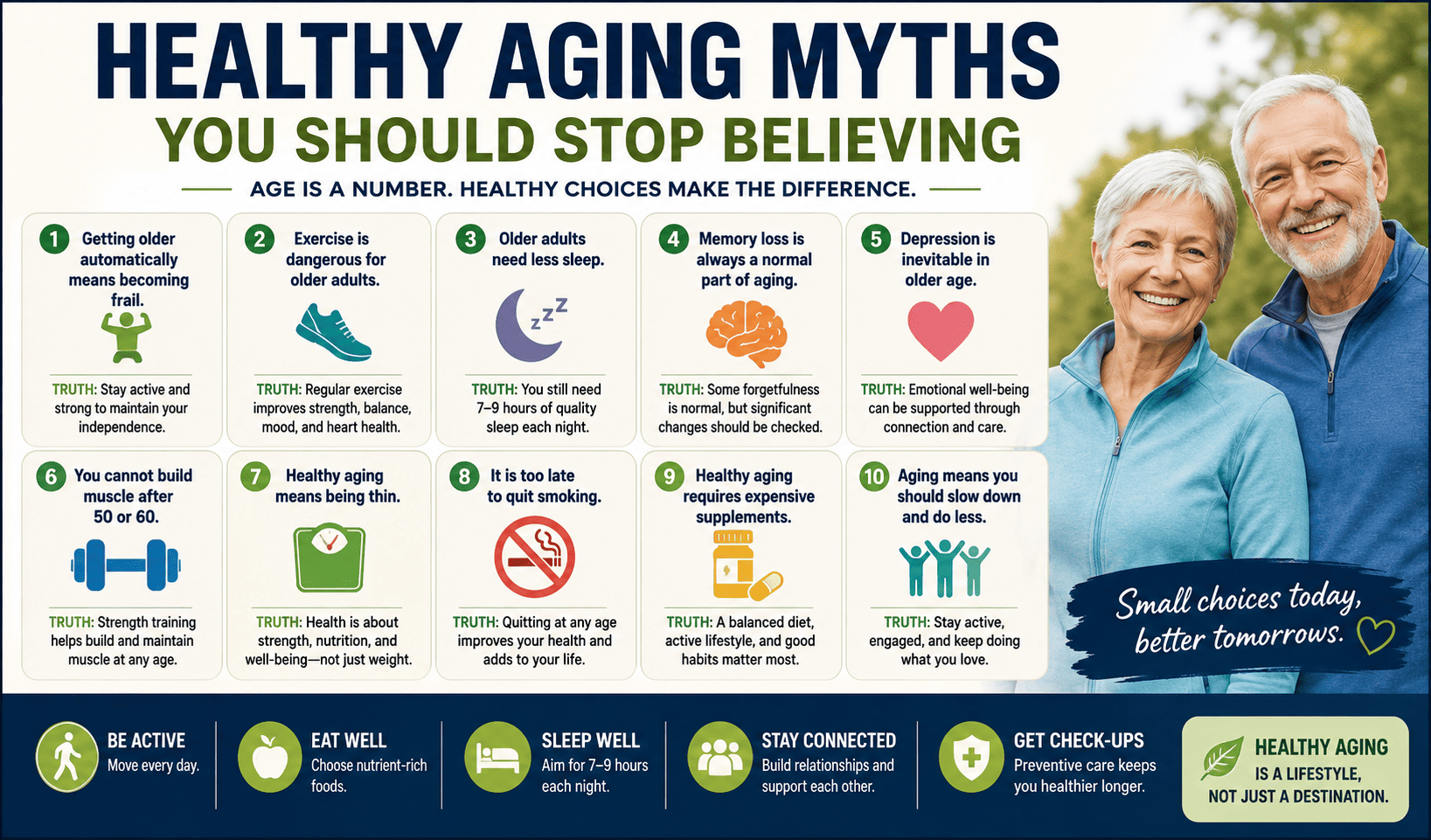
Healthy aging does not mean avoiding every sign of aging or accepting declining health as inevitable. Many common beliefs about aging are outdated or misleading. Regular physical activity, nutritious eating, adequate sleep, preventive health care, social connection, and mental engagement can help people maintain their health, independence, and quality of life as they grow older. Genetics influence aging, but lifestyle and health choices also matter.
Aging is a natural part of life, but many Americans still hear confusing or inaccurate claims about what happens as they get older. Some people believe that becoming weaker, less active, forgetful, or socially isolated is simply unavoidable. Others assume that exercise becomes dangerous, that older adults need very little sleep, or that maintaining a healthy weight is only about eating less.
These ideas can do more than create unnecessary worry. They may also discourage people from taking steps that support healthy aging. The National Institute on Aging notes that many factors affect aging, including genetics, lifestyle, physical activity, nutrition, sleep, health care, and mental well-being. While some changes are a normal part of getting older, many aspects of health and function can be influenced by everyday habits.
Understanding the difference between normal aging and health problems is therefore important. Here are some of the most common healthy aging myths you should stop believing and what research actually tells us.
Also Read : Can You Slow Down Biological Aging?
Myth 1: Getting Older Automatically Means Becoming Frail
One of the most persistent aging myths is that everyone eventually becomes weak, frail, and dependent on others. While muscle mass and physical function can change with age, significant loss of strength is not simply something people have to accept without action.
Physical activity can help older adults maintain muscle strength, physical function, balance, and independence. The National Institute on Aging reports that exercise can help preserve muscle mass and reduce some risks associated with inactivity, including falls and loss of functional ability.
Strength training, walking, balance exercises, swimming, dancing, and other appropriate activities can all contribute to an active lifestyle. The right exercise program depends on an individual’s health, fitness level, medications, and medical conditions, so people with health concerns should discuss new or vigorous exercise plans with a health professional.
Also Read : Why Americans Are Focusing on Healthspan Instead of Lifespan?
Myth 2: Exercise Is Dangerous for Older Adults
Another common misconception is that older adults should avoid exercise because they are more likely to get injured. In reality, avoiding movement can create its own health risks.
The National Institute on Aging states that physical activity can benefit people at any age and that most older adults can participate in some type of exercise, even when they have chronic health conditions. Physical activity can support cardiovascular health, muscle function, balance, mood, sleep, and overall quality of life.
For many people, the goal is not intense exercise. Starting gradually and choosing activities that match current abilities can be a safer and more sustainable approach. Even small amounts of movement throughout the day can contribute to overall activity.
Also Read : The Science Behind Longevity Explained.
Myth 3: Older Adults Need Less Sleep
It is common to hear that people naturally need much less sleep once they become older. This is misleading.
According to the National Institute on Aging, older adults generally need about seven to nine hours of sleep each night, similar to other adults. However, aging can be associated with changes in sleep patterns, including difficulty falling asleep or staying asleep.
Poor sleep should not automatically be dismissed as “just part of getting older.” Persistent sleep problems may have multiple causes, including medications, pain, medical conditions, stress, or changes in sleep habits. Addressing ongoing sleep problems with a healthcare professional can be an important part of healthy aging.
Also Read : Daily Habits That Support Healthy Aging
Myth 4: Memory Loss Is Always a Normal Part of Aging
Occasionally forgetting a name, misplacing keys, or forgetting an appointment can happen at any age. However, assuming that significant memory or thinking problems are simply normal aging can cause people to overlook symptoms that deserve medical attention.
The National Institute on Aging explains that mild forgetfulness can occur with normal aging, while substantial changes in memory, thinking, behavior, or personality should be discussed with a doctor. Some causes of cognitive problems may be treatable or reversible, making evaluation important.
Healthy aging does not mean having perfect memory forever. Instead, it means recognizing changes, maintaining cognitive and physical health, staying socially engaged, and seeking professional evaluation when changes interfere with everyday life.
Also Read : How to Live Longer Naturally?
Myth 5: Depression Is Inevitable in Older Age
Growing older does not automatically mean becoming depressed, lonely, or emotionally disconnected. Life changes such as retirement, bereavement, chronic illness, financial stress, or reduced mobility can affect emotional well-being, but depression is not an unavoidable consequence of aging.
The National Institute on Aging notes that some studies suggest older adults may actually be less likely to experience depression than younger adults. At the same time, depression can occur in later life and may sometimes present differently or be less openly discussed.
Maintaining relationships, participating in enjoyable activities, staying physically active, and discussing persistent emotional changes with a healthcare professional can all be important components of healthy aging.
Also Read : Healthspan vs Lifespan: What’s the Difference?
Myth 6: You Cannot Build Muscle After 50 or 60
The belief that building or maintaining muscle becomes impossible after middle age is another healthy aging myth worth abandoning.
Muscle mass and strength can decline with age, but physical activity can help counter these changes. Resistance exercises can support muscle strength and physical function, while regular movement can make everyday activities easier and help maintain independence.
Nutrition also matters. Older adults need adequate nutrients to support their bodies, and protein-rich foods can be part of a balanced eating pattern. Individual nutritional needs vary, particularly for people with kidney disease, digestive problems, or other medical conditions, so personalized advice may be appropriate.
Also Read : How to improve immune system naturally?
Myth 7: Healthy Aging Means Being Thin
A lower number on the bathroom scale does not automatically mean better health. Healthy aging is about much more than body weight.
The National Institute on Aging explains that body weight is influenced by factors such as age, genetics, lifestyle, sleep, and other circumstances. In older adults, body composition also matters because someone with a similar body weight may have different amounts of muscle and body fat. Unintentional weight loss can also be concerning and may sometimes be associated with reduced appetite, difficulty eating, swallowing problems, or underlying illness.
Instead of focusing exclusively on the scale, healthy aging should emphasize adequate nutrition, physical function, muscle health, metabolic health, and overall well-being. Anyone experiencing unexplained weight loss should discuss it with a healthcare professional.
Also Read : What causes chronic inflammation?
Myth 8: It Is Too Late to Quit Smoking
Some long-term smokers believe quitting is no longer worthwhile after decades of smoking. This is one of the most harmful aging myths.
The National Institute on Aging states that quitting smoking can improve health even in people who are 60 or older and have smoked for many years. Stopping smoking can lower the risk of serious health problems and improve circulation, exercise ability, and other aspects of health.
There is no age at which healthy lifestyle changes suddenly stop being valuable. Quitting smoking, becoming more physically active, improving nutrition, and addressing other health risks can still provide meaningful benefits later in life.
Also Read : Why do I feel older than my age?
Myth 9: Healthy Aging Requires Expensive Supplements
The wellness industry often promotes supplements as shortcuts to staying young. However, healthy aging is not dependent on purchasing a large collection of vitamins, powders, or anti-aging products.
Nutrition is a cornerstone of healthy aging, and the National Institute on Aging recommends choosing a variety of nutrient-dense foods across food groups. Individual vitamin and mineral needs can vary, and supplements may be appropriate in some situations, but they should not automatically replace a balanced diet or medical care.
People should be particularly cautious about products that promise to reverse aging, restore youth, or prevent major diseases without strong scientific evidence. Before taking a supplement regularly, it is wise to discuss it with a healthcare professional, especially if prescription medications are involved.
Also Read : What supplements support healthy aging?
Myth 10: Aging Means You Should Slow Down and Become Less Active
Retirement or advancing age does not mean a person needs to stop learning, socializing, exercising, traveling, working on hobbies, or participating in the community.
Regular physical activity can support physical function, mental well-being, sleep, balance, and independence. Social activities can also provide meaningful connection and purpose. The National Institute on Aging encourages older adults to participate in activities they enjoy and remain engaged with other people.
Healthy aging is not about trying to behave like you are 25. It is about maintaining the greatest possible level of health, function, independence, and quality of life for your circumstances.
Also Read : How to improve energy after 40?
What Does Healthy Aging Really Mean?
Healthy aging does not have a single definition or a perfect formula. It means supporting your physical, mental, emotional, and social well-being while recognizing that everyone’s health journey is different.
A practical approach includes regular physical activity, nutritious eating, adequate sleep, preventive health care, avoiding tobacco, moderating alcohol when appropriate, maintaining social connections, and addressing health concerns early. These habits cannot eliminate every age-related condition, but they can help support health and independence as people grow older.
It is also important to remember that healthy aging does not mean never developing a chronic condition. Many older adults live active and fulfilling lives while managing conditions such as arthritis, diabetes, hypertension, or heart disease. Good health care can help people manage these conditions while continuing to participate in activities that matter to them.
Also Read : Can inflammation speed up aging?
The Bottom Line on Healthy Aging Myths
The biggest mistake is assuming that every health change associated with age is inevitable. Some biological changes are a normal part of aging, but inactivity, poor nutrition, inadequate sleep, smoking, social isolation, and untreated health problems can also influence how a person feels and functions.
The best approach is to focus on what can be changed. Moving regularly, eating a nutrient-rich diet, getting sufficient sleep, maintaining relationships, staying mentally engaged, avoiding tobacco, and keeping up with appropriate medical care can all contribute to healthier aging.
If you notice persistent fatigue, unexplained weight loss, significant memory changes, depression, sleep problems, weakness, falls, or other new symptoms, do not automatically blame them on age. A healthcare professional can help determine whether an underlying problem needs attention.
Also Read : What are the best anti-aging habits?
Frequently Asked Questions About Healthy Aging Myths
1. What are the most common healthy aging myths?
Common myths include the belief that aging automatically causes frailty, memory loss, depression, poor sleep, and inactivity. Other misconceptions include the idea that exercise is dangerous for older adults, that it is too late to quit smoking, or that healthy aging requires expensive supplements. Research from the National Institute on Aging shows that many aspects of health and physical function can be supported through lifestyle and appropriate health care.
2. Can exercise really help with healthy aging?
Yes. Physical activity can help support muscle strength, balance, cardiovascular health, sleep, mood, physical function, and independence. The National Institute on Aging recommends incorporating aerobic, muscle-strengthening, and balance activities according to individual abilities and health needs.
3. Is memory loss a normal part of aging?
Some mild forgetfulness can occur with normal aging, but significant or worsening memory and thinking problems should not automatically be considered normal. Changes that interfere with daily activities should be discussed with a healthcare professional because some causes may be treatable.
4. Do older adults need less sleep?
No. Older adults generally need about seven to nine hours of sleep per night. Sleep patterns may change with age, but persistent difficulty sleeping should not simply be dismissed as a normal part of aging.
5. Can older adults build muscle?
Yes. Although muscle mass and strength can decline with age, appropriate resistance exercise and regular physical activity can help older adults maintain or improve physical function and muscle strength.
6. Is it too late to quit smoking after age 60?
No. Quitting smoking can benefit health even after many years of smoking. The National Institute on Aging emphasizes that quitting at older ages can still reduce health risks and improve aspects of physical health.
7. Does healthy aging mean losing weight?
Not necessarily. Healthy aging is about overall health and function rather than simply reaching a lower number on the scale. Nutrition, muscle mass, physical activity, and underlying health conditions all matter. Unintentional weight loss should be discussed with a healthcare professional.
8. Do older adults need supplements to age well?
Not automatically. A balanced, nutrient-dense eating pattern is an important foundation for healthy aging. Some people may need specific supplements because of nutritional deficiencies or medical circumstances, but supplements should not be viewed as a universal anti-aging solution.
9. Can lifestyle choices really affect how we age?
Yes. Genetics play a role, but lifestyle factors such as physical activity, nutrition, sleep, smoking, alcohol use, preventive health care, and mental well-being can influence health and quality of life as people age.
10. What is the best way to start healthy aging?
Start with sustainable habits rather than trying to change everything at once. Regular movement, nutritious foods, adequate sleep, meaningful social connection, avoiding tobacco, and appropriate medical care are practical foundations. If you have chronic conditions or have been inactive, discuss major lifestyle changes with your healthcare professional before starting a new exercise program.

A balanced lifestyle promotes longevity.
Medical Disclaimer: This article is for educational and informational purposes only and is not a substitute for professional medical advice, diagnosis, or treatment. Health needs vary from person to person. If you have symptoms, chronic medical conditions, take medications, or are considering significant changes to your diet or exercise routine, consult a qualified healthcare professional.
References:
- Healthy Aging – National Institute on Aging (NIA)
Healthy Aging – NIA - What Do We Know About Healthy Aging? – NIA
What Do We Know About Healthy Aging? - 10 Common Misconceptions About Aging – NIA
10 Common Misconceptions About Aging - Health Benefits of Exercise and Physical Activity – NIA
Health Benefits of Exercise and Physical Activity - Sleep – NIA Sleep – NIA
- Healthy Eating, Nutrition, and Diet – NIA
Healthy Eating, Nutrition, and Diet - Maintaining a Healthy Weight – NIA
Maintaining a Healthy Weight
Reviewed by: Dzarro Editorial Team
Fact-checked using trusted medical and scientific sources.

Sandip Choudhary is a Health & Wellness Researcher and Content Creator specializing in sleep, digestive health, preventive wellness, and evidence-based health education. He has been creating online content and researching health-related topics for several years, focusing on translating complex medical information into practical guidance for everyday readers.
With a strong background in SEO and content strategy, Sandip ensures that every article is optimized for both search engines and real users. His goal is to provide reliable, clear, and helpful information that supports healthier living.
Disclaimer: The content published is for informational purposes only and is not a substitute for professional medical advice.
1 thought on “Healthy Aging Myths You Should Stop Believing”
Comments are closed.