
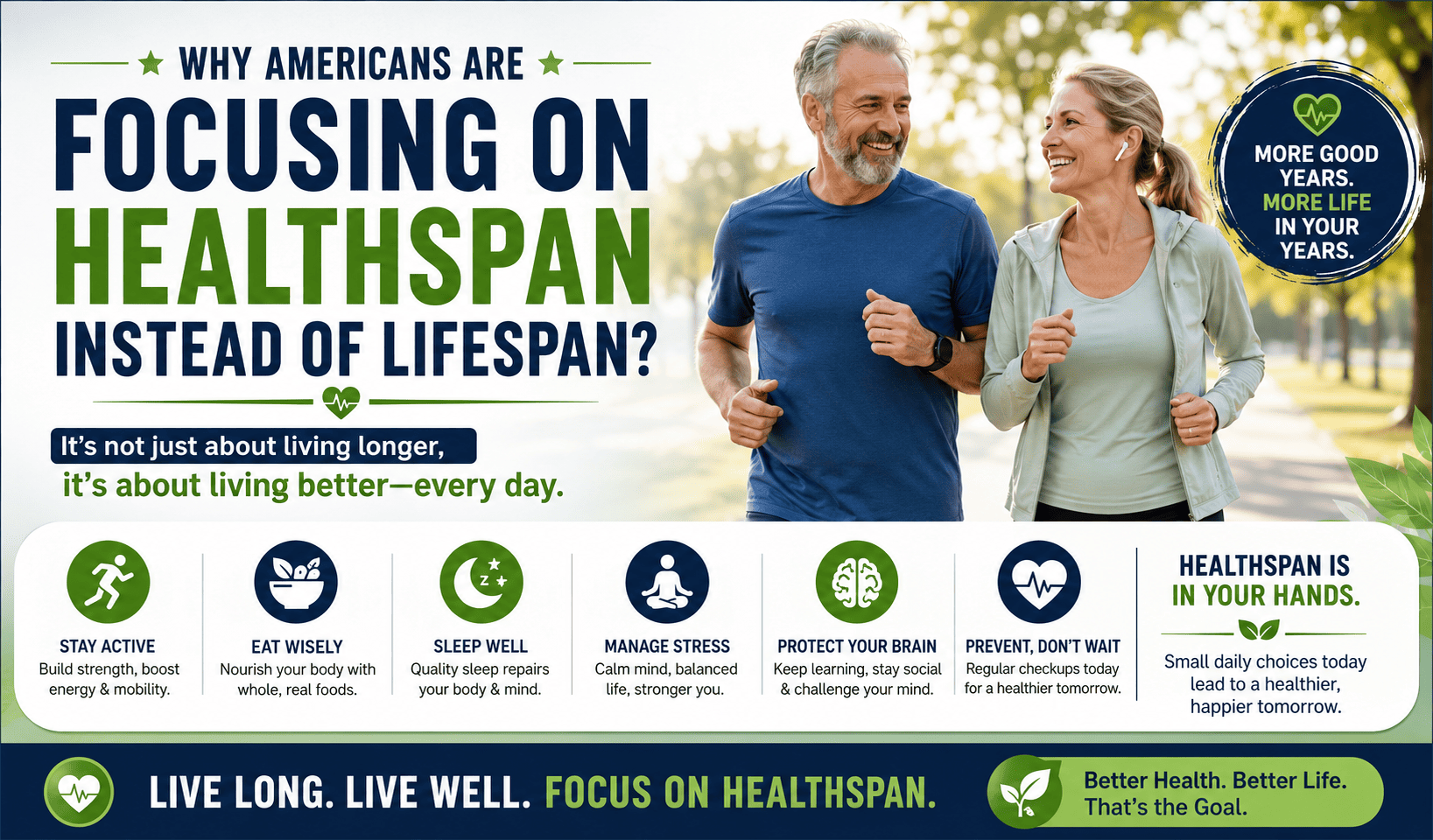
For decades, the American healthcare system and wellness industry emphasized one primary goal: living longer. Advances in medicine, vaccines, emergency care, and disease prevention have helped increase average life expectancy over the years. However, a growing number of Americans are asking a different question today: “What is the point of living longer if those extra years are filled with illness, disability, or poor quality of life?”
This shift has fueled a nationwide interest in healthspan rather than simply lifespan. Instead of counting the total number of years a person lives, healthspan measures how many of those years are spent in good physical, mental, and emotional health. Across the United States, physicians, researchers, fitness experts, nutritionists, and longevity scientists are encouraging people to prioritize healthy aging over merely extending life.
From wearable fitness trackers and personalized nutrition plans to strength training, sleep optimization, preventive healthcare, and mental wellness programs, Americans are embracing habits that help them stay active and independent well into their later years. This trend reflects a broader understanding that longevity should be measured not just by age but by vitality, mobility, cognitive function, and overall well-being.
This article explores why Americans are focusing on healthspan instead of lifespan, what the difference means, the science behind healthy aging, and practical strategies that can improve both quality and length of life.
What Is Lifespan?
Lifespan refers to the total number of years a person lives, regardless of their health during those years. If someone lives to age 90, their lifespan is 90 years, even if they spent the last 20 years coping with multiple chronic illnesses or limited mobility.
Historically, healthcare systems measured success by increasing lifespan through advances in medicine, sanitation, vaccinations, and emergency care. While extending life remains an important achievement, it does not necessarily guarantee a fulfilling or healthy life.
Also Read : The Science Behind Longevity Explained.
What Is Healthspan?
Healthspan refers to the number of years a person lives free from major chronic diseases, disability, and significant physical or cognitive decline. A person with a long healthspan remains active, independent, mentally sharp, and physically capable for most of their life.
For many Americans, the goal has shifted from simply adding years to life toward adding life to those years. This philosophy encourages healthy behaviors that reduce disease risk while maintaining energy, strength, and overall wellness.
Why Healthspan Matters More Than Ever?
The United States has one of the world’s highest healthcare expenditures, yet millions of Americans live with chronic conditions such as obesity, diabetes, heart disease, arthritis, hypertension, and Alzheimer’s disease.
Many people spend the last decade or more of life managing multiple health issues. This creates emotional, physical, and financial challenges for individuals, families, and healthcare systems.
Healthspan aims to reduce these burdens by delaying or preventing age-related diseases. The goal is not only to live longer but to remain healthy enough to enjoy retirement, travel, spend time with family, pursue hobbies, and maintain independence.
Also Read : Daily Habits That Support Healthy Aging
The Rise of Preventive Healthcare
Preventive healthcare has become a major priority across America. Rather than waiting for disease to develop, healthcare providers increasingly encourage early intervention.
Annual wellness visits, blood pressure monitoring, cholesterol screening, cancer screenings, diabetes testing, vaccinations, and lifestyle counseling help identify risks before they become serious problems.
Preventive care also includes nutrition education, physical activity recommendations, stress management, smoking cessation, and weight management. These proactive measures contribute significantly to extending healthspan.
Chronic Diseases Are Driving the Shift
One of the biggest reasons Americans are focusing on healthspan is the growing prevalence of chronic diseases.
Conditions such as cardiovascular disease, Type 2 diabetes, obesity, chronic kidney disease, osteoporosis, dementia, and arthritis often develop gradually over many years. While modern medicine helps manage these conditions, prevention remains far more effective.
Research consistently shows that healthy lifestyle habits can significantly lower the risk of developing many chronic illnesses, allowing individuals to maintain better health well into older adulthood.
Also Read : How to Live Longer Naturally?
Americans Want to Stay Independent Longer
Independence has become one of the strongest motivations behind the healthspan movement.
Most people hope to remain capable of driving, cooking, walking, exercising, traveling, managing finances, and living without constant assistance as they age.
Maintaining muscle strength, balance, flexibility, cardiovascular fitness, and cognitive function helps preserve independence and reduces the likelihood of falls, fractures, hospitalization, and long-term care.
Exercise Is No Longer Just About Weight Loss
Exercise recommendations have evolved dramatically.
While many Americans once exercised primarily for weight loss or appearance, today’s focus emphasizes functional fitness and healthy aging.
Strength training has become especially popular because it helps preserve muscle mass, improve bone density, increase metabolism, and reduce fall risk.
Cardiovascular exercise supports heart health, while flexibility and balance exercises improve mobility and reduce injuries.
Many longevity experts now recommend combining resistance training, aerobic exercise, mobility work, and daily movement for optimal healthspan.
Also Read : Healthspan vs Lifespan: What’s the Difference?
Nutrition Has Shifted Toward Longevity
Nutrition plays a central role in extending healthspan.
Instead of following short-term fad diets, many Americans are adopting sustainable eating patterns that support long-term health.
Whole foods rich in vegetables, fruits, lean proteins, legumes, whole grains, nuts, seeds, and healthy fats provide essential nutrients that reduce inflammation and support healthy aging.
Highly processed foods, excessive sugar, and trans fats are increasingly associated with chronic disease risk.
Protein intake has also become a major focus for older adults because adequate protein helps preserve muscle mass during aging.
Sleep Is Finally Receiving the Attention It Deserves
Sleep has emerged as one of the most important pillars of healthspan.
Poor sleep affects nearly every system in the body, including immune function, metabolism, hormone regulation, brain health, and cardiovascular health.
Chronic sleep deprivation increases the risk of obesity, diabetes, depression, memory problems, and heart disease.
Many Americans now prioritize consistent sleep schedules, improved sleep hygiene, and treatment for conditions such as sleep apnea to support healthy aging.
Also Read : How to improve immune system naturally?
Mental Health Is Part of Healthy Aging
Healthspan extends beyond physical health.
Mental wellness significantly influences overall quality of life throughout aging.
Stress, anxiety, depression, and loneliness can negatively affect immune function, heart health, sleep quality, and cognitive performance.
Americans are increasingly recognizing the importance of therapy, mindfulness, meditation, social connections, and emotional resilience as essential components of long-term wellness.
Healthy relationships and community engagement also contribute to improved longevity and better mental health.
Brain Health Is Becoming a Priority
One of the greatest fears associated with aging is cognitive decline.
As Alzheimer’s disease and other forms of dementia become more common, Americans are placing greater emphasis on protecting brain health.
Regular exercise, lifelong learning, social engagement, healthy nutrition, adequate sleep, and cardiovascular health all contribute to maintaining cognitive function.
Activities such as reading, learning new skills, solving puzzles, and engaging in meaningful conversations help keep the brain active throughout life.
Also Read : What causes chronic inflammation?
Technology Is Supporting Healthspan
Modern technology has transformed preventive healthcare.
Wearable devices can monitor heart rate, physical activity, sleep quality, blood oxygen levels, and exercise performance.
Continuous glucose monitors are helping individuals better understand how food affects blood sugar.
Smartwatches can detect irregular heart rhythms, encourage movement, and even identify falls in some users.
Digital health platforms also make it easier for Americans to track health metrics, communicate with physicians, and maintain healthier lifestyles.
Personalized Medicine Is Changing the Future
Healthcare is becoming increasingly personalized.
Instead of using identical recommendations for everyone, physicians now consider genetics, lifestyle, family history, environmental factors, and biomarkers when developing health strategies.
Personalized nutrition, customized fitness programs, precision medicine, and genetic risk assessments help individuals make informed decisions about disease prevention and healthy aging.
Healthy Aging Is Becoming a Financial Decision
Healthcare costs rise significantly with chronic illness.
Many Americans recognize that investing in preventive health today may reduce medical expenses later in life.
Maintaining a healthy weight, exercising regularly, avoiding tobacco, limiting alcohol consumption, and attending preventive screenings may lower the risk of expensive treatments, surgeries, hospitalizations, and long-term care.
Healthy aging therefore benefits both personal finances and overall quality of life.
Also Read : Why do I feel older than my age?
Social Connections Improve Healthspan
Strong relationships contribute to healthier aging.
Research has shown that people with meaningful social connections often experience lower stress levels, improved mental health, stronger immune function, and reduced mortality risk.
Community involvement, volunteering, spending time with family, maintaining friendships, and participating in group activities all support emotional well-being throughout adulthood.
Loneliness, on the other hand, has been linked to increased risks of depression, cardiovascular disease, and cognitive decline.
Healthy Habits That Improve Healthspan
Improving healthspan does not require expensive treatments or complicated routines. Small, consistent lifestyle choices can have a meaningful impact over time.
Regular physical activity helps maintain cardiovascular fitness, muscle strength, balance, and mobility. Eating a nutrient-rich diet supports healthy metabolism and reduces inflammation. Prioritizing seven to nine hours of quality sleep promotes recovery and cognitive performance. Managing stress through mindfulness, relaxation techniques, or counseling improves both mental and physical health. Avoiding tobacco and limiting excessive alcohol intake reduces the risk of many chronic diseases. Maintaining regular preventive healthcare visits allows early detection of potential health concerns before they become more serious.
The Future of Longevity Research
Scientists continue exploring ways to extend both lifespan and healthspan.
Researchers are investigating cellular aging, inflammation, mitochondrial health, genetics, gut microbiome diversity, senescent cells, regenerative medicine, and metabolic health.
Although some therapies remain experimental, current evidence strongly supports healthy lifestyle behaviors as the most reliable strategy for improving healthspan today.
Rather than waiting for future medical breakthroughs, Americans can benefit immediately from evidence-based habits that promote long-term wellness.
Also Read : What supplements support healthy aging?
Conclusion
The conversation around aging in America is changing rapidly. Instead of asking how long they can live, more people are asking how well they can live. This growing focus on healthspan reflects a deeper understanding that true longevity means remaining active, independent, mentally sharp, and physically healthy throughout life.
Preventive healthcare, regular exercise, balanced nutrition, quality sleep, stress management, strong social relationships, and personalized medicine all contribute to healthier aging. While no one can completely eliminate the aging process, adopting healthy habits today can significantly increase the number of years spent enjoying life rather than managing illness.
Ultimately, why Americans are focusing on healthspan instead of lifespan comes down to one simple idea: living longer has far greater value when those extra years are filled with health, purpose, energy, and independence.

Mental resilience supports healthy aging.
Frequently Asked Questions (FAQs)
1. Why are Americans focusing on healthspan instead of lifespan?
Americans increasingly recognize that living longer is most meaningful when those additional years are healthy, active, and independent. Healthspan emphasizes quality of life rather than simply increasing age.
2. What is the difference between healthspan and lifespan?
Lifespan measures the total number of years a person lives, while healthspan measures how many of those years are spent in good health without major chronic disease or disability.
3. Can healthy habits increase healthspan?
Yes. Regular physical activity, balanced nutrition, quality sleep, stress management, avoiding tobacco, limiting excessive alcohol consumption, and preventive healthcare can all improve healthspan.
4. Does exercise improve healthy aging?
Absolutely. Exercise supports heart health, muscle strength, bone density, balance, flexibility, metabolism, and cognitive function, making it one of the most effective ways to extend healthspan.
5. Why is preventive healthcare important for healthspan?
Preventive healthcare helps detect diseases early, reduces health risks, and encourages healthy lifestyle changes before serious medical conditions develop.
6. Does sleep affect healthspan?
Yes. Quality sleep supports brain function, immune health, hormone balance, metabolism, cardiovascular health, and emotional well-being, making it a critical component of healthy aging.
7. Can nutrition extend healthspan?
A nutrient-rich diet containing fruits, vegetables, lean proteins, whole grains, healthy fats, and fiber helps reduce chronic disease risk while supporting long-term health and vitality.
8. Is healthspan only important for older adults?
No. Building healthy habits during young adulthood and middle age can significantly improve health outcomes later in life. Starting early provides the greatest long-term benefits.
Medical Disclaimer: This article is for educational purposes only and does not replace professional medical advice, diagnosis, or treatment. Always consult a qualified healthcare provider before making significant changes to your diet, exercise routine, medications, or health management plan.
Medically reviewed information sourced from trusted health organizations.
References
- National Institute on Aging (NIA). Healthy Aging and Longevity Resources.
https://www.nia.nih.gov/health - National Institutes of Health (NIH). Healthy Aging Research.
https://www.nih.gov/health-information - Centers for Disease Control and Prevention (CDC). Healthy Aging.
https://www.cdc.gov/aging - Harvard T.H. Chan School of Public Health. Nutrition and Healthy Aging.
https://www.hsph.harvard.edu/nutritionsource
Reviewed by: Dzarro Editorial Team
Fact-checked using trusted medical and scientific sources.

Sandip Choudhary is a Health & Wellness Researcher and Content Creator specializing in sleep, digestive health, preventive wellness, and evidence-based health education. He has been creating online content and researching health-related topics for several years, focusing on translating complex medical information into practical guidance for everyday readers.
With a strong background in SEO and content strategy, Sandip ensures that every article is optimized for both search engines and real users. His goal is to provide reliable, clear, and helpful information that supports healthier living.
Disclaimer: The content published is for informational purposes only and is not a substitute for professional medical advice.