
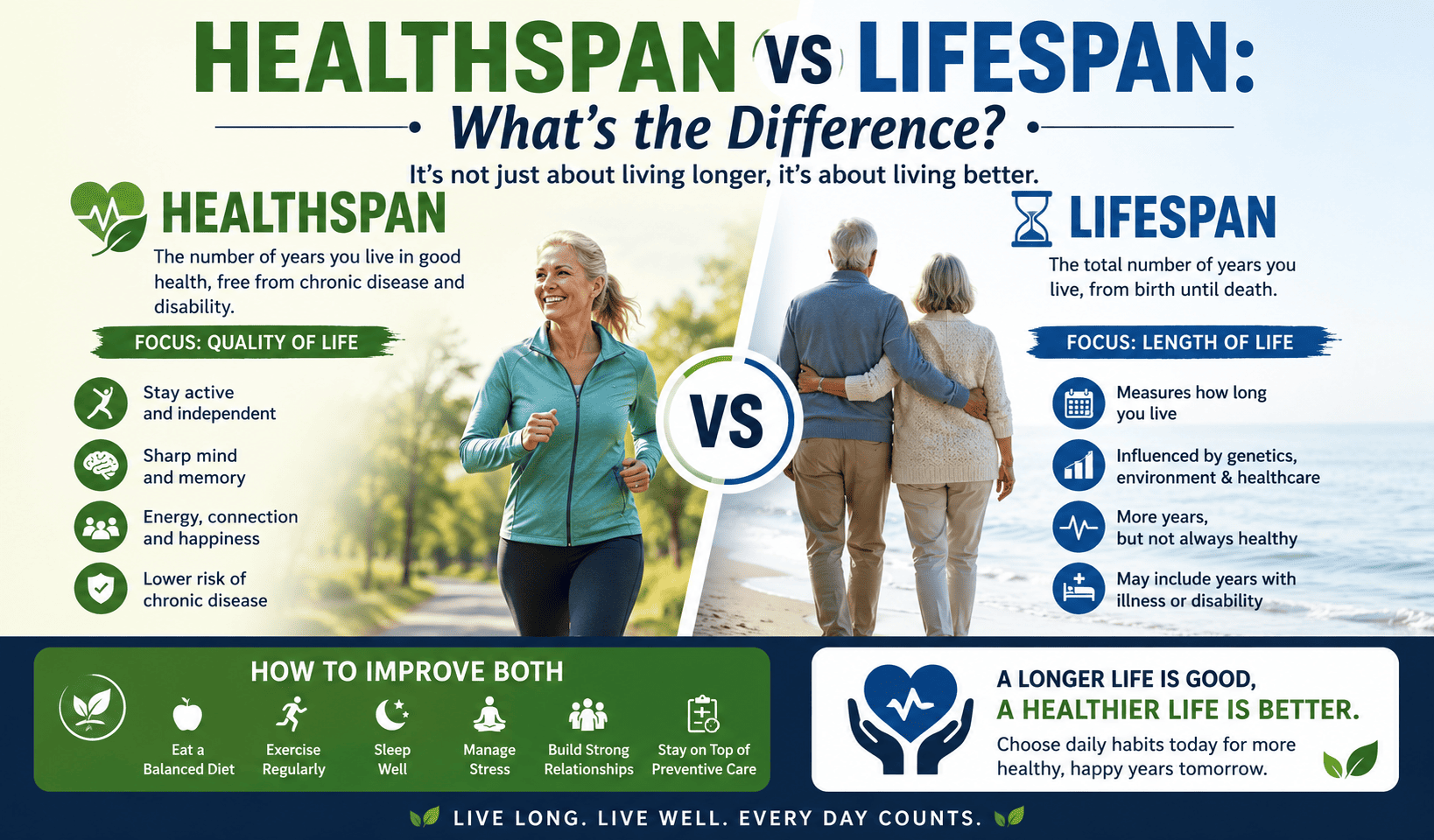
When people think about aging, the first question that often comes to mind is, “How long will I live?” However, modern health science is shifting the conversation toward a more meaningful question: How well will I live? This is where the concept of Healthspan vs Lifespan: What’s the Difference? becomes incredibly important.
For decades, medical advances have helped people in the United States live longer than previous generations. Better vaccines, improved healthcare, safer workplaces, and advances in disease treatment have increased average life expectancy. Yet living longer does not automatically mean living healthier. Many adults spend their later years managing chronic illnesses, reduced mobility, or cognitive decline.
Researchers, physicians, and longevity experts now emphasize healthspan alongside lifespan because the ultimate goal isn’t simply adding years to life—it’s adding healthy, active, and independent years. Understanding the difference between these two concepts can help you make smarter lifestyle choices today that benefit your future self.
This comprehensive guide explains everything you need to know about healthspan and lifespan, the factors influencing each, practical ways to improve them, and why focusing on healthspan may be one of the best investments you can make for your future.
What Is Lifespan?
Lifespan refers to the total number of years a person lives from birth until death. It measures longevity without considering the quality of those years.
For example, if someone lives to be 90 years old, their lifespan is 90 years. Lifespan is commonly used in public health research, insurance calculations, demographic studies, and national health statistics.
Scientists often discuss two different types of lifespan:
Average lifespan refers to the average age people live within a specific population. This number changes depending on healthcare access, lifestyle, environmental conditions, socioeconomic status, and medical technology.
Maximum lifespan represents the longest possible age humans can achieve under ideal biological conditions. Although a few individuals have lived beyond 115 years, researchers continue studying whether there is a natural biological limit to human longevity.
While lifespan is an important measure, it does not reveal whether those extra years are spent in good health or with chronic disease.
Also Read : How to improve immune system naturally?
What Is Healthspan?
Healthspan refers to the number of years a person lives in good physical, mental, and emotional health without significant disability or chronic illness.
A person with a long healthspan remains active, independent, mentally sharp, socially engaged, and physically capable for most of their life.
Unlike lifespan, healthspan focuses on quality rather than quantity.
Imagine two individuals who both live to age 90.
The first spends the last 25 years dealing with diabetes, heart disease, limited mobility, chronic pain, and memory problems.
The second remains physically active, mentally alert, socially connected, and independent until age 87 before experiencing a short period of illness.
Although both individuals have identical lifespans, the second person enjoys a much longer healthspan.
This distinction explains why longevity researchers increasingly prioritize improving healthspan rather than simply extending lifespan.
Healthspan vs Lifespan: The Key Difference
The simplest way to understand Healthspan vs Lifespan: What’s the Difference? is this:
Lifespan measures how long you live.
Healthspan measures how long you stay healthy while living.
These concepts overlap but are not identical.
Someone may live many years with chronic illness, which means they have a long lifespan but a relatively short healthspan.
Conversely, another person may have a slightly shorter lifespan yet remain energetic, healthy, and independent for nearly all of those years.
Modern medicine increasingly aims to reduce the gap between healthspan and lifespan by preventing diseases instead of only treating them after they appear.
Also Read : What causes chronic inflammation?
Why Healthspan Matters More Than Ever
Americans are living longer than previous generations, but chronic diseases have become increasingly common.
Conditions such as obesity, type 2 diabetes, cardiovascular disease, arthritis, osteoporosis, Alzheimer’s disease, and certain cancers often develop gradually over decades.
Many people spend their final years managing multiple medications, frequent medical appointments, and reduced quality of life.
Extending healthspan offers several benefits.
Individuals remain independent longer and maintain greater mobility throughout older adulthood. Cognitive function stays stronger, allowing people to continue learning, working, traveling, and enjoying hobbies. Healthcare expenses often decrease because fewer chronic illnesses require treatment. Relationships improve when people can stay socially active, and overall life satisfaction increases because healthy aging supports emotional well-being.
Instead of merely surviving longer, healthspan allows people to truly enjoy more years of life.
Also Read : Why do I feel older than my age?
Factors That Influence Lifespan
Several elements affect how long people live.
Genetics certainly play a role, although scientists estimate inherited genes account for only part of overall longevity. Family history may influence risks for heart disease, cancer, diabetes, and certain neurological disorders.
Access to healthcare significantly affects lifespan by enabling early diagnosis, preventive screenings, vaccinations, and effective disease treatment.
Environmental factors also matter. Air quality, clean drinking water, workplace safety, and neighborhood conditions all influence long-term health outcomes.
Lifestyle choices have perhaps the greatest influence. Smoking, excessive alcohol consumption, poor nutrition, inactivity, chronic stress, and inadequate sleep increase disease risk and shorten lifespan.
Socioeconomic factors including education, income, housing stability, and healthcare accessibility further contribute to longevity differences across populations.
Factors That Influence Healthspan
Healthspan depends heavily on daily behaviors that accumulate over many years.
Nutrition plays a foundational role. Diets rich in vegetables, fruits, legumes, whole grains, healthy fats, lean proteins, and fiber help reduce inflammation and lower chronic disease risk.
Regular physical activity strengthens muscles, improves cardiovascular health, supports metabolism, preserves bone density, and protects cognitive function.
Sleep allows the brain and body to repair themselves. Adults who consistently obtain sufficient, high-quality sleep generally experience better immune function, hormone regulation, memory, and metabolic health.
Stress management is equally important because chronic stress elevates cortisol levels, contributing to inflammation, hypertension, weakened immunity, and mental health disorders.
Strong social relationships also support healthy aging. Research consistently shows that meaningful friendships and community involvement reduce loneliness, depression, and even mortality risk.
Avoiding tobacco while limiting alcohol consumption further improves long-term healthspan by reducing risks for cancer, liver disease, stroke, and heart disease.
Also Read : What supplements support healthy aging?
Can You Increase Both Healthspan and Lifespan?
Yes. Many evidence-based lifestyle habits benefit both simultaneously.
Exercise remains one of the most effective interventions. Regular aerobic activity combined with strength training helps preserve muscle mass, improve heart health, enhance insulin sensitivity, and reduce mortality risk.
Maintaining a healthy body weight decreases the likelihood of metabolic diseases while supporting joint health and mobility.
Blood pressure, cholesterol, and blood sugar management reduce cardiovascular complications that commonly shorten both lifespan and healthspan.
Routine preventive healthcare enables early detection of medical conditions before they become severe.
Vaccinations protect against infectious diseases that disproportionately affect older adults.
Mental stimulation through reading, learning new skills, puzzles, and lifelong education supports brain health well into later years.
Although genetics cannot be changed, lifestyle choices substantially influence how those genes are expressed throughout life.
The Science Behind Healthy Aging
Scientists studying aging have identified several biological processes that contribute to declining health over time.
One major factor involves chronic low-grade inflammation, sometimes called “inflammaging.” Persistent inflammation accelerates tissue damage and contributes to numerous age-related diseases.
Another involves oxidative stress, which occurs when unstable molecules called free radicals damage cells faster than the body can repair them.
Cellular senescence also plays a role. Some aging cells stop functioning normally but remain in the body, releasing inflammatory compounds that affect surrounding tissues.
Mitochondrial dysfunction reduces the body’s ability to efficiently produce cellular energy.
DNA damage accumulates throughout life due to environmental exposures, metabolism, and normal aging processes.
Researchers worldwide are exploring therapies that target these biological mechanisms to improve healthspan while reducing age-related disease burden.
Also Read : How to improve energy after 40?
Nutrition for a Longer Healthspan
Diet strongly influences both longevity and healthy aging.
A balanced eating pattern emphasizing minimally processed foods provides essential vitamins, minerals, antioxidants, healthy fats, and plant compounds that support cellular function.
Colorful fruits and vegetables supply antioxidants that help protect cells from oxidative damage.
Whole grains contribute fiber that supports digestive health and beneficial gut bacteria.
Healthy fats from foods such as olive oil, nuts, seeds, and fatty fish promote cardiovascular and brain health.
Lean proteins help preserve muscle mass, particularly important after age 40 when natural muscle loss begins accelerating.
Limiting highly processed foods, sugary beverages, excessive sodium, and trans fats helps reduce chronic disease risk.
Rather than following restrictive fad diets, consistency with balanced nutrition generally provides the greatest long-term benefits.
Physical Activity and Healthspan
Exercise is sometimes called the closest thing to an anti-aging medicine because nearly every organ system benefits from regular movement.
Cardiovascular exercise strengthens the heart, improves circulation, and enhances endurance.
Resistance training preserves muscle mass, supports bone density, improves metabolism, and reduces fall risk.
Flexibility exercises improve joint mobility while balance training helps maintain independence later in life.
Physical activity also benefits mental health by reducing anxiety, depression, and stress while improving sleep quality and cognitive function.
Even moderate daily movement such as brisk walking, gardening, swimming, cycling, or dancing contributes meaningfully to healthier aging.
Consistency matters far more than perfection.
Also Read : Can inflammation speed up aging?
Sleep and Healthy Aging
Sleep is often overlooked despite being essential for maintaining healthspan.
During sleep, the body repairs tissues, regulates hormones, consolidates memories, and removes metabolic waste products from the brain.
Poor sleep has been linked with obesity, diabetes, hypertension, weakened immunity, depression, and cognitive decline.
Most healthy adults benefit from seven to nine hours of quality sleep each night.
Creating a consistent bedtime routine, reducing evening screen exposure, limiting caffeine late in the day, and maintaining a comfortable sleep environment all support better sleep quality.
Mental Health and Cognitive Health
Healthy aging includes emotional and cognitive well-being.
Chronic anxiety, untreated depression, and social isolation can negatively affect both physical health and longevity.
Activities that challenge the brain—including reading, learning languages, playing musical instruments, solving puzzles, and engaging in meaningful conversations—may help preserve cognitive function.
Mindfulness practices, meditation, gratitude exercises, and spending time in nature also support emotional resilience.
Maintaining strong family connections and friendships provides emotional support that contributes to overall healthspan.
Also Read : What are the best anti-aging habits?
Preventive Healthcare Supports Healthspan
Preventive medicine helps identify health concerns before symptoms develop.
Routine physical examinations allow healthcare professionals to monitor blood pressure, cholesterol, blood sugar, weight, and other important health indicators.
Recommended cancer screenings, vision exams, hearing evaluations, dental care, and vaccinations all contribute to healthier aging.
Managing existing chronic conditions effectively can prevent complications that reduce quality of life.
Working collaboratively with healthcare providers allows individuals to create personalized prevention strategies based on age, family history, and individual risk factors.
Common Myths About Healthspan and Lifespan
One common misconception is that living longer automatically means living healthier. While medical advances have increased longevity, healthy aging still depends largely on lifestyle.
Another myth suggests that aging inevitably causes severe disability. Although some decline is natural, many adults remain highly active well into their seventies, eighties, and beyond.
Some people believe genetics determine everything. In reality, lifestyle choices significantly influence health outcomes throughout life.
Others assume it’s too late to improve health after middle age. Research consistently demonstrates that adopting healthier habits later in life still produces meaningful benefits.
Healthy aging is possible at nearly every stage of adulthood.
Also Read : What foods help you live longer?
The Future of Longevity Research
The field of longevity science is expanding rapidly.
Researchers are studying calorie restriction, intermittent fasting, senolytic therapies, gut microbiome health, stem cell biology, precision medicine, artificial intelligence, wearable health technology, and personalized nutrition.
Scientists hope future interventions may delay biological aging, reduce chronic disease burden, and extend healthy years of life.
Although many experimental therapies remain under investigation, current evidence strongly supports established healthy lifestyle habits as the safest and most reliable path toward improving healthspan today.
Final Thoughts
Understanding Healthspan vs Lifespan: What’s the Difference? changes how we think about aging. Lifespan tells us how many years we live, while healthspan reflects how many of those years are spent in good health, free from serious disease and disability.
Rather than focusing solely on reaching an advanced age, the better goal is to maximize healthy, active, and meaningful years throughout life. Consistent exercise, balanced nutrition, quality sleep, stress management, preventive healthcare, social connection, and avoiding harmful habits all contribute to longer healthspan and often support longer lifespan as well.
Healthy aging is not determined by a single miracle supplement or breakthrough treatment. It is the result of thousands of daily choices made over a lifetime. By prioritizing healthspan today, you increase the likelihood of enjoying not only more birthdays but also more years filled with energy, independence, and purpose.

Fitness helps maintain independence with age.
Frequently Asked Questions (FAQs)
1. Is healthspan more important than lifespan?
For many people, yes. Healthspan emphasizes living independently, remaining physically active, and maintaining good mental health rather than simply increasing the number of years lived.
2. Can exercise increase both healthspan and lifespan?
Yes. Regular physical activity lowers the risk of chronic diseases, improves cardiovascular health, preserves muscle and bone strength, supports brain health, and is associated with longer, healthier lives.
3. Does genetics determine my healthspan?
Genetics influence your health, but lifestyle choices such as diet, exercise, sleep, stress management, and avoiding tobacco have a significant impact on healthy aging.
4. What is the biggest difference between healthspan and lifespan?
Lifespan measures total years lived, while healthspan measures the years spent living in good health without major chronic disease or disability.
5. At what age should I start focusing on healthspan?
The earlier, the better. However, adopting healthy habits at any age can improve long-term health and reduce the risk of age-related diseases.
6. Can diet really improve healthspan?
Yes. A nutrient-rich eating pattern that emphasizes fruits, vegetables, whole grains, lean proteins, healthy fats, and minimally processed foods supports cardiovascular, metabolic, and cognitive health.
7. Is there a proven way to stop aging?
No. Aging is a natural biological process. While researchers continue studying ways to slow aspects of biological aging, no treatment has been proven to stop or reverse aging in humans. The strongest evidence supports healthy lifestyle habits that improve healthspan and reduce disease risk.
Medical Disclaimer: This article is for educational purposes only and does not replace professional medical advice, diagnosis, or treatment. Always consult a qualified healthcare provider before making significant changes to your diet, exercise routine, medications, or health management plan.
Medically reviewed information sourced from trusted health organizations.
References
- National Institute on Aging (NIA). Healthy Aging and Longevity Resources.
https://www.nia.nih.gov/health - National Institutes of Health (NIH). Healthy Aging Research.
https://www.nih.gov/health-information - Centers for Disease Control and Prevention (CDC). Healthy Aging.
https://www.cdc.gov/aging - Harvard T.H. Chan School of Public Health. Nutrition and Healthy Aging.
https://www.hsph.harvard.edu/nutritionsource
Reviewed by: Dzarro Editorial Team
Fact-checked using trusted medical and scientific sources.

Sandip Choudhary is a Health & Wellness Researcher and Content Creator specializing in sleep, digestive health, preventive wellness, and evidence-based health education. He has been creating online content and researching health-related topics for several years, focusing on translating complex medical information into practical guidance for everyday readers.
With a strong background in SEO and content strategy, Sandip ensures that every article is optimized for both search engines and real users. His goal is to provide reliable, clear, and helpful information that supports healthier living.
Disclaimer: The content published is for informational purposes only and is not a substitute for professional medical advice.
3 thoughts on “Healthspan vs Lifespan: What’s the Difference?”
Comments are closed.