
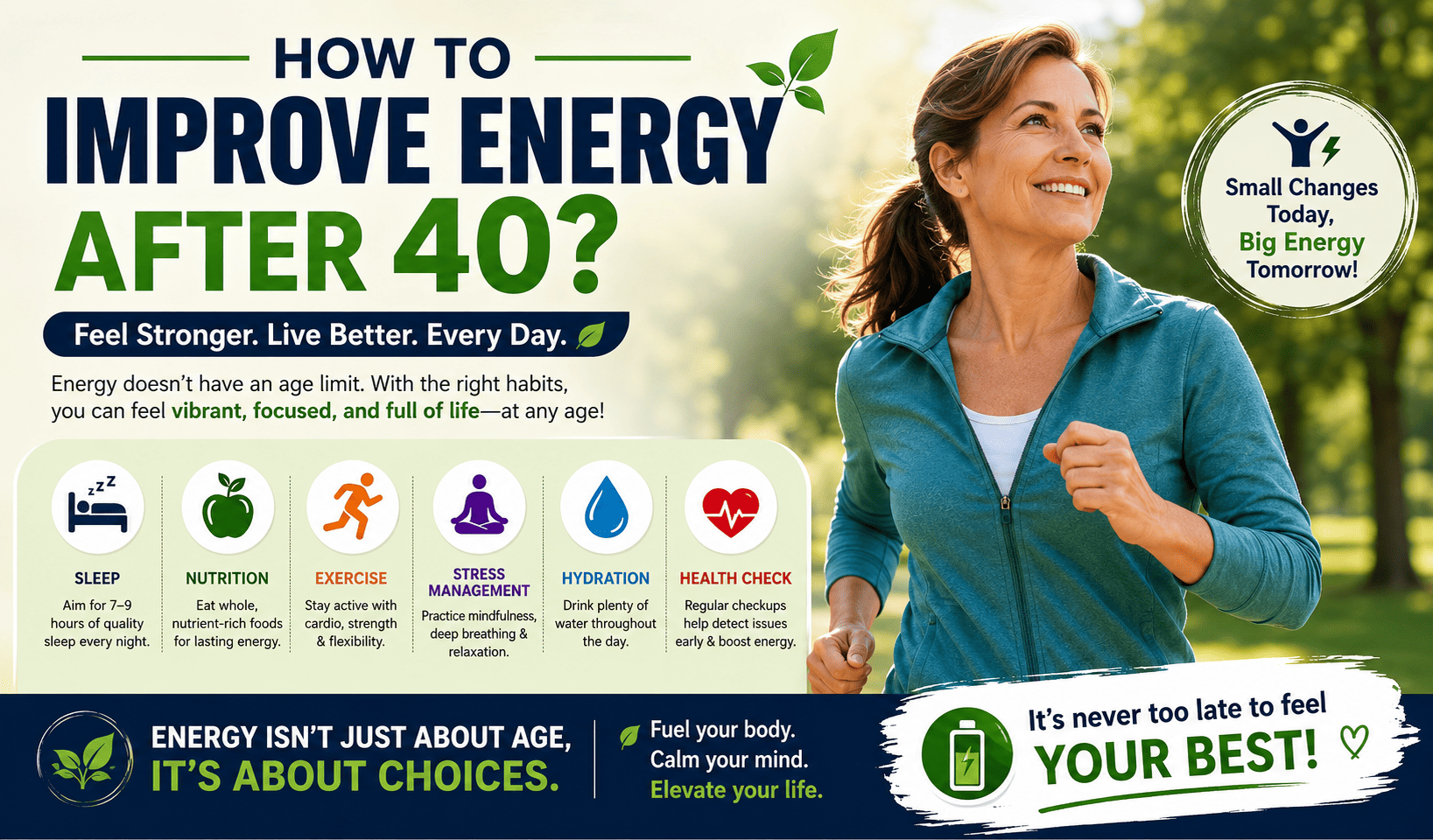
If you’ve been wondering how to improve energy after 40, you’re certainly not alone. Many adults in their 40s and beyond notice that they don’t wake up feeling as refreshed as they once did. Tasks that seemed effortless in their 20s or 30s may now require more effort, and afternoon fatigue becomes increasingly common.
The good news is that low energy isn’t simply an unavoidable part of aging. While natural biological changes occur over time, your daily habits have an enormous influence on how energetic you feel. Nutrition, physical activity, sleep quality, stress management, hydration, and preventive healthcare all work together to determine your energy levels.
This comprehensive guide explains why energy often declines after 40 and provides evidence-based strategies to help you regain vitality naturally. Whether you’re managing a demanding career, raising a family, or simply wanting to feel healthier, these practical recommendations can help you improve your overall wellness.
Why Does Energy Decline After 40?
As people age, several physiological changes naturally occur. Muscle mass gradually decreases, metabolism slows, hormone levels fluctuate, and the body’s ability to recover from stress becomes less efficient. These changes can contribute to lower stamina and increased fatigue.
However, aging alone is rarely the only reason for persistent tiredness. Lifestyle habits accumulated over many years often have a greater impact than age itself. Poor sleep, nutritional deficiencies, chronic stress, sedentary behavior, dehydration, excess alcohol consumption, smoking, and untreated medical conditions can all reduce daily energy.
Many adults also develop chronic inflammation and insulin resistance during middle age, both of which may contribute to feelings of sluggishness.
Fortunately, these factors are often modifiable.
Also Read : Can inflammation speed up aging?
Prioritize High-Quality Sleep
Sleep is the foundation of sustained energy. Adults over 40 generally still require seven to nine hours of quality sleep each night, yet many fail to achieve restorative sleep consistently.
Sleep quality often declines due to hormonal changes, increased stress, sleep apnea, frequent nighttime urination, or inconsistent bedtime routines.
Improving sleep hygiene can significantly boost daytime energy. Going to bed and waking up at consistent times helps regulate your body’s internal clock. Limiting caffeine in the afternoon, avoiding heavy meals before bedtime, reducing evening screen exposure, and maintaining a cool, dark bedroom can improve sleep quality.
If loud snoring, frequent awakenings, or excessive daytime sleepiness occur regularly, discussing possible sleep disorders with a healthcare provider is important.
Also Read : What are the best anti-aging habits?
Eat for Sustained Energy
Nutrition plays one of the biggest roles in maintaining energy after 40.
Rather than relying on sugary snacks or energy drinks, focus on foods that provide steady blood sugar levels throughout the day.
Balanced meals containing lean protein, complex carbohydrates, healthy fats, and fiber provide longer-lasting fuel. Examples include grilled chicken with vegetables and brown rice, salmon with quinoa, Greek yogurt with berries and nuts, or oatmeal topped with seeds.
Protein becomes especially important after age 40 because it helps preserve muscle mass while promoting fullness and stable energy.
Healthy fats from avocados, olive oil, walnuts, almonds, flaxseed, and fatty fish support brain health and reduce inflammation.
Complex carbohydrates from vegetables, fruits, beans, lentils, and whole grains release energy gradually rather than causing blood sugar spikes.
Stay Hydrated Throughout the Day
Even mild dehydration can contribute to fatigue, headaches, reduced concentration, and poor physical performance.
Many adults mistake thirst for hunger or simply forget to drink water during busy workdays.
Drinking water consistently throughout the day supports circulation, temperature regulation, digestion, and cellular energy production.
Hydration needs vary depending on activity level, climate, medications, and overall health, but making water your primary beverage is a simple way to improve daily energy.
Adding fruits like lemon or cucumber can make hydration more enjoyable without adding significant sugar.
Also Read : What foods help you live longer?
Exercise Regularly—Even When You’re Tired
It may seem counterintuitive, but physical activity is one of the most effective ways to increase energy.
Regular exercise improves cardiovascular health, increases oxygen delivery throughout the body, strengthens muscles, enhances mitochondrial function, and supports better sleep.
Adults over 40 benefit from combining aerobic exercise, resistance training, flexibility work, and balance exercises.
Walking, cycling, swimming, dancing, hiking, and jogging improve heart health and endurance.
Strength training deserves special attention because muscle mass naturally declines with age. Resistance exercises performed two to three times weekly help preserve muscle, support metabolism, improve posture, and increase functional energy.
Even short daily walks after meals can reduce fatigue while improving blood sugar control.
Build and Maintain Muscle
One overlooked answer to how to improve energy after 40 is preserving lean muscle.
Beginning around age 30, adults gradually lose muscle unless they actively perform resistance exercise.
Muscle tissue acts like an energy engine. The more healthy muscle you maintain, the easier everyday activities become.
Strength training doesn’t necessarily mean lifting heavy weights. Bodyweight exercises, resistance bands, kettlebells, machines, and free weights all provide effective options.
Combined with adequate dietary protein, resistance training can dramatically improve strength, endurance, metabolism, and confidence.
Also Read : Can stress speed up the aging process?
Manage Chronic Stress
Long-term stress drains physical and mental energy.
Constant activation of the body’s stress response increases cortisol production, which may contribute to poor sleep, weight gain, mood changes, and fatigue over time.
Healthy stress management practices can restore both mental clarity and physical vitality.
Deep breathing, mindfulness meditation, yoga, spending time outdoors, journaling, prayer, enjoyable hobbies, and meaningful social connections all help regulate the nervous system.
Setting realistic work boundaries and scheduling regular relaxation time are equally important.
Support Hormonal Health
Hormonal changes become increasingly noticeable after age 40.
Women may begin perimenopause, leading to fluctuating estrogen levels that can affect sleep, mood, and energy.
Men may experience gradual declines in testosterone, which can influence muscle mass, motivation, and vitality.
Maintaining a healthy weight, exercising regularly, eating nutrient-rich foods, minimizing alcohol, managing stress, and getting sufficient sleep all support hormonal balance.
Persistent symptoms should be evaluated by a qualified healthcare provider rather than self-diagnosed.
Also Read : What causes inflammation in the body?
Don’t Ignore Nutrient Deficiencies
Several vitamin and mineral deficiencies commonly contribute to fatigue.
Low iron, vitamin B12 deficiency, vitamin D deficiency, magnesium deficiency, and folate deficiency can all reduce energy levels.
Adults following vegetarian or vegan diets may be particularly vulnerable to vitamin B12 deficiency.
Rather than taking supplements blindly, it’s generally better to identify deficiencies through appropriate medical evaluation.
A healthcare provider can recommend laboratory testing when symptoms suggest nutritional deficiencies.
Maintain a Healthy Weight
Excess body weight increases the workload on the heart, joints, and muscles while also increasing the risk of insulin resistance and chronic inflammation.
On the other hand, excessively restrictive diets can also reduce energy due to inadequate calorie and nutrient intake.
Gradual, sustainable weight management through balanced nutrition and regular activity is more effective than extreme dieting.
Even modest weight loss can improve mobility, sleep quality, blood sugar control, and overall energy.
Also Read : How to boost immune system naturally?
Limit Sugar and Ultra-Processed Foods
Highly processed foods often provide quick bursts of energy followed by crashes.
Foods high in added sugars and refined carbohydrates rapidly increase blood glucose, leading to insulin spikes and subsequent fatigue.
Replacing processed snacks with whole foods helps stabilize energy throughout the day.
Fresh fruit, nuts, yogurt, vegetables with hummus, boiled eggs, or whole-grain snacks provide longer-lasting fuel.
Reduce Alcohol Consumption
Alcohol disrupts sleep quality even when it initially makes people feel sleepy.
It also contributes to dehydration and can impair recovery from exercise.
Limiting alcohol intake often improves sleep, concentration, and daytime energy within just a few weeks.
Also Read : What supplements support healthy aging?
Stay Socially Connected
Mental health strongly influences physical energy.
Positive relationships help reduce stress hormones while improving emotional resilience.
Regular conversations with friends, family, community groups, volunteer organizations, or fitness classes provide emotional support that often translates into greater motivation and energy.
Loneliness, by contrast, has been associated with poorer health outcomes and increased fatigue.
Schedule Preventive Medical Checkups
Persistent fatigue should never be dismissed as “just getting older.”
Medical conditions including thyroid disease, diabetes, anemia, heart disease, depression, sleep apnea, chronic infections, autoimmune disorders, and certain medications may all contribute to low energy.
Routine preventive healthcare allows these conditions to be identified and treated early.
Adults over 40 should follow recommended health screenings based on age, sex, personal medical history, and family history.
Also Read : Best daily habits for longevity?
Foods That Naturally Support Energy
Foods rich in nutrients help the body produce energy efficiently.
Leafy green vegetables provide iron and folate. Fatty fish offer omega-3 fatty acids that support heart and brain health. Eggs supply high-quality protein and essential vitamins. Oats provide slow-digesting carbohydrates for sustained fuel. Beans and lentils combine protein, fiber, and complex carbohydrates.
Nuts and seeds offer healthy fats, magnesium, and protein, while berries provide antioxidants that help combat oxidative stress associated with aging.
A colorful diet containing a wide variety of fruits and vegetables supports overall health while reducing inflammation.
Daily Habits That Increase Energy
Consistency matters more than perfection.
Small daily habits compound over time.
Starting the morning with protein and hydration, taking walking breaks throughout the workday, strength training several times each week, sleeping on a regular schedule, eating mostly whole foods, limiting sugary beverages, spending time outside in natural sunlight, and practicing stress management all work together to improve long-term energy.
These habits support not only physical stamina but also cognitive function, mood, and healthy aging.
Also Read : Can gut health affect aging?
When Should You See a Doctor?
While occasional tiredness is normal, certain symptoms warrant medical evaluation.
Persistent fatigue lasting several weeks, unexplained weight loss, chest pain, severe shortness of breath, dizziness, fainting, blood in the stool, heavy menstrual bleeding, depression, significant sleep disturbances, or sudden changes in energy should not be ignored.
Early diagnosis often leads to better outcomes.
Final Thoughts
If you’ve been asking how to improve energy after 40, remember that feeling energetic isn’t solely determined by your age. Most adults can significantly improve their vitality by focusing on consistent lifestyle habits rather than quick fixes.
Quality sleep, balanced nutrition, regular exercise, strength training, hydration, stress reduction, healthy relationships, and preventive healthcare work together to create lasting energy.
Instead of searching for miracle supplements or temporary solutions, prioritize sustainable habits that support your body every day. Over time, these changes can help you feel stronger, more focused, and better equipped to enjoy an active and fulfilling life well beyond your 40s.

Healthy nutrition may slow aging.
Frequently Asked Questions (FAQs)
1. How can I naturally improve energy after 40?
The best natural strategies include getting seven to nine hours of quality sleep, eating balanced meals with adequate protein, exercising regularly, staying hydrated, managing stress, and treating any underlying medical conditions.
2. Why do I feel more tired after turning 40?
Natural aging, reduced muscle mass, hormonal changes, chronic stress, poor sleep, nutrient deficiencies, sedentary lifestyles, and certain health conditions can all contribute to lower energy.
3. Which vitamins help improve energy after 40?
Vitamin B12, vitamin D, iron, magnesium, and folate may help if a deficiency is present. Supplements should ideally be taken based on medical advice or confirmed laboratory testing.
4. What foods increase energy naturally?
Whole grains, lean proteins, eggs, salmon, leafy greens, beans, lentils, berries, nuts, seeds, yogurt, and colorful vegetables provide sustained energy and important nutrients.
5. Is exercise safe for adults over 40?
Yes. Most adults benefit from regular aerobic activity combined with strength training and flexibility exercises. Individuals with chronic medical conditions should consult a healthcare provider before beginning a new exercise program.
6. Can dehydration cause fatigue after 40?
Absolutely. Even mild dehydration can reduce concentration, physical performance, and overall energy. Drinking water consistently throughout the day helps maintain optimal body function.
7. Should I take energy supplements?
Energy supplements are not necessary for most healthy adults and may contain stimulants that are not appropriate for everyone. If fatigue is persistent, it is better to identify and address the underlying cause rather than relying on supplements.
8. How long does it take to improve energy naturally?
Many people notice improvements within two to four weeks after consistently improving sleep, nutrition, physical activity, hydration, and stress management. Long-term lifestyle changes provide the greatest and most sustainable benefits.
Medical Disclaimer: This article is for educational purposes only and does not replace professional medical advice, diagnosis, or treatment. Always consult a qualified healthcare provider before making significant changes to your diet, exercise routine, medications, or health management plan.
Medically reviewed information sourced from trusted health organizations.
References
- National Institute on Aging (NIA). Healthy Aging and Longevity Resources.
https://www.nia.nih.gov/health - National Institutes of Health (NIH). Healthy Aging Research.
https://www.nih.gov/health-information - Centers for Disease Control and Prevention (CDC). Healthy Aging.
https://www.cdc.gov/aging - Harvard T.H. Chan School of Public Health. Nutrition and Healthy Aging.
https://www.hsph.harvard.edu/nutritionsource
Reviewed by: Dzarro Editorial Team
Fact-checked using trusted medical and scientific sources.

Sandip Choudhary is a Health & Wellness Researcher and Content Creator specializing in sleep, digestive health, preventive wellness, and evidence-based health education. He has been creating online content and researching health-related topics for several years, focusing on translating complex medical information into practical guidance for everyday readers.
With a strong background in SEO and content strategy, Sandip ensures that every article is optimized for both search engines and real users. His goal is to provide reliable, clear, and helpful information that supports healthier living.
Disclaimer: The content published is for informational purposes only and is not a substitute for professional medical advice.