
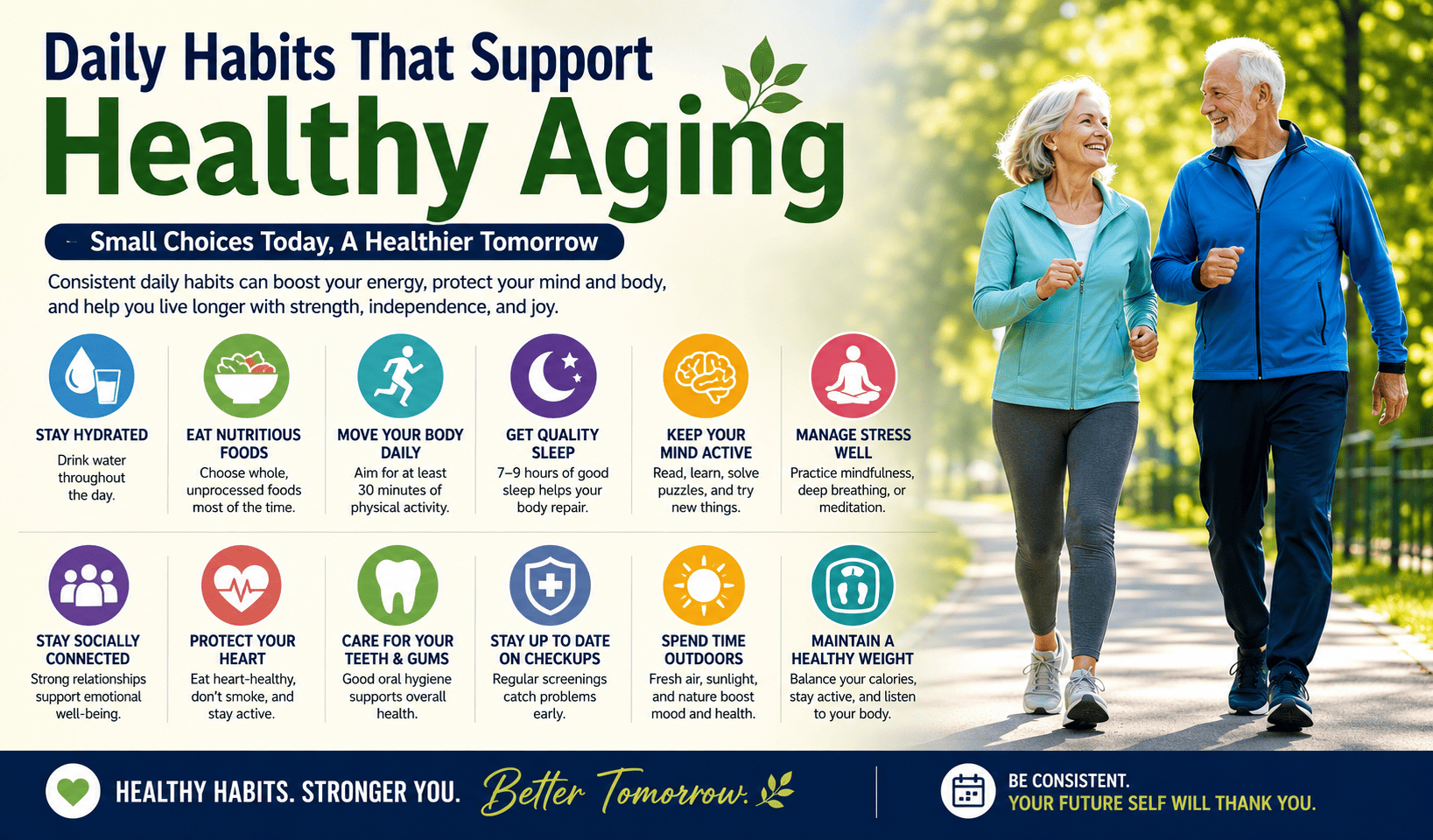
Healthy aging is not about finding a miracle supplement or following the latest wellness trend. It is the result of consistent, healthy choices made every day. As life expectancy continues to increase in the United States, more people are focusing not only on living longer but also on maintaining independence, mobility, mental sharpness, and overall well-being throughout their later years.
The daily habits that support healthy aging are often surprisingly simple. Eating nutritious foods, staying physically active, getting quality sleep, managing stress, and maintaining meaningful social relationships all play important roles in reducing the risk of chronic diseases while improving quality of life.
Research from organizations such as the National Institute on Aging, the Centers for Disease Control and Prevention (CDC), and the American Heart Association consistently shows that lifestyle choices significantly influence how we age. While genetics contribute to longevity, daily habits have an even greater impact on overall health.
This guide explores science-backed daily habits that support healthy aging and provides practical ways to incorporate them into your routine.
Why Healthy Aging Matters?
Aging is a natural biological process, but the rate at which our bodies age varies from person to person. Healthy aging means preserving physical function, cognitive ability, emotional well-being, and independence as we grow older.
Rather than trying to prevent aging altogether, healthy aging focuses on minimizing age-related diseases such as heart disease, diabetes, osteoporosis, dementia, arthritis, and certain cancers.
Making healthier choices today can improve your health decades into the future.
Also Read : How to Live Longer Naturally?
Start Every Morning with Hydration
One of the easiest daily habits that support healthy aging is drinking enough water.
Older adults are naturally more susceptible to dehydration because the sensation of thirst decreases with age. Even mild dehydration can affect energy levels, concentration, digestion, kidney function, and blood pressure.
Starting your morning with a glass of water helps replenish fluids lost overnight while supporting metabolism and circulation.
You can improve hydration by drinking water throughout the day, eating water-rich fruits and vegetables, limiting sugary beverages, and reducing excessive alcohol consumption.
Eat a Nutrient-Dense Diet Every Day
Nutrition is perhaps the most powerful tool for healthy aging.
Your body requires vitamins, minerals, antioxidants, healthy fats, protein, and fiber to repair cells, reduce inflammation, strengthen immunity, and maintain muscle mass.
A healthy aging diet emphasizes:
Fresh vegetables, Whole fruits, Whole grains, Beans and legumes, Lean proteins, Fatty fish, Nuts, Seeds, Olive oil, Low-fat dairy when appropriate.
Many experts recommend following Mediterranean-style eating patterns because they are associated with reduced risks of heart disease, stroke, cognitive decline, and early mortality.
Limiting ultra-processed foods, refined sugar, excessive sodium, and trans fats also contributes to better long-term health.
Also Read : Healthspan vs Lifespan: What’s the Difference?
Prioritize Protein at Every Meal
One of the biggest challenges of aging is gradual muscle loss, known as sarcopenia.
Beginning around age 30, adults naturally lose muscle mass each decade unless they actively work to preserve it.
Protein supports muscle repair, immune health, hormone production, and healthy metabolism.
Excellent protein sources include:
Chicken, Turkey, Fish, Eggs, Greek yogurt, Beans, Lentils, Tofu, Low-fat cottage cheese.
Including protein with every meal helps maintain strength and reduces age-related muscle decline.
Stay Physically Active Every Day
Regular exercise remains one of the strongest predictors of healthy aging.
Physical activity improves nearly every system in the body, including cardiovascular health, bone density, insulin sensitivity, lung function, mood, and cognitive performance.
Adults should aim for regular aerobic exercise combined with strength training and flexibility exercises.
Walking remains one of the most accessible activities for healthy aging. Even brisk walking for 30 minutes daily provides substantial health benefits.
Strength training is equally important because stronger muscles help prevent falls, improve balance, and preserve independence.
Activities like yoga, tai chi, swimming, cycling, resistance bands, and bodyweight exercises all contribute to healthy aging.
Also Read : How to improve immune system naturally?
Protect Your Heart Every Day
Heart disease remains the leading cause of death among Americans.
Fortunately, many heart-healthy habits overlap with daily habits that support healthy aging.
Maintaining healthy blood pressure, cholesterol, and blood sugar significantly reduces cardiovascular risk.
Heart-protective habits include exercising regularly, avoiding tobacco products, limiting alcohol, eating healthy fats instead of saturated fats, maintaining a healthy weight, and getting adequate sleep.
Regular preventive checkups also help detect problems early.
Get Quality Sleep Every Night
Sleep is essential for physical repair and brain function.
Poor sleep contributes to obesity, diabetes, depression, hypertension, memory decline, weakened immunity, and increased inflammation.
Healthy adults generally benefit from seven to nine hours of sleep each night.
Improving sleep hygiene includes maintaining a consistent bedtime, avoiding caffeine late in the day, limiting screen exposure before bed, keeping the bedroom cool and dark, and following a relaxing bedtime routine.
Quality sleep allows the body to repair tissues, regulate hormones, and consolidate memories.
Also Read : What causes chronic inflammation?
Exercise Your Brain
Healthy aging includes maintaining cognitive function.
The brain continues forming new neural connections throughout life, especially when challenged with new experiences.
Activities that stimulate the brain include reading books, solving puzzles, learning a language, playing musical instruments, taking educational courses, writing, and engaging in meaningful conversations.
Continuous learning strengthens memory, attention, and problem-solving skills while potentially reducing dementia risk.
Manage Chronic Stress
Long-term stress accelerates biological aging.
Chronic stress increases cortisol levels, promotes inflammation, weakens immunity, disrupts sleep, raises blood pressure, and contributes to anxiety and depression.
Healthy stress management includes meditation, mindfulness, deep breathing exercises, regular physical activity, spending time outdoors, practicing gratitude, and connecting with loved ones.
Even ten minutes of relaxation each day can significantly improve emotional well-being.
Also Read : Why do I feel older than my age?
Stay Socially Connected
Strong social relationships are closely linked to longevity.
People with meaningful friendships and family connections often experience lower rates of depression, cognitive decline, and chronic illness.
Social interaction stimulates the brain while providing emotional support during life’s challenges.
Maintaining healthy relationships may include joining community organizations, volunteering, attending religious services, participating in hobby groups, calling family members regularly, or simply spending time with friends.
Loneliness has become a growing public health concern among older adults, making social connection an essential daily habit.
Maintain a Healthy Weight
Carrying excessive body weight increases the risk of heart disease, diabetes, arthritis, certain cancers, and sleep apnea.
On the other hand, unintended weight loss in older adults may indicate poor nutrition or underlying illness.
Healthy aging focuses on maintaining a stable, healthy weight through balanced nutrition and regular activity rather than restrictive dieting.
Sustainable habits produce better long-term outcomes than rapid weight-loss programs.
Also Read : What supplements support healthy aging?
Avoid Smoking and Limit Alcohol
Smoking damages nearly every organ in the body and dramatically accelerates aging.
Quitting smoking at any age provides significant health benefits, including improved lung function, circulation, and reduced cancer risk.
Alcohol should also be consumed in moderation, as excessive intake increases risks for liver disease, falls, memory problems, certain cancers, and cardiovascular complications.
Avoiding tobacco and limiting alcohol are among the most effective lifestyle changes for increasing life expectancy.
Support Bone Health
Bone density naturally decreases with age.
Daily habits that support healthy aging should include protecting bone strength through adequate calcium, vitamin D, weight-bearing exercise, and resistance training.
Walking, stair climbing, dancing, and strength exercises stimulate bone remodeling while reducing osteoporosis risk.
Regular screening for bone density may be recommended for older adults, especially postmenopausal women.
Also Read : How to improve energy after 40?
Protect Your Skin from Sun Damage
Healthy skin reflects overall health.
Daily sunscreen use helps reduce premature aging, wrinkles, sunspots, and skin cancer risk.
Broad-spectrum sunscreen with SPF 30 or higher is recommended whenever spending time outdoors.
Additional protection includes wearing hats, sunglasses, and protective clothing during peak sunlight hours.
Healthy skin also benefits from hydration, balanced nutrition, and avoiding smoking.
Practice Good Oral Hygiene
Oral health affects more than just your teeth.
Poor dental health has been associated with cardiovascular disease, diabetes complications, and respiratory infections.
Daily brushing, flossing, regular dental cleanings, and limiting sugary foods contribute to healthy aging.
Healthy gums support better overall health throughout life.
Also Read : Can inflammation speed up aging?
Keep Your Mind Positive
Mental outlook influences physical health more than many people realize.
Optimism has been linked to healthier immune function, lower stress levels, better cardiovascular health, and increased longevity.
Simple daily practices such as gratitude journaling, celebrating small accomplishments, helping others, and maintaining realistic goals promote emotional resilience.
Positive thinking does not eliminate life’s challenges but improves the ability to cope with them.
Continue Regular Preventive Health Screenings
Preventive healthcare becomes increasingly important with age.
Routine screenings allow healthcare providers to identify problems before symptoms appear.
Depending on age and medical history, screenings may include blood pressure checks, cholesterol testing, diabetes screening, colorectal cancer screening, mammograms, prostate evaluations, bone density testing, vision exams, hearing tests, and vaccinations.
Early detection often leads to more successful treatment outcomes.
Also Read : What are the best anti-aging habits?
Spend Time Outdoors
Exposure to nature supports both physical and mental health.
Walking in parks, gardening, hiking, or simply sitting outside can lower stress hormones, improve mood, encourage physical activity, and support vitamin D production when practiced safely.
Natural environments also promote better sleep and reduce symptoms of anxiety.
Even short periods outdoors each day can improve overall well-being.
Build Healthy Daily Routines
Consistency matters more than perfection.
Healthy aging is rarely determined by one extraordinary decision. Instead, it reflects thousands of healthy choices repeated over many years.
Creating routines around healthy meals, physical activity, hydration, sleep, stress management, and preventive healthcare makes these habits easier to maintain.
Small improvements practiced consistently often lead to remarkable long-term health benefits.
Also Read : What foods help you live longer?
Common Mistakes That Accelerate Aging
Many lifestyle choices can unknowingly speed up biological aging. Frequently skipping sleep, eating highly processed foods, remaining physically inactive, smoking, excessive alcohol consumption, unmanaged stress, prolonged social isolation, chronic dehydration, and neglecting preventive healthcare can all increase the risk of age-related diseases. While occasional unhealthy choices are unlikely to cause lasting harm, consistently practicing these behaviors over many years may negatively affect both lifespan and quality of life. Replacing even one harmful habit with a healthier alternative can produce meaningful improvements over time.
When to Talk to Your Healthcare Provider
While healthy lifestyle habits benefit most adults, some symptoms require professional medical evaluation. Unexplained weight loss, persistent fatigue, frequent falls, memory changes, chest pain, shortness of breath, ongoing depression, changes in vision, or difficulty performing everyday activities should never be ignored. Your healthcare provider can recommend personalized lifestyle changes based on your medical history, medications, and individual health goals. Preventive care and routine checkups remain an important part of aging well.

Regular exercise reduces disease risk.
Conclusion
Daily habits that support healthy aging are built on consistency rather than perfection. Drinking enough water, eating a balanced diet, staying physically active, protecting heart and brain health, getting restorative sleep, managing stress, maintaining strong social relationships, and staying engaged with life all contribute to healthier aging. Although genetics influence longevity, everyday choices play a much larger role in determining how well we age. By adopting these evidence-based habits today, you can improve your chances of enjoying more active, independent, and fulfilling years in the future.
Frequently Asked Questions (FAQs)
1. What are the best daily habits that support healthy aging?
The most effective habits include eating a nutrient-rich diet, exercising regularly, sleeping seven to nine hours, staying hydrated, managing stress, maintaining healthy relationships, avoiding smoking, limiting alcohol, and attending routine medical checkups.
2. How much exercise should older adults get?
Most adults benefit from at least 150 minutes of moderate-intensity aerobic activity each week, along with muscle-strengthening exercises on two or more days, unless otherwise advised by their healthcare provider.
3. Which foods help support healthy aging?
Vegetables, fruits, whole grains, lean proteins, legumes, nuts, seeds, olive oil, and fatty fish rich in omega-3 fatty acids are commonly recommended as part of a healthy aging diet.
4. Does drinking more water help with healthy aging?
Yes. Proper hydration supports digestion, kidney function, circulation, temperature regulation, cognitive performance, and overall energy levels. Older adults should pay particular attention to staying adequately hydrated.
5. Can healthy habits reduce the risk of dementia?
While no lifestyle can guarantee prevention, research suggests that regular exercise, a healthy diet, quality sleep, mental stimulation, social engagement, and controlling blood pressure and diabetes may help reduce the risk of cognitive decline.
6. Is it ever too late to start healthy aging habits?
No. Studies show that adopting healthier lifestyle habits at almost any age can improve physical health, reduce disease risk, enhance quality of life, and potentially increase longevity.
7. How important is sleep for healthy aging?
Sleep plays a vital role in brain health, immune function, hormone regulation, tissue repair, and memory consolidation. Consistently getting sufficient, high-quality sleep is an essential part of healthy aging.
8. What is the single most important habit for longevity?
There is no single habit that guarantees longevity. Instead, the combination of regular physical activity, healthy eating, quality sleep, stress management, avoiding tobacco, and maintaining social connections provides the greatest long-term health benefits.
Medical Disclaimer: This article is for educational purposes only and does not replace professional medical advice, diagnosis, or treatment. Always consult a qualified healthcare provider before making significant changes to your diet, exercise routine, medications, or health management plan.
Medically reviewed information sourced from trusted health organizations.
References
- National Institute on Aging (NIA). Healthy Aging and Longevity Resources.
https://www.nia.nih.gov/health - National Institutes of Health (NIH). Healthy Aging Research.
https://www.nih.gov/health-information - Centers for Disease Control and Prevention (CDC). Healthy Aging.
https://www.cdc.gov/aging - Harvard T.H. Chan School of Public Health. Nutrition and Healthy Aging.
https://www.hsph.harvard.edu/nutritionsource
Reviewed by: Dzarro Editorial Team
Fact-checked using trusted medical and scientific sources.

Sandip Choudhary is a Health & Wellness Researcher and Content Creator specializing in sleep, digestive health, preventive wellness, and evidence-based health education. He has been creating online content and researching health-related topics for several years, focusing on translating complex medical information into practical guidance for everyday readers.
With a strong background in SEO and content strategy, Sandip ensures that every article is optimized for both search engines and real users. His goal is to provide reliable, clear, and helpful information that supports healthier living.
Disclaimer: The content published is for informational purposes only and is not a substitute for professional medical advice.