
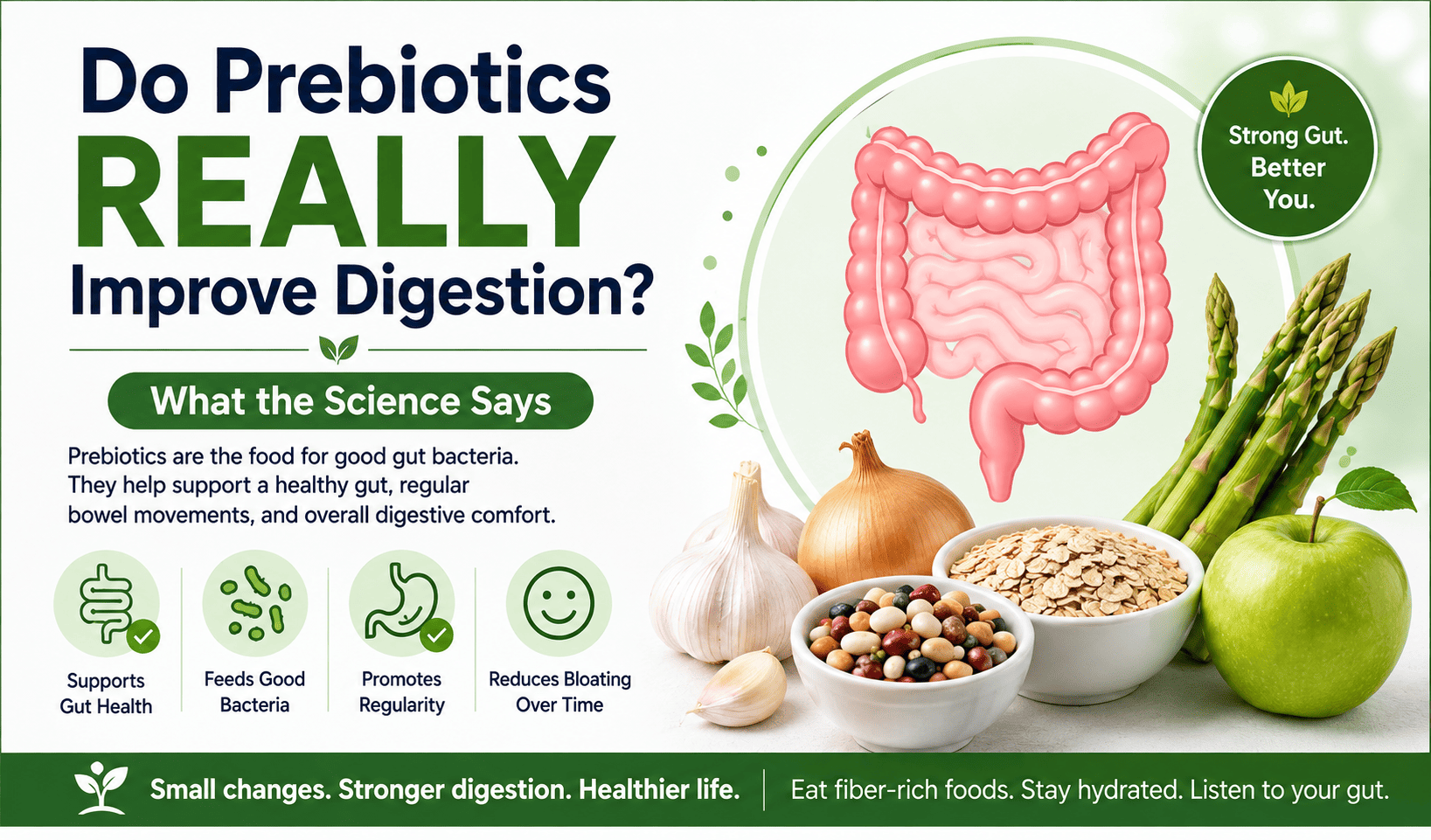
Yes, prebiotics can improve aspects of digestion and gut health for some people, but they are not a guaranteed solution for every digestive problem. Prebiotics are substances that beneficial gut microorganisms can selectively use as nourishment. When fermented in the colon, certain prebiotics can support microbial activity and produce metabolites such as short-chain fatty acids. This may help support normal bowel function and a healthy gut environment.
However, more prebiotics is not always better. Increasing intake too quickly can cause gas, bloating, abdominal discomfort, or changes in bowel habits, particularly in people with sensitive digestion or irritable bowel syndrome (IBS). The best approach is usually to introduce fiber-rich and prebiotic foods gradually while maintaining adequate fluid intake.
What Are Prebiotics?
Prebiotics are substances that are selectively used by microorganisms living in the body and provide a health benefit. In the digestive system, dietary prebiotics generally reach the lower gastrointestinal tract without being fully digested by human enzymes, where gut microorganisms can ferment them. The International Scientific Association for Probiotics and Prebiotics (ISAPP) describes a prebiotic as a substrate that is selectively utilized by host microorganisms and provides a health benefit.
This makes prebiotics different from probiotics. Probiotics are live microorganisms that provide a health benefit when consumed in adequate amounts, while prebiotics essentially provide usable fuel for certain microorganisms already present in the gut. Some products combine both and are commonly described as synbiotics.
Commonly studied prebiotic compounds include inulin, fructooligosaccharides (FOS), galactooligosaccharides (GOS), and certain other fermentable fibers. They can be found naturally in foods such as onions, garlic, asparagus, legumes, and some fruits, although the amount and type of prebiotic compounds vary from one food to another.
Also Read : What are the best probiotics for gut health?
Do Prebiotics Really Improve Digestion?
The answer is generally yes, but the effect depends on the specific prebiotic, the amount consumed, the person’s existing gut microbiome, overall diet, and individual digestive sensitivity.
Prebiotics can influence digestion indirectly by interacting with microorganisms in the large intestine. Rather than being broken down completely in the upper digestive tract, many prebiotic compounds reach the colon, where microorganisms ferment them. This fermentation can produce short-chain fatty acids and other microbial metabolites that participate in the normal functioning of the intestinal environment.
The potential benefits are therefore broader than simply “helping food digest.” Digestion involves breaking food into nutrients and absorbing them, while gut health also involves bowel function, the gut microbiome, intestinal barrier function, immune activity, and gastrointestinal symptoms. A 2026 ISAPP consensus statement describes gut health as normal gastrointestinal function without active gastrointestinal disease or gut-related symptoms that negatively affect quality of life.
Also Read : How long does it take to restore gut health?
How Prebiotics May Support Regular Bowel Movements
One of the most practical reasons people add prebiotic foods to their diet is to support regular bowel movements. Many prebiotic substances are forms of fermentable dietary fiber, and adequate fiber intake can help support normal stool formation and bowel regularity.
For adults, the National Institute of Diabetes and Digestive and Kidney Diseases notes that recommended daily fiber intake generally falls between 22 and 34 grams depending on age and sex. Increasing fiber gradually and drinking enough fluids can help the digestive system adapt.
This does not mean that every prebiotic will work like a laxative. Prebiotics have different structures and fermentation characteristics, so their effects can vary. A person’s baseline diet and gut microbiome can also influence the response.
If constipation is the main concern, it is useful to think beyond a single supplement. A diet containing a variety of fiber-rich foods, sufficient fluids, regular physical activity, and an appropriate overall eating pattern may be more helpful than relying on one isolated ingredient.
Also Read : Is bloating a sign of poor gut health?
Prebiotics and the Gut Microbiome
The gut contains a complex community of microorganisms. These microorganisms interact with dietary components, and certain prebiotics can provide substrates that selected microbes are able to use.
This is one of the main reasons prebiotics have attracted attention in digestive-health research. The goal is not simply to increase the total number of bacteria in the gut. According to the ISAPP definition, a true prebiotic should be selectively utilized by microorganisms in a way that produces a demonstrated health benefit.
Research has particularly examined compounds such as FOS and GOS because they can promote changes in populations of beneficial microorganisms, including bifidobacteria. However, responses can differ considerably between individuals. Factors such as habitual diet, genetics, and the existing microbiome can influence how someone responds to a particular prebiotic.
That variability is important. A product marketed as a “gut health” supplement should not automatically be assumed to provide the same results for everyone.
Also Read : Can poor gut health cause anxiety and depression?
Can Prebiotics Reduce Bloating?
This is where the answer becomes more complicated.
Some people may experience improved bowel regularity and digestive comfort after gradually increasing appropriate sources of fiber and prebiotics. Other people may initially experience more gas and bloating.
The reason is fermentation. When gut microorganisms ferment certain carbohydrates, gas and other metabolic products can be produced. If someone suddenly consumes a large amount of a highly fermentable prebiotic, their digestive system may not adapt comfortably.
This is particularly relevant for people with IBS. NIDDK notes that increasing fiber too quickly can cause gas and potentially worsen IBS symptoms, and recommends increasing fiber gradually. Some people with IBS may also benefit from dietary approaches such as a low-FODMAP diet under appropriate professional guidance.
Therefore, experiencing bloating after consuming a prebiotic does not necessarily mean that prebiotics are “bad.” It may indicate that the amount, type, timing, or overall dietary context needs to be reconsidered.
Also Read : What foods heal the gut lining?
What Foods Contain Prebiotics?
Many everyday plant foods contain fibers or carbohydrates that can support gut microorganisms. Onions, garlic, asparagus, legumes, whole grains, and certain fruits are examples of foods that can contribute fermentable carbohydrates to the diet.
The advantage of getting these compounds from whole foods is that they come packaged with other nutrients and different types of dietary fiber. A varied diet can expose the gut microbiome to a broader range of substrates than a single isolated supplement.
That said, some people have medical or digestive conditions that make certain high-fiber or fermentable foods difficult to tolerate. In those situations, the goal should not be to force a high-prebiotic diet. Instead, an individualized approach may be more appropriate.
Also Read : What are the signs of an unhealthy gut?
Are Prebiotic Supplements Better Than Food?
Not necessarily.
Prebiotic supplements can provide concentrated amounts of specific compounds such as inulin or FOS. This can be convenient for someone who has difficulty getting enough of a particular type of fiber through food. However, concentrated supplements can also produce digestive symptoms when introduced too quickly or consumed in excessive amounts.
Whole foods provide a broader nutritional package, while supplements allow more precise intake of a particular ingredient. Neither approach is automatically superior for everyone.
If you are considering a prebiotic supplement, pay attention to the ingredient, serving size, and other ingredients in the product. If you have a digestive disorder, take medications, are pregnant, or have been advised to follow a medically restricted diet, discussing supplementation with a healthcare professional is sensible.
Also Read : Can gut health affect energy levels?
Prebiotics vs. Probiotics: What’s the Difference?
The simplest distinction is that probiotics are beneficial live microorganisms, whereas prebiotics are substrates that selected microorganisms can use and that provide a health benefit.
Think of probiotics as the microorganisms themselves and prebiotics as a source of nourishment for microorganisms. The relationship is more complicated biologically, but this comparison provides a useful starting point.
Importantly, neither term means that a product will automatically improve digestion. The evidence depends on the specific strain of a probiotic or the specific prebiotic compound, the dose, the health outcome being measured, and the population being studied. NIH’s Office of Dietary Supplements also emphasizes that not all products labeled as probiotics have proven health benefits.
Also Read : Can gut health affect mental health?
How to Add Prebiotics to Your Diet Safely
If your current diet is low in fiber, suddenly adding large amounts of beans, onions, garlic, or concentrated prebiotic supplements may lead to uncomfortable gas and bloating. A gradual approach is usually easier for the digestive system.
Start by adding small portions of fiber-rich plant foods to meals and increase them progressively as tolerated. Drinking adequate fluids is also important because fiber works better when sufficient liquid is available. NIDDK recommends increasing fiber gradually and drinking plenty of liquids when increasing fiber intake.
It is also useful to pay attention to your own symptoms. If one food consistently causes significant discomfort, another source of fiber may be better tolerated. Digestive health is highly individual, and a food that works well for one person may not work as well for another.
Also Read : How long does gut healing take?
Are There Any Downsides to Prebiotics?
The most common concern is digestive discomfort, particularly when intake increases rapidly. Gas, bloating, abdominal discomfort, loose stools, or changes in bowel habits can occur depending on the type and quantity consumed.
People with IBS may be particularly sensitive to fermentable carbohydrates. For them, simply increasing prebiotic intake may not be the right strategy, especially during periods of significant symptoms. A healthcare professional or registered dietitian can help identify an appropriate dietary pattern.
It is also important not to treat prebiotics as a cure for gastrointestinal disease. Persistent abdominal pain, unexplained weight loss, blood in the stool, persistent diarrhea, or ongoing constipation should be medically evaluated rather than managed solely with supplements or dietary changes. NIDDK recommends seeking medical care for constipation accompanied by rectal bleeding, blood in the stool, continual abdominal pain, or other concerning signs.
Also Read : Does fasting improve gut health?
The Bottom Line
So, do prebiotics really improve digestion? They can. Evidence supports the idea that appropriate prebiotics can influence the gut microbiome and contribute to aspects of gastrointestinal health, including bowel regularity and a healthy intestinal environment.
But prebiotics are not a magic digestive-health solution. Their effects vary between individuals, and excessive or rapid increases can cause gas and bloating. For most healthy adults, a gradual increase in a diverse range of fiber-rich plant foods, adequate hydration, physical activity, and an overall balanced diet is a sensible foundation for digestive health.
If digestive symptoms are persistent, severe, or interfering with daily life, it is better to identify the underlying cause with a qualified healthcare professional than to assume that a prebiotic supplement is the answer.
Also Read : Best morning routine for gut health?
Frequently Asked Questions
1. Do prebiotics really improve digestion?
Yes, prebiotics can support aspects of digestive health by providing substrates that selected gut microorganisms can use. Their fermentation can influence the gut microbiome and produce metabolites associated with gastrointestinal function. However, individual responses vary, and prebiotics are not a treatment for every digestive problem.
2. What is the main benefit of prebiotics?
One important benefit is their ability to support beneficial microbial activity in the gut. Depending on the specific prebiotic and person, this may contribute to healthier bowel function and the intestinal environment. The evidence and benefits vary by prebiotic type and health outcome.
3. Do prebiotics help with constipation?
They may help as part of an adequate-fiber diet, particularly when the prebiotic also contributes meaningful dietary fiber. NIDDK recommends adequate fiber and sufficient fluids as part of dietary management for constipation. Adults generally need about 22 to 34 grams of fiber per day, depending on age and sex.
4. Can prebiotics cause gas and bloating?
Yes. Because many prebiotics are fermented by gut microorganisms, increasing intake rapidly can cause gas, bloating, or changes in bowel habits. Gradually increasing fiber may help the digestive system adapt.
5. Are prebiotics better than probiotics?
Neither is universally better. Prebiotics and probiotics work differently. Prebiotics are substrates used by microorganisms, while probiotics are live microorganisms that provide a health benefit when consumed in adequate amounts. The best choice depends on the individual’s diet, symptoms, and health goals.
6. What foods are naturally high in prebiotics?
Foods such as onions, garlic, asparagus, legumes, whole grains, and certain fruits contain fermentable fibers or carbohydrates that can support gut microorganisms. The exact amount and type of prebiotic compounds vary among foods.
7. How long does it take for prebiotics to improve digestion?
There is no universal timeline. Some people may notice changes in bowel habits relatively quickly, while microbiome-related changes and digestive adaptation can take longer. The response depends on the specific prebiotic, amount consumed, existing diet, and individual gut microbiome.
8. Are prebiotic supplements safe?
Many prebiotic supplements are tolerated when used appropriately, but they can cause gas, bloating, or diarrhea in some people, particularly at higher doses. Anyone with a gastrointestinal condition, medically restricted diet, or significant ongoing symptoms should discuss supplementation with a healthcare professional.
9. Should people with IBS take prebiotics?
Not automatically. Some people with IBS may tolerate certain fibers well, while fermentable carbohydrates can worsen symptoms in others. NIDDK notes that gradually increasing fiber may help reduce gas and that different dietary approaches can work differently for people with IBS.
10. Can prebiotics cure digestive disorders?
No. Prebiotics may support digestive and gut health, but they should not be considered a cure for conditions such as IBS, inflammatory bowel disease, chronic constipation, or other gastrointestinal disorders. Persistent or concerning symptoms should be evaluated by a qualified healthcare professional.

Frequent bloating may be a sign of poor digestive health.
Medical Disclaimer: This article is for general educational purposes and does not provide individual medical advice, diagnosis, or treatment. If you have persistent digestive symptoms, a diagnosed gastrointestinal condition, or concerns about using a prebiotic supplement, speak with a qualified healthcare professional.
Medically reviewed information sourced from trusted health organizations.
References
- National Center for Complementary and Integrative Health (NCCIH): https://www.nccih.nih.gov/health/probiotics-what-you-need-to-know
- American Gastroenterological Association (AGA):
https://gastro.org - Harvard T.H. Chan School of Public Health – The Nutrition Source (Probiotics): https://nutritionsource.hsph.harvard.edu/probiotics/
- International Scientific Association for Probiotics and Prebiotics (ISAPP):
https://isappscience.org - MedlinePlus – Probiotics:
https://www.nccih.nih.gov/health/probiotics-usefulness-and-safety
Reviewed by: Dzarro Editorial Team
Fact-checked using trusted medical and scientific sources.

Sandip Choudhary is a Health & Wellness Researcher and Content Creator specializing in sleep, digestive health, preventive wellness, and evidence-based health education. He has been creating online content and researching health-related topics for several years, focusing on translating complex medical information into practical guidance for everyday readers.
With a strong background in SEO and content strategy, Sandip ensures that every article is optimized for both search engines and real users. His goal is to provide reliable, clear, and helpful information that supports healthier living.
Disclaimer: The content published is for informational purposes only and is not a substitute for professional medical advice.
2 thoughts on “Do prebiotics really improve digestion?”
Comments are closed.