
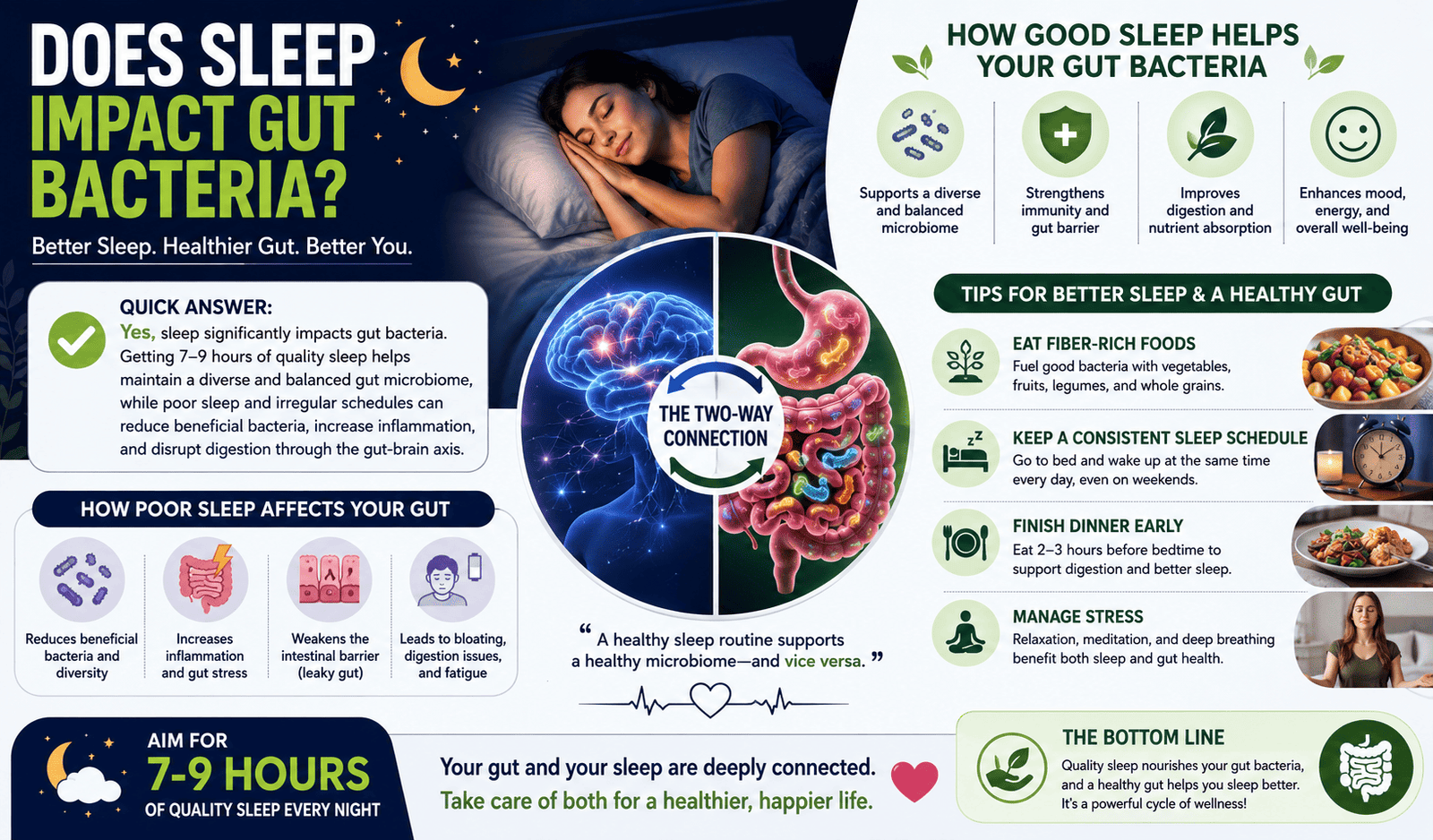
Yes, sleep significantly impacts gut bacteria. Getting 7–9 hours of quality sleep helps maintain a diverse and balanced gut microbiome, while poor sleep, irregular sleep schedules, and chronic sleep deprivation can reduce beneficial bacteria, increase inflammation, and disrupt digestion through the gut-brain axis.
The connection between sleep and gut health has become one of the most fascinating discoveries in modern health and wellness research. Scientists once believed that sleep mainly affected the brain, but growing evidence shows that your digestive system also follows a daily biological rhythm. The trillions of microorganisms living inside your intestines respond to your sleep schedule, meal timing, stress levels, and exposure to light. When sleep becomes inconsistent, these beneficial microbes may lose their natural balance, affecting digestion, immunity, metabolism, and even mood.
For millions of Americans who struggle with poor sleep, bloating, fatigue, or digestive discomfort, improving sleep quality may be one of the simplest ways to support a healthier gut. Understanding how sleep and gut bacteria communicate can help you make lifestyle choices that benefit your entire body.
Also Read : How does stress affect gut health?
What Is the Gut Microbiome?
Your gut microbiome is a complex ecosystem made up of trillions of bacteria, fungi, viruses, and other microorganisms that live primarily in the large intestine. While bacteria often have a negative reputation, most of these microbes are essential for good health. They help break down dietary fiber, produce vitamins such as vitamin K and certain B vitamins, strengthen the immune system, protect against harmful pathogens, and produce beneficial compounds that nourish the intestinal lining.
A healthy microbiome is usually rich in diversity. The greater the variety of beneficial bacteria in your gut, the better your digestive system is able to adapt and perform its many important functions. Researchers have consistently linked higher microbial diversity with improved metabolic health, stronger immunity, and better overall well-being.
Also Read : Can sugar damage your gut microbiome?
Does Sleep Really Affect Gut Bacteria?

Yes, sleep directly affects the gut microbiome, and the relationship works in both directions. Scientists describe this connection as the gut-brain axis, a communication network linking the brain, nervous system, hormones, immune system, and intestinal bacteria. These systems constantly exchange signals throughout the day and night.
During healthy sleep, your body follows a circadian rhythm, a 24-hour internal clock that regulates hormone production, digestion, body temperature, and microbial activity. Gut bacteria also have their own daily rhythm, becoming more or less active at different times of the day. When you regularly sleep and wake at consistent times, these microbial cycles remain synchronized. However, staying up late, working night shifts, or frequently changing sleep schedules can disrupt these rhythms and contribute to an imbalance known as gut dysbiosis.
Also Read : What drinks are best for gut health?
How Poor Sleep Changes Your Gut Microbiome?

Poor sleep does much more than leave you feeling tired the next morning. Even short periods of sleep deprivation can influence the composition of gut bacteria and increase inflammatory activity throughout the body. Researchers have observed that insufficient sleep may reduce populations of beneficial bacteria while encouraging changes in microbial metabolism that negatively affect digestive health.
One of the most important consequences involves short-chain fatty acids, especially butyrate. These beneficial compounds are produced when gut bacteria ferment dietary fiber. They help maintain the intestinal barrier, reduce inflammation, support immune function, and strengthen communication between the gut and brain. When sleep quality declines, production of these protective substances may also decrease, making the digestive system more vulnerable to irritation and inflammation.
Chronic sleep deprivation has also been associated with increased intestinal permeability, often referred to as leaky gut. Although research is still evolving, the evidence suggests that consistently poor sleep may weaken the protective lining of the intestines and contribute to digestive discomfort over time.
Also Read : Why is gut microbiome important for overall health?
The Role of Circadian Rhythm in Gut Health


Your circadian rhythm functions as the body’s master biological clock. It coordinates sleep, hormone release, metabolism, digestion, and countless other physiological processes. Morning sunlight, regular meal times, physical activity, and consistent bedtimes all help keep this internal clock synchronized.
The gut microbiome responds remarkably well to these daily routines. When you eat meals at similar times and maintain a regular sleep schedule, beneficial bacteria develop predictable cycles that support efficient digestion and nutrient absorption. Irregular sleeping patterns, weekend sleep-ins, jet lag, and shift work can interrupt these microbial rhythms, potentially increasing the risk of digestive problems and metabolic disorders.
This is one reason healthcare professionals often encourage consistency rather than simply sleeping longer. A regular bedtime may provide benefits that extend beyond feeling rested by helping maintain a healthier microbial ecosystem.
Also Read : Can gut health affect weight loss?
Can Gut Bacteria Affect Sleep Too?

The relationship between sleep and gut bacteria is truly bidirectional. Beneficial gut microbes participate in the production and regulation of neurotransmitters that influence sleep quality, including serotonin and gamma-aminobutyric acid, commonly known as GABA.
Around ninety percent of the body’s serotonin is produced within the digestive system. Although gut serotonin does not directly enter the brain, it plays an important role in gut-brain communication and overall physiological regulation. Gut bacteria also influence how the body metabolizes tryptophan, an amino acid that serves as a building block for both serotonin and melatonin, the hormone responsible for regulating sleep cycles.
This helps explain why digestive disorders and sleep disturbances frequently occur together. People experiencing chronic insomnia often report digestive symptoms, while individuals with ongoing gastrointestinal issues may struggle with sleep quality. Researchers continue investigating exactly how these pathways interact, but the connection is becoming increasingly clear.
Also Read : Do prebiotics really improve digestion?
What Happens After Just One Night of Poor Sleep?
Many people worry that staying awake for one late night will permanently damage their gut health. Fortunately, a single night of poor sleep is unlikely to cause lasting harm. The human microbiome is resilient and can often recover from occasional disruptions.
However, repeated sleep restriction tells a different story. Regularly sleeping fewer than six hours or maintaining an inconsistent sleep schedule may gradually alter microbial diversity, increase inflammation, and disrupt the body’s normal metabolic processes. The cumulative effects of chronic sleep loss appear far more significant than the occasional late bedtime.
The encouraging news is that returning to healthy sleep habits can help restore microbial balance over time, especially when combined with nutritious eating and regular physical activity.
Also Read : What are the best probiotics for gut health?
How Many Hours of Sleep Are Best for Gut Health?

Most healthy adults should aim for 7 to 9 hours of quality sleep every night. Quality is just as important as quantity. Sleeping for eight hours while waking repeatedly may not provide the same restorative benefits as uninterrupted, deep sleep.
Maintaining the same bedtime and wake-up time throughout the week also supports stronger circadian rhythms. Even small improvements in sleep consistency may positively influence digestion, energy levels, and overall wellness.
Also Read : How long does it take to restore gut health?
Best Habits to Improve Sleep and Gut Bacteria Naturally

Supporting your gut microbiome does not necessarily require expensive supplements. Daily lifestyle habits remain the most effective long-term strategy.
Eating plenty of fiber-rich foods gives beneficial bacteria the nutrients they need to thrive. Vegetables, fruits, legumes, oats, seeds, and whole grains help nourish microbial diversity while supporting digestive regularity. Fiber fermentation also produces beneficial compounds that strengthen the intestinal lining and reduce inflammation.
Keeping a consistent sleep schedule is equally important. Going to bed and waking up at the same time each day helps synchronize both your body’s biological clock and the natural rhythm of your gut bacteria. This consistency promotes healthier digestion and more stable energy throughout the day.
Finishing dinner two to three hours before bedtime gives your digestive system time to process food before sleep. Regular meal timing also supports microbial balance and may reduce nighttime digestive discomfort.
Reducing ultra-processed foods and excessive added sugars can further improve microbial diversity. Replacing highly processed snacks with minimally processed whole foods creates a healthier environment for beneficial bacteria to flourish.
Finally, managing stress before bed supports both sleep quality and gut health. Relaxation practices such as reading, gentle stretching, deep breathing, or mindfulness meditation can reduce cortisol levels and strengthen the gut-brain connection.
Also Read : What are the signs of an unhealthy gut?
Do Probiotics Help You Sleep Better?

Probiotics have received significant attention for their potential role in improving both gut health and sleep. Some clinical studies suggest that specific strains of Lactobacillus and Bifidobacterium may positively influence sleep quality by reducing inflammation and supporting neurotransmitter activity.
However, probiotics are not a miracle solution. Different bacterial strains produce different effects, and results vary from person to person. For most healthy adults, prioritizing sleep hygiene, dietary fiber, and consistent daily routines remains more important than relying solely on supplements.
If you have chronic insomnia or a diagnosed digestive disorder, discussing probiotic use with a healthcare provider is the safest approach.
Also Read : Is bloating a sign of poor gut health?
Who Is Most at Risk of Sleep-Related Gut Imbalance?
Certain groups may experience greater disruption of the gut microbiome because of irregular circadian rhythms. Night-shift workers often face continuous changes in sleep timing that interfere with both hormonal balance and microbial activity. Frequent travelers experiencing jet lag may notice temporary digestive changes as their internal clock adjusts to new time zones.
Adults living with chronic stress, insomnia, or unpredictable meal schedules may also have a higher likelihood of microbial imbalance. Creating consistent daily routines becomes especially valuable for these individuals because regularity helps stabilize both sleep and digestive function.
Also Read : Can poor gut health cause anxiety and depression?
The Bottom Line

So, does sleep impact gut bacteria? The answer is a clear yes. Quality sleep helps maintain a diverse and balanced microbiome, supports immune function, strengthens the intestinal barrier, and promotes healthier digestion. On the other hand, chronic sleep deprivation and irregular sleep schedules can disrupt beneficial bacteria, increase inflammation, and contribute to digestive and metabolic challenges.
The good news is that improving your gut health does not have to be complicated. Sleeping seven to nine hours consistently, eating fiber-rich whole foods, maintaining regular meal times, staying physically active, and managing daily stress can all work together to support a healthier gut and a healthier life.
Also Read : What foods heal the gut lining?
Frequently Asked Questions (FAQs)
1. Does sleep impact gut bacteria?
Yes. Quality sleep helps maintain a healthy balance of beneficial gut bacteria, while poor sleep can reduce microbial diversity and disrupt digestion.
2. Can poor sleep cause digestive problems?
Yes. Chronic poor sleep may contribute to bloating, constipation, diarrhea, and other digestive issues by affecting the gut microbiome and increasing inflammation.
3. How many hours should I sleep for better gut health?
Most adults should aim for 7–9 hours of uninterrupted sleep each night for optimal gut and overall health.
4. Does staying up late affect gut bacteria?
Yes. Irregular bedtimes and late-night wakefulness can disrupt the circadian rhythm of your gut microbiome and reduce its natural balance.
5. Can gut bacteria improve sleep quality?
Potentially. Healthy gut bacteria influence serotonin, GABA, and tryptophan metabolism, which all play important roles in sleep regulation.
6. Are probiotics helpful for insomnia?
Some probiotic strains show promising results, but they should complement healthy sleep habits rather than replace them.
7. Does fiber benefit both sleep and gut health?
Yes. Fiber feeds beneficial gut bacteria and supports the production of compounds that may indirectly promote better sleep and digestive health.
8. Can one bad night of sleep permanently damage my microbiome?
No. An occasional poor night is unlikely to cause lasting harm, but repeated sleep deprivation may gradually affect microbial balance.
9. Why do shift workers often experience digestive issues?
Shift work disrupts circadian rhythms, which can interfere with both sleep patterns and the daily activity of gut bacteria.
10. What is the gut-brain axis?
The gut-brain axis is the communication network connecting the digestive system and the brain through nerves, hormones, immune signals, and beneficial gut microbes. It explains why sleep and digestion are closely linked.

Fermented foods naturally contain beneficial bacteria
Medical Disclaimer: This article is for educational and informational purposes only and is not a substitute for professional medical advice, diagnosis, or treatment. Gut microbiome research is rapidly evolving, and individual health needs can differ. Speak with a qualified healthcare professional about persistent symptoms, medical conditions, medications, or supplements.
Medically reviewed information sourced from trusted health organizations.
Reviewed by: Dzarro Editorial Team
Fact-checked using trusted medical and scientific sources.

Sandip Choudhary is a Health & Wellness Researcher and Content Creator specializing in sleep, digestive health, preventive wellness, and evidence-based health education. He has been creating online content and researching health-related topics for several years, focusing on translating complex medical information into practical guidance for everyday readers.
With a strong background in SEO and content strategy, Sandip ensures that every article is optimized for both search engines and real users. His goal is to provide reliable, clear, and helpful information that supports healthier living.
Disclaimer: The content published is for informational purposes only and is not a substitute for professional medical advice.
2 thoughts on “Does sleep impact gut bacteria?”
Comments are closed.