
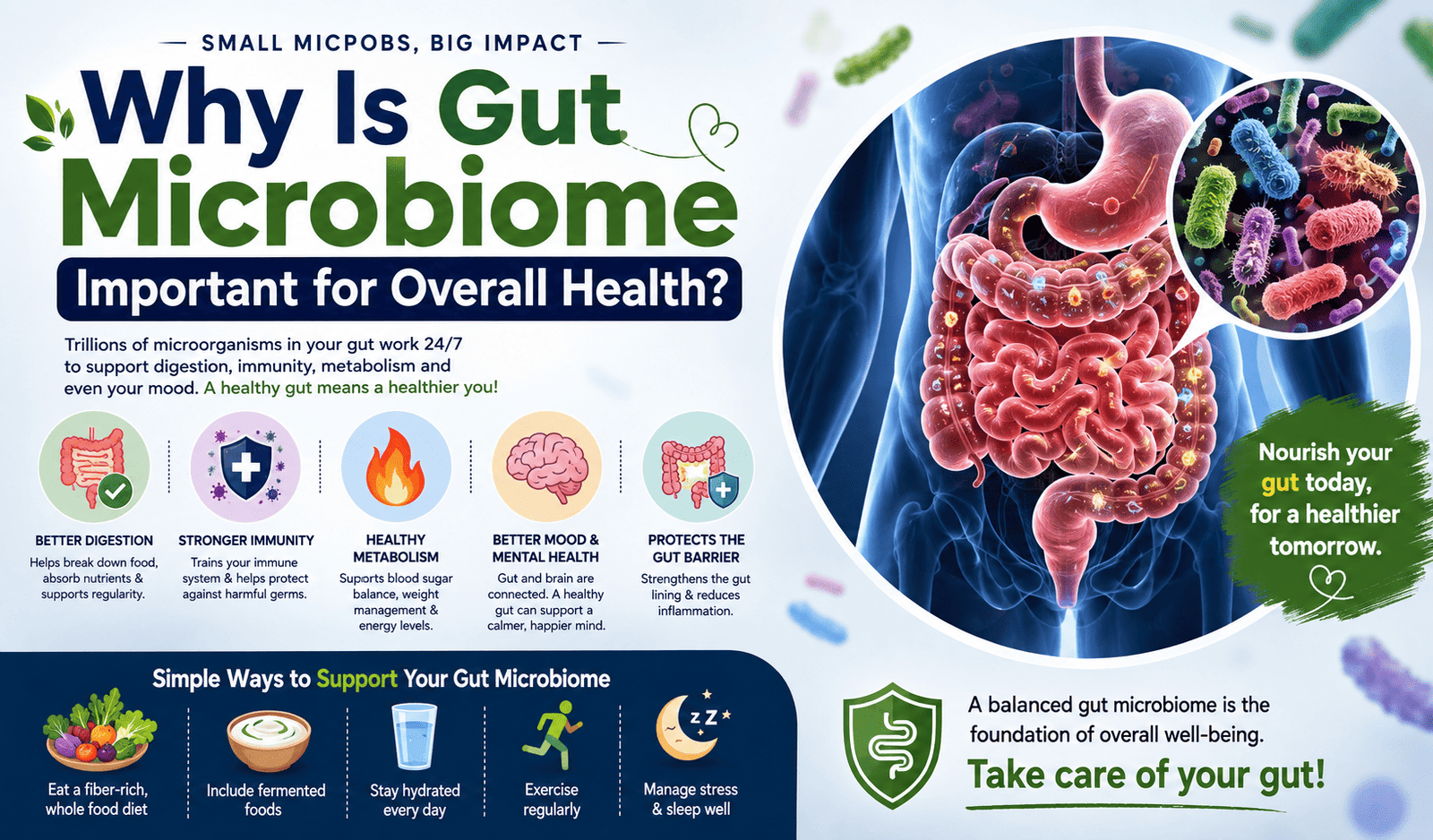
The gut microbiome is important for overall health because the trillions of microorganisms living in the digestive tract help digest certain foods, produce useful compounds, support the intestinal barrier, interact with the immune system, and influence metabolism. Research increasingly shows that changes in the gut microbiome are associated with digestive, metabolic, immune, and other health conditions. However, scientists are still learning which microbiome changes actually cause disease and which are simply associated with it.
What Is the Gut Microbiome?
The gut microbiome refers to the community of microorganisms and their genetic material living in the digestive tract. These microorganisms include bacteria as well as fungi, viruses, and other microbes. Rather than being simply “good” or “bad,” the gut microbiome is a complex ecosystem in which different organisms interact with each other and with the human body. The National Institute of Environmental Health Sciences explains that the microbiome contributes to digestion, energy production, protection against pathogens, and immune-system development.
The composition of the gut microbiome varies considerably from person to person. Age, diet, medications, environment, lifestyle, health history, and other factors can influence which microorganisms are present and how they function. This is one reason why the same food, supplement, or probiotic may not have identical effects in every individual. Researchers are increasingly studying not only which microbes are present but also what those microbes produce and how they interact with the body.
Also Read : Can gut health affect weight loss?
Why Is Gut Microbiome Important for Overall Health?
The gut microbiome is important because the microorganisms in the digestive tract perform biological functions that can affect more than digestion. Gut microbes can help break down components of food that human digestive enzymes cannot fully process. In particular, bacteria can ferment certain dietary fibers and produce compounds known as short-chain fatty acids, including acetate, propionate, and butyrate. These compounds participate in processes related to intestinal health, metabolism, and immune regulation.
The microbiome also interacts closely with the intestinal lining. A healthy intestinal environment helps regulate what passes between the digestive tract and the rest of the body. Gut microbes and their metabolic products can communicate with intestinal cells and influence the local environment. Maintaining a balanced microbial ecosystem is therefore an important part of understanding digestive and whole-body health.
Also Read : Do prebiotics really improve digestion?
How Does the Gut Microbiome Support Digestion?
One of the most familiar functions of the gut microbiome is its role in digestion. Although the human digestive system can break down many carbohydrates, proteins, and fats on its own, certain components of plant foods, particularly some dietary fibers, reach the colon without being completely digested.
Gut microorganisms can ferment some of these fibers and use them as fuel. During this process, they produce metabolites such as short-chain fatty acids. The American Gastroenterological Association notes that these microbial products can provide energy to intestinal cells and participate in signaling related to gut homeostasis, metabolism, and immune responses.
This relationship illustrates why diet and the microbiome are closely connected. What a person regularly eats can influence the nutrients available to different microbial communities, which can consequently affect the substances those microbes produce.
Also Read : What are the best probiotics for gut health?
What Is the Connection Between the Gut Microbiome and the Immune System?
A substantial part of the body’s immune activity is associated with the gastrointestinal tract, making communication between gut microbes and immune cells an important area of research. The microbiome can interact with immune pathways and help the body distinguish between harmless substances and potentially harmful organisms.
According to the National Institute of Environmental Health Sciences, microorganisms in the microbiome help the immune system develop and can contribute to protection against pathogens. The relationship is complex, however, and researchers are still investigating how specific microbial communities influence inflammation and immune function.
This does not mean that a particular “good bacteria” automatically prevents illness. Gut health is influenced by the overall microbial ecosystem, the intestinal environment, diet, genetics, medications, and many other factors.
Also Read : How long does it take to restore gut health?
Can the Gut Microbiome Affect Metabolic Health?
Yes, research has identified important connections between the gut microbiome and metabolism. Microbial metabolites can interact with pathways involved in energy regulation, glucose metabolism, appetite, and other physiological processes. Dietary fiber fermentation and the production of short-chain fatty acids are among the mechanisms researchers are studying.
The American Gastroenterological Association describes short-chain fatty acids as signaling molecules involved in gut homeostasis, energy metabolism, and immune responses. Research has also found that dietary patterns can change microbiome composition and function relatively quickly.
However, it would be misleading to claim that changing the gut microbiome alone can treat obesity, diabetes, or other metabolic diseases. The evidence is developing, and human responses can differ substantially.
Also Read : Is bloating a sign of poor gut health?
Does the Gut Microbiome Affect Digestive Health?
The gut microbiome has a strong relationship with digestive health. Researchers have investigated microbiome changes in connection with conditions and symptoms such as diarrhea, constipation, bloating, inflammatory bowel disease, and other gastrointestinal disorders. The American Gastroenterological Association describes the gut microbiome as an important and rapidly developing area of research in digestive health.
A disrupted microbial ecosystem is sometimes described as dysbiosis. Dysbiosis does not have one universally accepted definition, and researchers are still determining which microbial changes are clinically meaningful. Importantly, finding an association between a particular microbiome pattern and a disease does not necessarily prove that the microbiome caused the condition.
For people experiencing persistent abdominal pain, unexplained weight loss, blood in the stool, ongoing diarrhea, persistent constipation, or other concerning symptoms, medical evaluation is more appropriate than attempting to diagnose a microbiome problem independently.
Also Read : Can poor gut health cause anxiety and depression?
How Does Diet Influence the Gut Microbiome?
Diet is one of the major factors that can influence the gut microbiome. Different foods provide different substrates for microorganisms, meaning that dietary patterns can encourage different microbial activities. The American Gastroenterological Association reports that dietary changes can produce measurable changes in gut microbiome composition and function.
Fiber-rich foods are particularly important because many types of dietary fiber can be fermented by gut bacteria. Whole grains, beans, vegetables, fruits, nuts, seeds, and other plant foods can provide a variety of fibers and other compounds that interact with the microbiome. A diverse diet can expose the gut microbial ecosystem to a broader range of nutrients.
Increasing fiber suddenly, however, may cause temporary gas or bloating in some people. Gradually increasing fiber while maintaining adequate fluid intake can be more comfortable for many individuals.
Also Read : What foods heal the gut lining?
Are Fermented Foods Good for the Gut Microbiome?
Fermented foods can contain live microorganisms, depending on how they are produced and stored. Examples include certain yogurts, kefir, kimchi, sauerkraut, and other traditionally fermented foods. Their effects can vary according to the food, microorganisms involved, preparation methods, and individual health circumstances.
It is important to distinguish fermented foods from probiotic supplements. A probiotic is a live microorganism that is intended to provide a health benefit when consumed in an appropriate amount. The National Center for Complementary and Integrative Health emphasizes that different probiotic strains can have different effects, and evidence for one strain should not automatically be applied to another.
Therefore, buying a supplement labeled “probiotic” does not necessarily mean it will improve everyone’s gut health.
Also Read : What are the signs of an unhealthy gut?
Do You Need a Probiotic for a Healthy Gut?
Not necessarily. Probiotics are widely marketed for digestive and general health, but scientific evidence varies depending on the specific microorganism, dosage, health condition, and individual. The NCCIH states that researchers still do not know which probiotics are helpful for many conditions, how much should be taken, or which people are most likely to benefit.
For many healthy adults, focusing on an overall nutritious dietary pattern may be a more practical foundation for supporting the gut microbiome than automatically taking a probiotic supplement. People with serious illnesses or compromised immune systems should discuss probiotic use with a healthcare professional because certain probiotic products may carry risks in high-risk individuals.
Also Read : Can gut health affect energy levels?
What Can You Do to Support a Healthy Gut Microbiome?
Supporting gut health generally starts with sustainable lifestyle and dietary habits rather than trying to eliminate every “bad” microorganism. Eating a varied diet that includes fiber-rich plant foods can provide substrates for diverse gut microbes. Whole grains, legumes, vegetables, fruits, nuts, and seeds can all contribute to dietary diversity.
Adequate hydration, regular physical activity, sufficient sleep, and avoiding unnecessary use of medications can also contribute to overall health. Antibiotics are valuable and sometimes essential medications, but they should be used only when medically appropriate because they can alter microbial communities.
Instead of looking for a single food, supplement, or “detox” that supposedly fixes the microbiome, it is generally more useful to think about the gut as an ecosystem that responds to long-term dietary and lifestyle patterns.
Also Read : Can gut health affect mental health?
Can Gut Health Affect the Brain?
The gut and brain communicate through multiple biological pathways, including neural, hormonal, immune, and metabolic signaling. This relationship is commonly called the gut-brain axis. Researchers are investigating whether microbiome-derived substances and changes in gut microbial communities can influence brain function, mood, appetite, and behavior.
Although the gut-brain connection is a promising research area, many claims online go beyond the available evidence. The fact that gut microbes can communicate with biological systems does not mean that a specific probiotic or food can reliably treat depression, anxiety, or other mental health conditions.
The NCCIH notes that probiotic research has produced inconsistent results and that individual responses can vary based on factors including diet, age, lifestyle, health history, and existing microbiome composition.
Also Read : How long does gut healing take?
What Can Disrupt the Gut Microbiome?
Several factors can influence the gut microbiome, including dietary patterns, medications, illness, age, environmental exposures, and lifestyle. Antibiotics are particularly important because they can reduce or change populations of susceptible bacteria. This does not mean antibiotics should be avoided when medically necessary; their benefits can be substantial when used appropriately.
Highly restrictive diets, major dietary changes, chronic stress, poor sleep, and other lifestyle factors may also influence the gut environment. However, the microbiome is highly individual, and there is no single definition of what constitutes the perfect microbiome for every person.
Also Read : Does fasting improve gut health?
Is Gut Microbiome Testing Necessary?
Commercial microbiome testing has become increasingly popular, but interpreting these results can be complicated. A test may identify microorganisms in a stool sample, but knowing that a particular organism is present does not automatically tell you whether it is causing a health problem or whether changing its abundance would improve your health.
The American Gastroenterological Association has highlighted the need for additional research before many microbiome-based tests and therapies can be confidently incorporated into routine patient care.
If you have persistent digestive symptoms, it is better to discuss them with a qualified healthcare professional than to rely solely on a commercial microbiome report.
Also Read : Best morning routine for gut health?
The Bottom Line
The gut microbiome is important for overall health because it is an active biological ecosystem that interacts with digestion, the intestinal lining, immune function, metabolism, and other body systems. Gut microorganisms help process certain dietary components and produce metabolites that can influence human physiology. Research also continues to uncover relationships between the microbiome and numerous health conditions.
The most practical approach is not to chase a specific “perfect” microbiome. Instead, focus on a varied, nutrient-rich diet, adequate dietary fiber, regular physical activity, good sleep, appropriate medical care, and responsible medication use. Probiotics and other microbiome-focused products may have specific applications, but their benefits depend on the particular product and individual situation.
Because microbiome science is still evolving, consumers should be cautious about products that promise to “heal the gut,” eliminate toxins, or cure multiple diseases. A healthy gut is part of overall health, but it is only one component of a much larger picture.
Also Read : IBS vs leaky gut: what’s the difference?
Frequently Asked Questions
1. Why is gut microbiome important for overall health?
The gut microbiome is important because its microorganisms interact with digestion, intestinal function, immune activity, and metabolism. They can ferment certain dietary fibers and produce compounds such as short-chain fatty acids that participate in important biological processes.
2. What foods are best for the gut microbiome?
There is no single best food for everyone’s microbiome. A varied diet containing fiber-rich plant foods such as vegetables, fruits, beans, whole grains, nuts, and seeds can provide different nutrients and fibers for gut microorganisms. Dietary diversity is generally more useful than relying on one “superfood.”
3. How does fiber help the gut microbiome?
Certain dietary fibers cannot be fully digested by humans and instead become fuel for microorganisms in the colon. Gut bacteria can ferment some fibers and produce short-chain fatty acids, which participate in gut, metabolic, and immune functions.
4. Is a healthy gut microbiome the same for everyone?
No. Gut microbiome composition differs significantly between individuals. Age, diet, lifestyle, medications, environment, health history, and other factors can influence microbial communities. Researchers are therefore cautious about defining one universal microbiome as ideal for every person.
5. Can probiotics improve gut health?
Some probiotics may provide benefits for particular conditions, but their effects are strain-specific and do not apply equally to all probiotic products. The NCCIH notes that more research is needed to determine which probiotics work for particular conditions and which people are most likely to benefit.
6. Do antibiotics damage the gut microbiome?
Antibiotics can alter gut microbial communities because they affect susceptible bacteria along with disease-causing bacteria. However, antibiotics can be essential treatments for bacterial infections. They should be taken according to a healthcare professional’s instructions rather than avoided solely because of concerns about the microbiome.
7. Can gut microbiome affect the immune system?
Yes. Gut microorganisms interact with immune processes and contribute to immune-system development and regulation. Research is continuing to clarify how specific microbial communities and their metabolites influence immunity and inflammation.
8. Does gut microbiome affect mental health?
Researchers are investigating connections between the gut microbiome, nervous system, immune system, and brain through the gut-brain axis. However, evidence is not strong enough to claim that microbiome supplements can reliably prevent or treat mental health disorders. Microbiome research in this area remains an active field of study.
9. How can I improve my gut microbiome naturally?
A practical approach is to eat a diverse diet rich in whole plant foods and dietary fiber, stay physically active, get adequate sleep, stay hydrated, and use medications such as antibiotics only when medically appropriate. Individual tolerance matters, so major dietary changes should be made gradually if they cause digestive discomfort.
10. When should I see a doctor about digestive symptoms?
You should consider medical evaluation for persistent or worsening digestive symptoms, particularly unexplained weight loss, blood in the stool, persistent vomiting, severe abdominal pain, prolonged diarrhea, significant changes in bowel habits, or other concerning symptoms. A healthcare professional can determine whether further testing or treatment is appropriate rather than assuming the symptoms are caused by the gut microbiome.

Persistent diarrhea should be evaluated by a healthcare provider.
Medical Disclaimer: This article is for educational and informational purposes only and is not a substitute for professional medical advice, diagnosis, or treatment. Gut microbiome research is rapidly evolving, and individual health needs can differ. Speak with a qualified healthcare professional about persistent symptoms, medical conditions, medications, or supplements.
Medically reviewed information sourced from trusted health organizations.
Reviewed by: Dzarro Editorial Team
Fact-checked using trusted medical and scientific sources.

Sandip Choudhary is a Health & Wellness Researcher and Content Creator specializing in sleep, digestive health, preventive wellness, and evidence-based health education. He has been creating online content and researching health-related topics for several years, focusing on translating complex medical information into practical guidance for everyday readers.
With a strong background in SEO and content strategy, Sandip ensures that every article is optimized for both search engines and real users. His goal is to provide reliable, clear, and helpful information that supports healthier living.
Disclaimer: The content published is for informational purposes only and is not a substitute for professional medical advice.
3 thoughts on “Why is gut microbiome important for overall health?”
Comments are closed.