
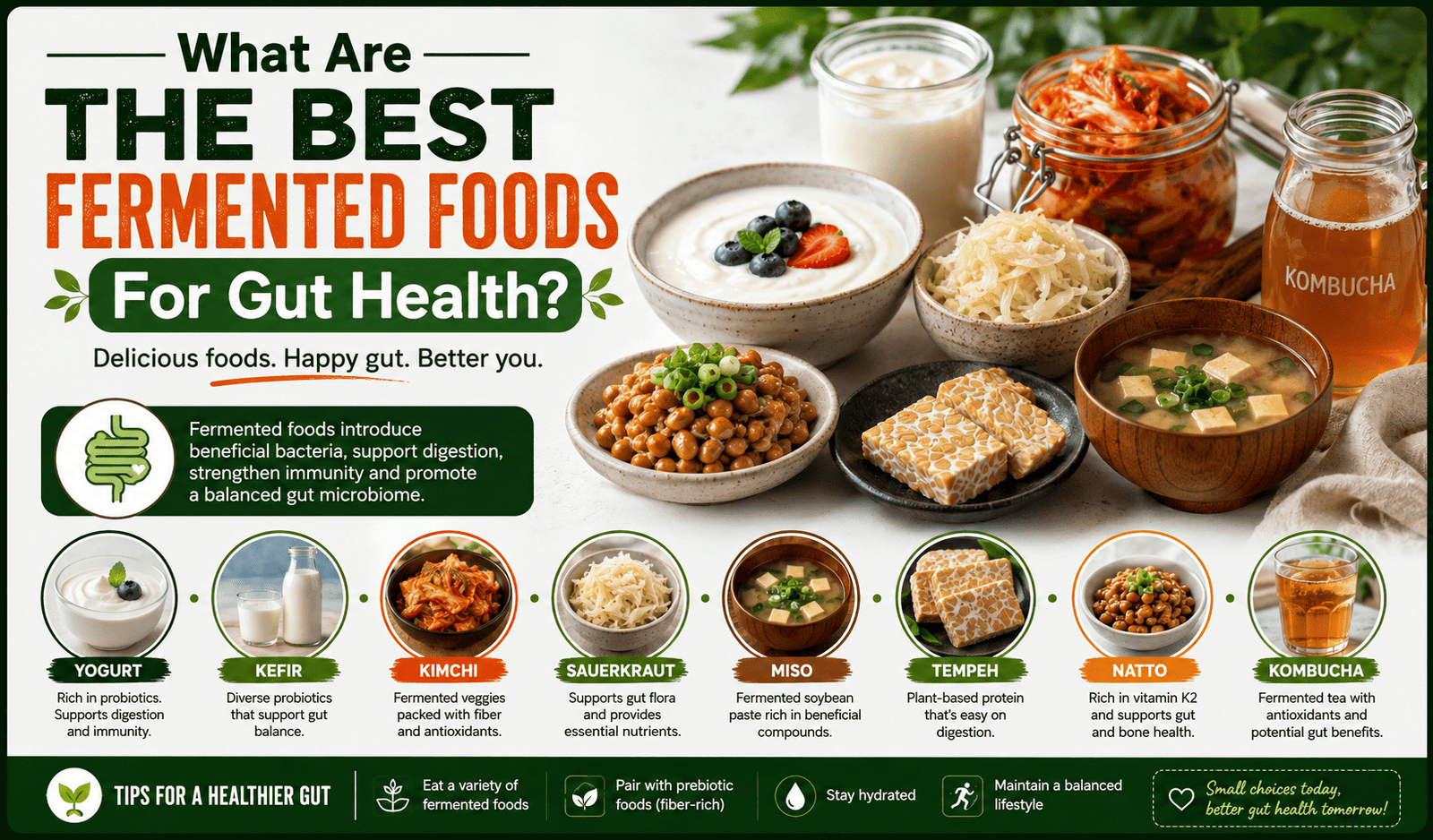
The best fermented foods for gut health are yogurt, kefir, kimchi, sauerkraut, miso, tempeh, natto, and kombucha. These foods are created through natural fermentation and can provide beneficial microorganisms, nutrients, and bioactive compounds that support digestion and a healthy gut microbiome. For the strongest evidence, choose products with live and active cultures and combine them with a fiber-rich diet.
What Are Fermented Foods?

Fermented foods are foods and beverages produced through the natural action of beneficial bacteria or yeast. During fermentation, these microorganisms convert sugars into acids or other compounds that preserve the food, enhance flavor, and create unique nutritional properties.
In the United States, fermented foods have become increasingly popular because research suggests they may help support digestive health, immune function, and overall wellness. However, it is important to understand that not every fermented food is automatically a probiotic food. Some products are heat-treated after fermentation, which removes the live microorganisms.
The healthiest approach is to enjoy a variety of minimally processed fermented foods as part of a balanced diet rich in fruits, vegetables, legumes, and whole grains.
Also Read : How can I rebuild my gut after antibiotics?
How Do Fermented Foods Help Gut Health?

Your digestive system contains trillions of bacteria, fungi, and other microorganisms collectively known as the gut microbiome. These microbes help break down certain foods, produce essential nutrients, strengthen the intestinal barrier, and communicate with the immune system.
Fermented foods may benefit gut health in several ways. Some introduce live beneficial bacteria that temporarily interact with your existing microbiome. Others contain organic acids and fermentation-derived compounds that may improve the digestive environment. Many fermented foods also provide valuable nutrients such as protein, calcium, vitamin K, and dietary fiber, making them nutritious beyond their probiotic potential.
Although research is still evolving, eating fermented foods consistently appears to be more beneficial than consuming them only occasionally.
Also Read : Can antibiotics permanently damage gut health?
1. Yogurt: The Best Everyday Fermented Food

Yogurt is one of the most recommended fermented foods because it combines excellent nutrition with strong scientific support. It is produced by fermenting milk with beneficial bacteria, including Lactobacillus and Streptococcus species. Many American yogurt brands also include additional probiotic strains.
For maximum gut health benefits, choose plain or Greek yogurt labeled Live & Active Cultures. Plain yogurt contains significantly less added sugar than flavored varieties while providing high-quality protein, calcium, vitamin B12, and beneficial bacteria.
Including yogurt at breakfast with berries and oats is an easy way to support both probiotics and prebiotics in one meal.
Also Read : Does sleep impact gut bacteria?
2. Kefir: The Most Diverse Probiotic Drink

Kefir is a fermented milk beverage that contains a remarkably diverse community of bacteria and yeast. Compared to yogurt, kefir often contains a greater variety of beneficial microorganisms, making it one of the strongest fermented food choices for digestive health.
Its smooth, tangy flavor makes it ideal for smoothies or as a standalone drink. Unsweetened kefir is the healthiest option because it delivers probiotics without unnecessary added sugar.
People who experience mild lactose sensitivity often find kefir easier to digest due to the fermentation process, although individual tolerance varies.
Also Read : How does stress affect gut health?
3. Kimchi: A Fiber-Rich Fermented Vegetable

Kimchi is a traditional Korean dish made from fermented cabbage, garlic, ginger, chili peppers, and other vegetables. It offers the combined benefits of fermentation and fiber-rich vegetables, making it an excellent addition to meals.
Its vibrant flavor pairs well with rice bowls, eggs, grilled chicken, or salads. Refrigerated kimchi is generally the better choice because it is more likely to contain live cultures than shelf-stable products.
Kimchi also supplies vitamins A and C along with naturally occurring antioxidants from vegetables and spices.
Also Read : Can sugar damage your gut microbiome?
4. Sauerkraut: Simple and Gut-Friendly

Sauerkraut is made by fermenting shredded cabbage with salt, allowing naturally occurring lactic acid bacteria to develop. This traditional food has been enjoyed for centuries and remains one of the simplest fermented vegetables available.
When shopping, choose raw refrigerated sauerkraut instead of canned varieties. Pasteurized or shelf-stable products often lose their live microorganisms during processing.
Sauerkraut is also rich in vitamin C, vitamin K, and dietary fiber, making it both nutritious and versatile.
Also Read : What drinks are best for gut health?
5. Miso: The Umami Superfood

Miso is a fermented soybean paste commonly used in Japanese cuisine. It adds rich umami flavor to soups, sauces, marinades, and dressings while providing beneficial compounds created during fermentation.
To preserve more of its live cultures, many cooks stir miso into warm soup after removing it from boiling heat. Even when heated, miso still contributes minerals, plant compounds, and unique fermented nutrients.
Because miso can be high in sodium, moderation is recommended as part of a heart-healthy eating pattern.
Also Read : Why is gut microbiome important for overall health?
6. Tempeh: The Best Plant-Based Protein

Tempeh is produced by fermenting whole soybeans into a firm, protein-rich food with a nutty flavor. It is especially popular among vegetarians and vegans because it provides complete protein, iron, magnesium, and dietary fiber.
Although many commercial tempeh products are pasteurized before sale, the fermentation process still improves digestibility and reduces certain naturally occurring compounds in soybeans.
Tempeh works well in stir-fries, tacos, sandwiches, grain bowls, and salads, making it one of the most versatile fermented foods available.
Also Read : Can gut health affect weight loss?
7. Natto: A Nutrient-Dense Japanese Classic

Natto is made from fermented soybeans using Bacillus subtilis. It has a distinctive sticky texture and strong aroma, but it is considered one of the most nutrient-dense fermented foods in the world.
Natto is exceptionally rich in vitamin K2, an important nutrient for bone health, and also provides protein and beneficial fermentation compounds. While its flavor may take time to appreciate, many people enjoy it with rice, green onions, and mustard.
For adventurous eaters looking to diversify their fermented food intake, natto is an excellent option.
Also Read : Do prebiotics really improve digestion?
8. Kombucha: Is It Worth Drinking?

Kombucha is a sparkling fermented tea produced using a symbiotic culture of bacteria and yeast. It has become increasingly popular in American grocery stores as a healthier alternative to sugary soft drinks.
While kombucha contains fermentation-derived compounds and may offer antioxidant benefits, scientific evidence supporting its gut health effects is still limited. The healthiest choice is a variety with minimal added sugar and moderate serving sizes.
Kombucha should be viewed as an enjoyable fermented beverage rather than a replacement for nutrient-rich whole foods like yogurt or kefir.
Also Read : What are the best probiotics for gut health?
Fermented Foods vs. Probiotics

Many people assume fermented foods and probiotics are identical, but they are not. Fermented foods are produced through microbial fermentation, while probiotics are live microorganisms that have demonstrated health benefits when consumed in adequate amounts.
Some fermented foods, such as yogurt and kefir, are excellent probiotic sources. Others, including sourdough bread, lose their live microbes during cooking. This is why reading labels and choosing products with live cultures is important.
Equally important are prebiotic foods, which feed beneficial gut bacteria. Foods such as oats, garlic, onions, bananas, apples, beans, and asparagus help nourish the microbiome and work synergistically with fermented foods.
Also Read : How long does it take to restore gut health?
How Much Fermented Food Should You Eat?

There is no official Recommended Daily Intake for fermented foods in the United States. Instead of focusing on large portions, consistency is the key. Including one serving of fermented food most days of the week is a practical and sustainable approach.
A balanced routine might include yogurt for breakfast, kefir in a smoothie, kimchi or sauerkraut with lunch, and miso or tempeh at dinner. Combining fermented foods with plenty of vegetables and whole grains creates the best environment for long-term gut health.
If you are new to fermented foods, introduce them gradually to reduce the chance of temporary bloating or digestive discomfort.
Also Read : Is bloating a sign of poor gut health?
Final Thoughts
If you’re wondering what are the best fermented foods for gut health, the strongest overall choices are yogurt and kefir because they consistently provide live beneficial cultures and have the most supportive human research. Kimchi, sauerkraut, miso, tempeh, natto, and kombucha can also contribute valuable nutrients and add diversity to your diet.
Rather than relying on a single superfood, aim for variety. A diet rich in fermented foods, colorful vegetables, fruits, legumes, and whole grains offers the best foundation for a healthy gut microbiome and overall wellness.
Also Read : Can poor gut health cause anxiety and depression?
Frequently Asked Questions (FAQ)
1. What are the best fermented foods for gut health?
The top fermented foods include yogurt, kefir, kimchi, sauerkraut, miso, tempeh, natto, and kombucha. Yogurt and kefir have the strongest evidence for supporting digestive health.
2. Is yogurt or kefir better for gut health?
Both are excellent, but kefir generally contains a greater diversity of beneficial microorganisms. Plain, unsweetened versions of either are healthy choices.
3. Do all fermented foods contain probiotics?
No. Some fermented foods are pasteurized after production, which removes live microorganisms. Always look for products with live and active cultures.
4. Is kimchi good for digestion?
Yes. Kimchi provides fermented vegetables, fiber, vitamins, and beneficial compounds that may support digestive health as part of a balanced diet.
5. Is sauerkraut healthier than pickles?
Raw fermented sauerkraut is generally a better probiotic choice because many pickles sold in stores are preserved with vinegar rather than natural fermentation.
6. Can fermented foods help reduce bloating?
Some people experience improved digestion after regularly eating fermented foods, but results vary. Introduce them gradually if you have a sensitive digestive system.
7. Are fermented foods safe to eat every day?
Yes, most healthy adults can safely enjoy moderate amounts of fermented foods daily as part of a balanced eating pattern.
8. What is the healthiest fermented food overall?
Plain yogurt and kefir are often considered the healthiest overall because they combine high-quality nutrition with well-studied live cultures.
9. Are fermented foods good for weight management?
Fermented foods can support a healthy eating pattern because many are rich in protein or nutrients, but they are not a standalone weight-loss solution.
10. What foods should I eat with fermented foods?
Pair fermented foods with prebiotic foods such as oats, bananas, garlic, onions, beans, asparagus, apples, and whole grains to better support a healthy gut microbiome.

Kimchi is a popular fermented food that supports gut health.
Medical Disclaimer : This article is intended for educational purposes only and should not replace professional medical advice, diagnosis, or treatment. Always consult your healthcare provider regarding persistent digestive symptoms or before starting new supplements.
Medically reviewed information sourced from trusted health organizations.
Reviewed by: Dzarro Editorial Team
Fact-checked using trusted medical and scientific sources.

Sandip Choudhary is a Health & Wellness Researcher and Content Creator specializing in sleep, digestive health, preventive wellness, and evidence-based health education. He has been creating online content and researching health-related topics for several years, focusing on translating complex medical information into practical guidance for everyday readers.
With a strong background in SEO and content strategy, Sandip ensures that every article is optimized for both search engines and real users. His goal is to provide reliable, clear, and helpful information that supports healthier living.
Disclaimer: The content published is for informational purposes only and is not a substitute for professional medical advice.