
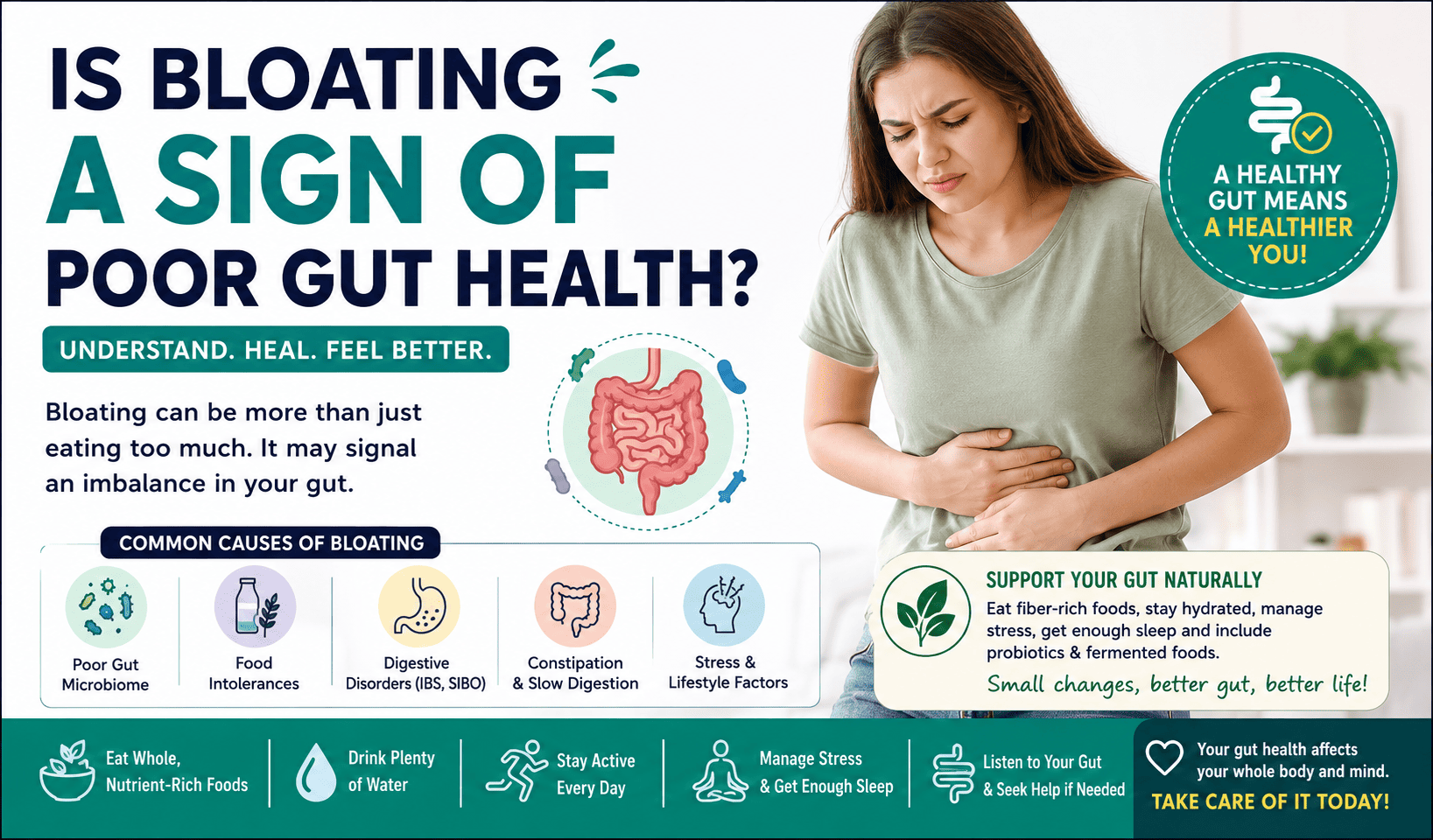
Yes, bloating can be a sign of poor gut health, but it isn’t always the cause. Occasional bloating after eating is normal. However, frequent or persistent bloating may indicate an imbalance in your gut microbiome, food intolerances, constipation, digestive disorders, or conditions such as irritable bowel syndrome (IBS). Improving your diet, staying hydrated, managing stress, and supporting a healthy gut microbiome may reduce bloating.
Introduction
Many people experience a swollen or tight feeling in their abdomen after meals. While occasional bloating is common, ongoing bloating can interfere with daily life and may signal that something isn’t functioning properly in your digestive system.
Your gut is home to trillions of bacteria, fungi, and other microorganisms collectively known as the gut microbiome. These microbes play an essential role in digestion, immunity, metabolism, and overall health. When the balance of these microorganisms changes, digestive symptoms such as bloating may develop.
If you’ve been wondering, “Is bloating a sign of poor gut health?”, the answer depends on several factors. Understanding the causes can help you identify whether simple lifestyle changes or medical evaluation is needed.
Also Read : Can poor gut health cause anxiety and depression?
What Is Bloating?
Bloating is the sensation of fullness, tightness, or swelling in the abdomen. Some people experience visible abdominal distension, while others mainly notice discomfort or pressure.
Gas naturally forms during digestion as bacteria break down food in the intestines. Normally, this gas moves through the digestive tract without causing significant discomfort. Problems arise when excess gas builds up or when digestion slows, leading to bloating.
Occasional bloating after a large meal is usually harmless. Persistent bloating, however, deserves closer attention.
Also Read : What foods heal the gut lining?
Is Bloating a Sign of Poor Gut Health?
Yes, frequent bloating is often associated with poor gut health because the digestive system may not be processing food efficiently.
An unhealthy gut can lead to excessive fermentation of food, increased gas production, inflammation, and slower intestinal movement. These changes may cause abdominal discomfort, fullness, and bloating.
Poor gut health may involve:
Healthy digestion depends on a balanced gut microbiome. When harmful bacteria outnumber beneficial bacteria, digestion can become less efficient. This imbalance, known as dysbiosis, may contribute to bloating, gas, irregular bowel movements, and abdominal discomfort.
Digestive problems can also occur when the intestinal lining becomes irritated or inflamed. Inflammation may affect nutrient absorption and alter normal digestive function, increasing bloating after meals.
Also Read : How Can I Improve My Gut Health Naturally?
Common Causes of Bloating
Gut Microbiome Imbalance
The bacteria living in your digestive tract help break down fiber and produce beneficial compounds. When the microbial balance changes due to poor diet, illness, antibiotics, or stress, excess gas production may occur.
Gut dysbiosis has been linked to chronic bloating in many individuals.
Constipation
Constipation slows the movement of stool through the intestines. As waste remains in the colon longer, bacteria continue producing gas, increasing abdominal pressure and bloating.
Improving fiber intake, drinking enough water, and regular physical activity often help relieve constipation-related bloating.
Food Intolerances
Unlike food allergies, food intolerances affect digestion rather than the immune system.
Common triggers include:
Lactose found in dairy products.
Fructose present in certain fruits and sweeteners.
Gluten in people with celiac disease or non-celiac gluten sensitivity.
Artificial sweeteners such as sorbitol.
When these foods aren’t properly digested, gut bacteria ferment them, producing excess gas.
Also Read : What are the signs of an unhealthy gut?
Irritable Bowel Syndrome (IBS)
IBS is one of the most common digestive disorders associated with chronic bloating.
People with IBS frequently experience:
Abdominal pain
Gas
Constipation
Diarrhea
Changes in bowel habits
Many individuals notice that bloating worsens after eating certain foods or during periods of stress.
Small Intestinal Bacterial Overgrowth (SIBO)
SIBO occurs when excessive bacteria grow in the small intestine instead of the large intestine.
These bacteria ferment food too early during digestion, leading to:
Severe bloating
Gas
Diarrhea
Abdominal discomfort
Nutrient deficiencies
Diagnosis typically requires specialized breath testing.
Also Read : Can overthinking affect physical health?
Eating Too Quickly
Swallowing air while eating rapidly or drinking carbonated beverages increases the amount of gas entering the digestive system.
Eating slowly and chewing food thoroughly can significantly reduce bloating.
High-FODMAP Foods
Certain healthy foods naturally contain fermentable carbohydrates called FODMAPs.
Examples include:
Onions
Garlic
Beans
Lentils
Apples
Pears
Milk
Wheat products
For sensitive individuals, these foods can increase gas production and bloating.
Also Read : Can gut health affect energy levels?
Other Signs of Poor Gut Health
Bloating rarely occurs alone. Other symptoms that may indicate gut health problems include:
Frequent gas
Constipation
Diarrhea
Abdominal cramps
Heartburn
Food sensitivities
Fatigue
Poor nutrient absorption
Unexplained weight changes
Skin issues such as eczema or acne
Frequent infections
Persistent digestive symptoms lasting several weeks should be discussed with a healthcare professional.
Also Read : Can gut health affect mental health?
Can Stress Cause Bloating?
Absolutely.
The gut and brain communicate continuously through the gut-brain axis.
During periods of chronic stress, digestion may slow, gut bacteria may change, and intestinal sensitivity can increase. This combination often leads to bloating, abdominal discomfort, and altered bowel habits.
Stress management techniques such as meditation, regular exercise, and adequate sleep can support better digestive health.
Also Read : How long does gut healing take?
How to Improve Gut Health Naturally
Improving gut health often reduces bloating over time.
A diet rich in fruits, vegetables, legumes, whole grains, and fermented foods provides fiber that nourishes beneficial gut bacteria.
Foods like yogurt with live cultures, kefir, kimchi, sauerkraut, and miso introduce helpful microorganisms that may improve microbial diversity.
Drinking enough water supports healthy digestion and prevents constipation.
Regular physical activity stimulates bowel movement and helps move gas through the digestive tract more efficiently.
Limiting ultra-processed foods, excessive sugar, alcohol, and unnecessary antibiotics when appropriate can also help maintain a balanced gut microbiome.
Eating meals slowly and avoiding overeating further reduces swallowed air and digestive discomfort.
Also Read : Can gut health affect aging?
Should You Take Probiotics?
Probiotics may help some individuals, especially those with IBS, antibiotic-associated digestive problems, or mild gut microbiome imbalances.
However, probiotics are not a universal solution. Different strains provide different benefits, and not everyone experiences improvement.
It’s generally best to choose clinically studied probiotic strains or consult a healthcare provider before starting supplements.
When Should You See a Doctor?
Although bloating is usually harmless, certain symptoms require prompt medical evaluation.
Seek medical attention if bloating is accompanied by severe abdominal pain, persistent vomiting, blood in the stool, unexplained weight loss, difficulty swallowing, persistent diarrhea, anemia, fever, or symptoms lasting several weeks despite lifestyle changes.
These symptoms could indicate conditions requiring medical treatment.
Also Read : What are the signs of poor gut health?
Foods That May Help Reduce Bloating
Several foods support healthy digestion and may naturally reduce bloating.
Ginger has long been used to aid digestion and may help food move through the stomach more efficiently.
Peppermint may relax digestive muscles and reduce intestinal spasms.
Oats provide soluble fiber that supports regular bowel movements.
Bananas contain potassium, which helps regulate fluid balance.
Yogurt containing live cultures may improve microbial balance in some individuals.
Kiwi has been associated with improved digestion and relief from constipation.
Also Read : Why does stress affect my stomach?
Foods That May Worsen Bloating
Some foods are more likely to produce gas depending on individual tolerance.
Beans and lentils contain fermentable carbohydrates.
Carbonated beverages introduce additional gas into the digestive tract.
Highly processed foods often contain excess sodium, contributing to water retention.
Sugar alcohols found in sugar-free products frequently cause gas and bloating.
Large, fatty meals may slow stomach emptying, increasing feelings of fullness.
Keeping a food diary may help identify personal triggers.
Also Read : Can burnout make you physically sick?
Can Poor Gut Health Affect Overall Wellness?
Yes.
Research increasingly shows that gut health influences far more than digestion.
A balanced gut microbiome supports immune function, helps regulate inflammation, contributes to vitamin production, and may even influence mood through the gut-brain connection.
Taking care of digestive health can therefore benefit both physical and mental well-being.
Also Read : Why do I feel tired after eating?
Prevention Tips
Maintaining healthy digestive habits can reduce the likelihood of chronic bloating.
Eat balanced meals with plenty of fiber while increasing fiber intake gradually to avoid excess gas. Stay hydrated throughout the day, exercise regularly, prioritize quality sleep, manage stress effectively, avoid smoking, limit excessive alcohol intake, and identify any personal food intolerances.
These simple lifestyle habits support a healthier digestive system over time.
Conclusion
So, is bloating a sign of poor gut health? In many cases, yes. Frequent bloating can indicate an imbalance in the gut microbiome, digestive disorders, food intolerances, constipation, or other gastrointestinal conditions. However, occasional bloating after eating is usually normal and not a cause for concern.
The good news is that many cases improve with healthier eating habits, regular exercise, stress reduction, proper hydration, and a diet that supports beneficial gut bacteria. If bloating becomes persistent or occurs alongside warning symptoms such as weight loss, severe pain, or blood in the stool, seeking medical evaluation is important to identify the underlying cause.

Probiotics can help maintain a balanced gut microbiome.
Frequently Asked Questions (FAQ)
Is bloating always caused by poor gut health?
No. Bloating can result from eating too quickly, consuming carbonated drinks, hormonal changes, constipation, food intolerances, or digestive disorders. Poor gut health is only one possible cause.
Can probiotics reduce bloating?
Some probiotic strains may reduce bloating in people with IBS or gut microbiome imbalances. Results vary depending on the individual and the specific probiotic strain.
How long does it take to improve gut health?
Many people notice digestive improvements within two to six weeks after making healthy dietary and lifestyle changes, although this varies depending on the underlying condition.
What foods heal the gut?
Fiber-rich vegetables, fruits, whole grains, fermented foods, yogurt with live cultures, kefir, kimchi, oats, bananas, and legumes can help support a healthy gut microbiome.
When is bloating considered serious?
Persistent bloating accompanied by severe abdominal pain, unexplained weight loss, blood in the stool, vomiting, fever, anemia, or difficulty swallowing should be evaluated by a healthcare professional promptly.
Does drinking more water help with bloating?
Yes. Adequate hydration supports digestion, helps prevent constipation, and allows food and waste to move more efficiently through the digestive tract, which may reduce bloating.
Is bloating more common as you age?
Yes. Digestive function, gut bacteria, physical activity, and medication use can change with age, making bloating more common in older adults.
Also Read : Why do I feel full after eating small amounts?
Medical Disclaimer: This article is for educational purposes only and does not replace professional medical advice, diagnosis, or treatment. Always consult a qualified healthcare provider before making significant changes to your diet, exercise routine, medications, or health management plan.
Medically reviewed information sourced from trusted health organizations.
References
- National Institute of Mental Health (NIMH): https://www.nimh.nih.gov
- National Institute of Diabetes and Digestive and Kidney Diseases (NIDDK): https://www.niddk.nih.gov
- National Center for Complementary and Integrative Health (NCCIH): https://www.nccih.nih.gov
- Harvard Health Publishing – The Gut-Brain Connection: https://www.health.harvard.edu
- Cleveland Clinic – Gut Health: https://health.clevelandclinic.org
- Johns Hopkins Medicine – The Brain-Gut Connection: https://www.hopkinsmedicine.org
- American Gastroenterological Association: https://gastro.org
Reviewed by: Dzarro Editorial Team
Fact-checked using trusted medical and scientific sources.

Sandip Choudhary is a Health & Wellness Researcher and Content Creator specializing in sleep, digestive health, preventive wellness, and evidence-based health education. He has been creating online content and researching health-related topics for several years, focusing on translating complex medical information into practical guidance for everyday readers.
With a strong background in SEO and content strategy, Sandip ensures that every article is optimized for both search engines and real users. His goal is to provide reliable, clear, and helpful information that supports healthier living.
Disclaimer: The content published is for informational purposes only and is not a substitute for professional medical advice.
2 thoughts on “Is bloating a sign of poor gut health?”
Comments are closed.