
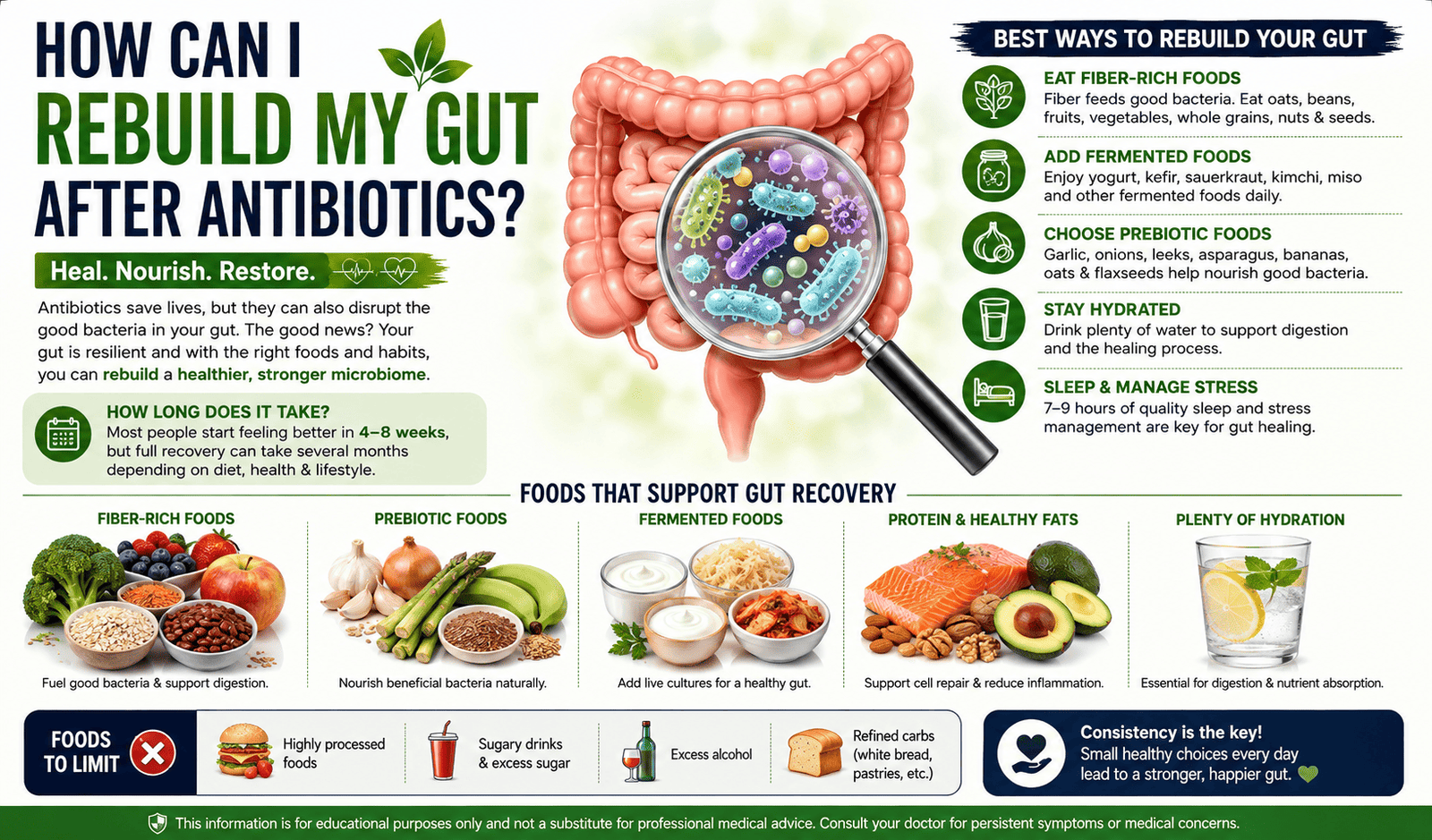
Antibiotics are one of modern medicine’s greatest achievements, helping millions of Americans recover from bacterial infections every year. However, while they eliminate harmful bacteria, they can also reduce many of the beneficial microbes that live in your digestive system. This temporary disruption may lead to bloating, diarrhea, constipation, stomach discomfort, or changes in digestion.
The encouraging news is that your gut microbiome is incredibly resilient. With the right nutrition, healthy lifestyle habits, and a little patience, most people can naturally support their gut’s recovery after finishing antibiotics.

How can I rebuild my gut after antibiotics?
The fastest and healthiest way to rebuild your gut is by eating a fiber-rich diet, adding fermented foods like yogurt and kefir, consuming prebiotic foods that feed beneficial bacteria, drinking plenty of water, getting quality sleep, and exercising regularly. Most healthy adults begin recovering within 4–8 weeks, although complete restoration of the microbiome may take several months.
Also Read : Can antibiotics permanently damage gut health?
Why Do Antibiotics Affect Your Gut?
Your digestive tract contains trillions of microorganisms that help digest food, produce essential vitamins, strengthen your immune system, and protect against harmful bacteria. Together, these microorganisms form what scientists call the gut microbiome.
When you take antibiotics, the medication cannot perfectly distinguish between harmful and beneficial bacteria. As a result, many healthy bacteria are reduced along with the infection-causing bacteria. This imbalance is called dysbiosis, and it often explains why digestive symptoms appear during or after antibiotic treatment.
Broad-spectrum antibiotics usually have a greater impact because they target a wider range of bacteria than narrow-spectrum antibiotics.
Also Read : Does sleep impact gut bacteria?

How Long Does It Take to Rebuild Your Gut?
Gut recovery varies from person to person. For most healthy adults, beneficial bacteria begin returning soon after antibiotics stop. Many people notice digestive improvement within 4 to 8 weeks, while certain bacterial species may take several months to recover completely.
Several factors influence recovery, including your age, diet, overall health, the type of antibiotic you took, and how often you’ve needed antibiotics in the past. People who eat a diverse, plant-rich diet generally support a healthier microbial environment than those eating mostly processed foods.
Also Read : How does stress affect gut health?

Eat More Fiber: The #1 Strategy for Gut Recovery
If there is one habit with the strongest scientific support, it’s increasing your daily fiber intake. Fiber serves as food for beneficial bacteria, allowing them to produce compounds called short-chain fatty acids that nourish the intestinal lining and support digestive health.
Aim for about 25–38 grams of fiber daily, depending on your age and sex. Excellent fiber sources include oats, beans, lentils, chickpeas, berries, apples, pears, broccoli, Brussels sprouts, sweet potatoes, quinoa, brown rice, nuts, and seeds.
Increase fiber gradually rather than all at once, especially if you’re experiencing bloating. Drinking enough water helps fiber work more effectively.
Also Read : Can sugar damage your gut microbiome?

Feed Good Bacteria with Prebiotic Foods
Prebiotics are special types of dietary fiber that specifically nourish beneficial gut bacteria. Unlike probiotics, they don’t contain live bacteria—they help the healthy bacteria already living in your gut grow and thrive.
Adding prebiotic foods to your meals every day is one of the simplest ways to encourage a stronger microbiome naturally. Garlic, onions, leeks, asparagus, green bananas, oats, flaxseeds, and chicory root are among the richest natural sources.
A diverse diet is more valuable than focusing on just one superfood. The greater the variety of plants you eat, the more diverse your gut bacteria tend to become.
Also Read : What drinks are best for gut health?

Include Fermented Foods for Natural Support
Fermented foods contain live cultures that may contribute to a healthier gut ecosystem when consumed regularly. They’re also rich in nutrients, protein, and beneficial compounds that support overall digestive wellness.
Plain yogurt with live cultures and kefir are two of the easiest fermented foods to include in an American diet. Other nutritious options include sauerkraut, kimchi, miso, tempeh, and naturally fermented vegetables.
Choose unsweetened varieties whenever possible, since excessive added sugar can reduce the overall health benefits.
Also Read : Why is gut microbiome important for overall health?

Should You Take Probiotics After Antibiotics?
Probiotic supplements are popular, but they are not a one-size-fits-all solution. Research suggests that probiotics can reduce the risk of antibiotic-associated diarrhea in some individuals, particularly when specific strains are used. However, they are not consistently proven to restore the entire gut microbiome for everyone.
For many healthy adults, focusing on whole foods may be sufficient. If you’re older, have digestive disorders, or experience persistent diarrhea after antibiotics, speak with your healthcare provider before choosing a probiotic supplement. The strain matters much more than the brand name.
Remember that food and lifestyle habits create the long-term environment where beneficial bacteria flourish.
Also Read : Can gut health affect weight loss?

What Should You Eat During the First Week?
The first week after antibiotics is an excellent time to prioritize gentle, nutrient-dense meals that are easy to digest while supporting microbial recovery.
A balanced day might begin with oatmeal topped with blueberries and walnuts. Lunch could include grilled chicken, quinoa, roasted vegetables, and leafy greens. An afternoon snack of plain Greek yogurt with strawberries provides both protein and live cultures. Dinner may feature baked salmon, sweet potato, and steamed broccoli, followed by plenty of water throughout the day.
Rather than following restrictive gut cleanses or detoxes, consistency is the real secret to recovery.
Also Read : Do prebiotics really improve digestion?

Foods That May Slow Gut Recovery
No single food permanently damages your microbiome, but regularly eating highly processed foods may make it harder for beneficial bacteria to thrive. Diets low in fiber and high in refined sugars provide fewer nutrients for healthy microbes.
Try limiting sugary drinks, packaged snack foods, excessive alcohol, heavily processed fast food, and meals dominated by refined white flour. Replacing these with whole grains, vegetables, legumes, and fruits creates a much healthier environment for your digestive system.
Small daily improvements are often more sustainable than dramatic dietary changes.
Also Read : What are the best probiotics for gut health?
Lifestyle Habits That Help Heal Your Gut
Gut health extends beyond nutrition. Sleep, movement, hydration, and stress management all influence the gut-brain connection and digestive function.
Aim for 7–9 hours of quality sleep each night, since your immune system and microbiome both benefit from adequate rest. Regular moderate exercise—such as walking, cycling, or strength training—has also been associated with greater microbial diversity. Staying hydrated helps fiber move efficiently through the digestive tract, while reducing chronic stress may improve digestion and overall well-being.
Think of gut recovery as a lifestyle rather than a temporary diet.
Also Read : How long does it take to restore gut health?

Signs Your Gut Is Healing
Recovery usually happens gradually instead of overnight. Positive signs include more regular bowel movements, less bloating, improved stool consistency, reduced stomach discomfort, better digestion after meals, and increased energy.
It’s completely normal for symptoms to fluctuate during recovery. Your microbiome is adapting, and consistency with healthy habits often matters more than immediate results.
Seek medical attention if you develop severe diarrhea lasting more than two days, blood in your stool, fever with diarrhea, significant dehydration, or severe abdominal pain. Persistent digestive symptoms deserve professional evaluation to rule out more serious conditions.
Also Read : Is bloating a sign of poor gut health?

Final Thoughts
Rebuilding your gut after antibiotics is less about finding a miracle supplement and more about supporting your body’s natural healing process. A diverse, fiber-rich diet filled with fruits, vegetables, legumes, whole grains, nuts, seeds, and fermented foods provides the strongest foundation for long-term gut health.
Give your microbiome time to recover, stay consistent with healthy habits, and remember that every nutritious meal is an investment in your digestive and overall wellness.
Also Read : Can poor gut health cause anxiety and depression?
Frequently Asked Questions (FAQ)
1. How can I rebuild my gut after antibiotics naturally?
Eat more fiber, include fermented foods, consume prebiotic vegetables, stay hydrated, sleep well, and exercise regularly. These habits naturally support beneficial gut bacteria.
2. How long does gut recovery take after antibiotics?
Most people notice improvement within 4–8 weeks, although complete microbiome recovery may take several months.
3. What is the best food for gut healing?
Fiber-rich foods such as oats, beans, berries, broccoli, apples, lentils, and whole grains are among the best choices for nourishing beneficial bacteria.
4. Is yogurt enough to restore gut bacteria?
Yogurt is helpful because it contains live cultures, but it works best as part of a diverse, high-fiber diet rather than as a standalone solution.
5. Should everyone take probiotics after antibiotics?
No. Probiotics may help some people prevent antibiotic-associated diarrhea, but they are not necessary or equally effective for everyone.
6. Why am I bloated after finishing antibiotics?
Bloating often results from temporary changes in your gut microbiome and usually improves as beneficial bacteria recover.
7. Can antibiotics permanently damage the gut?
Most gut bacteria recover naturally, although some bacterial species may remain altered for longer periods, especially after repeated antibiotic use.
8. What drinks help heal the gut?
Water is the most important drink for gut recovery. Kefir may also provide beneficial live cultures, while sugary beverages should be limited.
9. Are bananas good for gut health?
Yes. Green or slightly unripe bananas contain prebiotic fiber that helps nourish beneficial gut bacteria.
10. When should I see a doctor after antibiotics?
Seek medical care if you experience severe diarrhea, bloody stools, fever, dehydration, intense abdominal pain, or digestive symptoms that persist for weeks after treatment.

Kefir is a fermented drink rich in probiotics.
Medical Disclaimer : This article is intended for educational purposes only and should not replace professional medical advice, diagnosis, or treatment. Always consult your healthcare provider regarding persistent digestive symptoms or before starting new supplements.
Medically reviewed information sourced from trusted health organizations.
Reviewed by: Dzarro Editorial Team
Fact-checked using trusted medical and scientific sources.

Sandip Choudhary is a Health & Wellness Researcher and Content Creator specializing in sleep, digestive health, preventive wellness, and evidence-based health education. He has been creating online content and researching health-related topics for several years, focusing on translating complex medical information into practical guidance for everyday readers.
With a strong background in SEO and content strategy, Sandip ensures that every article is optimized for both search engines and real users. His goal is to provide reliable, clear, and helpful information that supports healthier living.
Disclaimer: The content published is for informational purposes only and is not a substitute for professional medical advice.
1 thought on “How can I rebuild my gut after antibiotics?”
Comments are closed.