
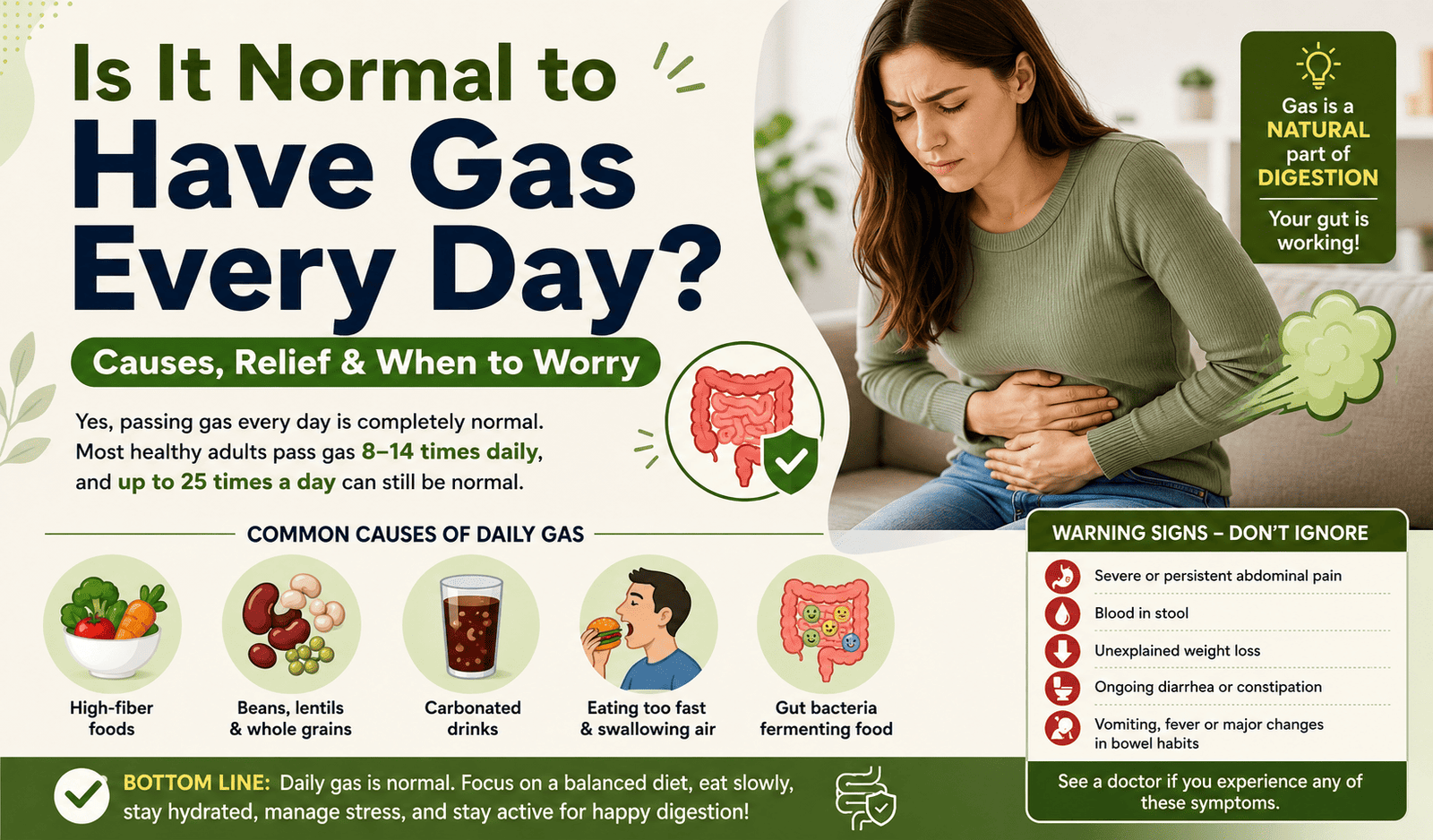
Yes, it is completely normal to have gas every day. Most healthy adults pass gas around 8–14 times daily, and even up to 25 times a day can be considered normal depending on diet and individual digestion. Gas is a natural result of breaking down food and maintaining a healthy gut microbiome.
What Is Gas and Why Does It Happen?

Gas is a normal part of the digestive process. Your body produces it in two main ways: by swallowing small amounts of air while eating or drinking, and by gut bacteria breaking down carbohydrates that are not fully digested in the small intestine.
The gases produced include hydrogen, carbon dioxide, and sometimes methane. These gases move through the intestines and are eventually released as burping or flatulence. This process happens in everyone and is generally a sign that digestion is working as it should.
Also Read : Can Coffee Upset Your Stomach?
How Much Gas Is Considered Normal?

Many people worry that passing gas frequently means something is wrong, but that’s usually not the case. The number of times you pass gas varies from person to person and is influenced by your diet, activity level, and gut bacteria.
| Digestive Activity | Typical Range |
|---|---|
| Passing gas | 8–14 times/day |
| Upper normal range | Up to 25 times/day |
| Burping | Up to 30 times/day |
If your gas is not painful and hasn’t changed dramatically, it’s usually considered completely normal.
Also Read : What Foods Trigger Heartburn?
Why Do I Have Gas Every Day?

Daily gas is most commonly caused by the foods you eat. Fiber-rich foods are excellent for overall health, but they naturally produce more gas because beneficial bacteria ferment them in the large intestine.
Common gas-producing foods include beans, lentils, broccoli, cauliflower, cabbage, onions, apples, pears, oats, and whole grains. These foods are nutritious and should not automatically be avoided simply because they cause gas.
Eating habits also matter. Eating too quickly, chewing gum, talking while eating, or drinking through a straw can increase the amount of air you swallow, leading to more gas throughout the day.
Also Read : What Is Acid Reflux and How Can I Prevent It?
Is Smelly Gas Normal?

Yes. Most intestinal gas has little or no odor, but certain foods produce sulfur-containing compounds that create a stronger smell. Eggs, garlic, onions, broccoli, cabbage, and high-protein foods are common culprits.
Occasional smelly gas is usually harmless. However, if it suddenly becomes much worse and is accompanied by diarrhea, fever, or severe abdominal pain, it should be evaluated by a healthcare professional.
Also Read : Why Do I Feel Full So Quickly?
Could Daily Gas Be a Sign of a Health Problem?

Although gas itself is usually harmless, persistent excessive gas can sometimes be associated with digestive disorders. The important factor is whether other symptoms are present.
Conditions that may contribute to increased gas include lactose intolerance, irritable bowel syndrome (IBS), fructose intolerance, celiac disease, constipation, and small intestinal bacterial overgrowth (SIBO).
If you’ve always experienced mild gas, it’s generally less concerning than a sudden and persistent change in your digestive pattern.
Also Read : Can Dehydration Cause Constipation?
Warning Signs You Shouldn’t Ignore

Seek medical attention if your daily gas occurs together with severe or persistent abdominal pain, blood in the stool, unexplained weight loss, ongoing diarrhea or constipation, fever, vomiting, or a sudden major change in bowel habits.
These symptoms may indicate an underlying digestive condition that requires proper medical evaluation rather than simple dietary adjustments.
Also Read : How Much Water Should I Drink for Healthy Digestion?
How to Reduce Gas Naturally

Most people can reduce uncomfortable gas with simple lifestyle changes. Eating slowly helps reduce swallowed air, while chewing food thoroughly improves digestion. Drinking enough water supports healthy bowel movements and may reduce constipation-related bloating.
Instead of eliminating healthy foods, gradually increase your fiber intake so your gut microbiome has time to adapt. Keeping a food diary for one or two weeks can also help identify personal trigger foods without unnecessarily restricting your diet.
Regular physical activity, even a short walk after meals, can help move gas through the digestive tract more comfortably.
Also Read : What Causes Chronic Diarrhea?
Does Healthy Eating Cause More Gas?

Surprisingly, yes. Many people notice increased gas after switching to a healthier diet rich in vegetables, fruits, legumes, and whole grains. This happens because beneficial gut bacteria ferment the extra fiber.
The increase is often temporary. As your digestive system adapts over several weeks, gas typically becomes less noticeable while your gut health continues to improve.
Also Read : Why Am I Constipated Even When I Eat Fiber?
Can Stress Cause Gas?

Stress doesn’t directly create gas, but it can influence digestion. It may increase air swallowing, slow or speed up bowel movements, and make bloating feel more intense. Many people with IBS find that emotional stress significantly worsens digestive symptoms.
Managing stress through adequate sleep, regular exercise, relaxation techniques, and mindful eating can improve both digestive comfort and overall well-being.
Also Read : Can Stress Cause Digestive Problems?
Should You Take Gas Relief Medicine?

Occasional over-the-counter gas relief products may help reduce discomfort, but they should not replace finding the underlying cause of persistent symptoms. If you rely on gas medication regularly for several weeks, it’s best to consult a healthcare provider for a proper diagnosis.
Remember that treating the cause is usually more effective than simply treating the symptom.
Also Read : What Foods Are Best for Gut Health?
Final Thoughts
Yes—it is normal to have gas every day. Daily gas is a healthy and expected part of digestion, and the amount varies from person to person. Rather than focusing on how often you pass gas, pay attention to whether your symptoms are painful, disruptive, or suddenly different from your usual pattern.
A balanced diet, slower eating, staying hydrated, and regular movement are often enough to keep your digestive system functioning comfortably.
Also Read : How Can I Improve My Gut Health Naturally?
Frequently Asked Questions (FAQ)
1. Is it normal to have gas every day?
Yes. Daily gas is a normal part of healthy digestion, and most adults experience it every day.
2. How many times a day should a healthy person fart?
Most healthy adults pass gas about 8–14 times daily, although up to 25 times may still be normal.
3. Why do healthy foods make me gassy?
High-fiber foods feed beneficial gut bacteria, which naturally produce gas during fermentation.
4. Is smelly gas unhealthy?
Not usually. Strong-smelling gas is commonly caused by sulfur-rich foods like eggs, garlic, onions, and broccoli.
5. Can drinking water reduce gas?
Water supports digestion and helps prevent constipation, which may reduce bloating and trapped gas.
6. Does eating fast cause more gas?
Yes. Eating quickly increases the amount of air you swallow, leading to more burping and flatulence.
7. Should I stop eating beans if they give me gas?
No. Beans are highly nutritious. Gradually increasing your intake often helps your digestive system adapt.
8. Can stress make gas worse?
Yes. Stress can affect digestion and make bloating and gas feel more noticeable, especially in people with IBS.
9. When should I see a doctor for gas?
See a healthcare provider if gas is accompanied by severe pain, blood in the stool, unexplained weight loss, fever, or persistent diarrhea or constipation.
10. Is gas at night normal?
Yes. Gas can accumulate throughout the day, making bloating and flatulence more noticeable during the evening or while lying down.

Acid reflux causes stomach acid to move into the esophagus.
Medical Disclaimer: This article is intended for general health education and is not a substitute for personalized medical advice, diagnosis, or treatment. Fluid and dietary needs differ from person to person. If you have persistent constipation, significant symptoms, a chronic medical condition, or concerns about your hydration needs, consult a qualified healthcare professional.
Medically reviewed information sourced from trusted health organizations.
Reviewed by: Dzarro Editorial Team
Fact-checked using trusted medical and scientific sources.

Sandip Choudhary is a Health & Wellness Researcher and Content Creator specializing in sleep, digestive health, preventive wellness, and evidence-based health education. He has been creating online content and researching health-related topics for several years, focusing on translating complex medical information into practical guidance for everyday readers.
With a strong background in SEO and content strategy, Sandip ensures that every article is optimized for both search engines and real users. His goal is to provide reliable, clear, and helpful information that supports healthier living.
Disclaimer: The content published is for informational purposes only and is not a substitute for professional medical advice.
1 thought on “Is It Normal to Have Gas Every Day?”
Comments are closed.