
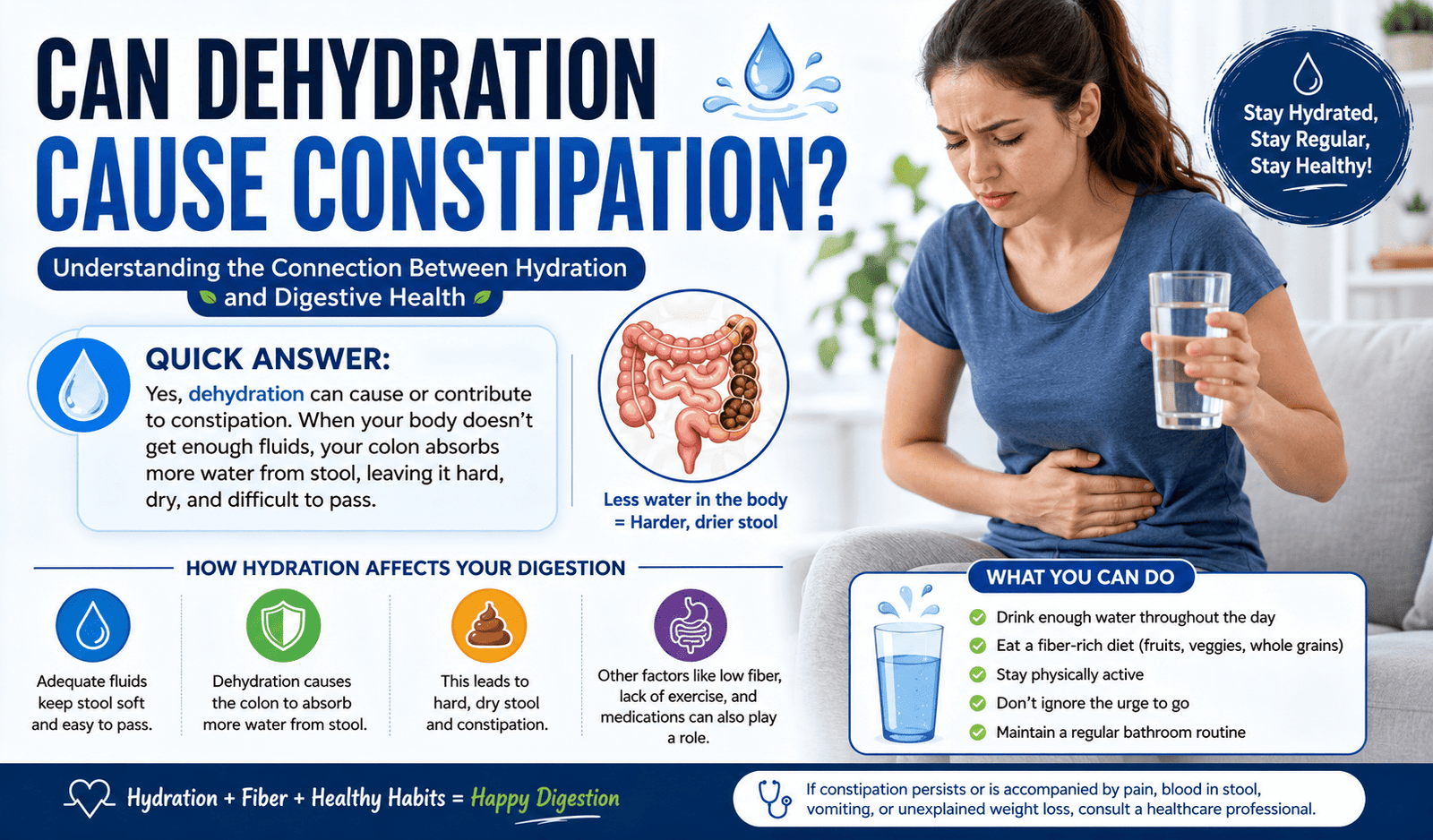
Yes, dehydration can cause or contribute to constipation. When your body does not get enough fluids, your colon may absorb more water from stool, leaving it harder, drier, and more difficult to pass. However, dehydration is only one possible cause of constipation. Low fiber intake, lack of physical activity, certain medications, changes in routine, and some medical conditions can also contribute.
Can Dehydration Cause Constipation?
Yes. Dehydration and constipation are closely connected, particularly when a person is not drinking enough fluids over a period of time. Your digestive system needs adequate fluid to help keep stool soft and easier to move through the intestines. When fluid intake is insufficient, the body conserves water, and the colon can absorb more water from waste as it passes through.
The result can be stool that is hard, dry, or lumpy. You may also need to strain more than usual or feel as though you have not completely emptied your bowels. The National Institute of Diabetes and Digestive and Kidney Diseases (NIDDK) specifically lists not drinking enough liquids or dehydration as a possible cause of constipation.
Constipation is common in the United States. NIDDK reports that about 16 out of 100 adults have symptoms of constipation, with the percentage increasing among adults age 60 and older.
Also Read : How Much Water Should I Drink for Healthy Digestion?
How Does Dehydration Lead to Constipation?
Your digestive system constantly moves food and waste through the gastrointestinal tract. As waste reaches the colon, water is naturally absorbed. This process helps form stool.
When you are adequately hydrated, there is generally enough fluid available for normal digestive processes. When you become dehydrated, your body attempts to conserve the water it has. More water may be absorbed from stool in the colon, which can make the stool firmer and harder to pass.
This does not mean every episode of constipation is caused by dehydration. Constipation usually has multiple possible causes, and some people may experience it even when they drink adequate fluids. Still, insufficient fluid intake can be an important contributing factor. Mayo Clinic also identifies inadequate fluid intake, low dietary fiber, and insufficient physical activity as lifestyle factors associated with constipation.
Also Read : What Causes Chronic Diarrhea?
What Does Dehydration Constipation Feel Like?
Constipation associated with inadequate fluid intake can feel similar to constipation caused by other factors. Common symptoms include hard or dry stools, difficulty passing stool, straining during a bowel movement, abdominal discomfort, bloating, and having fewer bowel movements than is normal for you.
NIDDK defines constipation using several possible symptoms, including fewer than three bowel movements per week, hard or lumpy stools, painful or difficult bowel movements, and a sensation that not all stool has passed.
It is important to remember that bowel frequency varies from person to person. Some healthy people naturally have bowel movements several times a day, while others may have them only several times a week. A change from your normal pattern, particularly when accompanied by hard or difficult-to-pass stool, may be more meaningful than a specific number alone.
Also Read : Why Am I Constipated Even When I Eat Fiber?
How Much Water Should You Drink to Prevent Constipation?
There is no single amount of water that is appropriate for every adult. Fluid needs can vary depending on factors such as body size, activity level, health status, climate, diet, and other individual circumstances. NIDDK recommends drinking enough water and other liquids to help fiber work effectively and to reduce the risk of dehydration.
Instead of focusing only on a fixed number of glasses, pay attention to your body’s fluid needs throughout the day. People who exercise, sweat heavily, spend time in hot weather, or lose fluids through illness may need more fluids than usual.
People with certain medical conditions may have fluid restrictions or specific hydration recommendations. If a healthcare professional has instructed you to limit fluids, follow that guidance rather than increasing your water intake on your own.
Also Read : Can Stress Cause Digestive Problems?
Can Drinking More Water Relieve Constipation?
Drinking enough fluids can help support softer stools, particularly when constipation is related to inadequate fluid intake. Water is especially important when you increase dietary fiber because fiber works best when there is enough fluid available.
NIDDK recommends increasing fiber and drinking plenty of water and other liquids as part of dietary approaches to constipation. Adults generally need about 22 to 34 grams of fiber per day depending on age and sex, although individual needs can vary.
However, drinking excessive amounts of water is not necessarily a solution for every type of constipation. If constipation is caused by medication, an underlying medical condition, very low physical activity, or another factor, hydration alone may not resolve the problem.
Also Read : What Foods Are Best for Gut Health?
Dehydration and Fiber: Why Both Matter
Hydration and dietary fiber work together when it comes to healthy bowel movements. Fiber adds bulk to stool, while adequate fluid helps support the movement and softness of that stool.
Good sources of dietary fiber include fruits, vegetables, whole grains, legumes, nuts, and seeds. NIDDK recommends increasing fiber gradually rather than making a sudden, dramatic change because a rapid increase may cause bloating or gas.
Adding a large amount of fiber without drinking enough fluid can actually make constipation feel worse for some people. MedlinePlus also notes that insufficient fluid intake when increasing fiber may worsen constipation.
For this reason, a balanced approach is generally more useful than concentrating on either water or fiber alone.
Also Read : How Can I Improve My Gut Health Naturally?
Other Causes of Constipation Besides Dehydration
Dehydration is only one potential contributor to constipation. A person can become constipated because of a diet that is low in fiber, insufficient physical activity, changes in daily routine, ignoring the urge to have a bowel movement, or certain medications.
Some medications and supplements associated with constipation include certain antacids, iron supplements, anticonvulsants, calcium channel blockers, diuretics, opioid pain medications, and some medications used for depression or Parkinson’s disease.
Medical conditions can also play a role. Constipation may be associated with conditions affecting the digestive tract, metabolism, hormones, the nervous system, or the muscles involved in bowel movements. Persistent constipation therefore should not automatically be blamed on dehydration.
Also Read : What Causes Bloating Every Day?
What Can You Do If You Are Constipated From Dehydration?
If you suspect inadequate fluid intake is contributing to occasional constipation, restoring normal hydration is a reasonable first step for most people who do not have a medical reason to restrict fluids. Drinking water and other appropriate fluids throughout the day can support normal stool consistency.
You can also focus on a fiber-rich eating pattern and increase fiber gradually. Fruits, vegetables, whole grains, beans, lentils, nuts, and seeds can help increase dietary fiber. Regular physical activity may also support bowel regularity. NIDDK recommends adequate fiber, plenty of fluids, regular physical activity, and establishing regular bowel habits as measures that can help prevent or relieve constipation.
It is also helpful to respond when you feel the urge to have a bowel movement rather than repeatedly delaying it. Establishing a consistent bathroom routine may help some people develop more regular bowel habits.
Also Read : Why Does My Stomach Hurt After Eating?
When Should You See a Doctor for Constipation?
Occasional constipation is common and is often temporary. However, constipation that persists despite self-care deserves medical attention, especially if it repeatedly returns or interferes with daily life.
Seek prompt medical evaluation if constipation occurs with rectal bleeding, blood in the stool, persistent or severe abdominal pain, vomiting, fever, inability to pass gas, unexplained weight loss, or other concerning symptoms. These symptoms can indicate a condition that requires more than simple hydration or dietary changes.
You should also talk with a healthcare professional if you have ongoing constipation or if you regularly need laxatives. Mayo Clinic cautions that inappropriate or excessive long-term laxative use can cause problems, and the appropriate treatment depends on the cause of constipation.
Also Read : Why do I feel tired after eating?
Can Dehydration Cause Constipation in Older Adults?
Yes. Older adults can be particularly vulnerable to constipation, and constipation becomes more common with age. NIDDK reports that approximately 33 out of 100 adults age 60 and older have symptoms of constipation.
Older adults may experience changes in thirst, activity level, diet, medications, and overall health that can affect bowel habits. Some medications commonly used by older adults can also contribute to constipation. Because hydration needs and medical conditions vary, older adults with persistent constipation should discuss appropriate fluid intake with a healthcare professional.
Also Read : Why do I feel full after eating small amounts?
Can Dehydration Cause Constipation During Exercise or Hot Weather?
It can. Physical activity and hot weather can increase fluid losses through sweating. If those fluids are not adequately replaced, dehydration can develop, potentially contributing to harder stools.
This is particularly relevant for people exercising outdoors, working in hot environments, or spending extended periods in high temperatures. Maintaining appropriate fluid intake based on activity and environmental conditions can support overall hydration and digestive health.
However, constipation after exercise or during hot weather may have multiple causes. Changes in diet, travel, altered bathroom routines, reduced fiber intake, or changes in normal activity can also affect bowel movements.
Also Read : How many times can esophageal dilatation be done?
The Bottom Line
Can dehydration cause constipation? Yes. Not drinking enough fluids can contribute to constipation by allowing stool to become harder and drier. But hydration is only one part of healthy bowel function.
For many people, the best approach combines adequate fluids, sufficient dietary fiber, regular physical activity, and healthy bathroom habits. If constipation persists or occurs with symptoms such as blood in the stool, severe abdominal pain, vomiting, fever, inability to pass gas, or unexplained weight loss, seek medical advice rather than assuming dehydration is the only cause.

Bloating often occurs after eating certain foods too quickly.
Frequently Asked Questions
1. Can dehydration cause constipation?
Yes. Dehydration can contribute to constipation because insufficient fluid intake may result in harder, drier stool that is more difficult to pass. NIDDK lists dehydration and not drinking enough liquids among potential causes of constipation.
2. Can drinking water help with constipation?
Yes, adequate fluid intake can help support softer stools and can help dietary fiber work effectively. However, water may not resolve constipation when another factor, such as medication or an underlying health condition, is responsible.
3. How does dehydration make poop hard?
When stool moves through the colon, the body naturally absorbs water from it. When you are dehydrated, your body may conserve available water, and stool can become harder, drier, and more difficult to pass.
Also Read : What are the early symptoms of esophageal stricture?
4. How much water should I drink for constipation?
There is no universal amount that works for everyone. Fluid requirements depend on factors such as age, body size, activity, health, diet, and climate. NIDDK recommends drinking enough water and other liquids to stay hydrated and help fiber work effectively.
5. Can drinking more water immediately relieve constipation?
Not necessarily. If dehydration is contributing to constipation, improving hydration may help, but the response varies. Constipation can have several causes, so persistent symptoms may require dietary, lifestyle, medication, or medical evaluation.
6. Can dehydration and low fiber cause constipation together?
Yes. Both inadequate fluid intake and insufficient dietary fiber can contribute to constipation. Increasing fiber gradually while maintaining adequate fluid intake can support healthier stool consistency and bowel movements.
7. Can dehydration cause constipation in children?
Dehydration can contribute to constipation in children, but constipation in children can have many possible causes. Parents and caregivers should consider the child’s age, diet, fluid intake, symptoms, and overall health and speak with a pediatric healthcare professional when symptoms are persistent or concerning.
8. Can dehydration cause constipation and bloating?
Yes. Constipation can cause bloating and abdominal discomfort, and dehydration may contribute to harder stool that is difficult to pass. However, bloating has many possible causes, so persistent or severe symptoms should be evaluated by a healthcare professional.
9. When is constipation a medical emergency?
Constipation requires urgent medical evaluation when it occurs with concerning symptoms such as severe or constant abdominal pain, vomiting, fever, inability to pass gas, rectal bleeding, blood in the stool, or unexplained weight loss.
10. What is the best way to prevent constipation?
Maintaining adequate hydration, eating enough fiber, staying physically active, responding to the urge to have a bowel movement, and maintaining regular bowel habits can help reduce the risk of constipation. If constipation keeps returning, identifying and treating the underlying cause with a healthcare professional is important.
Also Read : Can esophageal stricture heal naturally?
Medical Disclaimer: This article is intended for general health education and is not a substitute for personalized medical advice, diagnosis, or treatment. Fluid and dietary needs differ from person to person. If you have persistent constipation, significant symptoms, a chronic medical condition, or concerns about your hydration needs, consult a qualified healthcare professional.
Medically reviewed information sourced from trusted health organizations.
Reviewed by: Dzarro Editorial Team
Fact-checked using trusted medical and scientific sources.

Sandip Choudhary is a Health & Wellness Researcher and Content Creator specializing in sleep, digestive health, preventive wellness, and evidence-based health education. He has been creating online content and researching health-related topics for several years, focusing on translating complex medical information into practical guidance for everyday readers.
With a strong background in SEO and content strategy, Sandip ensures that every article is optimized for both search engines and real users. His goal is to provide reliable, clear, and helpful information that supports healthier living.
Disclaimer: The content published is for informational purposes only and is not a substitute for professional medical advice.
4 thoughts on “Can Dehydration Cause Constipation?”
Comments are closed.