
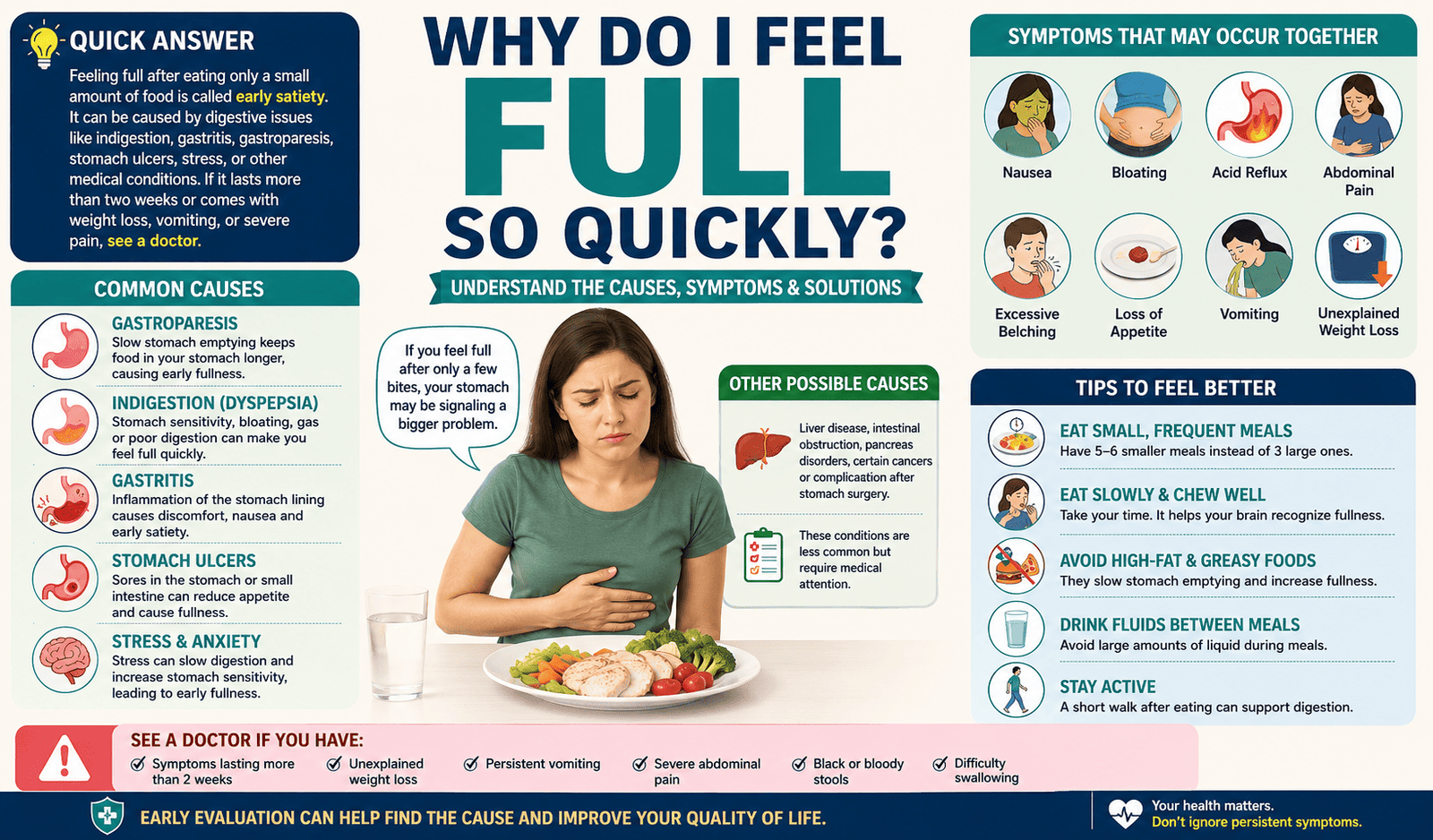
Why do I feel full so quickly? Feeling full after eating only a small amount of food is called early satiety. It happens when your stomach signals fullness much sooner than normal. While it can occasionally be caused by eating too fast or stress, persistent early satiety may be linked to digestive conditions such as gastritis, indigestion, gastroparesis, or stomach ulcers. If it lasts for more than two weeks or is accompanied by weight loss, vomiting, or severe abdominal pain, you should consult a healthcare provider.
Many people experience hunger before a meal, take only a few bites, and suddenly feel completely full. If this happens once in a while, it’s usually not a cause for concern. However, if you consistently struggle to finish normal-sized meals, it may affect your nutrition, energy levels, and overall health.
This article explains why do I feel full so quickly, the common causes, symptoms, diagnosis, treatments, and ways to improve your digestive health.
What Does Feeling Full Quickly Mean?
Feeling full quickly means you become satisfied after eating much less food than usual. The medical term for this symptom is early satiety. It is different from simply having a poor appetite because you may feel hungry before eating, but your stomach becomes full almost immediately after starting your meal.
Persistent early satiety can reduce your calorie and nutrient intake, which may eventually lead to fatigue, vitamin deficiencies, and unintended weight loss.
Also Read : Can Dehydration Cause Constipation?
Why Do I Feel Full So Quickly? Common Causes?
Gastroparesis (Slow Stomach Emptying)
Gastroparesis occurs when the stomach empties food more slowly than it should. Food remains in the stomach for longer, making you feel full after only a few bites.
Common symptoms include nausea, bloating, acid reflux, vomiting undigested food, and prolonged fullness after meals. People with diabetes have a higher risk of developing this condition because nerve damage can affect stomach function.
Functional Indigestion
Functional indigestion, also called dyspepsia, is one of the most common reasons people experience early fullness. The stomach may become overly sensitive or fail to relax properly during meals even when medical tests appear normal.
Symptoms often include upper abdominal discomfort, bloating, belching, mild nausea, and feeling full much sooner than expected.
Also Read : How Much Water Should I Drink for Healthy Digestion?
Gastritis
Gastritis is inflammation of the stomach lining. It can develop because of bacterial infection, long-term use of pain medications, excessive alcohol consumption, or chronic irritation.
An inflamed stomach becomes more sensitive, causing discomfort, nausea, burning sensations, and early satiety during meals.
Stomach Ulcers
Peptic ulcers are sores that develop in the lining of the stomach or upper small intestine. Besides stomach pain, ulcers may reduce appetite and create an uncomfortable feeling of fullness after eating only a small amount of food.
Also Read : What Causes Chronic Diarrhea?
Stress and Anxiety
Your digestive system and brain are closely connected. Chronic stress and anxiety can slow digestion, increase stomach sensitivity, and interfere with normal appetite regulation. Many people notice their digestive symptoms become worse during emotionally stressful periods.
Less Common but Serious Causes
Although less common, feeling full quickly may sometimes be associated with more serious medical conditions such as liver disease, abdominal fluid buildup, intestinal blockage, pancreatic disorders, certain stomach cancers, or complications following stomach surgery.
These conditions require prompt medical evaluation, especially if symptoms are persistent or worsening.
Also Read : Why Am I Constipated Even When I Eat Fiber?
Symptoms That May Occur Together
People experiencing early satiety often notice additional digestive symptoms. These may include bloating after meals, nausea, excessive belching, upper abdominal pain, acid reflux, reduced appetite, vomiting, and unexplained weight loss.
Having several of these symptoms together increases the importance of seeking medical advice.
Is Feeling Full Quickly Ever Normal?
Yes. Temporary early fullness can happen in healthy individuals. Common reasons include eating very quickly, drinking large amounts of water before meals, consuming unusually large or fatty meals, increasing fiber intake suddenly, or recovering from a stomach virus.
If symptoms disappear within a day or two, they are usually not a sign of a chronic digestive disorder.
Also Read : Can Stress Cause Digestive Problems?
When Should You See a Doctor?
You should make an appointment with your healthcare provider if you feel full quickly every day for more than two weeks, lose weight without trying, have persistent nausea or vomiting, experience severe abdominal pain, notice black or bloody stools, or have difficulty swallowing.
These symptoms may indicate an underlying condition that requires diagnosis and treatment.
Also Read : What Foods Are Best for Gut Health?
How Doctors Diagnose Early Satiety?
Doctors begin by discussing your symptoms, eating habits, medical history, and recent weight changes. A physical examination is usually followed by additional testing if necessary.
Depending on your symptoms, your provider may recommend blood tests, an upper endoscopy, gastric emptying studies, testing for H. pylori infection, or imaging studies to identify digestive abnormalities.
The goal is to determine the underlying cause rather than simply treating the symptom.
Also Read : How Can I Improve My Gut Health Naturally?
How to Stop Feeling Full So Quickly?
Treatment depends on the underlying condition, but many people improve with lifestyle and dietary changes.
Eat Smaller Meals More Often
Instead of eating three large meals, try eating five or six smaller meals throughout the day. Smaller portions reduce pressure on the stomach while helping you consume enough calories and nutrients.
Eat Slowly
Eating slowly gives your stomach and brain enough time to coordinate normal digestion. Thorough chewing may also reduce bloating and improve comfort after meals.
Also Read : What Causes Bloating Every Day?
Reduce High-Fat Foods
Greasy and fried foods naturally slow stomach emptying. Choosing lighter meals with lean protein and whole grains may reduce symptoms, especially if delayed digestion is contributing to early fullness.
Drink Fluids Between Meals
Large amounts of water during meals can fill the stomach before you’ve eaten enough food. Staying hydrated throughout the day rather than during meals may help some people eat more comfortably.
Also Read : Why Does My Stomach Hurt After Eating?
Stay Physically Active
A gentle walk after eating can encourage healthy digestion and reduce feelings of bloating. Even 10 to 15 minutes of light movement may be beneficial.
Best Foods for Early Satiety
People with early fullness often tolerate soft, nutrient-dense foods better than large heavy meals. Good choices include oatmeal, rice, potatoes, Greek yogurt, eggs, chicken, fish, cooked vegetables, bananas, and smoothies with adequate protein.
Also Read : Why do I feel tired after eating?
Keeping a food diary can help identify foods that improve or worsen your symptoms.
Foods That May Make Symptoms Worse
Certain foods commonly increase bloating and fullness. These include fried foods, high-fat fast food, carbonated beverages, excessive alcohol, very spicy foods, and oversized restaurant meals.
Limiting these foods may improve digestive comfort.
Also Read : Why do I feel full after eating small amounts?
Can Feeling Full Quickly Cause Weight Loss?
Yes. If you regularly eat much less than your body needs, you may gradually lose weight without intending to. Inadequate nutrition can also contribute to fatigue, muscle loss, weakened immunity, and vitamin deficiencies.
This is why persistent early satiety should never be ignored.
Also Read : How many times can esophageal dilatation be done?
Tips to Prevent Early Fullness
Maintaining healthy digestive habits can reduce recurring symptoms. Eating meals on a regular schedule, avoiding overeating, managing stress, staying active, controlling blood sugar if you have diabetes, and treating chronic digestive conditions early can all support better stomach function.
Also Read : Can esophageal stricture heal naturally?
Conclusion
If you’ve been asking, “Why do I feel full so quickly?”, the answer is that early satiety is a symptom with many possible causes. While occasional fullness after small meals may result from eating habits or stress, persistent symptoms may indicate digestive disorders that deserve medical attention. Early diagnosis and appropriate treatment can help restore healthy eating, improve nutrition, and prevent long-term complications.
Also Read : What are the early symptoms of esophageal stricture?
Frequently Asked Questions (FAQs)
1. Why do I feel full after only a few bites?
You may be experiencing early satiety, which causes your stomach to feel full much sooner than normal. Digestive conditions, stress, or slow stomach emptying are common causes.
2. Is feeling full quickly dangerous?
Occasional episodes are usually harmless, but persistent early fullness accompanied by weight loss, vomiting, or severe pain should be evaluated by a healthcare professional.
3. Can anxiety cause early satiety?
Yes. Anxiety and chronic stress can affect the gut-brain connection, slow digestion, and increase stomach sensitivity, making you feel full sooner.
4. What is the difference between early satiety and loss of appetite?
Loss of appetite means you do not feel hungry, while early satiety means you become full shortly after beginning to eat despite feeling hungry initially.
5. Can diabetes make me feel full quickly?
Yes. Diabetes can damage the nerves that control stomach muscles, leading to gastroparesis and delayed stomach emptying.
6. Which foods are easiest to digest when I feel full quickly?
Soft, nutrient-rich foods such as oatmeal, yogurt, rice, eggs, bananas, chicken, and cooked vegetables are often easier to tolerate.
7. Can drinking too much water before meals cause fullness?
Yes. Drinking large amounts of liquid immediately before eating can fill your stomach and reduce the amount of food you can comfortably consume.
8. How long should early satiety last before seeing a doctor?
If symptoms continue for more than two weeks or interfere with normal eating, you should schedule a medical evaluation.
9. Can gastritis cause early fullness?
Yes. Inflammation of the stomach lining can make your stomach more sensitive, leading to nausea, discomfort, and feeling full after small meals.
10. Is early satiety treatable?
Yes. In many cases, treating the underlying cause along with dietary and lifestyle changes can significantly improve or completely resolve early satiety.

Excess gas can cause abdominal discomfort and pressure.
Medical Disclaimer: This article is intended for general health education and is not a substitute for personalized medical advice, diagnosis, or treatment. Fluid and dietary needs differ from person to person. If you have persistent constipation, significant symptoms, a chronic medical condition, or concerns about your hydration needs, consult a qualified healthcare professional.
Medically reviewed information sourced from trusted health organizations.
Reviewed by: Dzarro Editorial Team
Fact-checked using trusted medical and scientific sources.

Sandip Choudhary is a Health & Wellness Researcher and Content Creator specializing in sleep, digestive health, preventive wellness, and evidence-based health education. He has been creating online content and researching health-related topics for several years, focusing on translating complex medical information into practical guidance for everyday readers.
With a strong background in SEO and content strategy, Sandip ensures that every article is optimized for both search engines and real users. His goal is to provide reliable, clear, and helpful information that supports healthier living.
Disclaimer: The content published is for informational purposes only and is not a substitute for professional medical advice.
3 thoughts on “Why Do I Feel Full So Quickly?”
Comments are closed.