
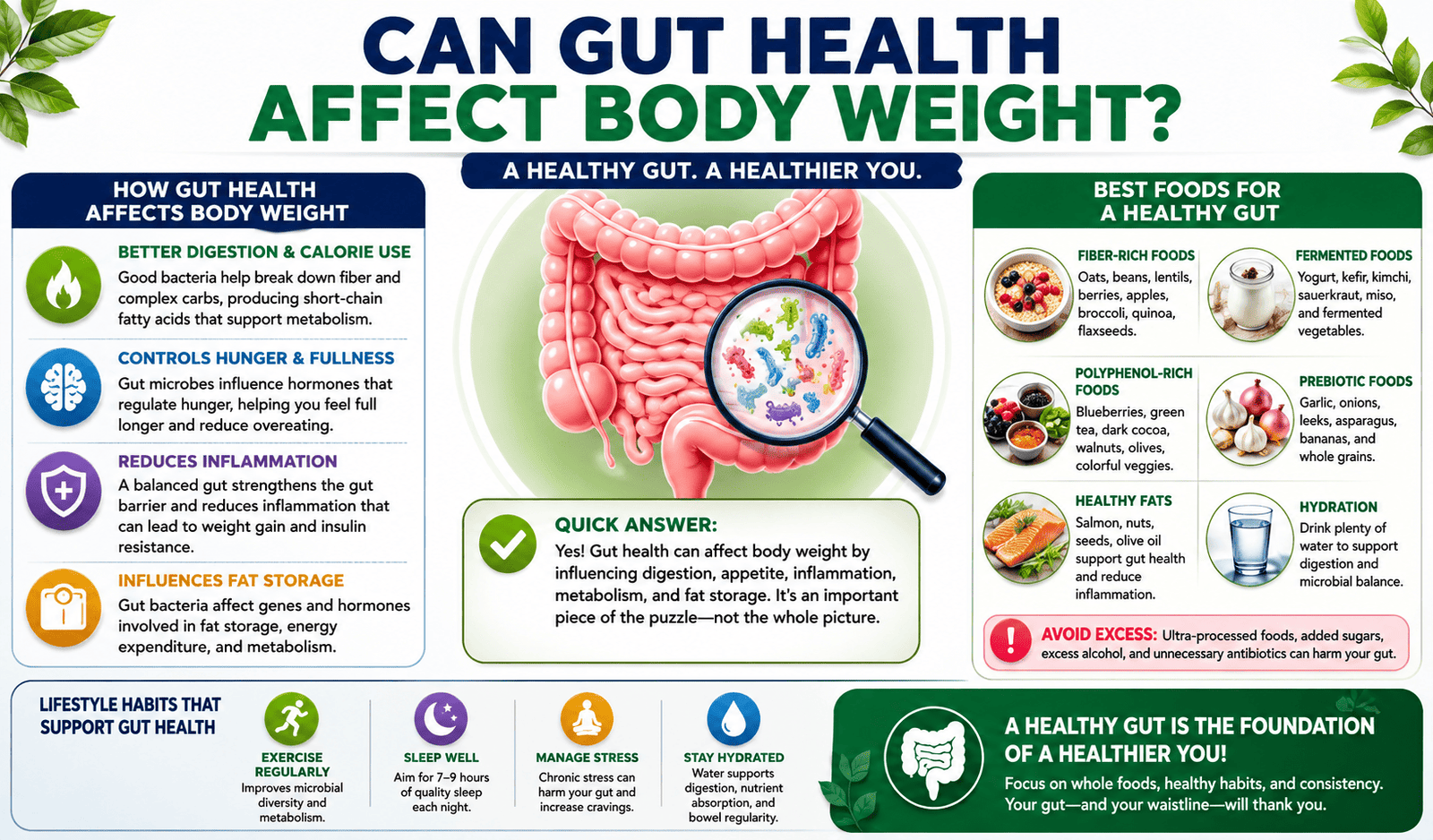
Yes, gut health can affect body weight. The trillions of bacteria living in your digestive system influence how your body digests food, absorbs nutrients, regulates appetite, controls inflammation, and manages metabolism. While gut health is not the only cause of weight gain or weight loss, maintaining a healthy gut microbiome may support healthier weight management alongside a balanced diet, regular exercise, quality sleep, and stress management.
Introduction
If you’ve ever wondered why two people can eat similar foods yet experience completely different changes in body weight, the answer may partly lie inside their gut. Your digestive tract is home to trillions of microorganisms collectively known as the gut microbiome. These bacteria, fungi, and other microbes do much more than help digest food—they communicate with your immune system, produce essential nutrients, influence hormones that control hunger, and even affect how efficiently your body stores fat.
In recent years, scientists have discovered a strong connection between gut health and obesity, making the microbiome one of the most exciting areas of nutrition and metabolic research. However, it’s important to understand that improving gut health is not a miracle weight-loss solution. Instead, it is one important factor that can support long-term, sustainable weight management.
Also Read : Best high protein breakfast for weight loss?
What Is Gut Health?
Gut health refers to the balance and proper functioning of the microorganisms living throughout your digestive system, particularly in the large intestine. A healthy gut contains hundreds of different bacterial species that work together to digest fiber, produce vitamins, strengthen the intestinal lining, protect against harmful bacteria, and regulate immune function.
Rather than having one “perfect” microbiome, healthy individuals usually have greater microbial diversity. This means a wide variety of beneficial bacteria coexist in balance. Reduced microbial diversity has frequently been associated with obesity, type 2 diabetes, and other metabolic disorders.
Also Read : How to stop emotional eating?
Can Gut Health Affect Body Weight?
The simple answer is yes. Your gut microbiome influences body weight through several biological processes that affect metabolism, appetite, fat storage, and inflammation.
Gut Bacteria Affect How You Digest Food
Certain beneficial bacteria help break down dietary fiber and complex carbohydrates that your body cannot digest on its own. During this process, they produce compounds called short-chain fatty acids (SCFAs), including butyrate, acetate, and propionate.
These compounds nourish the cells lining your colon, improve insulin sensitivity, reduce inflammation, and help regulate energy metabolism. Although SCFAs provide a small amount of energy, their overall effect appears to support better metabolic health rather than promote weight gain.
Also Read : What is metabolic health?
Your Gut Controls Hunger and Fullness
Your digestive system constantly communicates with your brain through the gut-brain axis. Beneficial bacteria influence hormones responsible for hunger and satiety, including GLP-1, peptide YY, and ghrelin.
When your gut microbiome is healthy, these hormones may work more effectively, helping you feel satisfied after meals and reducing unnecessary overeating. This is one reason diets rich in fiber often make weight management easier without requiring extreme calorie restriction.
Poor Gut Health May Increase Inflammation
An unhealthy gut, often called dysbiosis, can weaken the protective barrier of your intestines. This may allow harmful bacterial substances to enter the bloodstream, triggering chronic low-grade inflammation throughout the body.
Persistent inflammation has been linked to insulin resistance, increased fat storage, and difficulty maintaining a healthy body weight. While inflammation alone does not cause obesity, it can make weight regulation significantly more challenging.
Also Read : Can stress cause belly fat?
The Microbiome Influences Fat Storage
Research suggests that gut bacteria also affect bile acids, lipid metabolism, and genes involved in storing body fat. Some bacterial communities appear to promote healthier energy expenditure, while others are associated with increased body fat accumulation.
Scientists continue studying this relationship, but one important takeaway is clear: there is no single “fat bacteria.” Instead, overall microbial balance appears to matter most.
What Does Research Say?
Human studies consistently show meaningful differences between the gut microbiomes of people living with obesity and those maintaining healthier body weights. Individuals with obesity often have lower bacterial diversity and different microbial compositions.
Animal research provides even stronger evidence. In laboratory studies, transferring gut bacteria from obese donors into germ-free mice resulted in greater fat gain compared to bacteria from lean donors. Although humans are far more complex than animal models, these findings suggest that gut microbes play a genuine role in metabolism.
Researchers also emphasize that body weight depends on many interacting factors, including genetics, physical activity, sleep quality, medications, hormones, stress, and overall diet. Gut health is an important contributor—not the only cause.
Also Read : What are signs of hormonal weight gain?
Signs Your Gut May Be Unhealthy
Poor gut health doesn’t always produce obvious symptoms, but several warning signs may indicate an imbalance in your digestive system. Frequent bloating, excessive gas, constipation, diarrhea, irregular bowel movements, digestive discomfort, unexplained fatigue, and recurring food sensitivities may all be associated with an unhealthy gut microbiome.
If these symptoms persist, it’s important to consult a healthcare professional rather than self-diagnose based on internet information alone.
Also Read : Why am I always hungry?
Best Foods for Gut Health and Weight Management
The healthiest way to improve your gut microbiome is through consistent dietary habits rather than detoxes or restrictive cleanses.
Eat More Fiber Every Day
Fiber is the primary food source for beneficial gut bacteria. Unfortunately, most American adults consume far less fiber than recommended.
Excellent high-fiber foods include oats, beans, lentils, chickpeas, apples, berries, broccoli, Brussels sprouts, sweet potatoes, quinoa, flaxseeds, chia seeds, and leafy green vegetables. Increasing fiber gradually while drinking enough water can improve digestion and support microbial diversity.
Include Fermented Foods
Fermented foods naturally contain beneficial microorganisms that may help support a healthier gut environment. Regularly eating Greek yogurt with live cultures, kefir, kimchi, sauerkraut, miso, and fermented vegetables can contribute to better digestive health.
These foods work best as part of an overall healthy eating pattern rather than as a standalone solution.
Also Read : Does drinking water help lose weight?
Choose Polyphenol-Rich Foods
Polyphenols are natural plant compounds that beneficial bacteria love. Foods such as blueberries, strawberries, green tea, walnuts, dark cocoa, olives, and colorful vegetables help nourish the microbiome while providing antioxidants that support overall health.
A diet filled with a variety of colorful plant foods is one of the best strategies for improving gut diversity.
Can Probiotics Help You Lose Weight?
Many probiotic supplements claim to promote rapid weight loss, but the scientific evidence is more balanced.
Certain probiotic strains have shown modest improvements in body weight, waist circumference, and metabolic health in some clinical studies. However, results vary depending on the bacterial strain, dosage, and the individual’s existing microbiome.
For most healthy adults, eating fiber-rich whole foods and fermented foods is likely more beneficial than relying solely on probiotic supplements. If you’re considering a daily probiotic, discuss it with your healthcare provider, especially if you have digestive disorders or a weakened immune system.
Also Read : Best morning habits for weight loss?
Foods That May Harm Gut Health
Your microbiome responds quickly to dietary choices. Diets high in ultra-processed foods, refined sugars, and low in fiber may reduce beneficial bacteria over time. Excessive alcohol consumption and unnecessary antibiotic use can also temporarily disrupt microbial balance.
Rather than eliminating every unhealthy food, focusing on dietary variety and whole foods is generally a more sustainable approach for improving gut health.
A Gut-Friendly Daily Meal Example
A healthy gut-supporting eating pattern might begin with Greek yogurt topped with blueberries, oats, and flaxseeds for breakfast. Lunch could include grilled chicken, quinoa, spinach, roasted vegetables, and olive oil. An afternoon snack of an apple with walnuts provides both fiber and healthy fats. Dinner featuring baked salmon, lentils, broccoli, and sweet potatoes delivers protein, omega-3 fatty acids, and prebiotic fiber that nourish beneficial gut bacteria.
This type of balanced eating pattern supports both digestive health and healthy weight management.
Also Read : What causes slow metabolism?
Lifestyle Habits That Improve Gut Health
Food is only one part of the equation. Your daily lifestyle has a significant impact on both your microbiome and metabolism.
Getting seven to nine hours of quality sleep each night helps regulate hormones involved in hunger and blood sugar control. Regular physical activity improves microbial diversity and supports healthy insulin sensitivity. Managing chronic stress through meditation, deep breathing, walking, or other relaxation techniques may also positively influence the gut-brain connection. Staying adequately hydrated further supports healthy digestion and regular bowel movements.
Together, these habits create an environment where beneficial gut bacteria can thrive.
Also Read : Can poor sleep cause weight gain?
Is Gut Health the Secret to Weight Loss?
Gut health is not a magic solution for losing weight, but it is a powerful supporting factor. A healthy microbiome can improve digestion, enhance feelings of fullness, reduce chronic inflammation, and support healthier metabolic function. When combined with nutritious eating, regular exercise, quality sleep, and consistent healthy habits, improving gut health may make maintaining a healthy weight more achievable.
The goal should not be chasing the perfect microbiome, but building sustainable habits that benefit your entire body.
Also Read : Why is belly fat hard to lose?
Conclusion
So, can gut health affect body weight? Absolutely. Your gut microbiome influences how your body processes food, regulates appetite, manages inflammation, and supports metabolism. While it won’t replace healthy nutrition or physical activity, caring for your gut can become an important part of long-term weight management and overall wellness.
The most effective strategy is surprisingly simple: eat a wide variety of fiber-rich plant foods, include fermented foods regularly, stay physically active, sleep well, and reduce chronic stress. These habits support both a healthier gut and a healthier body.
Also Read : What foods burn belly fat naturally?
Frequently Asked Questions (FAQs)
1. Can gut health really affect body weight?
Yes. A healthy gut microbiome influences metabolism, appetite, inflammation, and nutrient absorption, all of which can contribute to healthy weight regulation.
2. What is the gut microbiome?
The gut microbiome is the community of trillions of bacteria and other microorganisms living in your digestive system that support digestion, immunity, and metabolic health.
3. Can poor gut health cause weight gain?
Poor gut health may contribute to weight gain by affecting hunger hormones, increasing inflammation, and altering how the body stores fat, but it is usually one of several contributing factors.
4. Which foods improve gut health the most?
High-fiber foods like beans, oats, berries, vegetables, and fermented foods such as yogurt, kefir, kimchi, and sauerkraut are excellent choices for supporting gut health.
5. Do probiotics help with weight loss?
Some probiotic strains may provide modest benefits for weight management, but they work best alongside a healthy diet rather than replacing it.
6. How long does it take to improve gut health?
Positive changes may begin within days of eating more fiber, but lasting improvements typically require consistent healthy habits over several weeks or months.
7. Does fiber feed good gut bacteria?
Yes. Fiber acts as a prebiotic, providing nourishment for beneficial bacteria that produce compounds supporting digestive and metabolic health.
8. What are common signs of an unhealthy gut?
Bloating, gas, constipation, diarrhea, irregular bowel movements, digestive discomfort, and unexplained fatigue may all indicate that your gut needs attention.
9. Can stress affect gut health and body weight?
Yes. Chronic stress can disrupt the gut-brain connection, influence appetite hormones, and negatively impact both digestive health and weight management.
10. What is the best natural way to support gut health?
The best approach includes eating a diverse, fiber-rich diet, consuming fermented foods, exercising regularly, sleeping seven to nine hours, managing stress, and staying hydrated.

Healthy eating habits improve metabolism over time.
Medical Disclaimer: This article is intended for general educational purposes and does not replace individualized medical, nutritional, or mental health advice. If you are experiencing recurrent binge eating, loss of control around food, severe distress, or symptoms of an eating disorder, speak with a qualified healthcare professional.
Medically reviewed information sourced from trusted health organizations.
Reviewed by: Dzarro Editorial Team
Fact-checked using trusted medical and scientific sources.

Sandip Choudhary is a Health & Wellness Researcher and Content Creator specializing in sleep, digestive health, preventive wellness, and evidence-based health education. He has been creating online content and researching health-related topics for several years, focusing on translating complex medical information into practical guidance for everyday readers.
With a strong background in SEO and content strategy, Sandip ensures that every article is optimized for both search engines and real users. His goal is to provide reliable, clear, and helpful information that supports healthier living.
Disclaimer: The content published is for informational purposes only and is not a substitute for professional medical advice.
3 thoughts on “Can gut health affect body weight?”
Comments are closed.