
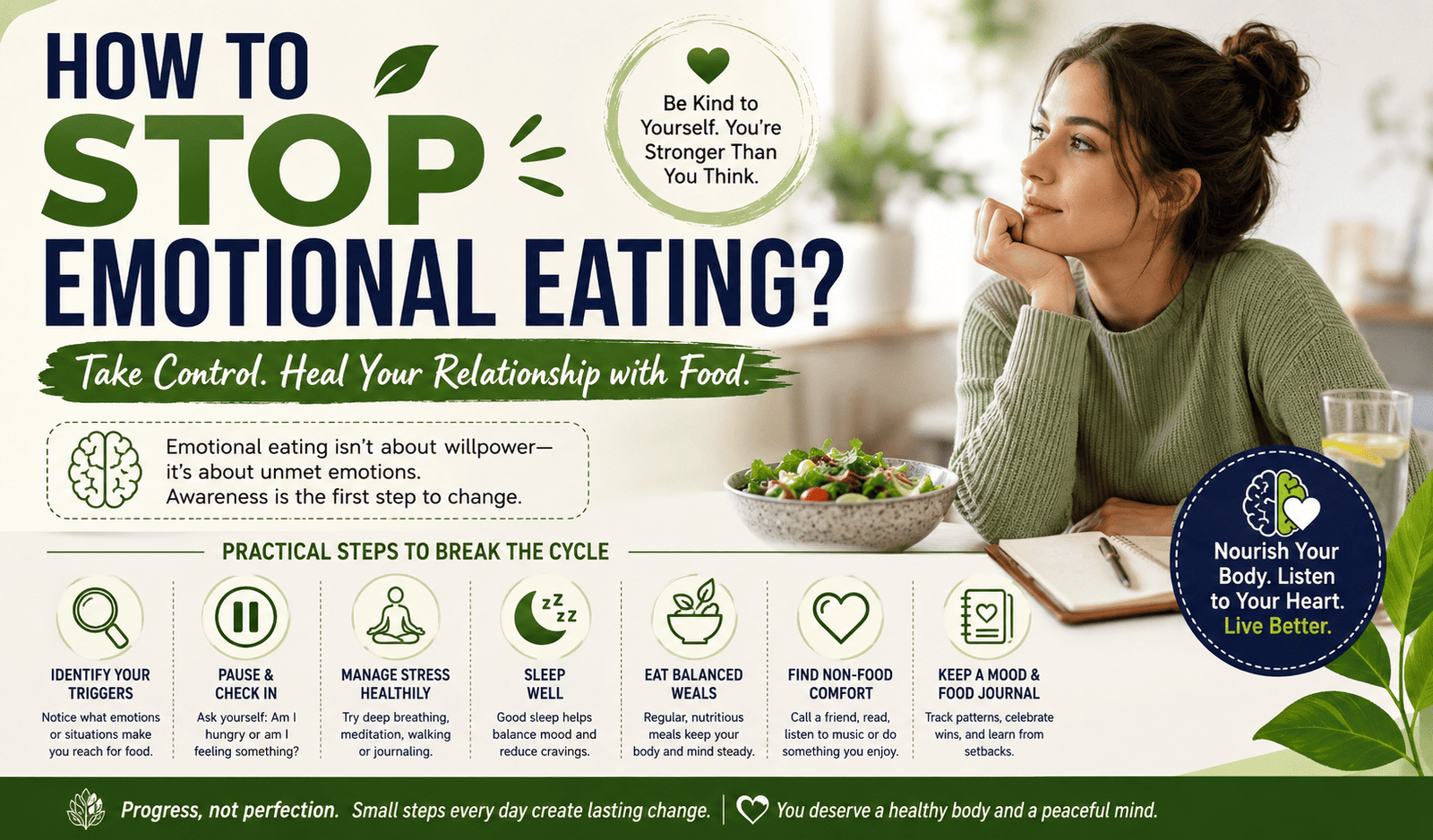
To stop emotional eating, first identify the emotions and situations that trigger the urge to eat, then create a short pause between the feeling and the food. Ask yourself whether you are physically hungry or emotionally seeking comfort. Managing stress, getting enough sleep, eating balanced meals regularly, keeping a food-and-mood journal, practicing mindful eating, finding non-food ways to cope with difficult emotions, and avoiding overly restrictive diets can help break the emotional eating cycle. If emotional eating feels uncontrollable, happens frequently, or involves binge eating, guilt, or loss of control, consider speaking with a qualified healthcare professional or mental health provider.
What Is Emotional Eating?
Emotional eating is eating in response to emotions rather than physical hunger. People may reach for food when they feel stressed, bored, lonely, sad, angry, anxious, tired, or overwhelmed. Food can temporarily provide comfort or distraction, which can make the behavior feel rewarding even when the body does not actually need additional calories.
Emotional eating is common and does not mean that you lack willpower. In many cases, eating becomes a learned coping response. When a particular emotion repeatedly becomes associated with a certain food or eating situation, the brain can begin to create an automatic connection between the emotion and the behavior. Mayo Clinic notes that everyday stressors, fatigue, relationship problems, money concerns, and other difficult experiences can contribute to emotional eating.
The goal is not necessarily to eliminate every instance of emotional eating. Food is naturally connected to celebrations, comfort, memories, and social experiences. A healthier goal is to recognize when emotions are driving your eating and develop additional ways to respond to those emotions.
Also Read : What is metabolic health?
How Can You Tell If You Are Emotionally Eating?
One of the first steps in learning how to stop emotional eating is understanding the difference between physical hunger and emotional hunger. Physical hunger usually develops gradually and can be satisfied by a variety of foods. Emotional hunger may appear suddenly and can create a strong desire for a particular comfort food.
Emotional hunger may also continue after you are physically full. You might find yourself eating while distracted, eating much faster than usual, or feeling guilt or shame afterward. Mayo Clinic Health System describes emotional hunger as something that can arise suddenly, involve specific cravings, and remain unsatisfied even after eating.
However, these signs are not a diagnostic test. Hunger and eating behavior can be influenced by many factors, including sleep, medications, meal timing, stress, and health conditions. The purpose of recognizing these patterns is to increase awareness rather than judge yourself.
Also Read : Can stress cause belly fat?
Identify Your Emotional Eating Triggers
You cannot effectively change a habit if you do not understand what activates it. Start paying attention to what happens immediately before you feel the urge to eat when you are not physically hungry.
For example, you may notice that you snack after a stressful workday, eat when you are bored at night, reach for sweets after an argument, or continue eating when you feel lonely. Some people may also eat in response to positive emotions, such as celebrating an achievement or enjoying a social occasion. Emotional eating is not limited to negative feelings.
A simple food-and-mood journal can help you identify patterns. Record when you ate, what you ate, how hungry you were, and what you were feeling immediately beforehand. You do not need to count every calorie. The purpose is to understand the connection between emotions, situations, cravings, and eating behavior. NIDDK and Mayo Clinic both recommend tracking eating and emotional patterns as a way to recognize triggers.
Also Read : What are signs of hormonal weight gain?
Pause Before Giving In to a Craving
When an emotional craving appears, you do not have to immediately decide whether you can or cannot eat. Instead, create a short pause.
Take a few slow breaths and ask yourself, “What am I feeling right now?” Then ask, “Am I physically hungry, or am I trying to change how I feel?”
This pause does not have to be long. Even a few minutes can help you move from an automatic reaction to a conscious decision. You might discover that you are stressed, exhausted, lonely, frustrated, or simply bored.
If you are physically hungry, eating is appropriate. If the urge is primarily emotional, you can experiment with another response first. This approach avoids turning eating into a battle of willpower.
Also Read : Why am I always hungry?
Find Other Ways to Manage Stress
Stress is one of the most common contributors to emotional eating. When food becomes your primary way of calming yourself, it can be useful to build a larger collection of stress-management strategies.
A short walk, deep breathing, meditation, stretching, listening to music, talking with a friend, reading, taking a shower, or spending time outdoors may provide another way to respond to stress. NIDDK recommends stress-relieving activities, adequate sleep, hobbies, and social connection as part of healthy lifestyle habits.
The best strategy is one you are actually willing to use. You do not need a complicated wellness routine. A 10-minute walk or phone call with someone you trust may be more useful than an elaborate plan you never follow.
Also Read : Does drinking water help lose weight?
Do Not Skip Meals to Compensate
A common mistake after emotional eating is trying to compensate by severely restricting food the next day. This can create another cycle: overeating, guilt, restriction, intense hunger, and then another episode of overeating.
Instead of responding to one episode by drastically cutting calories, return to regular, balanced meals. A sustainable eating pattern generally includes nutritious foods such as vegetables, fruits, whole grains, protein foods, and appropriate sources of dairy or fortified alternatives.
Mayo Clinic also cautions that excessive restriction can increase cravings. Allowing reasonable variety and satisfying portions may make it easier to maintain healthy eating habits over time.
Also Read : Best morning habits for weight loss?
Practice Mindful Eating
Mindful eating means paying attention to the experience of eating rather than automatically consuming food while distracted. Sit down when possible, slow your pace, notice the taste and texture of your food, and pay attention to your body’s signals of hunger and fullness.
Try eating without television, scrolling, or other distractions when practical. This can make it easier to recognize how much you are eating and whether you are still hungry. NIDDK recommends eating meals at a table and reducing distractions to help prevent mindless eating.
Mindful eating does not mean judging yourself for choosing dessert or another favorite food. It means becoming more aware of your choices so that food becomes a conscious experience rather than an automatic response to emotion.
Also Read : What causes slow metabolism?
Get Enough Sleep
Poor sleep can make emotional eating more difficult to manage. When you are exhausted, you may have less energy for meal planning, physical activity, and emotional regulation. NIDDK notes that insufficient sleep is associated with higher body weight and may influence appetite and desire for highly palatable foods.
Try to establish a consistent sleep routine and make adequate sleep part of your overall approach to managing emotional eating. If you regularly have trouble sleeping despite making healthy changes, talk with a healthcare professional about possible causes.
Also Read : Can poor sleep cause weight gain?
Make Your Environment Work for You
Your surroundings can influence eating behavior. If certain foods repeatedly trigger automatic eating, consider changing how easily accessible they are. Keep nutritious snacks available and avoid storing large quantities of foods that you tend to eat automatically.
This does not mean you need to completely ban your favorite foods. Strict food rules can sometimes increase cravings and make eating feel more restrictive. Instead, focus on creating an environment where balanced choices are convenient and highly tempting foods are not always immediately available. Mayo Clinic and NIDDK both recommend making healthier choices easier and being thoughtful about food availability.
Also Read : Why is belly fat hard to lose?
Address the Emotion Instead of Only the Food
Food can temporarily distract you from an uncomfortable emotion, but it does not resolve the underlying problem. If you repeatedly eat when you feel lonely, for example, the longer-term solution may involve improving social connection. If stress at work triggers eating, you may need strategies for managing workload, boundaries, or recovery time.
Try naming the emotion instead of immediately trying to eliminate it. Saying “I am stressed,” “I feel lonely,” or “I am disappointed” can help create awareness of what is actually happening. From there, ask what you need.
Sometimes the answer may genuinely be food. Other times, you may need rest, connection, reassurance, movement, relaxation, or a conversation.
Also Read : What foods burn belly fat naturally?
Stop the Guilt-and-Restriction Cycle
Feeling guilty after emotional eating can make the cycle worse. You may tell yourself that you have failed, promise to follow an extremely restrictive diet tomorrow, and then become increasingly preoccupied with food.
Instead, treat an episode as information. Ask what happened before it. Were you stressed? Had you slept poorly? Had you skipped meals? Were you dealing with an argument or difficult situation?
Mayo Clinic recommends learning from setbacks, forgiving yourself, and returning to healthier habits rather than allowing one episode to derail your progress.
Progress does not require perfect eating. It requires becoming better at recognizing patterns and responding to them.
Also Read : How to boost metabolism naturally?
When Should You Get Professional Help?
Occasional emotional eating is not necessarily a sign of an eating disorder. However, professional support may be appropriate if you frequently feel unable to control your eating, regularly eat unusually large amounts in a short period, experience significant distress about eating, or frequently experience guilt and shame surrounding food.
A mental health professional can help you explore emotional triggers and develop healthier coping strategies. Psychotherapy, including cognitive behavioral approaches, can help people identify problematic thoughts and behaviors and develop better coping and problem-solving skills.
If emotional eating is associated with an eating disorder, treatment may involve psychotherapy, nutritional counseling, medical monitoring, and, in some cases, medication depending on the condition. NIMH emphasizes that eating disorders can be treated successfully and that early detection and treatment are important.
Also Read : Why am I gaining weight without eating more?
A Simple Way to Start Today
If you are wondering how to stop emotional eating, start with one change rather than trying to completely transform your diet. For the next several days, notice when you want to eat outside of normal meals and ask yourself what you are feeling.
Then pause, identify the trigger, and choose one alternative coping strategy before deciding whether to eat. If you are genuinely hungry, eat without guilt. If you are not hungry, experiment with another activity and see whether the craving changes.
Over time, this process can help weaken the automatic connection between difficult emotions and food. The objective is not perfection. It is developing enough awareness and flexibility that food is no longer your only coping mechanism.

A balanced diet supports long-term weight loss goals.
Final Thoughts
Learning how to stop emotional eating starts with understanding that the behavior is often about more than food. Stress, boredom, loneliness, fatigue, anxiety, habits, and difficult life experiences can all influence eating behavior.
Rather than relying solely on willpower, focus on identifying triggers, creating a pause, eating regular balanced meals, managing stress, sleeping adequately, practicing mindful eating, and finding healthier ways to meet emotional needs. If you feel unable to control your eating or suspect an eating disorder, professional support can make a meaningful difference.
Frequently Asked Questions
1. How do I stop emotional eating immediately?
When an emotional craving appears, pause before eating and ask whether you are physically hungry or emotionally seeking comfort. Identify the emotion, take a few slow breaths, and try a non-food activity such as walking, calling someone, listening to music, or relaxing. If you are genuinely hungry, eat rather than forcing yourself to ignore your body’s needs.
2. Why do I keep eating when I am not hungry?
You may be using food to cope with emotions, stress, boredom, loneliness, fatigue, or established habits. Emotional eating can become automatic when certain feelings repeatedly become associated with eating. Tracking your mood and eating patterns can help reveal your personal triggers.
3. What is the difference between emotional hunger and physical hunger?
Physical hunger generally develops gradually and can be satisfied by different foods. Emotional hunger may appear suddenly, create a strong desire for specific foods, and continue even after you are full. These differences are useful clues, but they are not a medical diagnosis.
4. Can stress cause emotional eating?
Yes. Stress can contribute to emotional eating, particularly when food becomes a convenient way to temporarily soothe or distract from uncomfortable feelings. Developing alternative stress-management strategies may help reduce this pattern.
5. Does skipping meals help stop emotional eating?
Usually, skipping meals is not a good long-term strategy. Excessive restriction can increase hunger and cravings and may contribute to another cycle of overeating. A consistent, balanced eating pattern is generally more sustainable.
6. How can I stop emotional eating at night?
First identify what usually happens before nighttime eating. You may be genuinely hungry, tired, bored, stressed, or using food as a way to relax after a demanding day. Eating balanced meals during the day, getting adequate sleep, reducing distractions, and developing a relaxing nighttime routine may help.
7. Can emotional eating cause weight gain?
Frequent emotional eating can contribute to consuming more calories than your body needs, particularly when episodes involve large amounts of highly calorie-dense foods. However, body weight is influenced by many factors, including genetics, medications, sleep, physical activity, overall diet, and health conditions. Emotional eating should not be viewed as the only explanation for weight changes.
8. How long does it take to stop emotional eating?
There is no universal timeline. Emotional eating can be a learned behavior, so changing it may take time and repeated practice. Instead of expecting the behavior to disappear immediately, focus on recognizing triggers earlier and gradually developing alternative responses.
9. Should I see a therapist for emotional eating?
Consider professional support if emotional eating feels difficult to control, causes significant distress, interferes with daily life, or involves recurrent binge-eating episodes. Therapy can help identify emotional triggers, change unhelpful thought and behavior patterns, and develop healthier coping strategies.
10. Can emotional eating be completely cured?
Emotional eating is not necessarily something that needs to be “cured.” A more realistic goal is learning to recognize emotional triggers and developing multiple ways to respond to them. Occasional emotional eating can happen to many people; what matters is whether it becomes frequent, distressing, or difficult to control.
Medical Disclaimer: This article is intended for general educational purposes and does not replace individualized medical, nutritional, or mental health advice. If you are experiencing recurrent binge eating, loss of control around food, severe distress, or symptoms of an eating disorder, speak with a qualified healthcare professional.
Medically reviewed information sourced from trusted health organizations.
Reviewed by: Dzarro Editorial Team
Fact-checked using trusted medical and scientific sources.

Sandip Choudhary is a Health & Wellness Researcher and Content Creator specializing in sleep, digestive health, preventive wellness, and evidence-based health education. He has been creating online content and researching health-related topics for several years, focusing on translating complex medical information into practical guidance for everyday readers.
With a strong background in SEO and content strategy, Sandip ensures that every article is optimized for both search engines and real users. His goal is to provide reliable, clear, and helpful information that supports healthier living.
Disclaimer: The content published is for informational purposes only and is not a substitute for professional medical advice.
3 thoughts on “How to stop emotional eating?”
Comments are closed.