
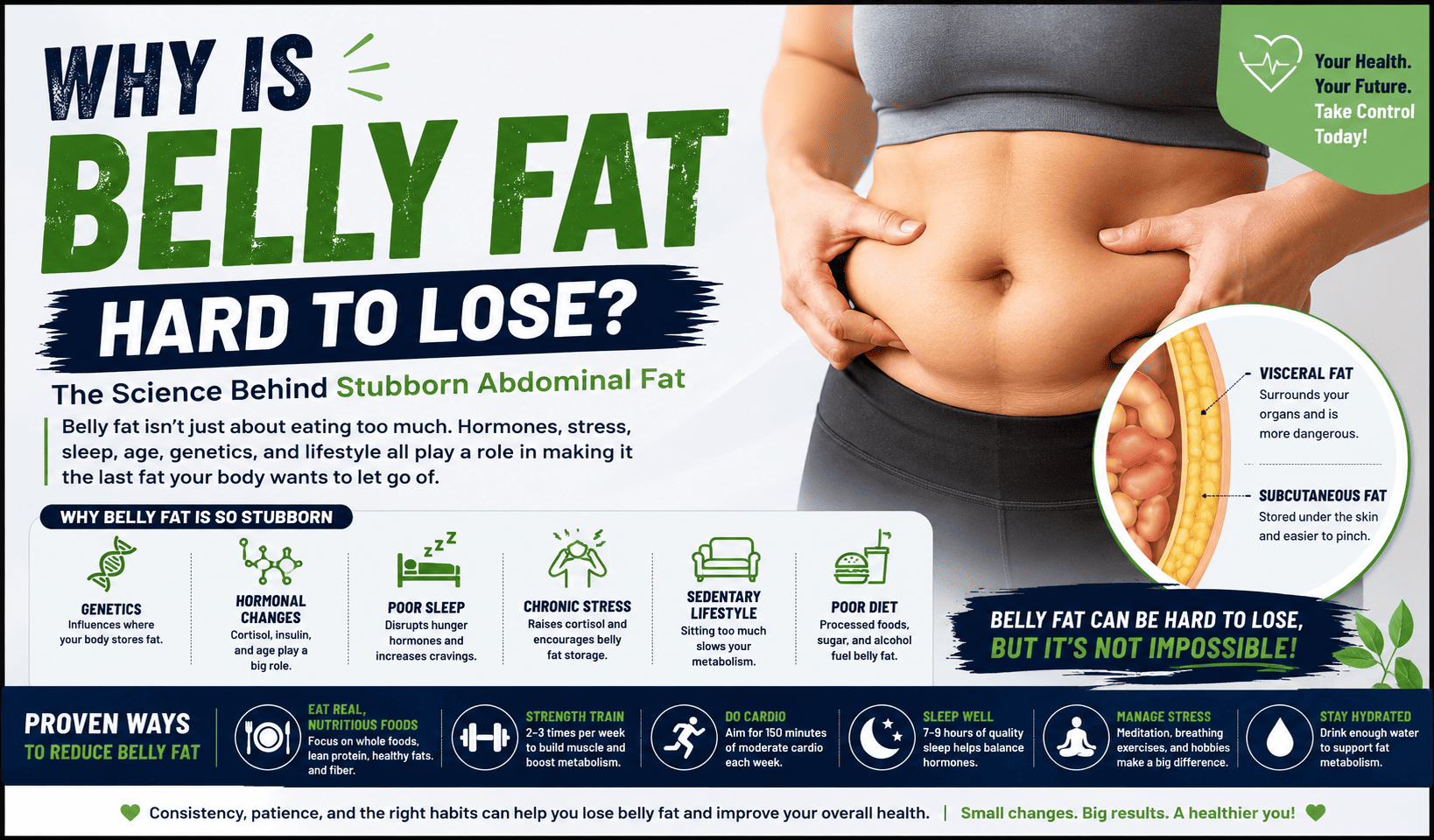
If you’ve been eating healthier, exercising regularly, and still wondering, “Why is belly fat hard to lose?”, you’re certainly not alone. Belly fat is one of the most common health concerns among adults in the United States. Many people notice that even after losing weight elsewhere on their bodies, fat around the waist seems to linger.
The truth is that belly fat isn’t simply the result of eating too much. Genetics, hormones, age, sleep quality, stress levels, physical activity, and overall health all influence how your body stores and burns fat. Understanding these factors can help you create a more effective, sustainable strategy for reducing abdominal fat while improving your long-term health.
This article explains why belly fat is particularly stubborn, the different types of abdominal fat, associated health risks, and science-backed methods that can help reduce it safely.
What Is Belly Fat?
Belly fat refers to the fat stored around the abdominal region. However, not all belly fat is the same.
Subcutaneous fat lies just beneath the skin and is the type you can pinch with your fingers. While excess amounts may affect appearance, it is generally less harmful than visceral fat.
Visceral fat surrounds internal organs such as the liver, pancreas, and intestines. This deeper abdominal fat is metabolically active and has been linked to increased inflammation, insulin resistance, type 2 diabetes, cardiovascular disease, and other chronic health conditions.
Because visceral fat behaves differently from fat stored elsewhere in the body, it can be more difficult to eliminate.
Why Is Belly Fat Hard to Lose?
Several biological and lifestyle factors work together to make abdominal fat especially resistant to weight loss.
Your Body Stores Fat for Survival
Humans evolved to store energy during times of food scarcity. The abdominal area serves as one of the body’s preferred energy reserves. Even during calorie restriction, your body often attempts to preserve these fat stores because they provide readily available energy during periods of stress or fasting.
This natural survival mechanism makes abdominal fat more persistent than many people expect.
Hormones Play a Major Role
Hormones regulate appetite, metabolism, and fat storage. Even slight hormonal imbalances can contribute to increased belly fat.
Cortisol, often called the stress hormone, encourages fat accumulation around the abdomen when chronically elevated. Long-term stress may increase cravings for calorie-dense foods while simultaneously promoting visceral fat storage.
Insulin also plays an important role. Diets high in refined carbohydrates and added sugars may contribute to insulin resistance, making it easier for the body to store fat rather than burn it efficiently.
As people age, changes in estrogen and testosterone levels can also shift fat storage toward the abdominal area. Women often notice increased belly fat after menopause, while men may experience greater abdominal fat accumulation as testosterone naturally declines with age.
Genetics Influence Fat Distribution
Genetics determine much more than eye color and height. They also influence where your body prefers to store fat.
Some individuals naturally accumulate more fat around their hips and thighs, while others primarily store fat in their abdomen. Although genetics cannot be changed, healthy lifestyle habits can significantly reduce overall body fat and improve body composition.
Aging Slows Metabolism
Many adults notice that maintaining a healthy weight becomes more challenging after age 30 or 40.
Several factors contribute to this change, including reduced muscle mass, lower daily energy expenditure, hormonal shifts, and decreased physical activity. Because muscle burns more calories than fat, losing muscle over time slows metabolism, making fat loss more difficult.
Without strength training and adequate protein intake, these age-related changes may contribute to increasing belly fat.
Chronic Stress Makes Belly Fat More Stubborn
Modern lifestyles expose many Americans to chronic stress from work, finances, family responsibilities, and digital overload.
Persistent stress increases cortisol production. Elevated cortisol not only stimulates appetite but also encourages fat storage around the abdominal organs. Many people under stress also experience emotional eating, sleep disruption, and reduced motivation for exercise, creating a cycle that supports continued belly fat accumulation.
Poor Sleep Affects Fat Loss
Sleep is often overlooked when discussing weight management.
Adults who regularly sleep fewer than seven hours per night may experience changes in hormones that regulate hunger, including ghrelin and leptin. Reduced sleep often increases appetite, cravings for high-calorie foods, and overall calorie intake.
Sleep deprivation also impairs insulin sensitivity and recovery from exercise, making it harder to lose fat while increasing the likelihood of gaining abdominal weight.
Diet Quality Matters More Than Many Realize
Not all calories affect the body in exactly the same way.
Highly processed foods rich in refined carbohydrates, sugary beverages, trans fats, and excessive alcohol may contribute to greater visceral fat accumulation.
Conversely, diets emphasizing vegetables, fruits, lean proteins, whole grains, legumes, nuts, seeds, and healthy fats provide nutrients that support metabolic health while helping control appetite.
Adequate protein intake is particularly important because protein helps preserve muscle mass during weight loss and increases feelings of fullness.
Physical Inactivity Encourages Belly Fat
Modern work environments often involve prolonged sitting.
Even individuals who exercise for 30 to 60 minutes each day may spend most of the remaining hours sitting. Extended sedentary behavior reduces overall calorie expenditure and can negatively affect metabolic health.
Combining regular aerobic exercise, resistance training, and increased daily movement provides greater benefits than relying on exercise alone.
Belly Fat May Be the Last Fat Your Body Loses
One of the biggest frustrations during weight loss is noticing changes in the face, arms, or legs while the stomach appears unchanged.
This occurs because fat loss happens throughout the body according to genetics and hormonal regulation. Unfortunately, targeted fat loss from a single body part—often called spot reduction—is largely unsupported by scientific evidence.
Doing hundreds of abdominal exercises strengthens the underlying muscles but does not specifically burn fat from the stomach.
Medical Conditions Can Contribute
Sometimes stubborn belly fat has underlying medical causes.
Conditions such as hypothyroidism, polycystic ovary syndrome (PCOS), Cushing syndrome, insulin resistance, and certain medications, including long-term corticosteroids, may increase abdominal fat storage.
If belly fat develops rapidly or is accompanied by unexplained fatigue, significant weight changes, or other concerning symptoms, consultation with a healthcare provider is recommended.
Health Risks Associated With Excess Belly Fat
Excess visceral fat affects more than appearance. It can increase the risk of several chronic diseases.
Abdominal obesity has been associated with type 2 diabetes, hypertension, heart disease, stroke, fatty liver disease, sleep apnea, certain cancers, chronic inflammation, metabolic syndrome, and reduced life expectancy.
Waist circumference may provide useful information about health risk alongside body mass index (BMI). For many adults, increased waist measurements can indicate elevated visceral fat even if body weight appears normal.
Evidence-Based Ways to Reduce Belly Fat
Although belly fat can be stubborn, it is not impossible to reduce. Sustainable lifestyle changes consistently outperform extreme diets or quick-fix supplements.
A moderate calorie deficit remains the foundation of fat loss. Choosing nutrient-dense foods while reducing added sugars and ultra-processed foods supports long-term success.
Strength training at least two to three times per week helps preserve muscle mass while increasing calorie expenditure. Aerobic activities such as brisk walking, cycling, swimming, or jogging improve cardiovascular health and help reduce visceral fat.
Daily movement outside structured exercise is equally valuable. Walking more, standing frequently during work, and reducing sedentary time contribute to greater overall energy expenditure.
Managing stress through mindfulness, meditation, breathing exercises, hobbies, or counseling may reduce cortisol levels and improve healthy eating behaviors.
Prioritizing seven to nine hours of quality sleep each night supports hormonal balance, appetite regulation, and recovery from exercise.
Consistency is often more important than perfection. Small improvements maintained over months generally produce better results than short periods of extreme dieting.
Common Myths About Belly Fat
Many products promise rapid belly fat reduction, but scientific evidence tells a different story.
Waist trainers do not burn belly fat. They may temporarily compress the abdomen but do not reduce fat stores.
Detox teas and cleansing products generally lead to temporary water loss rather than meaningful fat reduction.
Fat-burning supplements often provide limited benefits while carrying potential side effects. Most have little high-quality evidence supporting substantial belly fat loss.
Similarly, performing endless crunches alone will not eliminate abdominal fat. Visible abdominal muscles become apparent primarily through overall body fat reduction combined with muscle development.
When Should You See a Healthcare Provider?
If you experience persistent abdominal weight gain despite healthy lifestyle habits, or if belly fat is accompanied by fatigue, hormonal symptoms, digestive problems, or significant unexplained weight changes, consulting a healthcare professional is advisable.
A physician or registered dietitian can evaluate for underlying medical conditions and develop an individualized treatment plan based on your health history.
Conclusion
If you’ve been asking, “Why is belly fat hard to lose?”, the answer involves much more than willpower. Belly fat is influenced by biology, hormones, genetics, aging, stress, sleep, physical activity, and nutrition. Visceral fat, in particular, is metabolically unique and tends to resist rapid weight loss.
Fortunately, lasting improvements are possible. Sustainable eating habits, regular exercise that combines strength and cardio training, quality sleep, effective stress management, and consistent healthy routines can gradually reduce abdominal fat while improving overall health. Rather than focusing solely on the number on the scale, aim for long-term lifestyle changes that support both physical and metabolic well-being.

Daily physical activity increases your body’s fat-burning potential.
Frequently Asked Questions (FAQs)
1. Why is belly fat harder to lose than other body fat?
Belly fat, especially visceral fat, is strongly influenced by hormones, genetics, stress, aging, and metabolism. These biological factors make abdominal fat more resistant to loss than fat stored in other areas.
2. Can you lose belly fat by doing sit-ups?
No. Sit-ups strengthen the abdominal muscles but do not specifically burn fat from the stomach. Overall body fat reduction through nutrition and exercise is necessary.
3. Does stress increase belly fat?
Yes. Chronic stress raises cortisol levels, which may increase appetite and encourage fat storage around the abdomen.
4. What foods help reduce belly fat?
Whole foods such as vegetables, fruits, lean proteins, legumes, whole grains, nuts, seeds, and healthy fats support weight management when consumed as part of a balanced calorie-controlled diet.
5. How long does it take to lose belly fat?
The timeline varies depending on age, genetics, calorie intake, physical activity, sleep, and overall health. Sustainable fat loss typically occurs gradually over weeks to months.
6. Is belly fat dangerous?
Excess visceral fat is associated with increased risks of heart disease, type 2 diabetes, high blood pressure, fatty liver disease, and metabolic syndrome.
7. Does walking help reduce belly fat?
Yes. Regular brisk walking, particularly when combined with strength training and healthy nutrition, contributes to overall fat loss and improved metabolic health.
8. Can poor sleep prevent belly fat loss?
Yes. Inadequate sleep affects hormones that regulate hunger and metabolism, making weight management and belly fat reduction more difficult.
Reviewed by: Dzarro Editorial Team
Fact-checked using trusted medical and scientific sources.

Sandip Choudhary is a Health & Wellness Researcher and Content Creator specializing in sleep, digestive health, preventive wellness, and evidence-based health education. He has been creating online content and researching health-related topics for several years, focusing on translating complex medical information into practical guidance for everyday readers.
With a strong background in SEO and content strategy, Sandip ensures that every article is optimized for both search engines and real users. His goal is to provide reliable, clear, and helpful information that supports healthier living.
Disclaimer: The content published is for informational purposes only and is not a substitute for professional medical advice.
2 thoughts on “Why is belly fat hard to lose?”
Comments are closed.