
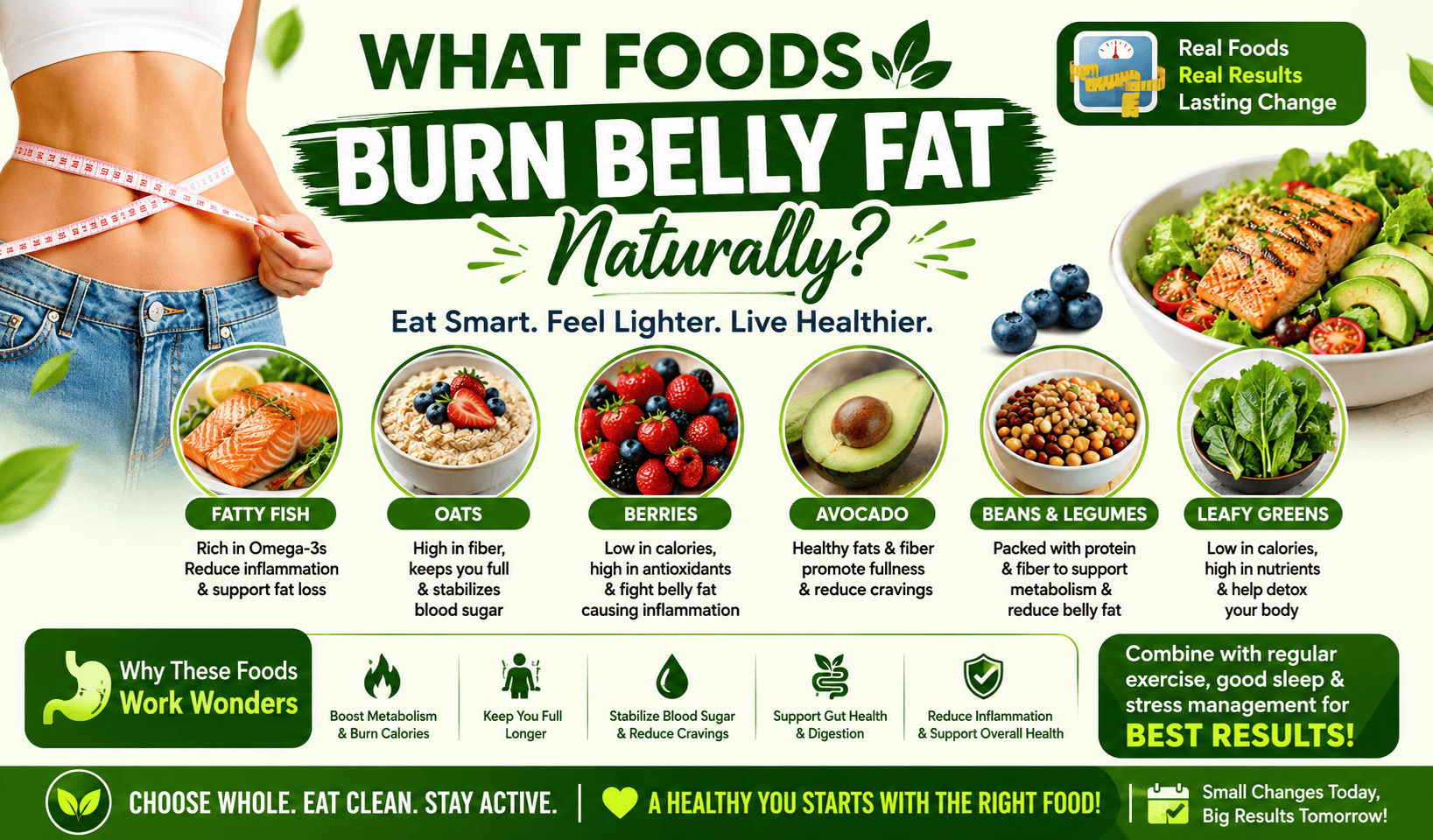
If you’ve ever searched “What foods burn belly fat naturally?”, you’re not alone. Millions of Americans are looking for safe, natural ways to reduce stubborn belly fat without relying on fad diets, detox teas, or expensive supplements. While no single food can magically melt fat from your abdomen, certain nutrient-rich foods can support your metabolism, improve satiety, reduce inflammation, and help create the calorie deficit needed for sustainable fat loss.
The truth is that belly fat, especially visceral fat stored around internal organs, is associated with an increased risk of heart disease, type 2 diabetes, high blood pressure, and metabolic syndrome. Fortunately, combining healthy eating habits with regular physical activity, quality sleep, and stress management can significantly improve your body composition over time.
In this comprehensive guide, we’ll explain what foods burn belly fat naturally, why they work, and how you can include them in your daily diet to support healthy weight management.
Can Foods Really Burn Belly Fat?
One of the biggest misconceptions about weight loss is that specific foods directly “burn” belly fat. In reality, no food selectively targets fat around your waist.
Instead, certain foods help by:
- Increasing feelings of fullness
- Supporting muscle maintenance
- Improving blood sugar control
- Reducing cravings
- Enhancing metabolism slightly
- Lowering inflammation
- Promoting healthy digestion
When combined with a balanced lifestyle, these effects make it easier to lose overall body fat, including stubborn abdominal fat.
Why Belly Fat Is Different
Not all body fat is the same. Belly fat consists of two main types.
Subcutaneous fat sits just beneath your skin and is relatively harmless.
Visceral fat surrounds organs like your liver, pancreas, and intestines. This deeper fat is metabolically active and linked to chronic diseases.
The good news is that visceral fat often responds well to healthy lifestyle changes, especially improved nutrition.
High-Protein Foods That Support Belly Fat Loss
Protein is one of the most important nutrients for healthy weight loss.
Eating enough protein helps preserve lean muscle during weight loss while increasing fullness after meals. It also requires slightly more energy to digest compared to carbohydrates or fats.
Excellent protein-rich foods include:
Skinless chicken breast, turkey, eggs, Greek yogurt, cottage cheese, salmon, tuna, tofu, tempeh, lentils, beans, and edamame.
Starting your day with a protein-rich breakfast may reduce hunger throughout the day and decrease unnecessary snacking.
Fatty Fish Rich in Omega-3s
Fatty fish provide high-quality protein along with omega-3 fatty acids that may help reduce inflammation associated with obesity.
Healthy options include:
Salmon, sardines, trout, mackerel, herring, and anchovies.
Replacing processed meats with fatty fish several times each week supports heart health while contributing to a balanced weight-loss plan.
Leafy Green Vegetables
Leafy greens are extremely low in calories while providing vitamins, minerals, antioxidants, and fiber.
Examples include:
Spinach, kale, romaine lettuce, collard greens, Swiss chard, mustard greens, and arugula.
These vegetables add volume to meals, helping you feel full without consuming excess calories.
Cruciferous Vegetables
Cruciferous vegetables are rich in fiber and plant compounds linked to improved health.
Popular choices include:
Broccoli, cauliflower, cabbage, Brussels sprouts, bok choy, and broccoli sprouts.
These vegetables are satisfying and easy to incorporate into lunches and dinners.
Berries
Blueberries, strawberries, raspberries, and blackberries are packed with antioxidants and dietary fiber.
Because they’re naturally sweet yet relatively low in calories, berries make an excellent alternative to sugary desserts.
Their fiber content also slows digestion and promotes longer-lasting fullness.
Apples and Pears
Whole fruits provide vitamins, minerals, antioxidants, and water.
Apples and pears are especially filling because they contain soluble fiber called pectin.
Eating whole fruit instead of fruit juice helps reduce calorie intake while improving satisfaction after meals.
Avocados
Although avocados are higher in calories than many fruits, they contain healthy monounsaturated fats and fiber.
This combination supports fullness and may reduce overeating later in the day.
Enjoy avocado in moderation as part of balanced meals.
Oats
Oats are one of the healthiest whole grains available.
They contain beta-glucan, a soluble fiber that supports digestive health, stabilizes blood sugar, and increases satiety.
A bowl of oatmeal topped with berries and Greek yogurt makes an excellent breakfast for weight management.
Whole Grains
Replacing refined grains with whole grains may support healthier body weight.
Examples include:
Brown rice, quinoa, barley, bulgur, whole wheat, farro, steel-cut oats, and whole-grain bread.
Whole grains digest more slowly than refined carbohydrates, helping maintain stable energy levels.
Beans and Legumes
Beans are affordable, versatile, and highly nutritious.
Kidney beans, black beans, chickpeas, navy beans, pinto beans, lentils, and split peas provide plant protein along with large amounts of fiber.
Research consistently associates higher legume intake with improved weight management.
Greek Yogurt
Plain Greek yogurt offers protein, calcium, and beneficial probiotics.
Protein helps preserve lean muscle while probiotics may contribute to better gut health.
Choose unsweetened varieties whenever possible to avoid added sugars.
Nuts
Almonds, walnuts, pistachios, pecans, and cashews provide healthy fats, protein, and fiber.
Although calorie-dense, moderate portions can actually help control appetite.
A small handful makes a satisfying snack between meals.
Chia Seeds and Flaxseeds
These tiny seeds contain fiber, omega-3 fats, and plant protein.
When mixed with liquid, chia seeds absorb water and form a gel-like consistency that promotes fullness.
Ground flaxseed is easy to add to smoothies, oatmeal, or yogurt.
Eggs
Eggs are one of the most nutrient-dense foods available.
They’re rich in complete protein and essential nutrients while being relatively low in calories.
Studies suggest protein-rich breakfasts containing eggs may reduce hunger later in the day.
Green Tea
While beverages aren’t miracle fat burners, green tea contains catechins and caffeine that may provide a modest increase in calorie expenditure.
Drinking unsweetened green tea can be a healthy replacement for sugar-sweetened beverages.
Coffee
Black coffee may slightly increase metabolism because of its caffeine content.
However, adding flavored syrups, whipped cream, and sugar can quickly turn coffee into a high-calorie dessert.
Choose minimal additions if your goal is fat loss.
Chili Peppers
Capsaicin, the compound responsible for the heat in chili peppers, has been studied for its small thermogenic effect.
While the impact is modest, spicy foods may temporarily increase calorie burning and reduce appetite for some people.
Apple Cider Vinegar
Apple cider vinegar has gained popularity in the weight-loss community.
Some studies suggest it may improve fullness when consumed before meals.
However, its effects are relatively small and should not replace healthy eating habits.
Always dilute vinegar before drinking to protect your teeth and digestive tract.
Foods to Limit If You Want to Reduce Belly Fat
Reducing certain foods can often be more impactful than adding specific “fat-burning” foods.
Highly processed snacks, sugary drinks, refined carbohydrates, candy, pastries, fast food, excessive alcohol, and heavily processed meats may contribute to excess calorie intake.
This doesn’t mean you must eliminate your favorite foods forever. Instead, aim for moderation while focusing primarily on whole, minimally processed foods.
The Importance of Fiber
Fiber is one of the strongest nutritional tools for healthy weight management.
It slows digestion, supports gut bacteria, regulates blood sugar, and helps you stay full longer.
Adults should aim for approximately 25–38 grams of fiber daily from fruits, vegetables, legumes, whole grains, nuts, and seeds.
Hydration Matters
Sometimes thirst is mistaken for hunger.
Drinking enough water throughout the day supports digestion, exercise performance, and appetite regulation.
Replacing sugary beverages with water can significantly reduce daily calorie intake.
Healthy Meal Ideas
A balanced breakfast might include oatmeal topped with blueberries, chia seeds, and Greek yogurt.
Lunch could feature grilled chicken over spinach with avocado, tomatoes, cucumbers, and olive oil dressing.
Dinner may include baked salmon, roasted broccoli, quinoa, and mixed vegetables.
Healthy snacks include almonds, apple slices with peanut butter, cottage cheese, berries, or hummus with vegetables.
Lifestyle Habits That Maximize Belly Fat Loss
Nutrition works best when paired with healthy lifestyle habits.
Regular strength training helps preserve muscle while increasing calorie expenditure.
Walking, cycling, swimming, or other aerobic exercise contributes to overall fat loss.
Sleeping seven to nine hours nightly helps regulate hormones that influence hunger.
Managing chronic stress may reduce emotional eating and improve long-term weight control.
Consistency is far more important than perfection.
Common Myths About Belly Fat
Many products promise rapid belly fat loss, but science tells a different story.
Detox teas cannot melt abdominal fat.
Fat-burning supplements are rarely necessary.
Doing hundreds of sit-ups won’t specifically eliminate belly fat.
Skipping meals often leads to overeating later.
Carbohydrates are not inherently bad; choosing high-quality complex carbohydrates is what matters.
When to Talk to a Healthcare Professional
If you’re struggling to lose weight despite healthy lifestyle changes, consider speaking with your healthcare provider or a registered dietitian.
Medical conditions such as hypothyroidism, polycystic ovary syndrome (PCOS), insulin resistance, or certain medications may influence weight management.
A personalized approach is often more effective than following generic advice online.
Final Thoughts
When asking “What foods burn belly fat naturally?”, it’s important to understand that no single food can target abdominal fat on its own. Instead, foods rich in protein, fiber, healthy fats, vitamins, and antioxidants create an environment that supports sustainable weight loss and improved metabolic health.
Focusing on lean proteins, vegetables, fruits, whole grains, legumes, nuts, seeds, and healthy beverages while limiting highly processed foods can help reduce overall body fat—including belly fat—over time. Pair these eating habits with regular physical activity, quality sleep, adequate hydration, and stress management for the best long-term results.
Healthy weight loss is a gradual process, but consistent lifestyle changes produce lasting results that benefit not only your waistline but also your overall health.

Consuming fewer calories than you burn supports weight loss.
Frequently Asked Questions (FAQs)
1. What foods burn belly fat naturally the fastest?
No food burns belly fat instantly. However, protein-rich foods, leafy greens, berries, legumes, whole grains, fatty fish, and high-fiber foods can support overall fat loss when combined with a calorie-controlled diet and regular exercise.
2. Can eating more protein reduce belly fat?
Yes. Higher protein intake helps increase fullness, preserve muscle during weight loss, and reduce overall calorie consumption, making it easier to lose body fat over time.
3. Are fruits good for losing belly fat?
Absolutely. Whole fruits such as apples, berries, oranges, pears, and grapefruit provide fiber, vitamins, minerals, and antioxidants while being naturally lower in calories than many processed snacks.
4. Is green tea effective for belly fat?
Green tea may provide a small increase in calorie burning due to its catechins and caffeine. However, its effect is modest and works best alongside healthy eating and physical activity.
5. Which breakfast is best for belly fat loss?
A balanced breakfast containing protein and fiber is ideal. Examples include Greek yogurt with berries, oatmeal with chia seeds, or eggs with vegetables and whole-grain toast.
6. How long does it take to lose belly fat naturally?
Results vary depending on diet, exercise, sleep, age, metabolism, and starting weight. Most people notice gradual improvements over several weeks to months with consistent healthy habits.
7. Can I lose belly fat without exercising?
Weight loss is possible through dietary changes alone, but combining healthy eating with regular exercise generally leads to better fat loss, improved fitness, and long-term success.
8. What foods should I avoid for belly fat?
Limit sugary beverages, refined carbohydrates, processed snacks, pastries, excessive alcohol, fast food, and foods high in added sugars and unhealthy fats, as these can contribute to excess calorie intake.
Reviewed by: Dzarro Editorial Team
Fact-checked using trusted medical and scientific sources.

Sandip Choudhary is a Health & Wellness Researcher and Content Creator specializing in sleep, digestive health, preventive wellness, and evidence-based health education. He has been creating online content and researching health-related topics for several years, focusing on translating complex medical information into practical guidance for everyday readers.
With a strong background in SEO and content strategy, Sandip ensures that every article is optimized for both search engines and real users. His goal is to provide reliable, clear, and helpful information that supports healthier living.
Disclaimer: The content published is for informational purposes only and is not a substitute for professional medical advice.
2 thoughts on “What foods burn belly fat naturally?”
Comments are closed.