
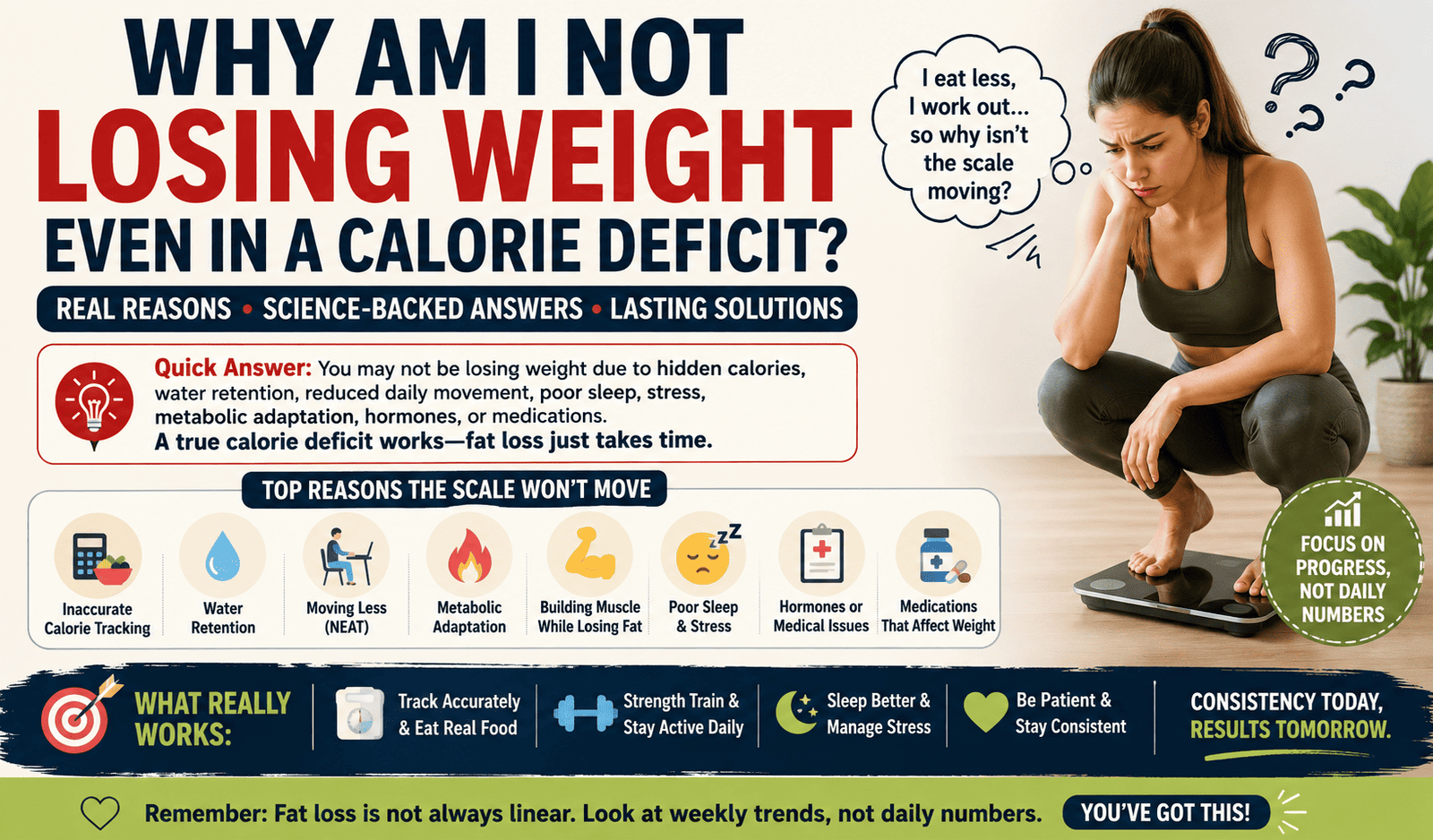
If you’re not losing weight even in a calorie deficit, the most common reasons include inaccurate calorie tracking, water retention, reduced daily movement, metabolic adaptation, poor sleep, chronic stress, hormonal conditions, or medications that affect body weight. A genuine calorie deficit leads to fat loss over time, but the scale may not change immediately because body weight naturally fluctuates due to water, glycogen, digestion, and muscle changes.
Introduction
One of the most frustrating experiences during a weight loss journey is doing everything right while seeing no change on the scale. You count calories, prepare healthy meals, exercise regularly, and avoid junk food, yet your weight seems stuck. If you’ve been asking, “Why am I not losing weight even in a calorie deficit?”, you’re definitely not alone.
The truth is that weight loss is more complex than simply eating less. While a calorie deficit is essential for losing body fat, several biological and lifestyle factors influence how quickly results appear. Water retention, stress, sleep quality, muscle gain, and even everyday movement can temporarily hide your progress.
This comprehensive guide explains the real reasons behind stalled weight loss and shows you how to overcome them using evidence-based strategies.
Also Read : How many calories should I eat to lose weight safely?
Does a Calorie Deficit Really Cause Weight Loss?
Yes. A calorie deficit occurs when your body uses more energy than it receives from food and beverages. To meet its energy needs, the body begins using stored fat as fuel, resulting in fat loss over time.
However, there’s an important difference between fat loss and weight loss. Your body weight includes fat, muscle, water, food in your digestive system, and glycogen. Even when you’re losing fat successfully, temporary increases in water or muscle can prevent the scale from moving.
This is why judging progress by a single weigh-in is often misleading.
Also Read : Can gut health affect body weight?
Water Retention May Be Hiding Your Fat Loss
Many people assume they are not losing fat because the number on the scale stays the same. In reality, water retention is one of the most common reasons weight appears stalled.
Your body naturally retains water after intense workouts, high-sodium meals, hormonal fluctuations, increased carbohydrate intake, and periods of stress. This retained water can mask several pounds of actual fat loss.
For example, if you lose three pounds of body fat but simultaneously retain three pounds of water, your scale will show no change despite meaningful progress. Eventually, the excess water is released, making it seem like you’ve suddenly lost several pounds overnight.
Instead of focusing on daily weight, calculate your weekly average to identify the true trend.
Also Read : Best high protein breakfast for weight loss?
You’re Probably Eating More Calories Than You Think
Calorie tracking is helpful, but it isn’t always accurate. Even highly motivated people often underestimate how much they eat without realizing it.
Small additions such as cooking oil, butter, peanut butter, coffee creamers, sauces, salad dressings, nuts, and beverages can significantly increase daily calorie intake. Weekend restaurant meals or cheat days can also erase an entire week’s calorie deficit.
A person eating in a 500-calorie deficit for five days may completely offset that progress with two days of overeating. Consistency across the entire week matters much more than being perfect Monday through Friday.
Using a digital food scale instead of estimating portions is one of the easiest ways to improve accuracy.
Also Read : How to stop emotional eating?
Your Metabolism Has Adapted
As you lose weight, your body naturally requires fewer calories to function. This is known as metabolic adaptation, and it’s a completely normal biological response.
Your resting metabolic rate decreases slightly because a smaller body burns less energy. At the same time, your body becomes more efficient and unconsciously encourages energy conservation.
This does not mean your metabolism is broken. The change is usually modest, and most people can continue losing fat by making small adjustments rather than drastically reducing calories.
The goal is sustainability, not starvation.
Also Read : What is metabolic health?
You’re Moving Less Throughout the Day
Exercise is only one part of daily calorie expenditure. Another major contributor is Non-Exercise Activity Thermogenesis (NEAT), which includes walking, standing, cleaning, shopping, climbing stairs, and even fidgeting.
When dieting, many people unknowingly reduce these spontaneous movements because they feel more tired. They sit longer, walk less, and become less active overall.
Ironically, someone who burns 400 calories during a workout may later burn fewer calories throughout the day because they move less afterward. Maintaining a daily step goal is often more effective than adding endless cardio sessions.
Aim for consistent daily movement rather than relying entirely on gym workouts.
Also Read : Can stress cause belly fat?
You May Be Building Muscle While Losing Fat
If you’ve recently started resistance training, your body composition may be improving even though your weight isn’t changing.
Muscle tissue is denser than fat, meaning you can lose body fat while gaining lean muscle. Your waist becomes smaller, your clothes fit better, and your body looks leaner despite little movement on the scale.
This process, called body recomposition, is especially common in beginners and people returning to exercise after a break.
Measure your waist every two weeks and take monthly progress photos to capture changes the scale misses.
Also Read : What are signs of hormonal weight gain?
Poor Sleep Can Slow Weight Loss
Sleep affects much more than energy levels. It directly influences hunger, cravings, appetite regulation, and food choices.
People who consistently sleep too little tend to crave more high-calorie foods, feel less satisfied after eating, and find it harder to maintain a calorie deficit. Poor sleep also increases fatigue, making exercise and daily movement less appealing.
Most healthy adults benefit from seven to nine hours of quality sleep each night. Improving sleep often makes healthy eating feel noticeably easier.
Also Read : Why am I always hungry?
Stress Can Affect Your Progress
Chronic stress doesn’t stop fat loss, but it can make losing weight more difficult.
Stress increases emotional eating, encourages cravings for comfort foods, and contributes to temporary water retention. Many people believe they’re gaining fat during stressful periods when they’re actually holding extra water.
Managing stress through regular exercise, meditation, walking outdoors, journaling, or simply getting adequate rest can support long-term weight management.
Also Read : Does drinking water help lose weight?
Your Calorie Deficit May Be Too Aggressive
Eating too little isn’t always better. Extremely restrictive diets often increase hunger, reduce daily activity, decrease workout performance, and increase the likelihood of binge eating.
A moderate calorie deficit is generally more sustainable and helps preserve muscle mass when combined with adequate protein intake and strength training.
Slow, consistent progress almost always produces better long-term results than rapid weight loss.
Also Read : Best morning habits for weight loss?
Medical Conditions That Can Make Weight Loss Harder
Sometimes lifestyle isn’t the entire story. Certain medical conditions can make maintaining or achieving weight loss more challenging.
Hypothyroidism can reduce metabolic activity, while polycystic ovary syndrome (PCOS) may affect insulin regulation and appetite. Other hormonal disorders can also influence body weight and fluid balance.
These conditions do not make fat loss impossible, but they often require proper medical diagnosis and treatment. If you’ve consistently maintained a verified calorie deficit for several weeks without meaningful progress, it’s worth discussing your symptoms with a healthcare provider.
Also Read : What causes slow metabolism?
Medications That May Affect Body Weight
Several prescription medications are associated with weight gain or difficulty losing weight. These include some antidepressants, corticosteroids, hormonal therapies, and certain diabetes medications.
Never stop taking prescribed medication without consulting your healthcare provider. In many cases, alternative treatments may be available.
How Long Does Healthy Weight Loss Take?
Healthy fat loss is rarely linear. Some weeks you’ll lose two pounds, while other weeks you’ll lose nothing at all despite perfect consistency.
For most adults, a realistic rate of fat loss ranges from 0.5 to 2 pounds per week, depending on body size, calorie deficit, and activity level.
Looking at monthly trends provides a much more accurate picture than daily weigh-ins.
Also Read : Can poor sleep cause weight gain?
Signs You’re Losing Fat Without Losing Weight
The scale is only one measurement of progress. Many people successfully lose fat while maintaining the same body weight.
Positive signs include a smaller waistline, looser clothing, improved muscle definition, increased strength, better endurance, and progress photos showing visible body changes.
These improvements often appear before significant changes in body weight.
Also Read : Why is belly fat hard to lose?
How to Break a Weight Loss Plateau?
If your weight has remained unchanged for more than three weeks despite consistent effort, start by reviewing your habits rather than drastically cutting calories.
Accurately weigh your food, prioritize protein at each meal, continue resistance training, increase daily walking, improve sleep quality, manage stress, and evaluate weekly average weight instead of individual days.
Small, sustainable adjustments are usually more effective than extreme dieting.
Also Read : What foods burn belly fat naturally?
When Should You See a Healthcare Provider?
Consider speaking with a healthcare professional if you’ve maintained a carefully tracked calorie deficit for six to eight weeks with virtually no fat loss, especially if you also experience fatigue, constipation, irregular menstrual cycles, unexplained weight gain, or persistent cold intolerance.
Identifying an underlying medical condition early can make treatment and weight management much more effective.
Conclusion
If you’ve been wondering, “Why am I not losing weight even in a calorie deficit?”, remember that a stalled scale doesn’t necessarily mean stalled fat loss. Water retention, inaccurate tracking, reduced daily movement, metabolic adaptation, poor sleep, stress, muscle gain, and medical conditions can all influence what you see on the scale.
The most successful weight loss journeys focus on long-term consistency rather than daily perfection. Track your weekly progress, eat enough protein, stay active, sleep well, and be patient. Fat loss happens gradually, and sustainable habits produce lasting results.
Also Read : How to boost metabolism naturally?
Frequently Asked Questions (FAQ)
1. Why am I not losing weight even though I’m eating in a calorie deficit?
The most common reasons are inaccurate calorie tracking, water retention, reduced daily activity, poor sleep, stress, hormonal conditions, or medications affecting body weight.
2. Can water weight completely hide fat loss?
Yes. Water retention can temporarily mask several pounds of fat loss, making it appear that your weight hasn’t changed.
3. How long should I stay in a calorie deficit before expecting results?
Evaluate progress over two to four weeks using your weekly average weight rather than daily measurements.
4. Is it possible to lose fat without losing weight?
Yes. Building muscle while losing fat can improve body composition even when body weight remains stable.
5. Does strength training help with weight loss?
Yes. Strength training helps preserve muscle mass, supports metabolism, and improves body composition during a calorie deficit.
6. Can stress prevent weight loss?
Stress can increase cravings, emotional eating, and water retention, making progress appear slower even when fat loss is occurring.
7. How many calories should I cut to lose weight safely?
A moderate deficit of approximately 300–500 calories per day is often more sustainable than aggressive restriction for many adults.
8. Why do I lose weight some weeks but not others?
Weight naturally fluctuates because of water, hormones, digestion, sodium intake, and glycogen levels. Fat loss is rarely linear.
9. Should I do more cardio if my weight is stuck?
Not necessarily. Increasing daily movement, maintaining strength training, and reviewing calorie intake are often more effective than adding excessive cardio.
10. What’s better than using the scale alone?
Track waist measurements, progress photos, clothing fit, strength improvements, and weekly average body weight for a more accurate picture of fat loss.

Chronic stress may slow metabolism and increase fat storage.
Medical Disclaimer: This article is intended for general educational purposes and does not replace individualized medical, nutritional, or mental health advice. If you are experiencing recurrent binge eating, loss of control around food, severe distress, or symptoms of an eating disorder, speak with a qualified healthcare professional.
Medically reviewed information sourced from trusted health organizations.
Reviewed by: Dzarro Editorial Team
Fact-checked using trusted medical and scientific sources.

Sandip Choudhary is a Health & Wellness Researcher and Content Creator specializing in sleep, digestive health, preventive wellness, and evidence-based health education. He has been creating online content and researching health-related topics for several years, focusing on translating complex medical information into practical guidance for everyday readers.
With a strong background in SEO and content strategy, Sandip ensures that every article is optimized for both search engines and real users. His goal is to provide reliable, clear, and helpful information that supports healthier living.
Disclaimer: The content published is for informational purposes only and is not a substitute for professional medical advice.
1 thought on “Why am I not losing weight even in a calorie deficit?”
Comments are closed.