
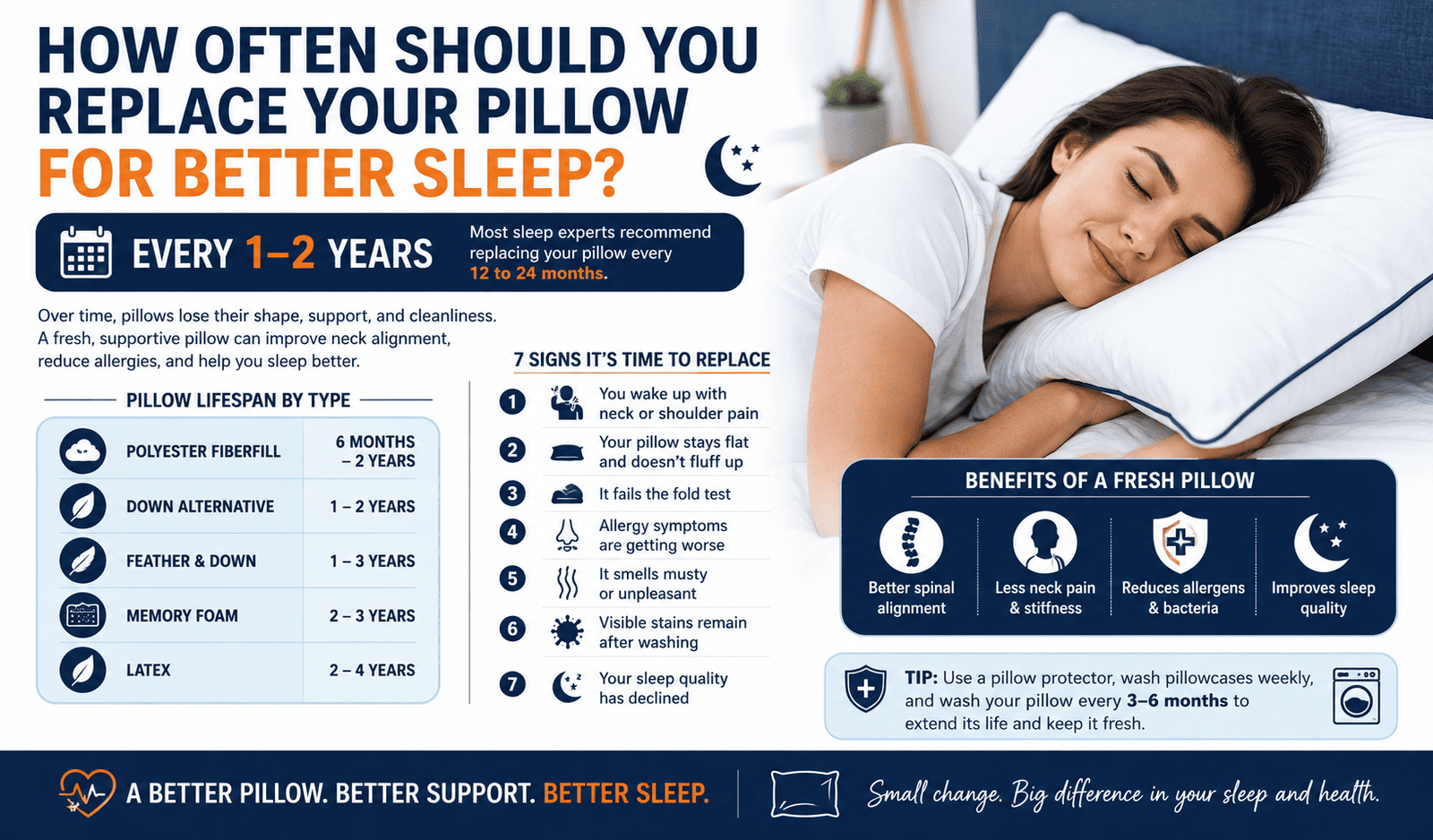
You should replace your pillow every 1–2 years for better sleep. Most sleep specialists recommend replacing a pillow once it loses its shape, support, or cleanliness. Memory foam pillows usually last 2–3 years, latex pillows 2–4 years, feather pillows 1–3 years, and polyester pillows around 6 months to 2 years. Using a pillow protector and washing your pillow regularly can help extend its lifespan.
Introduction
A comfortable mattress is essential for quality sleep, but your pillow is just as important. Every night, your pillow supports your head, neck, and shoulders while helping maintain healthy spinal alignment. Over time, however, pillows absorb sweat, skin oils, dust, and allergens while gradually losing their ability to provide proper support.
Many people continue using the same pillow for several years without realizing it may be affecting their sleep quality. Waking up with neck pain, shoulder stiffness, headaches, or nighttime allergies can sometimes be traced back to an old, worn-out pillow. If you’ve ever wondered how often should you replace your pillow for better sleep, this comprehensive guide explains everything you need to know.
Also Read : Can Your Mattress Be Causing Poor Sleep?
Why Your Pillow Is Important for Sleep Quality?
Your pillow does much more than provide softness. Its primary job is to keep your head and neck aligned with your spine while you sleep. When your spine remains in a neutral position, muscles relax naturally, pressure on joints decreases, and your body experiences deeper, more restorative sleep.
As pillows age, the filling compresses and becomes uneven. Instead of supporting your neck properly, an old pillow allows your head to sink too low or pushes it too high. This imbalance can create unnecessary strain on the neck and shoulders, leading to discomfort that often continues throughout the day.
A supportive pillow also contributes to better breathing during sleep by helping maintain a comfortable head position. While a pillow is not a medical treatment for snoring or sleep disorders, proper positioning may improve overall sleeping comfort for many individuals.
Also Read : Does Sleeping Naked Help You Sleep Better?
How Often Should You Replace Your Pillow?
The general recommendation for adults is to replace a pillow every 12 to 24 months. However, the ideal replacement schedule depends on the material, sleeping habits, and how well the pillow has been maintained.
A high-quality latex pillow typically lasts the longest, while synthetic polyester pillows tend to wear out much faster. Premium materials often cost more initially but usually provide better durability and long-term value.
Also Read : Why Do I Feel More Awake at Night Than During the Day?
Average Lifespan of Different Pillow Types
| Pillow Type | Recommended Replacement |
|---|---|
| Polyester Fiberfill | 6 months–2 years |
| Down Alternative | 1–2 years |
| Feather & Down | 1–3 years |
| Memory Foam | 2–3 years |
| Latex | 2–4 years |
Even if a pillow appears clean, it may still have lost the internal support needed for healthy sleep posture. That’s why replacement should be based on both comfort and structural integrity.
Seven Signs It’s Time to Replace Your Pillow
Persistent Neck or Shoulder Pain
One of the clearest signs of a worn pillow is waking up with stiffness or pain. When a pillow no longer supports the natural curve of your neck, muscles remain under tension throughout the night.
Also Read : Can Sleeping With a Fan Improve Sleep Quality?
Your Pillow Has Become Flat
If your pillow stays compressed after sleeping on it and fluffing no longer restores its shape, the filling has broken down. A flat pillow cannot provide consistent support.
The Fold Test Fails
A simple way to evaluate your pillow is the fold test. Fold the pillow in half and then release it. If it remains folded instead of springing back, it has likely reached the end of its useful life.
Increased Allergy Symptoms
Older pillows accumulate dust mites, pollen, dead skin cells, and other allergens. If you notice more sneezing, itchy eyes, or congestion during the night, your pillow may be contributing to the problem.
Unpleasant Odors
Sweat and moisture gradually penetrate pillow materials. A musty smell that remains even after washing usually indicates deep buildup that cannot be fully removed.
Also Read : Why Do My Legs Twitch When I’m Trying to Sleep?
Permanent Yellow Stains
Discoloration from sweat and natural body oils is common over time. While light staining isn’t always harmful, heavy stains combined with reduced support suggest it’s time for a replacement.
Poor Sleep Comfort
If you constantly adjust your pillow during the night or struggle to find a comfortable position, replacing it may significantly improve your sleep quality.
Also Read : Is It Better to Sleep With Socks On?
What Happens If You Keep an Old Pillow Too Long?
Keeping the same pillow for five or more years may negatively affect both hygiene and comfort. Every night, pillows absorb perspiration, facial oils, saliva, and microscopic skin particles. These create an environment where allergens and dust mites thrive.
Although regular washing helps reduce surface buildup, it cannot restore flattened filling or reverse years of structural wear. An old pillow may contribute to recurring neck pain, shoulder discomfort, allergy flare-ups, reduced sleep quality, and more frequent nighttime awakenings.
Replacing your pillow at the appropriate time is a simple yet effective way to support better overall sleep health.
Also Read : Can Seasonal Changes Affect Your Sleep Cycle?
Which Pillow Material Lasts the Longest?
Different materials offer different benefits, and understanding their durability helps you make a smarter purchasing decision.
Memory Foam Pillows
Memory foam pillows contour closely to the shape of your head and neck, making them especially popular among back and side sleepers. They provide excellent pressure relief and typically maintain their support for 2–3 years when properly cared for.
Also Read : Why Do I Wake Up at the Same Time Every Night?
Latex Pillows
Latex is one of the most durable pillow materials available. It naturally resists dust mites, maintains its shape well, and offers consistent support without flattening easily. Most latex pillows last between 2 and 4 years.
Feather and Down Pillows
Feather pillows feel soft and luxurious while allowing sleepers to reshape them easily. However, they require frequent fluffing because the filling gradually compresses. Their lifespan generally ranges from 1–3 years.
Polyester Pillows
Polyester fiberfill pillows are affordable and widely available, making them a common choice in American households. The trade-off is durability, as they tend to lose loft more quickly and often need replacement within 6 months to 2 years.
Also Read : How much sleep do adults over 40 need?
Choosing the Right Pillow Based on Your Sleeping Position
Your sleeping position should influence the type of pillow you buy.
Side sleepers generally need a firm, high-loft pillow that fills the space between the shoulder and head. This keeps the spine aligned and reduces pressure on the neck.
Back sleepers usually benefit from a medium-loft pillow that supports the natural curve of the cervical spine without pushing the head too far forward.
Stomach sleepers often sleep more comfortably with a thin, soft pillow because excessive height can place unnecessary strain on the neck.
Selecting the correct pillow height is just as important as replacing it regularly.
Also Read : Why do I wake up sweating at night?
How to Make Your Pillow Last Longer?
Proper maintenance can extend your pillow’s lifespan while keeping it cleaner and more hygienic.
Wash washable pillows every three to six months according to the manufacturer’s care instructions. Use a zippered pillow protector underneath your pillowcase to reduce exposure to sweat, oils, and allergens. Wash pillowcases weekly, fluff your pillow every morning to redistribute the filling, and allow it to air out occasionally in a dry, well-ventilated room.
Memory foam and latex pillows should generally be spot cleaned rather than machine washed, as excessive moisture can damage their structure.
Good maintenance won’t make a pillow last forever, but it can help preserve support until it’s time for a replacement.
Also Read : Can low vitamin D affect sleep?
Pillow vs. Pillowcase: Understanding the Difference
Many people replace pillowcases regularly but forget that the pillow itself also has a lifespan.
| Item | Recommended Schedule |
|---|---|
| Pillowcase | Every week |
| Pillow Protector | Every 1–2 months |
| Wash the Pillow | Every 3–6 months |
| Replace the Pillow | Every 1–2 years |
Weekly cleaning removes oils and bacteria from the surface, while washing the pillow helps reduce allergens. However, neither can restore worn-out filling once the pillow loses its shape.
Also Read : What causes sleep anxiety before workdays?
Are Expensive Pillows Worth Buying?
An expensive pillow is not automatically better, but higher-quality materials often provide better durability and longer-lasting support. The best pillow is the one that matches your sleeping position, feels comfortable throughout the night, and maintains its shape over time.
Instead of focusing only on price, consider loft, firmness, breathability, washable construction, and material quality. A well-made pillow that lasts three years may offer better value than a cheaper option that needs replacing every six months.
Also Read : How to reset sleep schedule naturally?
Expert Sleep Tips for Better Pillow Hygiene
Maintaining good pillow hygiene is an important part of healthy sleep habits. Always use a clean pillowcase, replace pillow protectors regularly, avoid sleeping with wet hair when possible, and keep your bedroom well ventilated to reduce excess moisture. If you suffer from allergies, washing bedding consistently and replacing aging pillows on schedule may help create a cleaner sleeping environment.
Also Read : Why does my body feel heavy after waking up?
Conclusion
If you’re asking how often should you replace your pillow for better sleep, the answer is simple: replace it every 1–2 years, or sooner if it becomes flat, uncomfortable, or no longer provides proper support.
A fresh pillow can improve spinal alignment, reduce morning neck pain, minimize allergen buildup, and enhance overall sleep quality. Since we spend roughly one-third of our lives sleeping, replacing a worn pillow is one of the easiest investments you can make in your health and wellness.
Also Read : Can sleep problems affect mental health?
Frequently Asked Questions (FAQs)
1. How often should I replace my pillow for better sleep?
Most adults should replace their pillow every 1–2 years, depending on the material and its condition.
2. Can an old pillow cause neck pain?
Yes. A worn-out pillow may lose its ability to support the neck properly, leading to stiffness and discomfort.
3. How long do memory foam pillows last?
Memory foam pillows typically last 2–3 years with proper care and regular maintenance.
4. What type of pillow lasts the longest?
Latex pillows are generally the most durable and can last 2–4 years while maintaining their shape.
5. Is it okay to wash my pillow instead of replacing it?
Washing helps improve hygiene, but it cannot restore lost support. A flattened or damaged pillow should still be replaced.
6. How often should pillowcases be washed?
Pillowcases should ideally be washed once every week to remove oils, sweat, and bacteria.
7. What is the fold test for pillows?
Fold the pillow in half and release it. If it doesn’t return to its original shape, it’s likely time for a replacement.
8. Do feather pillows need frequent replacement?
Yes. Feather pillows usually last 1–3 years and require regular fluffing to maintain their loft.
9. Can an old pillow worsen allergies?
Yes. Older pillows can accumulate dust mites and allergens that may trigger sneezing, congestion, and itchy eyes.
10. Does replacing a pillow really improve sleep?
For many people, yes. A supportive new pillow can improve comfort, spinal alignment, and overall sleep quality, especially if the previous pillow had lost its shape.

A consistent wake-up time supports better health.
Medical Disclaimer: This article is for educational purposes only and does not replace professional medical advice, diagnosis, or treatment. Always consult a qualified healthcare provider before making significant changes to your diet, exercise routine, medications, or health management plan.
Medically reviewed information sourced from trusted health organizations.
References
- National Institutes of Health (NIH). Sleep and Sleep Disorders.
https://www.nhlbi.nih.gov/health/sleep - Sleep Foundation. Sleep Health Resources.
https://www.sleepfoundation.org/ - Centers for Disease Control and Prevention (CDC). Sleep and Sleep Disorders.
https://www.cdc.gov/sleep/ - Mayo Clinic. Sleep Disorders Overview.
https://www.mayoclinic.org/
Reviewed by: Dzarro Editorial Team
Fact-checked using trusted medical and scientific sources.

Sandip Choudhary is a Health & Wellness Researcher and Content Creator specializing in sleep, digestive health, preventive wellness, and evidence-based health education. He has been creating online content and researching health-related topics for several years, focusing on translating complex medical information into practical guidance for everyday readers.
With a strong background in SEO and content strategy, Sandip ensures that every article is optimized for both search engines and real users. His goal is to provide reliable, clear, and helpful information that supports healthier living.
Disclaimer: The content published is for informational purposes only and is not a substitute for professional medical advice.
2 thoughts on “How Often Should You Replace Your Pillow for Better Sleep?”
Comments are closed.