
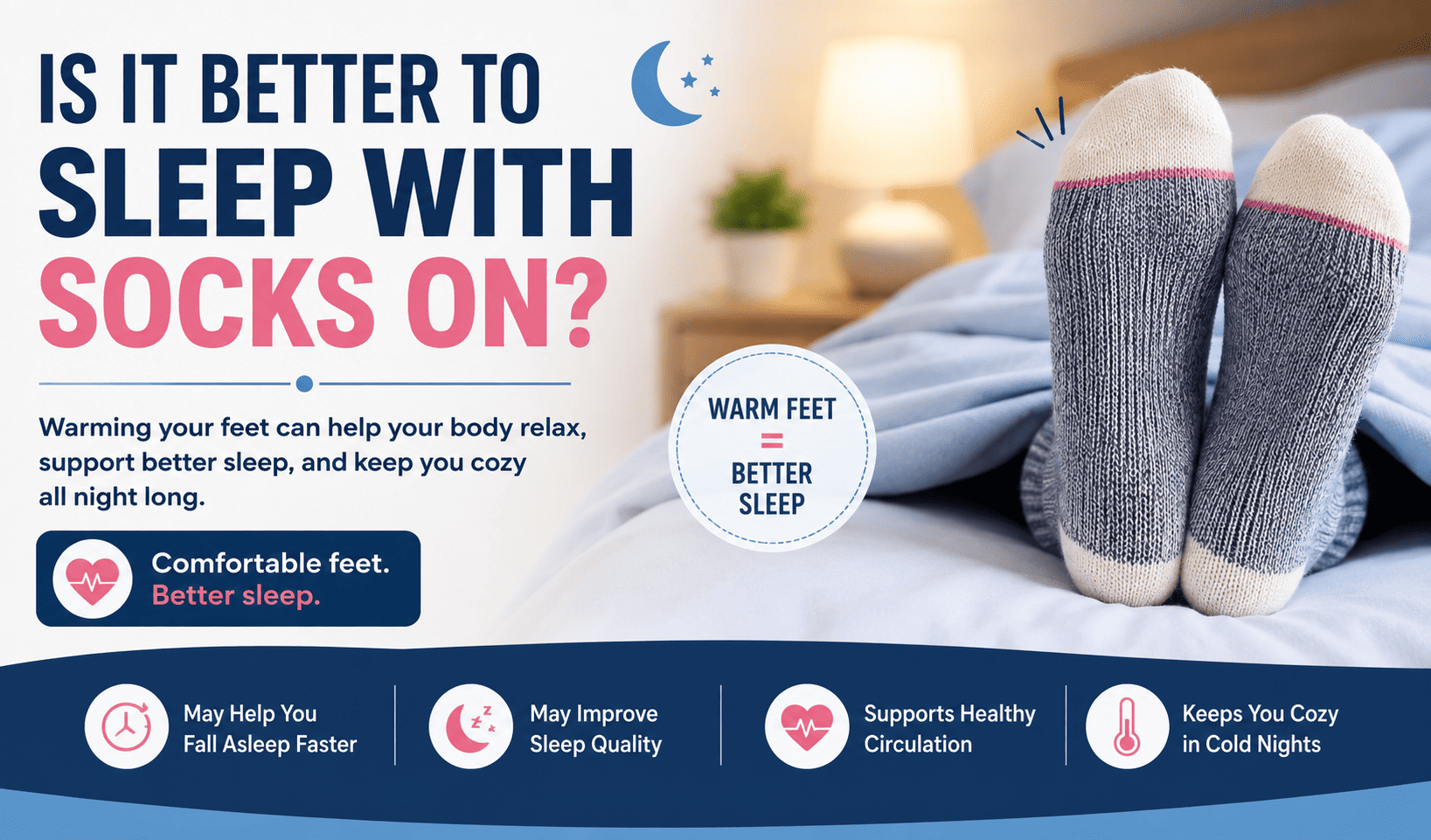
Yes, sleeping with socks on may help some people fall asleep faster and stay asleep longer, particularly if their feet tend to feel cold at night. Warming the feet can increase blood flow near the skin and support the body’s natural process of releasing heat before sleep. However, sleeping with socks is not automatically better for everyone. If socks make you feel too warm, uncomfortable, sweaty, or restricted, sleeping without them may be a better choice.
A small clinical study found that participants who wore bed socks in a cool sleeping environment fell asleep about 7.5 minutes faster, slept about 32 minutes longer, had fewer awakenings, and showed higher sleep efficiency than when they did not wear socks. However, the study included only six young men, so the results should not be interpreted as proof that socks improve sleep for everyone.
Is It Better to Sleep With Socks On?
For many people, sleeping with socks on can be beneficial if cold feet interfere with falling or staying asleep. The main reason has less to do with simply keeping your feet warm and more to do with how the body regulates temperature before and during sleep.
Your core body temperature naturally decreases as you prepare for sleep. At the same time, blood vessels in areas such as the hands and feet can widen, allowing more heat to move from the body’s core toward the skin. This process, known as distal vasodilation, is part of normal thermoregulation and helps the body transition toward sleep. Warming the feet with socks may support this process.
This means that wearing socks to bed is not necessarily about making your entire body warmer. Instead, gently warming your feet may help your body release heat through the extremities while your core temperature gradually falls.
Also Read : Can Seasonal Changes Affect Your Sleep Cycle?
Can Wearing Socks Help You Fall Asleep Faster?
There is some evidence that it can, particularly when cold feet are making it difficult to get comfortable. In the 2018 study published in the Journal of Physiological Anthropology, researchers compared sleep with and without foot-warming bed socks in a cool environment. The participants fell asleep approximately 7.5 minutes faster when their feet were warmed.
The same study found that total sleep time was approximately 32 minutes longer and sleep efficiency was about 7.6% higher during the sock condition. Participants also experienced fewer nighttime awakenings. These findings are interesting, but the study was very small, so larger studies involving different ages, sexes, health conditions, and sleeping environments are needed before making broad conclusions.
For someone who regularly gets into bed with cold feet, however, trying comfortable socks may be a simple and low-effort sleep experiment.
Also Read : Why Do I Wake Up at the Same Time Every Night?
Why Do Cold Feet Make It Harder to Sleep?
Cold feet can make it harder to feel comfortable at bedtime. Your body needs to make several physiological adjustments as it prepares for sleep, including changes in temperature regulation. Research on sleep temperature suggests that cooling of the body is closely connected with sleep onset, while excessive heat can interfere with comfortable sleep.
If your feet remain unusually cold, warming them may make the transition to sleep more comfortable. Sleep Foundation notes that people with chronically cold feet may have a greater risk of sleep-onset difficulties, potentially because cold extremities can interfere with the normal temperature-regulation process.
This does not mean that cold feet are always the cause of poor sleep. Stress, anxiety, caffeine, an uncomfortable mattress, noise, light, medical conditions, medications, and an inconsistent sleep schedule can all affect sleep.
Also Read : How much sleep do adults over 40 need?
What Are the Benefits of Sleeping With Socks On?
One potential benefit is faster sleep onset. If cold feet are keeping you awake, warm socks may help you become comfortable sooner and potentially shorten the time it takes to fall asleep. The available research suggests that foot warming may influence sleep onset and sleep efficiency, although the evidence remains limited.
Another possible benefit is fewer nighttime awakenings. The small bed-sock study found fewer awakenings when participants warmed their feet. This suggests that maintaining comfortable foot temperature may help some people experience less disrupted sleep.
Sleeping with socks may also be particularly comfortable during colder months. People who naturally have cold hands and feet may find that socks make their sleeping environment more comfortable without requiring them to heat the entire bedroom.
Some people with Raynaud’s phenomenon may also find warm socks helpful for keeping their feet comfortable. Cleveland Clinic notes that warming cold hands and feet can be useful for people experiencing symptoms associated with Raynaud’s, although people with circulation problems should discuss appropriate foot-warming strategies with a healthcare professional.
Also Read : Why do I wake up sweating at night?
Can Sleeping With Socks Help With Hot Flashes?
Temperature regulation can become especially important for people experiencing nighttime hot flashes. Cleveland Clinic notes that warming the feet may influence the body’s temperature-regulation process and potentially help moderate temperature changes.
However, socks should not be viewed as a treatment for menopause-related hot flashes or night sweats. If you regularly wake up drenched in sweat or experience disruptive hot flashes, it is worth discussing those symptoms with a healthcare professional because effective treatments and lifestyle strategies are available.
The goal is comfort, not overheating. If socks make you feel hotter or cause sweating, take them off.
Also Read : Can low vitamin D affect sleep?
Is It Bad to Sleep With Socks On?
For most healthy adults, there is generally no reason to consider comfortable, properly fitting socks inherently bad for sleep. The bigger issue is whether the socks are comfortable, breathable, clean, and loose enough to avoid unnecessary pressure.
Socks that are too tight can be uncomfortable and may create pressure around the ankles or feet. People with circulation problems, swelling, diabetes-related foot complications, or other conditions affecting the feet should be more cautious and may want to ask their healthcare professional whether wearing socks overnight is appropriate. Sleep Foundation specifically advises people with circulation issues or foot swelling to discuss the practice with a doctor.
Another concern is overheating. Your bedroom and bedding should generally support a cool, comfortable sleep environment. Sleep Foundation commonly recommends a bedroom temperature around 65 to 68°F for many adults, although individual preferences vary.
If socks cause your feet to become sweaty or uncomfortably hot, they may work against your sleep goals.
Also Read : What causes sleep anxiety before workdays?
What Kind of Socks Are Best for Sleeping?
If you want to try sleeping with socks, choose a pair that feels comfortable rather than treating socks as a medical device. Breathable materials can help reduce excessive moisture and overheating. The socks should fit comfortably around your feet and ankles without feeling tight or restrictive.
Clean socks are also important because your feet can sweat during the night. Wearing a fresh pair to bed can be more comfortable than sleeping in socks that you have worn throughout the day.
Avoid socks that leave deep marks around your ankles or feel like they are compressing your feet unless they have been specifically recommended for you by a healthcare professional. Comfort should be the priority.
Also Read : How to reset sleep schedule naturally?
Should You Sleep With Socks On Every Night?
There is no medical rule that says everyone should sleep with socks on every night. Whether you should wear them depends largely on your comfort, temperature preferences, and individual health circumstances.
If your feet are frequently cold and you notice that wearing socks helps you fall asleep or prevents you from waking because of cold feet, there is little reason to stop simply because of the belief that sleeping barefoot is inherently healthier.
On the other hand, if you naturally sleep warm, sweat easily, or find socks irritating, going barefoot may be more comfortable. Good sleep is influenced by many factors, and there is no single bedtime routine that works for everyone.
Also Read : Why does my body feel heavy after waking up?
Is Sleeping Barefoot Better Than Sleeping With Socks?
Neither option is universally better. The best choice is the one that helps you maintain a comfortable temperature and sleep continuously.
Sleeping barefoot can be preferable for people who feel hot at night or dislike anything around their feet. Sleeping with socks may be preferable for people with cold feet, especially in a cool bedroom.
The broader goal is temperature comfort. Research and sleep-health guidance consistently emphasize that excessive heat can interfere with sleep, while a comfortable, relatively cool bedroom can support better rest.
Also Read : Can sleep problems affect mental health?
Who Should Be Careful About Wearing Socks to Bed?
Most healthy adults can experiment with comfortable socks at bedtime. However, people who have significant circulation problems, swelling, reduced sensation in their feet, or certain foot conditions should be cautious. Socks that are too tight may create unnecessary pressure and may be particularly inappropriate for someone with an underlying circulation or foot-health issue.
People with diabetes should pay particular attention to foot comfort and skin health. If you have diabetes or another condition that affects sensation or circulation, ask your healthcare professional what type of nighttime footwear, if any, is appropriate for you.
If your feet are persistently cold even in a warm environment, or if you develop unexplained color changes, pain, numbness, swelling, sores, or other unusual symptoms, do not simply assume you need warmer socks. Those symptoms deserve medical evaluation.
Also Read : What are the best nighttime habits for deep sleep?
How to Use Socks as Part of a Healthy Sleep Routine?
If you want to see whether socks improve your sleep, try them for several nights under similar conditions. Use clean, comfortable, breathable socks and keep your bedroom at a temperature that feels comfortable rather than excessively warm.
Pay attention to how quickly you fall asleep, whether you wake during the night, whether your feet become sweaty, and how rested you feel in the morning. If your sleep improves and your feet remain comfortable, wearing socks may be a useful part of your bedtime routine.
However, socks should complement—not replace—basic sleep habits. Consistent sleep and wake times, a dark and quiet bedroom, comfortable bedding, and limiting stimulating activities before bed are all important components of healthy sleep.
Also Read : Why do I feel exhausted despite resting all day?
The Bottom Line: Is It Better to Sleep With Socks On?
Is it better to sleep with socks on? For some people, yes. If cold feet are making it difficult to fall asleep, wearing comfortable socks may help warm the feet, support normal temperature regulation, and potentially improve sleep onset and continuity.
The evidence is promising but limited. One small controlled study found meaningful improvements in sleep onset, total sleep time, awakenings, and sleep efficiency with foot warming, but the study involved only six young men. Therefore, it would be too strong to claim that everyone sleeps better with socks.
The most practical approach is to listen to your body. If socks keep your feet comfortably warm without making you sweat or feel restricted, they may be worth trying. If they make you hot or uncomfortable, sleeping without them is perfectly reasonable.
For persistent insomnia, frequent nighttime awakenings, severe night sweats, unexplained cold feet, or other ongoing sleep problems, speak with a qualified healthcare professional rather than relying solely on bedtime socks.
Also Read : Can overthinking cause insomnia?
Frequently Asked Questions
1. Is it healthier to sleep with socks on?
Sleeping with socks is not necessarily healthier for everyone, but it may help people who have cold feet at night. Foot warming may support the body’s natural temperature-regulation process and could help some people fall asleep more easily.
2. Does sleeping with socks help you sleep better?
It may. A small study found that participants wearing bed socks fell asleep faster, slept longer, had fewer awakenings, and had higher sleep efficiency in a cool environment. Because the study was very small, more research is needed.
3. Can socks help you fall asleep faster?
Yes, potentially. Warming the feet can promote blood flow to the extremities and may support the body’s normal transition toward sleep. In one study, participants fell asleep about 7.5 minutes faster when wearing bed socks.
4. Is it better to sleep barefoot?
Not necessarily. Sleeping barefoot can be more comfortable if you tend to overheat, while socks may be more comfortable if your feet get cold. There is no universal rule that one option is healthier for everyone.
5. Can sleeping with socks improve circulation?
Warming cold feet can increase blood flow near the skin, but socks should not be considered a treatment for circulation problems. If you have poor circulation, swelling, numbness, or another medical condition affecting your feet, ask a healthcare professional before wearing socks overnight.
6. What socks are best for sleeping?
Comfortable, breathable socks that are clean and not overly tight are generally the most practical choice. Avoid socks that feel restrictive or leave significant pressure marks around your ankles.
7. Can wearing socks to bed make you too hot?
Yes. If socks make your feet sweaty or cause you to feel overheated, remove them. Excessive heat can interfere with sleep, so maintaining a comfortable bedroom temperature is more important than keeping your feet covered.
8. Should people with diabetes sleep with socks on?
People with diabetes should consider their individual foot health, circulation, and sensation. If you have diabetes-related foot problems or reduced sensation, ask your healthcare professional whether wearing socks overnight is appropriate for you rather than choosing tight socks on your own.
9. Can sleeping with socks help with cold feet?
Yes. Socks can physically warm the feet, which may make bedtime more comfortable. Foot warming has also been associated with improved sleep measures in a small controlled study conducted in a cool environment.
10. Is sleeping with socks on good for everyone?
No. Some people sleep better with socks, while others sleep better barefoot. The best choice depends on your temperature preferences, comfort, sleep environment, and health. If socks help you stay comfortably warm without overheating or feeling restricted, they can be a reasonable part of your bedtime routine.

Melatonin helps regulate your sleep-wake cycle.
Medical Disclaimer: This article is for educational purposes only and does not replace professional medical advice, diagnosis, or treatment. Always consult a qualified healthcare provider before making significant changes to your diet, exercise routine, medications, or health management plan.
Medically reviewed information sourced from trusted health organizations.
References
- National Institutes of Health (NIH). Sleep and Sleep Disorders.
https://www.nhlbi.nih.gov/health/sleep - Sleep Foundation. Sleep Health Resources.
https://www.sleepfoundation.org/ - Centers for Disease Control and Prevention (CDC). Sleep and Sleep Disorders.
https://www.cdc.gov/sleep/ - Mayo Clinic. Sleep Disorders Overview.
https://www.mayoclinic.org/
Reviewed by: Dzarro Editorial Team
Fact-checked using trusted medical and scientific sources.

Sandip Choudhary is a Health & Wellness Researcher and Content Creator specializing in sleep, digestive health, preventive wellness, and evidence-based health education. He has been creating online content and researching health-related topics for several years, focusing on translating complex medical information into practical guidance for everyday readers.
With a strong background in SEO and content strategy, Sandip ensures that every article is optimized for both search engines and real users. His goal is to provide reliable, clear, and helpful information that supports healthier living.
Disclaimer: The content published is for informational purposes only and is not a substitute for professional medical advice.
4 thoughts on “Is It Better to Sleep With Socks On?”
Comments are closed.