
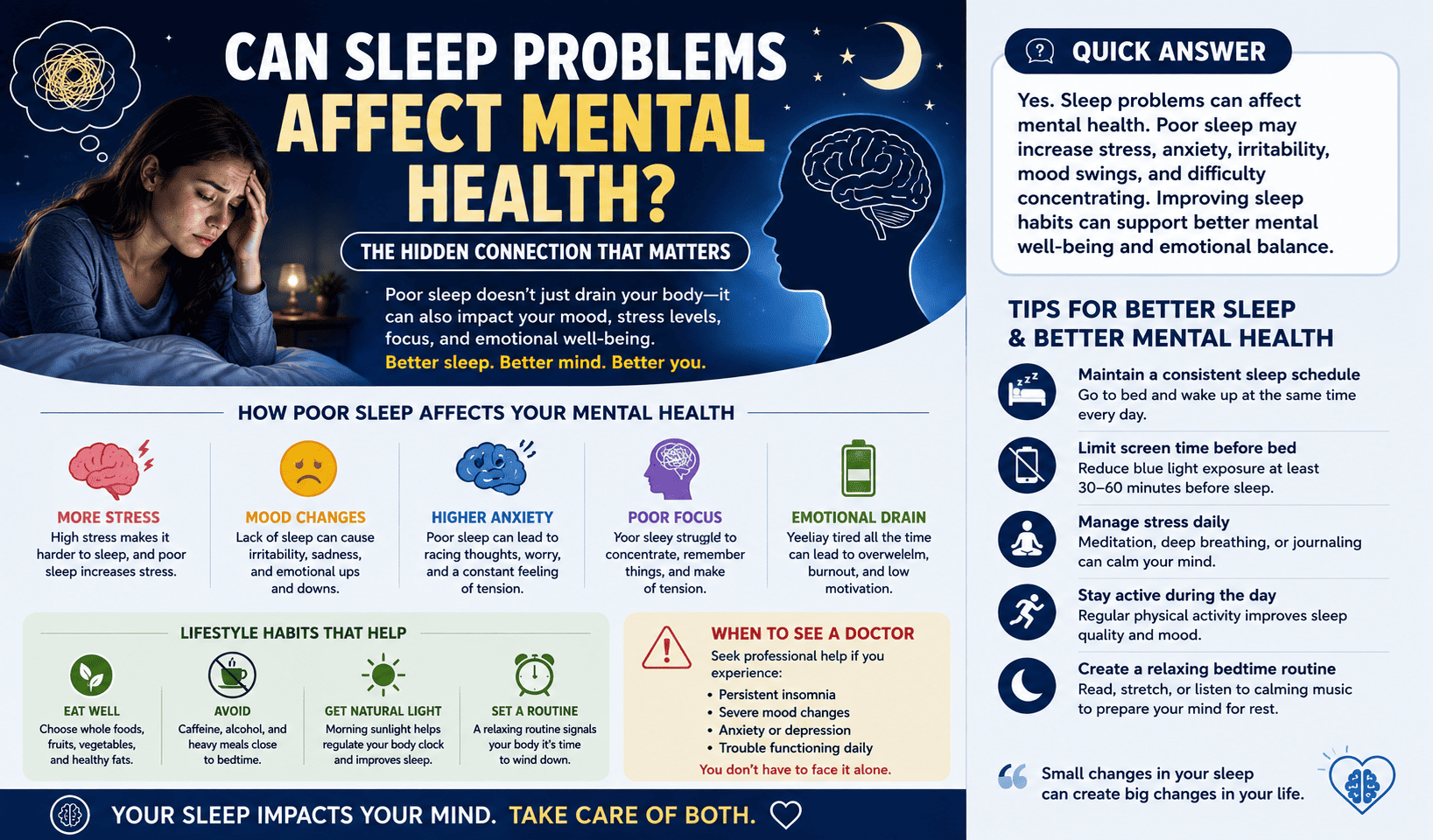
Have you ever noticed that after a poor night’s sleep, everything feels harder? You may feel irritable, anxious, emotionally overwhelmed, or unable to concentrate. Even simple tasks can seem exhausting when you’re running on inadequate sleep.
If this sounds familiar, you’re not alone. Millions of Americans struggle with sleep issues, and many don’t realize how closely sleep and mental health are connected. While most people think of sleep as simply a way to rest the body, it also plays a critical role in emotional regulation, stress management, memory, and overall psychological well-being.
The relationship works both ways. Poor sleep can negatively affect mental health, and mental health challenges can make it harder to sleep. Understanding this connection is one of the most important steps toward improving both sleep quality and emotional wellness.
Quick Answer
Yes, sleep problems can affect mental health. Poor sleep may increase the risk of stress, anxiety, mood changes, irritability, emotional exhaustion, and difficulty concentrating. Over time, chronic sleep deprivation can significantly impact emotional well-being, cognitive performance, and overall quality of life. Improving sleep habits often supports better mental health outcomes.
What Is the Connection Between Sleep Problems and Mental Health?
Sleep and mental health are deeply connected through the brain’s natural recovery processes.
During sleep, the brain:
- Processes emotions
- Consolidates memories
- Regulates stress hormones
- Repairs neural pathways
- Supports emotional resilience
When sleep becomes disrupted, these processes may not function efficiently.
As a result, people often experience:
- Increased emotional sensitivity
- Difficulty coping with stress
- Reduced focus
- Lower motivation
- Mood instability
Think of sleep as overnight maintenance for the brain. When that maintenance is interrupted repeatedly, mental and emotional performance can suffer.
Also Read : Can overthinking cause insomnia?
Symptoms of Sleep-Related Mental Health Issues
The effects often begin subtly and become more noticeable over time.
Early Symptoms
Many people first experience:
- Mild irritability
- Reduced patience
- Brain fog
- Difficulty concentrating
- Low motivation
- Feeling emotionally drained
These symptoms may appear after only a few nights of poor sleep.
Advanced Symptoms
When sleep problems continue for weeks or months, symptoms may become more severe:
- Increased anxiety
- Persistent mood swings
- Emotional overwhelm
- Memory problems
- Difficulty managing stress
- Reduced productivity
- Social withdrawal
- Feelings of burnout
The severity varies from person to person, but long-term sleep disruption often affects both emotional and cognitive functioning.
Also Read : Can gut health affect energy levels?
Why Sleep Is Essential for Emotional Well-Being
Sleep affects several systems that help regulate mental health.
Stress Hormone Regulation
When you don’t get enough sleep, cortisol levels may remain elevated.
Cortisol is commonly known as the stress hormone. Higher cortisol levels can make people feel:
- More anxious
- More reactive
- Less resilient to daily stress
Over time, chronic sleep deprivation may create a cycle where stress affects sleep and poor sleep increases stress.
Emotional Processing
Healthy sleep helps the brain process emotional experiences.
Without sufficient sleep:
- Negative emotions may feel stronger
- Emotional reactions may become more intense
- Recovery from stressful events may take longer
This is one reason why people often feel emotionally vulnerable after poor sleep.
Cognitive Performance
Sleep supports:
- Focus
- Decision-making
- Memory
- Problem-solving
Poor sleep can make routine tasks feel more difficult and mentally exhausting.
Also Read : Why do I feel mentally tired after work?
Causes & Risk Factors
Several factors contribute to sleep-related mental health concerns.
Chronic Stress
Work deadlines, financial pressure, family responsibilities, and daily life challenges can interfere with sleep quality.
Stress often causes:
- Racing thoughts
- Difficulty falling asleep
- Frequent waking
As sleep quality declines, stress management becomes even more difficult.
Excessive Screen Time
Many Americans spend hours on smartphones, tablets, and computers before bed.
Late-night screen exposure may:
- Delay sleep onset
- Reduce sleep quality
- Increase mental stimulation
This can make it harder for the brain to transition into restful sleep.
Poor Sleep Habits
Inconsistent sleep schedules can disrupt the body’s natural rhythm.
Common examples include:
- Staying up late on weekends
- Irregular bedtimes
- Sleeping in excessively
These habits can contribute to ongoing sleep difficulties.
Lack of Physical Activity
Regular movement supports both sleep quality and mental health.
Sedentary lifestyles may increase:
- Stress levels
- Sleep disturbances
- Daytime fatigue
Medical Conditions
Some health conditions can interfere with sleep and indirectly affect mental well-being.
Examples include:
- Sleep apnea
- Chronic pain
- Hormonal imbalances
- Digestive issues
Persistent symptoms should always be evaluated by a healthcare professional.
Also Read : Can gut health affect aging?
Comparison: Healthy Sleep vs Poor Sleep
| Factor | Healthy Sleep | Poor Sleep |
|---|---|---|
| Mood | Stable | Irritable |
| Stress Response | Balanced | Increased |
| Concentration | Strong | Reduced |
| Memory | Better retention | Frequent forgetfulness |
| Emotional Control | More resilient | More reactive |
| Energy Levels | Consistent | Fatigue and burnout |
This comparison highlights why sleep is often considered one of the foundations of mental wellness.
Best Treatment Options
Improving sleep quality often improves emotional well-being as well.
Establish a Consistent Sleep Schedule
Going to bed and waking up at the same time each day helps regulate the body’s internal clock.
Consistency often leads to:
- Faster sleep onset
- Better sleep quality
- Improved mood stability
Reduce Evening Screen Exposure
Limiting screen time before bed may support melatonin production and improve sleep quality.
Many sleep specialists recommend avoiding screens for at least 30–60 minutes before bedtime.
Manage Stress Effectively
Stress management can improve both sleep and mental health.
Helpful strategies include:
- Meditation
- Deep breathing exercises
- Journaling
- Light stretching
- Mindfulness practices
Small daily habits can create significant improvements over time.
Improve Sleep Environment
A healthy sleep environment should be:
- Quiet
- Dark
- Comfortable
- Cool
Even minor environmental changes can improve sleep quality.
Professional Support
If sleep difficulties continue despite lifestyle improvements, professional guidance may help identify underlying causes and appropriate treatment options.
Also Read : Can burnout affect physical health?
Diet & Lifestyle Tips
Nutrition plays an important role in sleep and mental wellness.
Foods That May Support Better Sleep
A balanced diet that includes:
- Fruits
- Vegetables
- Whole grains
- Lean proteins
- Healthy fats
can support overall health and sleep quality.
Certain foods rich in magnesium and other nutrients may contribute to relaxation and recovery.
What to Avoid
Excessive intake of:
- Caffeine
- Alcohol
- Energy drinks
- Highly processed foods
may interfere with sleep quality.
Timing also matters. Heavy meals close to bedtime can increase discomfort and disrupt sleep.
Daily Routine Improvements
Healthy daily habits often have a cumulative effect.
Helpful practices include:
- Getting morning sunlight
- Staying physically active
- Managing stress proactively
- Maintaining regular sleep schedules
- Taking breaks from screens
These habits support both emotional health and sleep quality.
Also Read : What are the signs of poor gut health?
When to See a Doctor
Sleep problems should not be ignored when they become persistent.
Consider speaking with a healthcare professional if you experience:
- Sleep difficulties lasting several weeks
- Severe daytime fatigue
- Loud snoring
- Breathing interruptions during sleep
- Significant mood changes
- Difficulty functioning during daily activities
- Ongoing anxiety related to sleep
Early intervention may help prevent worsening symptoms and improve overall well-being.
Who Is Most at Risk?
1. Office Workers
Long hours, workplace stress, and excessive screen exposure can contribute to poor sleep habits.
2. Students
Academic demands, irregular schedules, and screen use often interfere with sleep quality.
3. Shift Workers
Rotating schedules can disrupt circadian rhythms and increase sleep-related challenges.
4. Women
Hormonal changes throughout life may affect both sleep quality and emotional well-being.
5. Older Adults
Aging can influence sleep patterns and make restorative sleep more difficult.
6. Individuals Experiencing Chronic Stress
People facing ongoing stress often experience both sleep disruption and emotional exhaustion.
FAQs
1. Can lack of sleep cause anxiety?
Poor sleep may increase feelings of anxiety and make stress harder to manage. Improving sleep quality often supports emotional balance.
2. Can sleep problems affect mood?
Yes. Sleep deprivation can contribute to irritability, mood swings, frustration, and emotional sensitivity.
3. How many hours of sleep do adults need?
Most adults generally benefit from 7–9 hours of quality sleep per night.
4. Can better sleep improve mental health?
Improving sleep habits may support emotional regulation, focus, stress management, and overall mental wellness.
5. What is the biggest sign that poor sleep is affecting mental health?
Persistent irritability, anxiety, emotional exhaustion, difficulty concentrating, and ongoing fatigue are common indicators.

Simple better sleep solutions may help reduce fatigue and improve focus.
Conclusion
The answer to “Can sleep problems affect mental health?” is a clear yes. Sleep and mental wellness are closely connected, and poor sleep can influence mood, stress levels, emotional resilience, concentration, and overall quality of life.
The good news is that even small improvements in sleep habits can have meaningful benefits. Consistent bedtimes, reduced screen exposure, better stress management, regular exercise, and a supportive sleep environment can all contribute to healthier sleep and improved mental well-being.
If sleep difficulties continue despite healthy lifestyle changes, seeking professional guidance may help uncover underlying causes and support long-term health.
Medically reviewed information sourced from trusted health organizations.
References
- National Institutes of Health (NIH). Sleep and Sleep Disorders.
https://www.nhlbi.nih.gov/health/sleep - Sleep Foundation. Sleep Health Resources.
https://www.sleepfoundation.org/ - Centers for Disease Control and Prevention (CDC). Sleep and Sleep Disorders.
https://www.cdc.gov/sleep/ - Mayo Clinic. Sleep Disorders Overview.
https://www.mayoclinic.org/
Reviewed by: Dzarro Editorial Team
Fact-checked using trusted medical and scientific sources.
Last Updated: June 13, 2026

Sandip Choudhary is a Health & Wellness Researcher and Content Creator specializing in sleep, digestive health, preventive wellness, and evidence-based health education. He has been creating online content and researching health-related topics for several years, focusing on translating complex medical information into practical guidance for everyday readers.
With a strong background in SEO and content strategy, Sandip ensures that every article is optimized for both search engines and real users. His goal is to provide reliable, clear, and helpful information that supports healthier living.
Disclaimer: The content published is for informational purposes only and is not a substitute for professional medical advice.